Exfoliation & Eczema: When It Helps, When It Worsens Symptoms & the Safest Methods Explained
Exfoliation is one of the most frequently asked-about skincare topics for eczema — and one where the answer is genuinely nuanced. There are times and methods where careful exfoliation reduces dead skin buildup and improves comfort. There are others where it significantly worsens the condition. Understanding which is which requires knowing why eczema produces flakiness in the first place.
The Role of Exfoliation in Eczema‑Prone Skin
Eczema slows down your skin’s natural cell turnover, leading to build‑up and flakiness. Gentle exfoliation helps lift away dry skin, improving smoothness and comfort.
But there’s a catch: the eczema barrier is already fragile. Harsh scrubs or strong acids can make micro‑tears worse — letting irritants and bacteria in, and moisture out.
That’s why your exfoliating routine needs to focus on hydration first, exfoliation second.
Why eczema skin flakes — and what this means for exfoliation
The flakiness of eczema is not a surface buildup problem in the same way as normal dry skin. Eczema involves abnormal keratinocyte differentiation — skin cells don't mature and shed normally through the natural desquamation process. The result is a disorganised, poorly structured stratum corneum that flakes abnormally and is more permeable than normal skin.
The compromised barrier loses moisture at an elevated rate (increased transepidermal water loss), is more permeable to irritants and allergens, and is structurally fragile. This is why exfoliation that would be entirely appropriate for healthy dry skin can cause significant damage on eczema skin — it removes or disrupts what little barrier integrity exists.
This is also why the first-line response to eczema flakiness is generous emollient use, not exfoliation. Well-moisturised eczema skin sheds more normally and accumulates less surface flake than dry, neglected skin. Consistent emollient use addresses the cause of abnormal desquamation; exfoliation addresses the symptom of it.
Why exfoliation can be risky for eczema
Eczema weakens the skin barrier, making it more vulnerable to irritation.
Exfoliation can:
strip natural oils
damage the barrier further
increase dryness and sensitivity
In fact, harsh exfoliation is commonly advised against for eczema-prone skin.
When gentle exfoliation has a legitimate role
Exfoliation is not categorically wrong for eczema. There are specific circumstances where it may help:
Lichenified, chronically thickened eczema. Skin that has been repeatedly scratched and has developed lichenification (a leathery, thickened texture) may benefit from careful keratolytic exfoliation. Urea at 10–25% concentration is the most appropriate approach — it is both keratolytic (loosens dead skin cells) and humectant (attracts moisture), as covered in the salicylic acid and eczema article in this series.
Scale buildup over emollient-treated skin. When consistent emollient use has softened skin and a layer of loose, non-adherent scale remains, gentle removal with a soft damp cloth after bathing is low-risk and may improve emollient penetration.
Scalp seborrhoeic eczema. This is a specific exception — seborrhoeic dermatitis responds to scale removal and antifungal approaches in ways that atopic eczema does not. Low-concentration salicylic acid in shampoo is appropriate here.
Methods: from least to most risky
Urea 10–25% — the most appropriate keratolytic for eczema. Removes scale through chemical action while simultaneously adding humectant benefit. Gentle enough for daily use on chronically rough skin. Discussed in detail in the salicylic acid article.
Polyhydroxy acids (PHAs) — large-molecule chemical exfoliants (gluconolactone, lactobionic acid) that work only at the skin surface. They do not penetrate deeply, making them considerably gentler than AHAs or BHAs. Appropriate for very mild use on calm, non-flaring eczema-prone skin.
Lactic acid at low concentration (5% or below) — gentler than glycolic acid, and also humectant, which reduces the dehydration risk of exfoliating acids. At 5% or below, it may be tolerated on calm eczema skin between flares.
Colloidal oatmeal bathing — as covered in the bath salts and eczema facials articles, oatmeal bathing provides avenanthramide anti-inflammatory compounds and a mild physical softening of surface flake during the bath. This is the most gentle and most appropriate "exfoliation-adjacent" approach for eczema — it is soothing rather than stripping.
Recommended Products
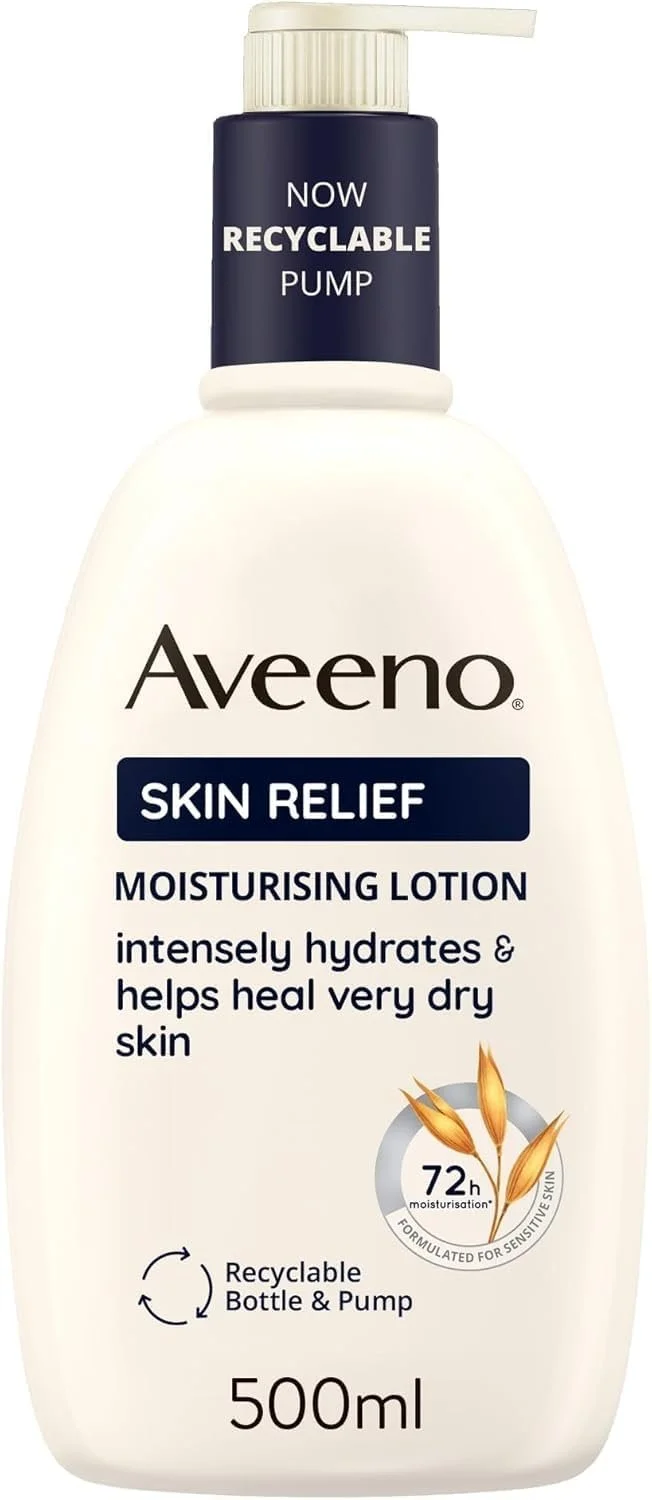
Aveeno Skin Relief Moisturising Lotion
a colloidal oatmeal-based moisturiser that provides mild skin-smoothing alongside barrier support. Appropriate as a daily moisturiser rather than an exfoliant, but the oatmeal component contributes gentle texture-improving effects for eczema-prone skin.
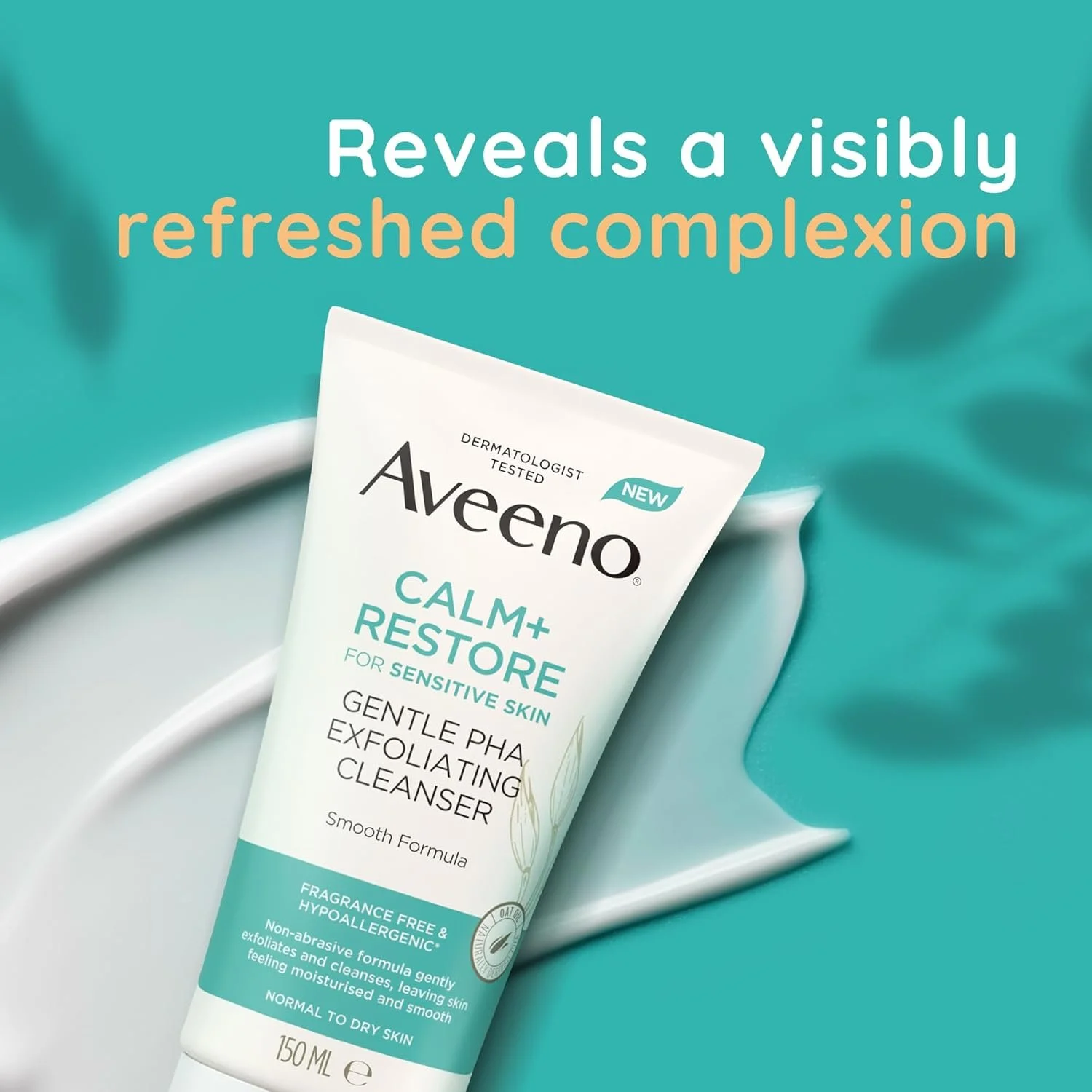
Aveeno Face CALM+RESTORE Gentle PHA Exfoliating Cleanser
a PHA-containing cleanser appropriate for the face when skin is calm and not actively flaring. PHA at cleanser concentrations with a rinse-off format provides the gentlest possible chemical exfoliation with minimal penetration depth. Not for use during flares.
The Safest Ways to Exfoliate Eczema‑Prone Skin
Soften first: Take a lukewarm bath or shower to loosen flaky skin.
Use a soft cloth or mild chemical exfoliant: Stick to once or twice weekly.
Avoid active flare‑ups: Never exfoliate red, weeping, or broken areas.
Moisturise immediately afterwards: Apply a ceramide or shea‑rich cream to lock in hydration.
Focus on healing between sessions: Hydration, gentle cleansing, and anti‑inflammatory support make all the difference.
What to avoid entirely for eczema
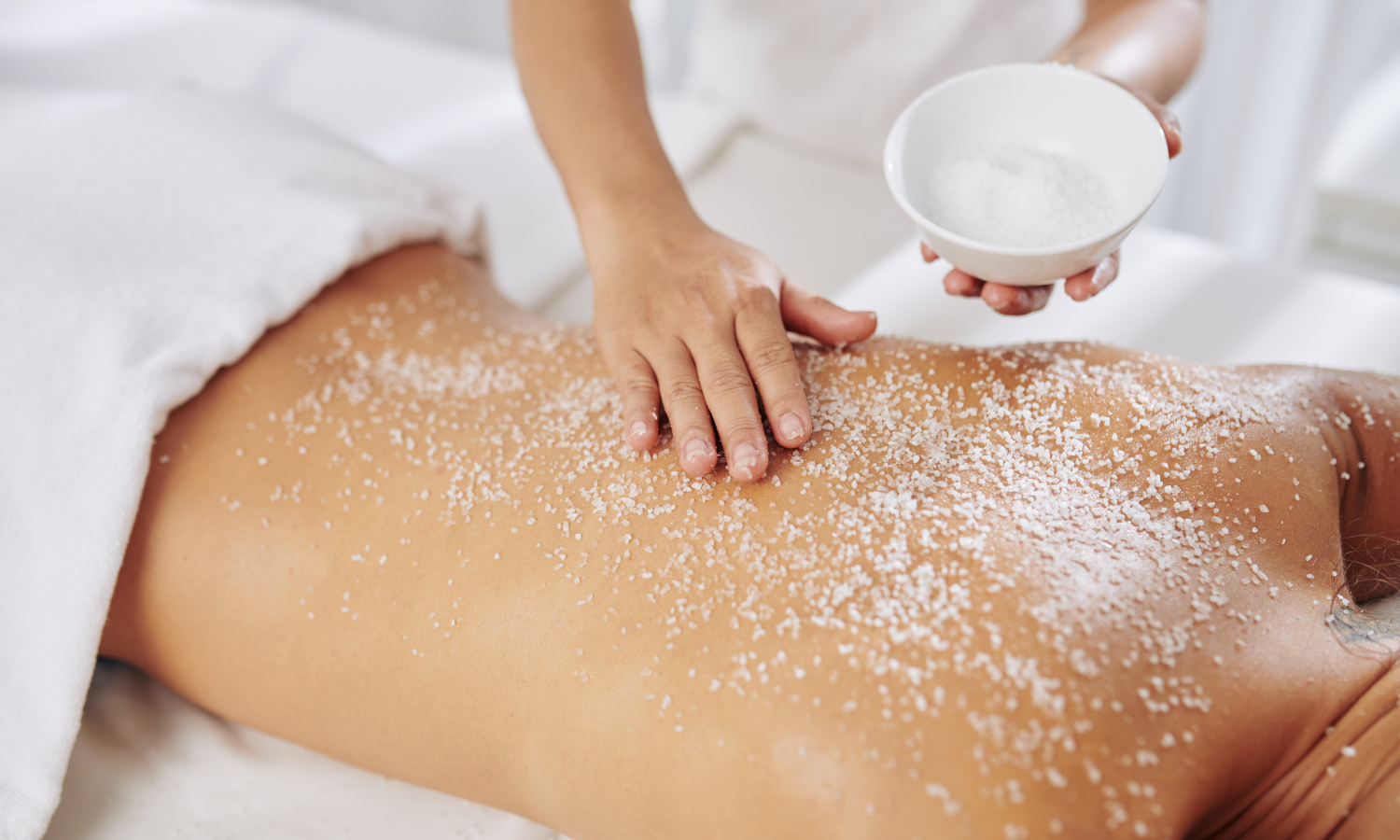
Physical scrubs — sugar, salt, apricot kernel, microbeads, or any abrasive particles. These cause friction damage on already-fragile eczema skin, disrupt the barrier, and can cause micro-tears that increase infection risk. The fact that they can make skin feel temporarily smoother does not mean they are appropriate.
High-concentration AHAs (glycolic acid, strong lactic acid) — too deeply penetrating and too barrier-disrupting for eczema skin. Products like glycolic acid face scrubs or high-strength exfoliating products formulated for normal or acne-prone skin are specifically contraindicated.
Salicylic acid on atopic eczema — as covered in the salicylic acid and eczema article, BHA on fragile atopic skin disrupts the ceramide-rich lipid barrier rather than improving it. Its role is limited to seborrhoeic dermatitis and lichenified eczema under specific guidance.
Anything during a flare. Actively inflamed, weeping, or cracked eczema skin should have zero exfoliation of any kind. The skin is maximally compromised during a flare; exfoliation at this stage causes significant additional barrier damage.
The Best Ingredients for Gentle Exfoliation
Colloidal oatmeal – soothes and smooths
Lactic acid (low concentration) – hydrates while gently lifting dead cells
Urea (5–10%) – both exfoliating and moisturising
PHA (gluconolactone) – hydrates as it exfoliates
Enzyme‑based exfoliants – from papaya or pineapple, in very mild formulas
Always patch‑test first and avoid fragranced exfoliants.
What works better than exfoliation for eczema flakiness
Consistent, generous emollient use. This addresses the cause of abnormal flakiness — barrier dysfunction and increased TEWL — rather than the symptom. A 500g weekly emollient quantity, applied within two to three minutes of bathing, is more effective for eczema texture than any exfoliation protocol.
The soak and seal approach. A lukewarm bath or shower softens surface flake far more gently than any exfoliant. The post-bath emollient application seals in the hydration and supports the desquamation process toward normal. This is the most effective practical approach for eczema skin texture and requires no exfoliant products at all.
Urea for specific thickened areas. 10% urea lotion applied to rough, lichenified patches daily is more effective and safer for eczema than any AHA or physical scrub for the same result.
Signs you should NOT exfoliate
Avoid exfoliation if your skin is:
red or inflamed
cracked or broken
actively flaring
Exfoliating during these times can worsen symptoms.
Skin support for eczema-prone skin
Barrier function and normal keratinocyte differentiation — the processes that determine how eczema skin flakes — depend on vitamin D (filaggrin regulation), zinc (keratinocyte function and repair), and biotin (normal skin cell metabolism). These internal nutritional foundations determine how effectively the skin renews itself.
Drought's Skin Support Formula provides 14 nutrients including vitamin D, zinc, biotin, and vitamin C — supporting the internal nutritional foundations of normal keratinocyte function and barrier integrity that determine eczema skin texture over time. Made in the UK, suitable for vegetarians, designed for consistent long-term daily use.
FAQs: Exfoliation and eczema
Should I exfoliate eczema skin?
Cautiously and selectively — not as a routine practice. Eczema skin has a compromised ceramide barrier that repairs more slowly than healthy skin, meaning exfoliation removes the stratum corneum faster than the barrier can rebuild it. During settled periods with mild dry scale on intact, non-inflamed skin — very gentle chemical exfoliation once weekly can improve moisturiser absorption and smooth rough texture. During active flares, inflamed or broken skin, or periods of heightened sensitivity — skip exfoliation entirely and focus on emollient and barrier repair. The practical rule: exfoliation is an occasional texture management tool for eczema-prone skin, not a core management strategy.
Can exfoliation make eczema worse?
Yes — through a specific mechanism rather than simply causing general irritation. Over-exfoliation removes the stratum corneum faster than eczema's already-compromised barrier can rebuild it, simultaneously disrupting the acid mantle that keeps kallikrein serine proteases inactive. Activated serine proteases degrade filaggrin and tight junction proteins — directly worsening the two structural features most deficient in eczema skin. This explains why over-exfoliation is specifically more damaging to eczema skin than to healthy skin — it removes a barrier that can't be quickly replaced and activates enzymes that compound the existing structural deficit.
Is chemical or physical exfoliation better for eczema?
Chemical exfoliation — consistently and for a specific reason. Physical scrubs (sugar, salt, microbeads, nut shell powders) create friction and micro-tears on eczema-prone skin through mechanical force — the same type of mechanical trauma that activates the protease-activated receptor pathway triggering itch and inflammation. Chemical exfoliants dissolve the protein bonds between corneocytes without mechanical friction. PHAs (polyhydroxy acids — gluconolactone, lactobionic acid) are the most appropriate chemical exfoliants for eczema because they simultaneously hydrate as they exfoliate, have larger molecular weight than AHAs that prevents deep penetration, and have documented tolerance on sensitive and compromised skin.
What is urea and why is it good for eczema exfoliation?
Urea is the most specifically appropriate exfoliant for eczema-prone skin — and the only one that exfoliates and hydrates simultaneously rather than choosing one at the expense of the other. At 5–10% concentration, urea provides humectant hydration by drawing water into the stratum corneum while simultaneously breaking down the protein bonds between corneocytes that create rough, flaky texture. At 20–40% concentration, it provides more pronounced keratolytic activity for thicker, more adherent scale. Unlike AHAs which acidify the skin surface and can disrupt the acid mantle at higher concentrations, urea's mechanism doesn't compromise barrier pH. It is the default recommendation for dry, rough eczema-affected skin where any exfoliation is considered.
Can I use glycolic acid on eczema?
Not generally — glycolic acid is the smallest molecular weight AHA, penetrating skin most deeply and producing the most pronounced exfoliating effect of any common AHA. On eczema-prone skin with compromised ceramide barrier and elevated permeability, glycolic acid penetrates significantly faster than on intact skin — reaching sensitised nerve endings and immune cells and triggering the stinging, burning, and inflammatory cascade that worsens eczema. Even at low concentrations glycolic acid disrupts the acid mantle through its low pH formulation. Lactic acid at 5–8% is considerably gentler and more appropriate than glycolic acid for eczema — its larger molecular size slows penetration and it provides simultaneous humectant hydration. PHAs are more appropriate still — and urea is more appropriate than either for most eczema presentations.
How often should I exfoliate eczema skin?
Once weekly maximum — and only on settled, non-inflamed skin. More frequent exfoliation compounds barrier disruption before recovery is complete. In practice, many people with eczema find that consistent twice-daily emollient application addresses the dry, flaky texture concern more effectively than any exfoliation at any frequency — the scale in eczema is a symptom of barrier failure and moisture loss rather than excess dead skin cell accumulation as in healthy skin. Addressing the cause (barrier repair and TEWL reduction) produces better texture outcomes than addressing the symptom (scale removal through exfoliation).
Should I exfoliate during an eczema flare-up?
Never — and the mechanism explains why. During active flares, the barrier is at its most compromised, TEWL is at its highest, and serine protease activity is already elevated. Any exfoliation during this window removes what little stratum corneum protection remains, allows allergen and irritant penetration through the most permeable skin state, and compounds the inflammatory signalling that the flare is already producing. The priority during flares is barrier protection — thick fragrance-free emollient application, wet wrap therapy for significant flares, and prescribed topical treatment as appropriate. Reintroduce exfoliation cautiously only after the flare has fully resolved and the skin has been stable for at least two weeks.
Summary
Exfoliation is not categorically wrong for eczema, but it requires careful selection of method, timing, and skin state. Urea (keratolytic and humectant), PHAs (surface-only, gentle), and low-concentration lactic acid represent the appropriate options for calm, non-flaring eczema skin. Physical scrubs, high-strength AHAs, salicylic acid on atopic eczema, and any exfoliation during flares are inappropriate and worsen the condition. For most people with eczema, consistent generous emollient use and the soak-and-seal approach produce better texture improvement than any exfoliant — by addressing the cause of flakiness rather than its surface manifestation.
Written by the Drought Skin team — specialists in natural support for eczema, psoriasis, and sensitive skin.
Disclaimer: This article contains affiliate links. We earn a very small commission from each purchase made through these links. There is no additional cost to you. All products featured have been specifically selected as products we personally use and love. For further information, please see our disclaimer page.
-
Moisturising for Eczema: How to Do It Properly & What Actually Works
Salicylic Acid for Eczema: When It Helps, When It Harms & What Works Better
Bath Salts for Eczema & Psoriasis: What Actually Helps and How to Use Them
6 Steps to a Successful Eczema Skincare Routine
Types of Eczema Explained: Atopic, Contact, Seborrhoeic & More
