
The Eczema Skincare Routine: Step-by-Step Guide for Daily & Flare Management

The best eczema skincare routine is not about finding the right products — it's about applying the right approach consistently and adjusting it for whether your skin is calm or actively flaring. The difference between a routine that helps and one that makes things worse often comes down to three things: timing, quantity, and what you avoid.
Why routine matters more than products
Eczema involves a structurally compromised skin barrier — reduced ceramides, impaired filaggrin, elevated transepidermal water loss. This means skin is losing moisture and absorbing irritants at an accelerated rate regardless of what products you use. The barrier cannot be fixed by any single product; it needs consistent daily support that reduces the rate of water loss and protects against external triggers.
This is why consistency matters more than product quality. An inexpensive emollient applied consistently twice daily outperforms an expensive ceramide cream used intermittently. And this is why the most important element of any eczema routine is timing: applying emollient within two to three minutes of bathing, while skin retains surface moisture, seals hydration in. Waiting until skin has fully dried removes the primary opportunity.
The routine: step by step
Step 1: Bathe with lukewarm water
Hot water causes vasodilation, triggers histamine release, and strips natural skin oils. Lukewarm is the only appropriate temperature for eczema skin. Limit bathing to one or two times daily — more than this strips the barrier progressively regardless of how gentle the cleanser.
Bath or shower? Neither has a clear evidence advantage. Baths allow bath additive products (colloidal oatmeal, emollient bath oils) to be used, which can provide additional barrier support and relief.
Step 2: Cleanse gently
A fragrance-free, soap-free cleanser or emollient wash provides the cleaning necessary without stripping. Harsh foaming cleansers with sodium lauryl sulphate (SLS) disrupt the skin's pH and lipid barrier — avoid them.
Alternatively, use your standard emollient as a soap substitute — apply to wet skin, rinse off, pat dry. This is particularly appropriate during flares when any additional cleanser formula is unnecessary.
Step 3: Pat dry — never rub
A soft towel, gentle patting motion. Leave the skin slightly damp rather than completely dry. The two-to-three minute post-bathing window begins now.
Step 4: Apply emollient — the most important step
Within two to three minutes of patting dry, apply a generous layer of fragrance-free emollient to all eczema-affected and eczema-prone areas. The slightly damp skin absorbs emollient more effectively than dry skin and retains the surface moisture that the emollient seals in.
Apply in the direction of hair growth — this reduces follicular irritation.
How much? The clinical guideline of approximately 500g per week for an adult with significant eczema reflects how much is actually needed for a therapeutic effect. Most people apply a fraction of this. A thin smear is not meaningful barrier support. A generous application that fully covers affected areas and leaves skin feeling moisturised is.
Formulation: ointments (petroleum-based) are the most occlusive and effective barrier supports. Creams are more practical for daytime use. For very dry or thickened areas, urea 10% provides simultaneous keratolytic and humectant benefit.
Step 5: Apply prescribed treatment (if using one)
If you have prescribed topical corticosteroids or calcineurin inhibitors, apply these after emollient has had a moment to absorb — typically two to three minutes. Applying directly to dry skin first, then emollient on top, is equally correct; the key is not mixing them simultaneously. Follow your prescriber's guidance on frequency and areas.
Step 6: SPF (morning only)
Mineral sunscreen — zinc oxide or titanium dioxide — applied over emollient and treatment. Sun exposure worsens some eczema presentations and protection is important year-round for anyone using photosensitising topical treatments. Check that your SPF is fragrance-free and formulated for sensitive skin.
The evening routine
Evening cleanse: a gentle rinse or mild emollient wash to remove the day's accumulation of sweat, pollutants, and skin surface debris. A full cleanser evening cleanse is appropriate; a water rinse alone is sufficient on calmer days.
Pre-sleep emollient: the most important emollient application of the day. Apply generously immediately before bed. This is when the skin does most of its repair work — providing maximum occlusive support during sleep captures this repair window.
Overnight occlusion (for very dry or resistant patches): a thin layer of petroleum jelly over stubborn dry patches, covered with soft cotton (a tube or sock for hands/feet; loose cotton sleeve for body), increases emollient penetration overnight significantly. Discussed in the Vaseline eczema article in this series.
Recommended Products
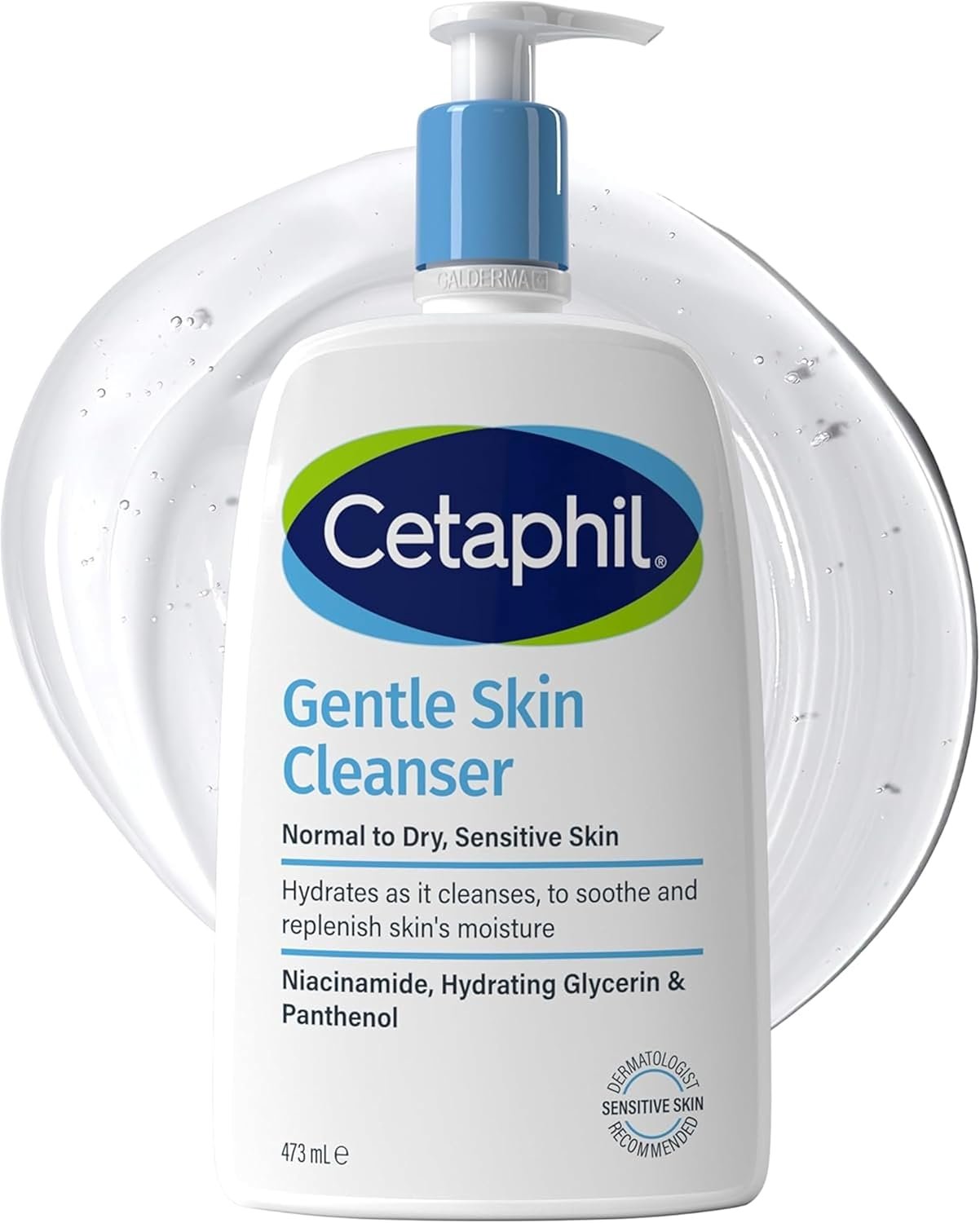
Cetaphil Gentle Skin Cleanser
a fragrance-free, soap-free cleanser consistently recommended by dermatologists for eczema-prone skin. Formulated without sodium lauryl sulphate — the primary surfactant that disrupts skin pH and strips barrier lipids in most foaming cleansers. Suitable for face and body; rinse thoroughly with lukewarm water. During flares, consider using your emollient as a soap substitute instead — applying to wet skin and rinsing off — to reduce even the minimal formula exposure of a gentle cleanser.
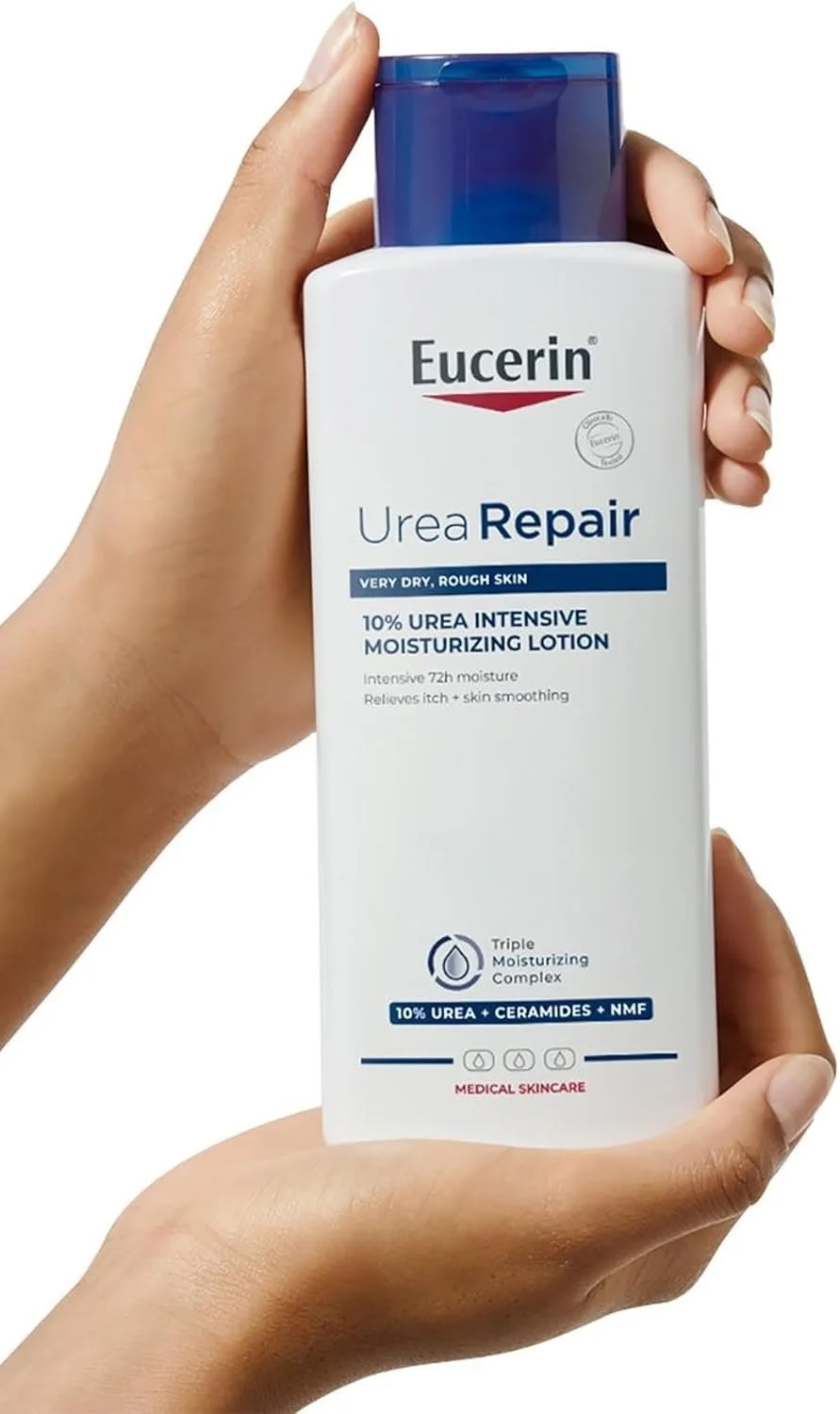
Eucerin UreaRepair Plus 10% Urea Lotion
a dermatologist-formulated urea preparation providing simultaneous keratolytic and humectant activity. At 10% concentration, urea breaks down the protein bonds between corneocytes — gently removing the rough, flaky scale that accumulates on eczema-prone skin — while simultaneously drawing water into the stratum corneum. Unlike physical exfoliants that mechanically disrupt the barrier, urea improves skin texture through chemical action without friction. Apply after the post-bath emollient window to slightly damp skin for best absorption. The 500ml format is appropriate for the generous application quantities required for meaningful eczema management.
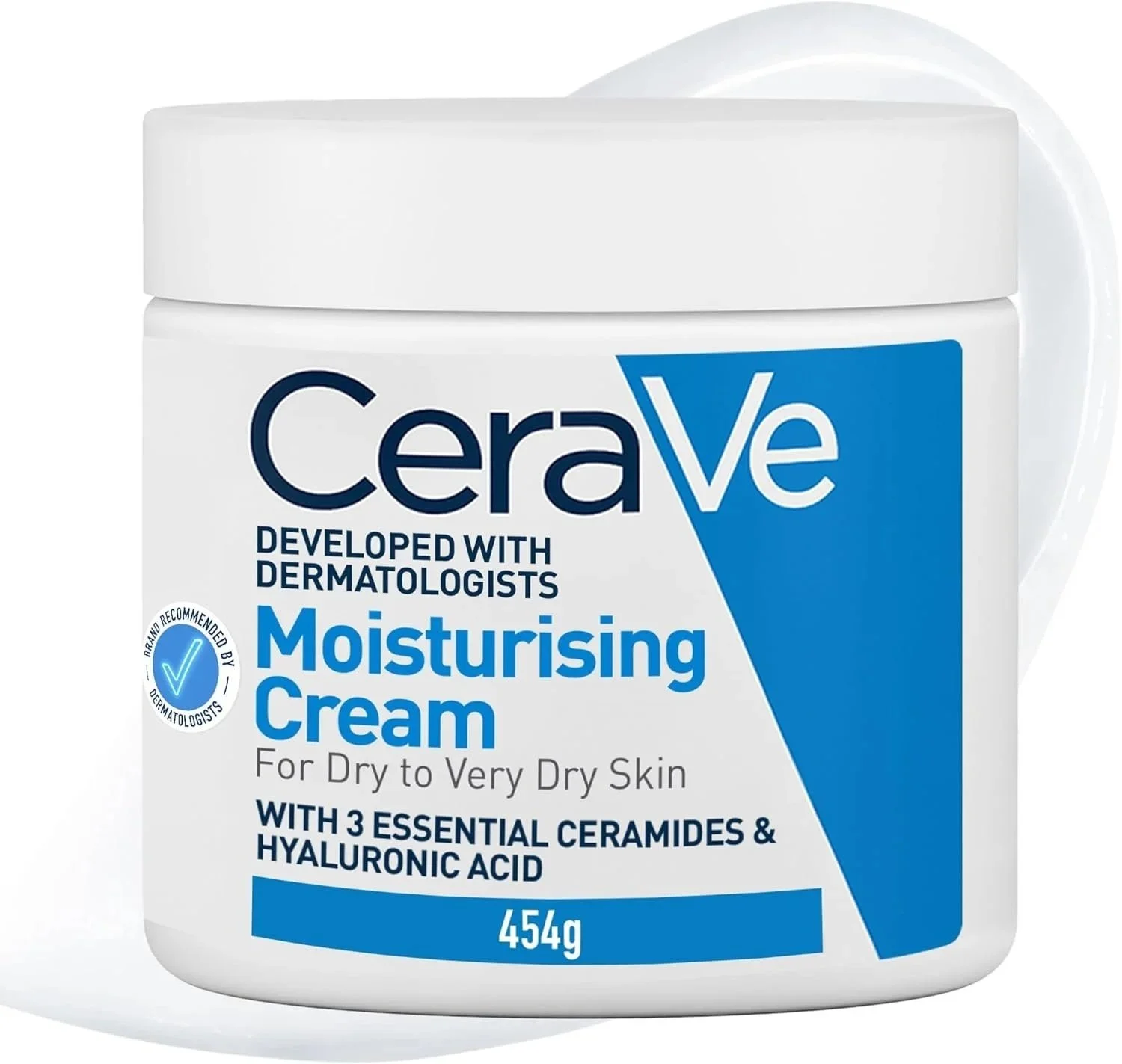
CeraVe Moisturising Cream
a ceramide-containing emollient providing ceramides 1, 3, and 6-II alongside hyaluronic acid in a fragrance-free, non-comedogenic base. As covered in the skin barrier article in this series, eczema skin has 30–40% lower ceramide content than healthy skin — replacing these specific barrier lipids is the most mechanistically targeted emollient approach available. The MVE (MultiVesicular Emulsion) technology releases ceramides gradually over 24 hours rather than in a single application. Available in large tub sizes appropriate for the 500g per week clinical target for significant eczema. Apply within the two-to-three minute post-bathing window for maximum barrier sealing benefit.
Two different modes: stable skin vs active flare
An eczema routine has two versions — and applying the wrong version makes things worse.
Stable, non-flaring skin: the goal is maintaining barrier function and preventing the next flare. A gentle cleanser, generous emollient, and daily SPF during the day. Active ingredients (if using any) are introduced here, during calm periods.
Active flare: the goal is reducing inflammation, protecting the barrier, and avoiding anything that adds irritation. Simplify to the minimum — emollient only, no actives, no new products. This is the time for prescribed topical treatments (corticosteroids, calcineurin inhibitors) under GP guidance, not new skincare experiments.
The most common mistake in eczema skincare is introducing new products during a flare and then being unable to tell whether they're helping or making things worse. New products belong on calm skin only.
What to avoid entirely in an eczema routine
Fragrance and parfum — the most common contact allergen in skincare. This includes "natural" fragrance, essential oils, botanical extracts. Every product touching eczema skin should be fragrance-free.
Alcohol (denatured or isopropyl) — strips barrier lipids and increases TEWL. Common in toners and setting sprays.
Physical exfoliants — sugar, salt, apricot kernel, microbeads. Friction on compromised eczema skin damages what little barrier integrity exists. See the exfoliation eczema article.
Products removed from this article's original recommendations:
The Garnier Rose Water Toner contains fragrance — not appropriate for eczema-prone skin. The Avène Exfoliating Gel is a physical exfoliant not formulated for eczema. Both have been removed. The Cetaphil cleanser and Eucerin urea lotion are retained as genuinely appropriate recommendations.
Routine during a flare
Strip back to the minimum. Emollient only — nothing new, nothing active. Apply prescribed treatment as directed. Lukewarm baths with colloidal oatmeal or emollient bath oil for soothing relief. Cotton gloves overnight if scratching is breaking the skin. Cool (not cold) damp cloths for acute itch relief.
If a flare is not responding to your standard management within two to three weeks, this warrants a GP assessment for a short course of topical corticosteroid or other appropriate treatment.
Skin support for eczema-prone skin
A topical routine addresses the surface. The filaggrin barrier dysfunction, Th2 immune dysregulation, and nutritional deficiencies driving eczema operate internally and require a complementary approach.
Drought's Skin Support Formula provides vitamin D (filaggrin upregulation), zinc (immune regulation and barrier repair), omega-3-supportive vitamins, magnesium, and 10 other nutrients — supporting the internal nutritional foundations that even the most consistent topical routine cannot reach. Made in the UK, suitable for vegetarians, designed for consistent long-term daily use
FAQs: Eczema skincare routine
What is the best routine for eczema?
Gentle fragrance-free cleanser, generous emollient applied within two to three minutes of bathing, prescribed treatment where needed, daily SPF. Consistent application matters more than product selection
How often should I moisturise with eczema?
At minimum twice daily — immediately after bathing and before sleep. More frequently during flares or dry periods. Approximately 500g per week is the clinical target for significant eczema.
Should I have a different morning and evening routine for eczema?
Morning: cleanser, emollient, treatment, SPF. Evening: gentle cleanse or rinse, generous emollient (thicker application), overnight occlusion on dry patches if appropriate.
What should I avoid in my eczema skincare routine?
Fragrance (including "natural" fragrance), alcohol in leave-on products, physical exfoliants, and introducing new products during active flares.
Should I exfoliate eczema-prone skin?
Only with chemical rather than physical methods, and only on settled non-flaring skin. Physical exfoliants (sugar, salt, microbeads, exfoliating cloths) create friction that mechanically disrupts eczema's already-compromised barrier — they remove what little structural integrity exists. PHAs (polyhydroxy acids — gluconolactone, lactobionic acid) are the most appropriate chemical exfoliants for eczema-prone skin — larger molecular weight than AHAs means slower penetration, and they simultaneously hydrate as they exfoliate. Even these should be introduced cautiously, once weekly maximum, on fully settled skin. During flares, exfoliation of any kind should be avoided entirely.
Can I use actives in my eczema routine?
On calm, non-flaring skin only. PHAs and low-concentration lactic acid are the gentlest appropriate options. Avoid salicylic acid, strong glycolic acid, and retinoids on active eczema.
What’s the best cleanser for eczema?
Fragrance-free, soap-free, SLS-free formulations — Cetaphil Gentle Skin Cleanser and similar dermatologist-recommended options. Sodium lauryl sulphate (SLS) in foaming cleansers disrupts the skin's acid mantle and strips barrier lipids — avoid it regardless of how "gentle" the cleanser is otherwise marketed. During active flares, using your emollient as a soap substitute (applied to wet skin and rinsed off) reduces formula exposure to its minimum while still cleaning effectively. The cleanser is on skin for 30–60 seconds — save any therapeutic benefit for leave-on products.
How long does a routine take to work?
Several weeks of consistent application before meaningful assessment. The barrier takes time to recover. Consistency over months matters more than any short-term product trial.
Summary
An effective eczema routine is built on four pillars: gentle, fragrance-free cleansing; generous emollient applied within two to three minutes of bathing; appropriate prescribed treatment where needed; and consistent daily repetition. The two-to-three minute window after bathing is the single most important practical concept — missing it significantly reduces the effectiveness of any emollient. During flares, simplify completely. During stable periods, maintain the routine and introduce any beneficial additions cautiously, one at a time, for at least four weeks each. Consistency over months produces better outcomes than any individual product decision.
Written by the Drought Skin team — specialists in natural support for eczema and psoriasis.
Disclaimer: This article contains affiliate links. We earn a very small commission from each purchase made through these links. There is no additional cost to you. All products featured have been specifically selected as products we personally use and love. For further information, please see our disclaimer page.
-
Moisturising for Eczema: How to Do It Properly & What Actually Works
Why Vaseline Is Recommended for Eczema & How to Use It
Exfoliation and Eczema: What's Safe, When to Avoid It & What Works Better
Bath Salts for Eczema & Psoriasis: What Actually Helps and How to Use Them
Eczema Supplements: What the Evidence Shows for Each Nutrient
