
Why Dermatologists Recommend Vaseline for Eczema — and How to Use It Correctly
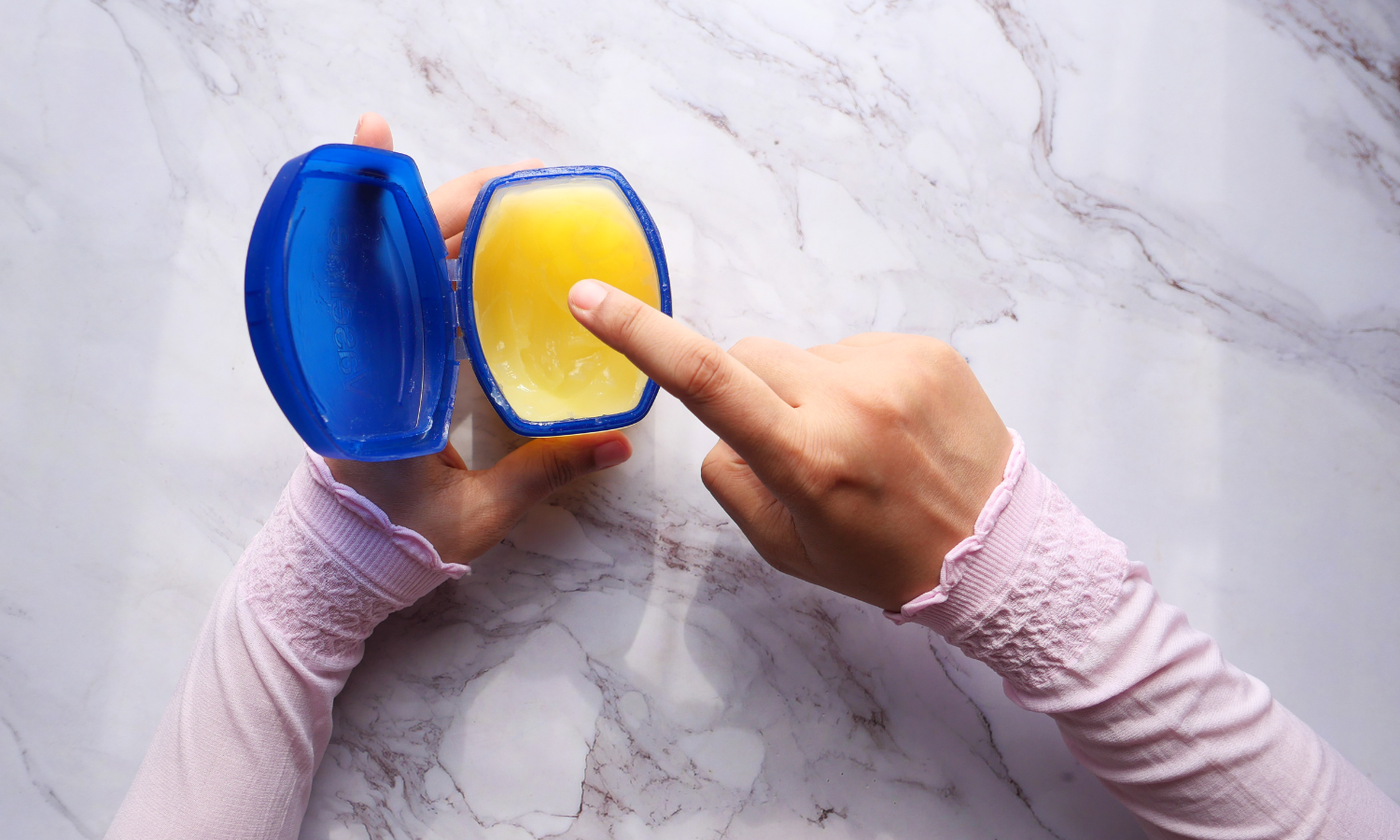
Of all the products that cycle in and out of eczema skincare recommendations, Vaseline — petroleum jelly — has remained constant for decades. Not because it's cheap or convenient (though it is both), but because petrolatum genuinely is one of the most effective occlusive emollient ingredients available, and the evidence behind it is more substantial than most people realise.
Vaseline & Eczema: Why Petroleum Jelly Is Still So Popular
Despite constantly changing skincare trends, Vaseline remains one of the most widely recommended products for eczema-prone skin.
Dermatologists have recommended petroleum jelly for decades because it helps protect the skin barrier and reduce moisture loss — two major issues linked to eczema.
And while modern skincare now includes countless creams, serums and “barrier repair” products, many experts still describe petrolatum as one of the most effective occlusive moisturising ingredients available.
Vaseline doesn’t “cure” eczema, but it may help protect dry, compromised skin barriers extremely effectively.
What petroleum jelly actually is and how it works
Petroleum jelly (petrolatum or white soft paraffin) is a semi-solid mixture of hydrocarbons derived from petroleum. Despite its industrial-sounding origin, it is one of the most well-refined and dermatologically tested skincare ingredients available — the pharmaceutical grade used in skincare products is highly purified.
Its mechanism of action is often oversimplified as "it sits on top of the skin and prevents water evaporating." This is partially correct but incomplete. Research has found that petrolatum is partially absorbed into the upper layers of the stratum corneum — the outermost skin layer — where it fills the gaps between skin cells and reduces water loss through the lipid matrix. It doesn't just sit on the surface; it integrates into the skin structure temporarily, providing more durable barrier support than a purely surface film.
This occlusive mechanism — reducing transepidermal water loss (TEWL) — is the central therapeutic action in eczema. Eczema-prone skin, particularly in those with filaggrin gene mutations, loses water through the barrier at a dramatically elevated rate compared to healthy skin. Reducing TEWL reduces dryness, itch, and the inflammatory responses triggered by dehydration of the barrier.
Why Dermatologists Often Recommend Petroleum Jelly
Petrolatum is often described as the “gold standard” occlusive ingredient because it’s extremely effective at preventing water loss from the skin.
Studies suggest petroleum jelly may help:
Improve skin hydration
Reduce dryness
Support barrier repair
Reduce flare frequency
Protect against irritation
The National Eczema Association also lists Vaseline Original Petroleum Jelly as suitable for eczema-prone skin.
Petrolatum remains popular because it’s simple, effective and generally very well tolerated.
The evidence behind petroleum jelly for eczema
Petrolatum has been used in dermatology for over 150 years, but modern research has provided specific supporting evidence:
Barrier repair. Multiple randomised controlled trials have demonstrated that consistent petroleum jelly application improves skin hydration, reduces TEWL, and supports barrier repair in atopic dermatitis.
The BARRIER trial. This landmark research found that prophylactic application of emollients — including petroleum jelly — to newborns at high risk of eczema (based on family history) significantly reduced eczema development in the first year of life. This is some of the strongest evidence available for the causal role of barrier support in eczema prevention.
Comparison with ceramide creams. A 2017 study published in JAMA Pediatrics compared petroleum jelly to branded ceramide-containing emollient for childhood eczema and found no significant difference in outcomes — despite a substantial difference in cost. Petrolatum was as effective as the more expensive formulation.
This is why dermatologists describe petroleum jelly as the "gold standard" occlusive for eczema. Not because of brand loyalty but because the evidence supports it.
How Vaseline Actually Works
One common misconception is that Vaseline “hydrates” the skin directly.
Instead, petroleum jelly works mainly by:
Creating a physical barrier over the skin
Locking existing moisture into the skin
Protecting against external irritation
This is why dermatologists often recommend applying it:
After moisturiser
After bathing
Onto slightly damp skin
Vaseline works best when there’s already moisture underneath it to seal in.
Slugging: what it is and whether it works for eczema
"Slugging" — applying petroleum jelly as the final skincare step overnight — became widely known through social media but reflects a genuine and established dermatological principle. The technique involves applying a thin layer of petrolatum after all other skincare products to lock in the hydration from preceding steps.
For eczema specifically, overnight slugging is particularly appropriate because:
The skin does most of its repair work during sleep. Nighttime is when TEWL is highest and emollient support is most beneficial. The greasy texture is less practically limiting during sleep. Applying over other eczema treatments (emollients, calcineurin inhibitors) seals them in and potentially improves their absorption.
It doesn't work on completely dry skin — petrolatum seals in moisture, it doesn't add it. The correct sequence is: bathe or shower, pat dry while skin is still slightly damp, apply any other emollient or treatment, and then apply petroleum jelly as the final occlusive layer.
Can Vaseline Make Eczema Worse?
For many people, no — but certain situations can become problematic.
Potential issues may include:
Trapping sweat and heat in hot weather
Feeling too greasy
Applying over infected or weeping eczema
Rare sensitivity reactions
Experts generally advise caution if eczema is:
Oozing
Infected
Extremely inflamed
because occlusive products may trap bacteria or moisture.
Vaseline usually works best on dry, non-infected eczema-prone skin.
The fire risk: essential to know
As covered in the paraffin eczema article in this series, petroleum jelly impregnated into fabric significantly lowers its ignition temperature and creates a genuine fire risk. This applies to Vaseline and all petroleum jelly products — not just prescription paraffin-based creams.
Keep away from naked flames, gas hobs, and cigarettes when using these products. Change and wash bedding and clothing regularly if using petroleum jelly overnight. Washing alone does not fully remove the impregnated residue, and fire risk from accumulated paraffin in fabric has caused deaths and serious injuries. This is documented in MHRA safety guidance.
This is not a reason to avoid petroleum jelly — its benefits for eczema are substantial — but it warrants the same fire safety precautions as any paraffin-based skincare product.
Petroleum jelly versus ceramide creams: which is better?
Both have a place. Pure petroleum jelly provides stronger occlusion. Ceramide-containing creams (CeraVe, Doublebase) provide barrier-replenishing lipids that petroleum jelly doesn't. Many people use both — ceramide cream as the primary daily moisturiser and petroleum jelly as a second-step occlusive seal, or petroleum jelly overnight on the driest areas.
The evidence suggests they are broadly equivalent in clinical outcome for eczema — the choice between them is largely practical (texture preference, daytime tolerability) rather than efficacy-based.'
Products worth considering
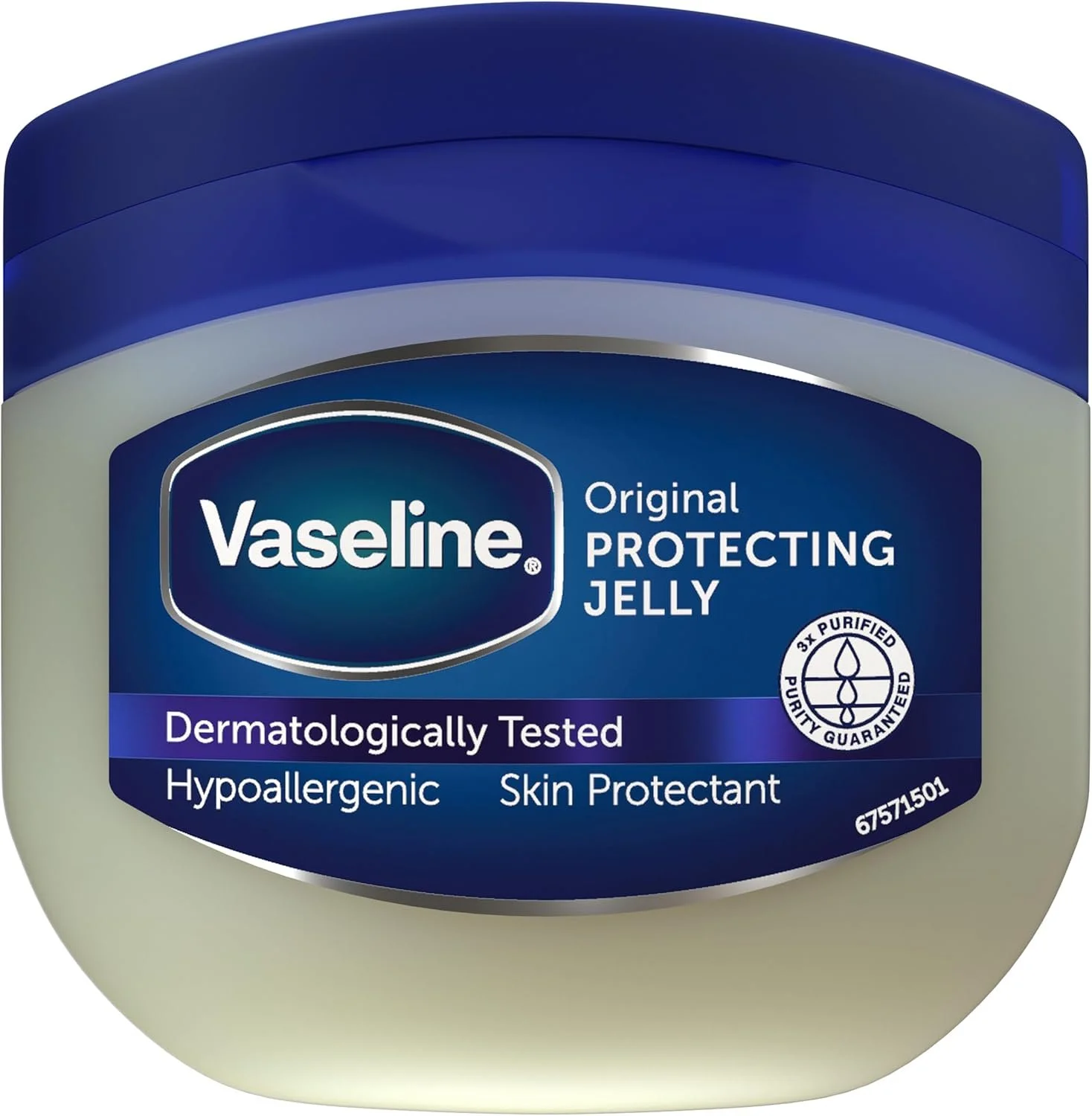
Vaseline Original Pure Petroleum Jelly
the pure, unscented product. Single ingredient: white petrolatum. No fragrance, no preservatives, no additives. This is the version most appropriate for eczema skin — simple, inert, and maximally well-tolerated. Available in large tubs that provide good value for consistent daily use.
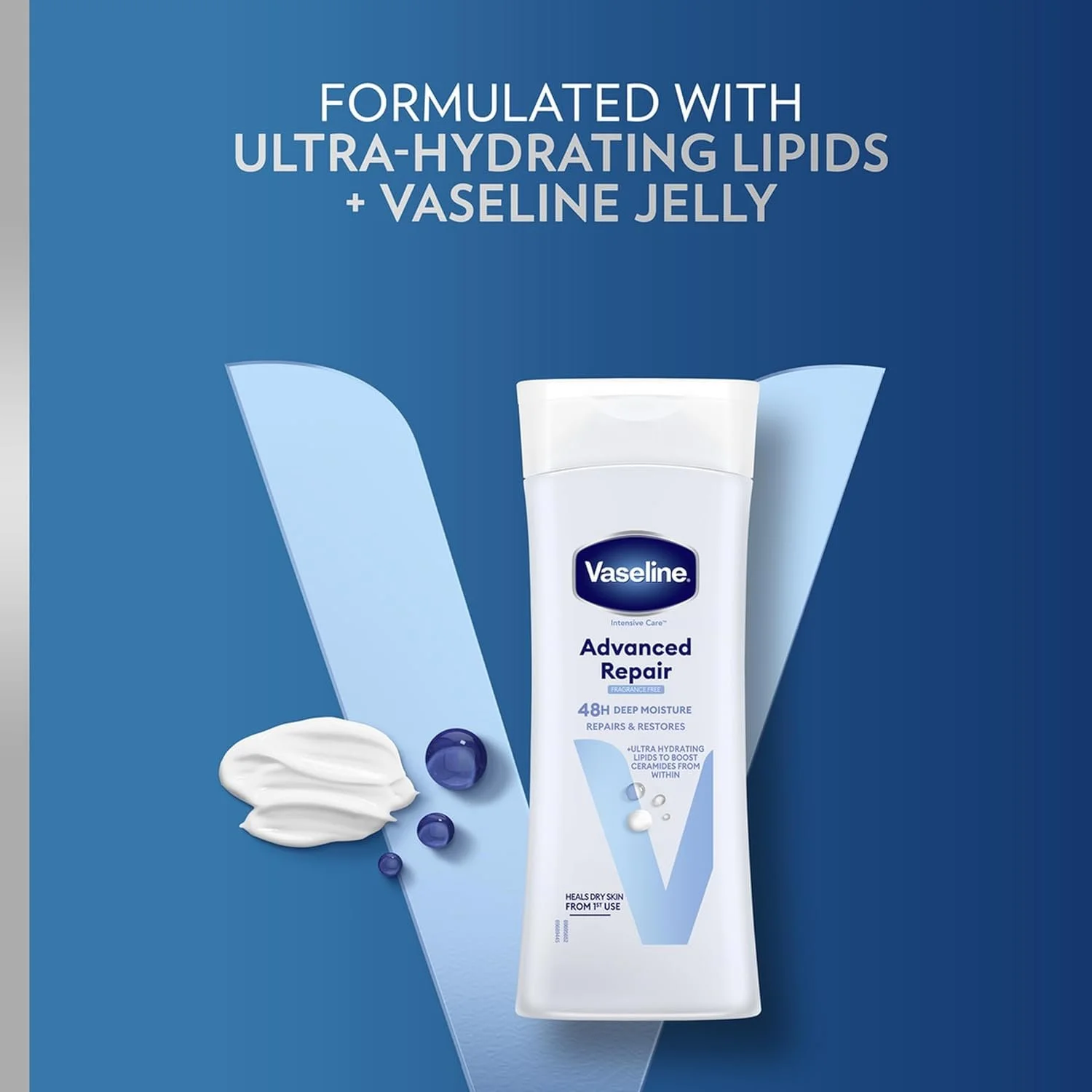
Vaseline Intensive Care Advanced Repair Body Lotion
a lighter petrolatum-containing lotion for daytime use on large body surface areas where pure petroleum jelly is impractically thick. Fragrance-free. The lighter texture makes it more practical as a daily moisturiser while retaining some of petrolatum's occlusive properties.
Why Fragrance-Free Products Matter
One major reason petroleum jelly works well for sensitive skin is because it’s usually:
Fragrance-free
Preservative-free
Minimal ingredient
Fragrance and harsh additives are common eczema irritation triggers.
Simpler formulas are often easier for reactive skin barriers to tolerate.
How to apply petroleum jelly effectively for eczema
Apply within two to three minutes of bathing. This is the most important practical instruction. The skin retains surface moisture after bathing; applying petrolatum while still slightly damp seals this hydration in. Waiting until the skin has dried completely means applying an occlusive layer over nothing.
Apply generously. A thin film provides minimal occlusion. The 500g weekly clinical guideline for emollient use in significant eczema applies here too — most people apply far less than is therapeutically effective.
Use overnight on particularly dry or problematic areas. The slugging approach is most useful for the driest, most persistently problematic patches — heels, elbows, areas behind the knees — where the extra occlusion overnight provides the most benefit.
Don't apply to infected or weeping eczema. Occlusion on infected skin can create a warm, moist environment that encourages bacterial growth. Infected eczema (weeping with honey-coloured crusting, increased warmth) warrants medical assessment before occlusive treatment.
Supplement Support for Dry, Sensitive Skin
Petroleum jelly addresses the surface dimension of eczema with remarkable effectiveness. The internal drivers — filaggrin-related barrier dysfunction, Th2 immune dysregulation, nutritional deficiencies — require complementary internal support.
Drought's Skin Support Formulaprovides 14 nutrients including vitamin D (filaggrin upregulation), zinc (immune regulation and barrier repair), and magnesium (inflammatory balance) — addressing what petroleum jelly cannot reach. Made in the UK, suitable for vegetarians, designed for consistent long-term daily use.
Common Mistakes People Make With Vaseline & Eczema
Applying It To Completely Dry Skin
Petrolatum seals moisture in — it doesn’t add water itself.
Using It On Infected Skin
Occlusives may trap bacteria if infection is present.
Forgetting Regular Moisturising
Barrier support works best consistently over time.
Expecting Vaseline To “Cure” Eczema
It supports symptoms and barrier repair but doesn’t change the underlying immune condition.
Vaseline is usually most effective as part of a broader gentle skincare routine.
FAQ
Is Vaseline good for eczema?
Yes because petroleum jelly is one of the most effective occlusive emollients for reducing transepidermal water loss — the primary physical problem of eczema-prone skin — with a strong evidence base including randomised controlled trials.
Does petroleum jelly help itchy skin?
Petroleum jelly may help reduce dryness and itchiness by protecting the skin barrier.
Can you use Vaseline on eczema flare-ups?
Many people use Vaseline on dry eczema-prone areas, although infected or weeping eczema may need different treatment approaches.
What is slugging for eczema?
Slugging involves applying petroleum jelly over moisturiser to help seal moisture into the skin overnight.
Is Vaseline safe for baby eczema?
Yes — pure petroleum jelly is one of the most appropriate products for infant eczema. The BARRIER trial specifically found protective benefits in high-risk newborns.
Can Vaseline cause eczema flares?
Pure petroleum jelly rarely causes reactions — it is chemically inert. Fragranced petroleum jelly products, however, can cause contact reactions and should be avoided.
Is slugging helpful for eczema?
Yes — applying petroleum jelly as the final overnight skincare step maximises barrier support during the skin's main repair window and is consistent with established dermatological practice.
Does petroleum jelly carry a fire risk?
Yes — paraffin-based products including petroleum jelly impregnate fabric and increase flammability. Avoid naked flames, change bedding regularly, and follow MHRA fire safety guidance.
Is Vaseline safe for sensitive skin?
Pure petroleum jelly is generally considered very gentle and hypoallergenic.
Should you apply Vaseline before or after moisturiser?
After. Petrolatum is an occlusive — it seals moisture in rather than adding it. Apply moisturiser first, then petroleum jelly as a final sealing layer.
Final Thoughts
Petroleum jelly remains one of the most evidence-backed eczema products available — not by default or inertia, but because multiple randomised controlled trials, including the BARRIER trial showing eczema prevention in high-risk infants, support its efficacy. Its mechanism — partial absorption into stratum corneum interstices to reduce TEWL — is more sophisticated than the "seals moisture in" oversimplification. Applied within two to three minutes of bathing, generously, with fire safety precautions for fabric contact, it provides the most reliable and cost-effective barrier protection available for eczema skin. Pure, fragrance-free petroleum jelly is the appropriate choice — not fragranced variants that introduce unnecessary contact allergen risk.
In Short
Vaseline is made from purified petroleum jelly (petrolatum)
It helps lock moisture into the skin
Petroleum jelly supports the skin barrier by reducing water loss
Many dermatologists recommend it for dry, eczema-prone skin
It works best when applied to damp skin after moisturising
While petroleum jelly won’t cure eczema itself, it may help reduce moisture loss, support barrier repair and protect irritated skin from further dryness and irritation.
At Drought Skin- Skin Support Supplements, the goal is to support dry, sensitive and eczema-prone skin from within alongside gentle skincare and supportive long-term skin habits.
Disclaimer: This article contains affiliate links. We earn a very small commission from each purchase made through these links. There is no additional cost to you. All products featured have been specifically selected as products we personally use and love. For further information, please see our disclaimer page.
