
Bath Salts for Eczema & Psoriasis: Dead Sea vs Epsom vs Colloidal Oatmeal & How to Use Them

Bath additives are one of the most commonly used home remedies for eczema and psoriasis — and for good reason. A warm bath done correctly can temporarily reduce itching, soften plaques, and provide genuine comfort during a flare. Done incorrectly — too hot, too long, with the wrong products, or without moisturising immediately afterwards — it can leave skin drier and more irritated than before.
The evidence behind different bath salt types varies considerably. Dead Sea salts have more published clinical data than most people realise. Epsom salts are popular but more contested. Colloidal oatmeal baths have some of the strongest evidence for eczema of any bath additive and are routinely undermentioned. Understanding what each does — and what it doesn't — makes the difference between a bath that genuinely helps and one that doesn't.
Can bath salts help eczema or psoriasis?
Bath salts may help soothe:
itching
dryness
irritation
scaling
especially during flare-ups.
However, the evidence is mixed, and some salts may actually worsen dryness or irritation in sensitive skin.
Why people use bath salts for skin conditions
Eczema and psoriasis both involve:
inflammation
skin barrier dysfunction
dryness and irritation
Bath salts are commonly used because they may:
soften plaques and flakes
calm itching
help the skin feel less irritated
Warm baths themselves can also feel relaxing and soothing.
Why bathing helps (and when it doesn't)
Before getting into specific products, it's worth understanding what a bath actually does for eczema and psoriasis skin — because the mechanism explains both why it helps and why it can go wrong.
Water temporarily hydrates the stratum corneum — the outermost layer of skin. This softens scaling, can temporarily reduce itch, and for psoriasis, helps loosen and remove thick plaques. Salt and mineral additives can modify this process, and some have additional anti-inflammatory or antimicrobial effects.
The catch is that this temporary hydration is followed by a drying phase as the water evaporates — and for skin with a compromised barrier (which is the defining feature of both eczema and psoriasis), this evaporation leaves the skin drier than before the bath unless an emollient is applied immediately afterwards to seal the moisture in.
This is why the post-bath emollient step isn't optional — it's the most important part of any therapeutic bathing routine. The bath creates the window; the moisturiser locks it in.
Temperature matters just as much. Hot water feels soothing in the moment but strips natural oils, accelerates transepidermal water loss, and can trigger histamine release in sensitive skin — all of which worsen eczema and psoriasis. Lukewarm water (comfortable to the touch, not steaming) is consistently better.

The most common bath salts used for eczema & psoriasis
1. Epsom salts
Epsom salt — magnesium sulphate — has a large and loyal following in the eczema and psoriasis community. It's inexpensive, widely available, and many people report genuine comfort benefits from Epsom salt baths.
The evidence is more modest than for Dead Sea salts. The primary proposed mechanism is transdermal magnesium absorption — the idea that magnesium is absorbed through the skin during bathing. As discussed in the magnesium article in this series, the evidence for this is genuine but contested: some studies confirm transdermal absorption, others find it minimal. The more reliably documented benefit is the softening effect of the dissolved salt on skin and scaling.
The caution with Epsom salts for eczema specifically is that higher concentrations can be drying — the osmotic effect of dissolved salts can draw water out of the upper skin layers in some formulations, which is the opposite of the intended effect for skin that is already losing water too quickly. Using a moderate amount (around 250–300g per bath) in lukewarm water, rather than high concentrations, reduces this risk.
For psoriasis, Epsom salts are generally well-tolerated and the scale-softening benefit is useful. For eczema, starting cautiously and monitoring how your skin responds over several sessions is the right approach — some people find them very soothing, others find they worsen dryness.
2. Dead Sea salts
Dead Sea salts have the strongest clinical evidence of any bath salt type for both eczema and psoriasis — and the reason is specific rather than generic.
The Dead Sea, at approximately 430 metres below sea level, has water with a mineral composition fundamentally different from ordinary sea water. Standard sea water is approximately 97% sodium chloride. Dead Sea water contains around 21% magnesium chloride, 26% potassium chloride, and smaller amounts of calcium chloride, bromide, and other minerals — with sodium chloride comprising only about 3% of total dissolved salts.
This difference matters. Several studies have found that it's specifically the magnesium and other mineral components — not the saltiness per se — that produce beneficial effects for skin conditions. Magnesium in particular has been shown to improve skin barrier function, enhance skin hydration, and reduce inflammatory markers.
A published randomised controlled trial found that forearm immersion in Dead Sea salt solution significantly reduced skin roughness, reduced redness, and improved skin barrier function compared to tap water in participants with atopic eczema. A separate study found improvements in psoriasis severity scores following Dead Sea salt bathing. Several studies have demonstrated that Dead Sea climatotherapy (combining salt bathing with UV exposure at the Dead Sea itself) produces significant and lasting improvements in psoriasis — though this combines multiple variables.
The practical implication: Dead Sea salt products genuinely have clinical rationale behind them, not just wellness marketing.
3.Colloidal oatmeal: underrated and well-evidenced
This is the bath additive most frequently missing from conversations about eczema, despite having some of the strongest published evidence.
Colloidal oatmeal is finely milled oat grain that disperses in water. It contains several compounds with documented skin benefits: avenanthramides (anti-inflammatory phenolic compounds unique to oats), beta-glucan (which supports skin barrier function and moisture retention), and starches and proteins that form a protective film on the skin surface.
Multiple clinical studies and systematic reviews have found that colloidal oatmeal baths reduce itch, redness, and skin dryness in atopic eczema. The US FDA has recognised colloidal oatmeal as a skin protectant for this reason. For children with eczema in particular — where many treatment options are limited — colloidal oatmeal baths are one of the most recommended non-prescription interventions.
For psoriasis, the evidence is more limited but the anti-inflammatory and barrier-supportive mechanisms are relevant. Colloidal oatmeal baths are generally very well-tolerated even on actively inflamed skin, making them a useful option during flares when other salt-based products might sting.
Recommended Products
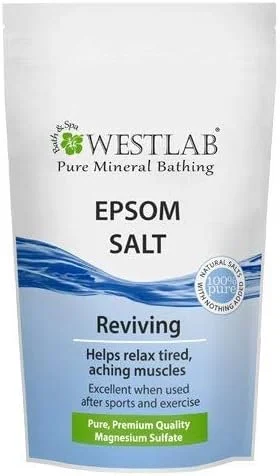
Westlab Reviving Epsom Salt
pure magnesium sulphate with no additives — the right choice if you prefer Epsom salts,
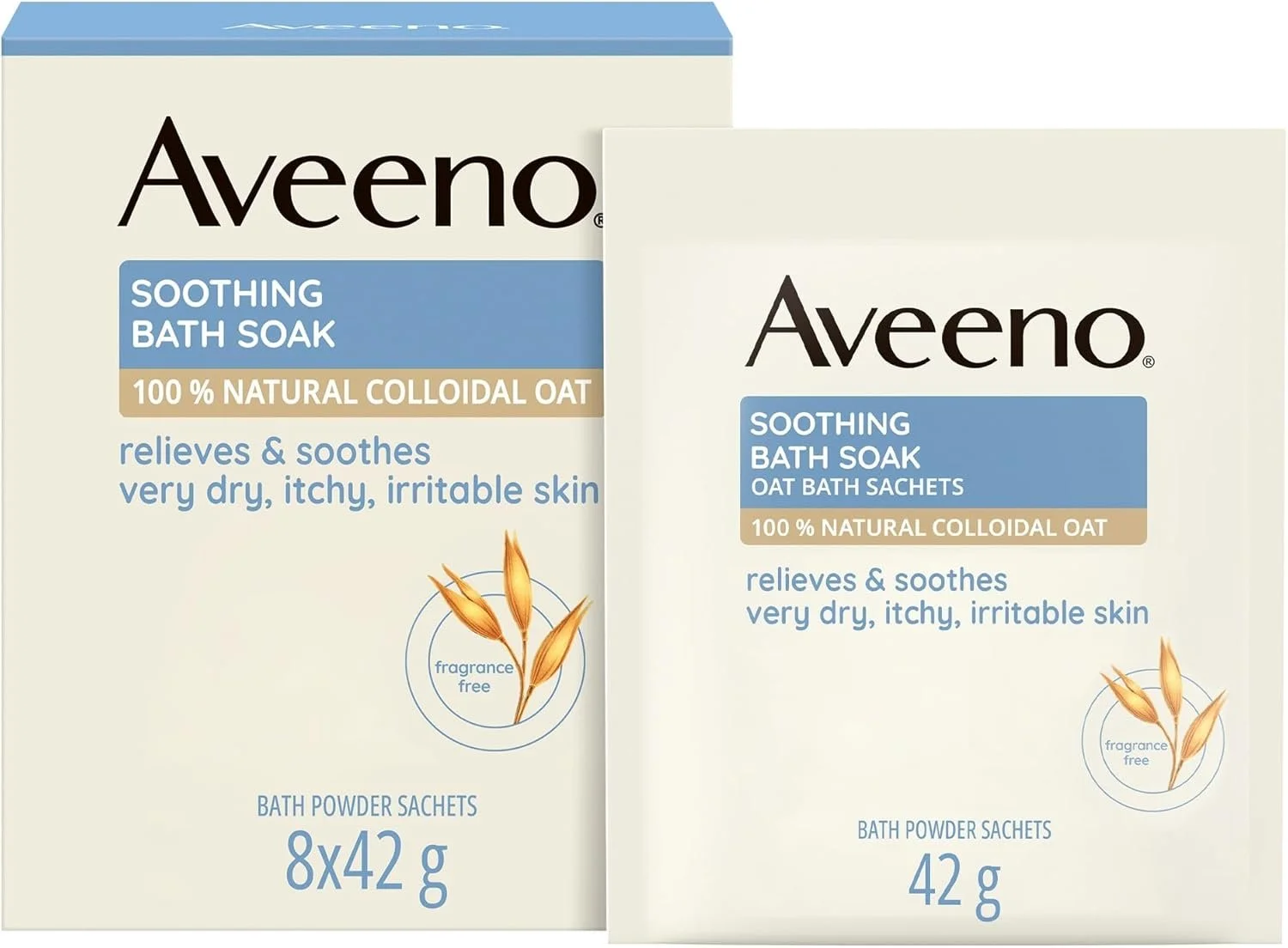
Aveeno Soothing Bath Treatment with Colloidal Oatmeal
individual sachets of colloidal oatmeal specifically formulated for skin conditions. Fragrance-free, disperses cleanly in bath water, and one of the most clinically referenced colloidal oatmeal bath products. A particularly good option for children with eczema and for adults with very sensitive or actively inflamed skin.
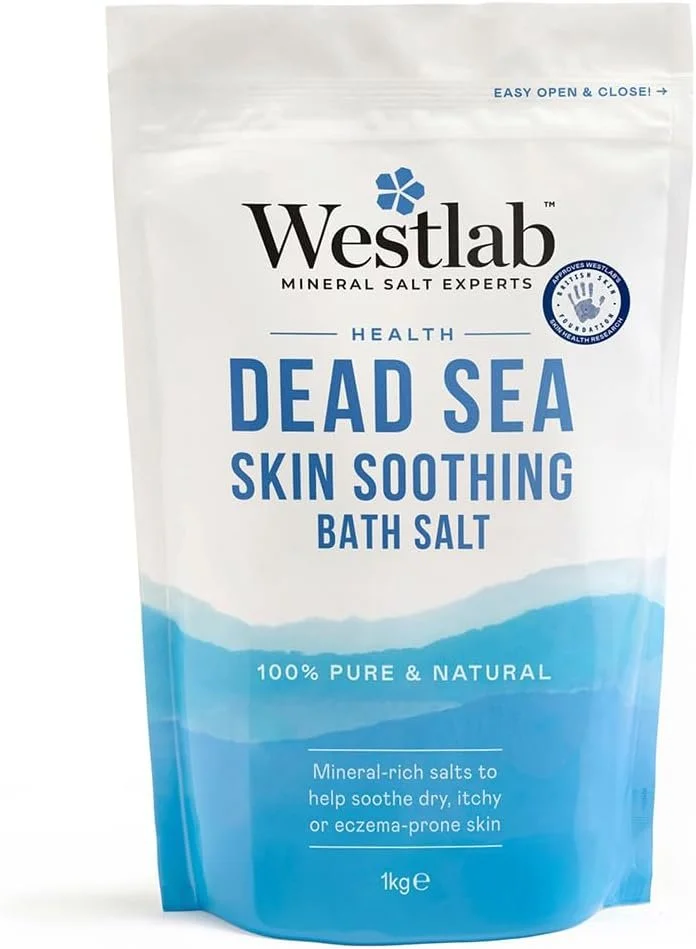
Westlab Reviving Dead Sea Salt
a straightforward, pure Dead Sea salt from a reputable UK supplier. No added fragrance or colourants, which is important for eczema and psoriasis skin. Use 250–500g per bath in lukewarm water, soak for 10–15 minutes, and apply emollient immediately after patting dry.
Other bath additives worth knowing about
Baking soda (sodium bicarbonate). Sometimes recommended for itch relief in eczema and psoriasis. It's alkaline, which may temporarily reduce the itch sensation, but its effect on skin pH makes it potentially disruptive for the slightly acidic environment that the skin barrier relies on. Occasional use in small amounts is generally fine; regular use is not recommended.
Bleach baths. Worth mentioning because they are actually recommended by some dermatologists for eczema — specifically to reduce Staphylococcus aureus colonisation on eczema-affected skin, which perpetuates the inflammation-barrier cycle. A highly diluted bleach bath (around a quarter cup of regular household bleach in a full bath — equivalent to the chlorine level in a swimming pool) has published evidence for reducing eczema severity in children. This is a medical recommendation rather than a home remedy, and should be discussed with a GP or dermatologist before use rather than self-initiated.
Essential oil bath additives. Lavender, chamomile, and tea tree are frequently added to bath products marketed at eczema and psoriasis. These carry fragrance allergen risk that is significant for both conditions — even essential oils that feel calming can be contact allergens for sensitised skin. Avoid fragrance-containing bath products for eczema and psoriasis.
How to use bath salts more safely
Use lukewarm water
around 35–37°C. Not hot. If the water is steaming or makes skin pink immediately on entry, it is too hot.
Hot water can worsen:
itching
dryness
inflammation
Keep baths short
10–15 minutes. Longer soaking increases water absorption into the stratum corneum, which causes swelling and can disrupt tight junction structure in the skin barrier
Moisturise immediately afterwards
This is extremely important.
Pat skin dry — do not rub. Apply emollient within two to three minutes, before the skin has fully dried. This is the step that converts a temporary benefit into a lasting one
Salt concentration
For Dead Sea salts, 250–500g in a full bath. For Epsom salts, 250–300g. More is not better — higher concentrations increase the drying risk.
During the bath
Move gently. Avoid vigorous rubbing or scratching affected areas. Allow the water to do its work passively.
Frequency
Two to three times per week is a reasonable starting point. Daily baths can be appropriate during significant flares if the post-bath emollient routine is consistently followed, but prolonged daily immersion without good barrier support can worsen dryness over time.
Patch test first
Especially if:
your skin is very sensitive
you have active eczema flare-ups
What bath salts can and can't do
Bath salts and additives are tools for symptom management — they reduce itch, soften scaling, and provide comfort during flares. They do not address the underlying immune dysregulation driving psoriasis, nor the barrier dysfunction that is the central problem in eczema. Symptoms will return after bathing, often within hours, unless the broader management approach addresses internal and external factors together.
The post-bath emollient step, consistent daily moisturising between baths, and addressing nutritional factors that support barrier function from within together produce more durable results than any bathing routine alone.
Skin support for eczema & psoriasis-prone skin
Bath additives work from the outside. The skin's ability to maintain hydration, regulate inflammation, and repair its barrier is also influenced by internal nutritional status — particularly zinc, vitamin D, magnesium, vitamin C, and biotin, which each play documented roles in these systems.
Drought's Skin Support Formula provides 14 of these nutrients in a daily supplement designed for reactive and sensitive skin — supporting the internal foundations that topical and bathing approaches build on. Made in the UK, suitable for vegetarians, formulated for consistent long-term daily use.
FAQs: Bath salts, eczema & psoriasis
Are Epsom salts good for eczema?
Cautiously useful — Epsom salts (magnesium sulphate) soften scaling and may provide transdermal magnesium absorption, but the osmotic effect of dissolved salts can worsen dryness in eczema skin at higher concentrations. Use 250–300g in a full bath of lukewarm water rather than high concentrations, limit soaking to 10–15 minutes, and apply a fragrance-free emollient within two to three minutes of leaving the bath. Epsom salts are generally better tolerated for psoriasis than for eczema — for eczema specifically, starting with a lower concentration and monitoring how your skin responds over several sessions is the right approach.
Do Dead Sea salts help eczema and psoriasis?
Yes — with the strongest published clinical evidence of any bath salt type for both conditions. Dead Sea salt's unique mineral composition (21% magnesium chloride, 26% potassium chloride, minimal sodium chloride) differs fundamentally from standard sea salt. A published RCT found significant improvements in skin roughness, redness, and barrier function in atopic eczema participants after forearm immersion in Dead Sea salt solution versus tap water. Separate studies show psoriasis severity score improvements. Use 250–500g per bath in lukewarm water, soak for 10–15 minutes, and apply emollient immediately on leaving. Dead Sea salts are the best-evidenced bath salt option for both conditions.
Are Dead Sea salts better than Epsom salts for eczema?
Yes — Dead Sea salts have published clinical evidence for improvements in skin hydration, barrier function, and inflammatory markers in atopic eczema. Epsom salts have genuine anecdotal support and some mechanistic rationale through transdermal magnesium absorption, but less clinical evidence. The mineral diversity of Dead Sea salts — magnesium, potassium, calcium, bromide — likely explains their stronger clinical performance compared to Epsom salts' single-mineral magnesium sulphate composition. For psoriasis specifically, both are useful for scale softening; for eczema, Dead Sea salts are the more evidence-supported choice.
What is the best bath additive for eczema?
Colloidal oatmeal and Dead Sea salts have the strongest evidence. Colloidal oatmeal is particularly well-evidenced — its avenanthramide content inhibits NF-κB inflammatory activity, beta-glucan supports barrier function and moisture retention, and the FDA has recognised it as a skin protectant since 2003. Multiple clinical studies show reductions in itch, redness, and dryness in atopic eczema. It is notably well-tolerated on actively inflamed skin when many other additives would sting — making it the best option for significant flares. Dead Sea salts are the best-evidenced salt specifically.
Can salt baths worsen eczema?
Yes — through four specific mechanisms. High salt concentrations have an osmotic drying effect that can worsen TEWL in already-compromised eczema barrier skin. Hot water strips natural oils, accelerates moisture loss, and triggers histamine release. Soaking longer than 15–20 minutes causes the stratum corneum to swell and disrupt tight junction structure. And skipping the post-bath emollient step leaves the skin drier than before bathing as absorbed water evaporates without being sealed in. Used correctly — moderate concentration, lukewarm temperature, 10–15 minutes, immediate emollient — the risk is minimal.
Are bleach baths safe for eczema?
When correctly diluted, yes — and they have published clinical evidence supporting their use. Bleach baths work by reducing Staphylococcus aureus colonisation on eczema-affected skin, which is one of the most consistently documented factors perpetuating the inflammation-barrier breakdown cycle in atopic eczema. The appropriate dilution is approximately one quarter cup of standard household bleach (5% sodium hypochlorite) in a full bath — equivalent to approximately 0.005% sodium hypochlorite, similar to a swimming pool. This is a medically recommended intervention rather than a home remedy — discuss with your GP or dermatologist before use rather than self-initiating, particularly for children.
Should I moisturise before or after a salt bath?
After — immediately after patting dry, within two to three minutes of leaving the bath. This is the most important step in any therapeutic bathing routine. Water temporarily hydrates the stratum corneum during bathing — but this is followed by a drying phase as water evaporates through the compromised barrier. Applying emollient within two to three minutes traps the surface moisture before evaporation occurs, converting a temporary benefit into a lasting one. Pat dry rather than rubbing — friction on eczema or psoriasis skin can trigger Koebner responses in psoriasis and worsen barrier disruption in eczema.
How often should I use bath salts for eczema or psoriasis?
Two to three times per week is a reasonable starting frequency for most people. Daily bathing is appropriate during significant flares provided emollient is applied consistently afterwards — but prolonged daily immersion without good barrier support can worsen dryness over time. For psoriasis specifically, daily therapeutic bathing with scale removal is sometimes used during active disease management. For eczema, consistency in post-bath emollient application matters more than bathing frequency — a twice-weekly bath with excellent emollient timing produces better outcomes than daily bathing with inconsistent moisturising.
Can I mix different bath salt types?
Yes — combining Dead Sea salts with colloidal oatmeal is a well-justified combination that addresses different mechanisms simultaneously. Dead Sea salts provide the mineral profile with documented barrier and anti-inflammatory effects; colloidal oatmeal provides avenanthramide anti-inflammatory activity and beta-glucan barrier support through a complementary pathway. Use standard amounts of each — 250g Dead Sea salts and one to two Aveeno sachets in a full bath — rather than increasing either concentration. Avoid adding essential oils or fragrance to the combination regardless of their anti-inflammatory reputation — lavender, chamomile, and tea tree carry specific contact allergen risks for both eczema and psoriasis that outweigh any soothing benefit.
Summary
Of the main bath salt options, Dead Sea salts have the most clinical evidence for both eczema and psoriasis, and colloidal oatmeal baths are one of the most well-supported interventions for eczema specifically — and are significantly underused. Epsom salts have genuine anecdotal support and some mechanistic rationale, but with more caution needed for eczema skin. For all types, temperature, duration, and immediate post-bath emollient application matter as much as what you add to the water. Used as part of a consistent routine rather than an occasional treatment, therapeutic bathing is a worthwhile complement to broader eczema and psoriasis management.
Written by the Drought Skin team — specialists in natural support for psoriasis, eczema and acne
Disclaimer: This article contains affiliate links. We earn a very small commission from each purchase made through these links. There is no additional cost to you. All products featured have been specifically selected as products we personally use and love. For further information, please see our disclaimer page.
