
Makeup with Eczema or Psoriasis: Safe Ingredients, What to Avoid & How to Apply Without Flaring
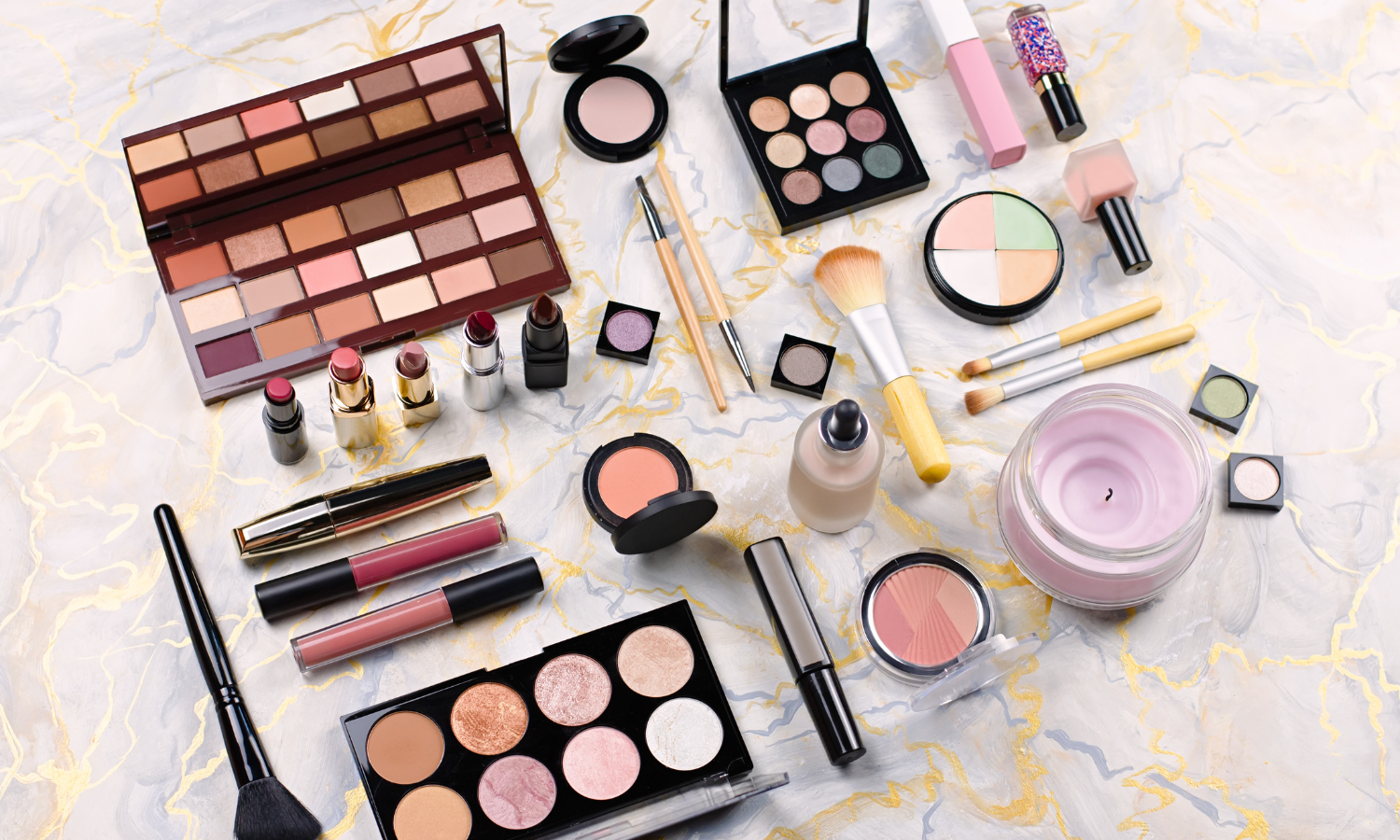
Wearing makeup with eczema or psoriasis is entirely possible — but the difference between a makeup routine that works beautifully and one that consistently triggers flares or worsens plaques often comes down to a handful of specific ingredient and application decisions rather than anything fundamental about makeup itself. Fragrance is the most common contact allergen in cosmetics, and eczema-prone skin's elevated permeability makes it significantly more susceptible to contact sensitisation than healthy skin — meaning a product that causes no reaction on a colleague or friend can produce a significant inflammatory response on yours. For psoriasis specifically, there's an additional consideration that almost no beauty content addresses: the mechanical friction of applying and removing foundation over psoriatic plaques carries a real Koebner risk, making application technique as important as product selection. Getting both right opens up the full range of makeup options rather than restricting them.
What makes makeup problematic for eczema and psoriasis skin
Both conditions compromise the skin barrier — eczema through filaggrin deficiency and Th2 immune dysregulation, psoriasis through abnormal keratinocyte turnover. A compromised barrier allows topical ingredients to penetrate more readily, which means contact allergens and irritants that might cause no reaction on intact skin can trigger significant reactions on eczema or psoriasis-prone skin.
The ingredients most likely to cause problems:
Fragrance and parfum — the most common contact allergen in cosmetics. Both synthetic and "natural" fragrance compounds are problematic. A product listed as "unscented" may still contain masking fragrance — look specifically for "fragrance-free" on the label.
Alcohol (denatured, ethanol, isopropyl) — drying and barrier-disrupting. Found in many setting sprays, lightweight liquid foundations, and primers. Particularly common in products marketed as "long-wearing" or "oil-control."
Essential oils — including tea tree, lavender, citrus, and peppermint. These are among the most documented contact allergens for eczema-prone skin, as covered in the tea tree oil and lavender eczema articles in this series. Finding them labelled as "natural ingredients" in makeup does not make them safe for reactive skin.
Certain preservatives — methylisothiazolinone (MI) and methylchloroisothiazolinone (MCI) are among the most significant contact allergens in cosmetics. The EU has restricted their use in leave-on products, but they remain in some rinse-off and older formulations.
Strongly pigmented dyes — some cosmetic dyes, particularly in lipsticks and eyeshadows, can be contact allergens. If specific products consistently trigger reactions, patch testing by a dermatologist can identify the culprit.
Eczema vs psoriasis: different challenges
Eczema makeup considerations:
The primary concern with eczema is the sensitised, reactive skin surface. The goal is minimal ingredient exposure — shorter ingredient lists, no fragrance, no essential oils. During flares, avoid makeup entirely on affected areas; the compromised barrier dramatically increases absorption of topical compounds, and some makeup ingredients genuinely worsen eczema flares rather than covering them.
When skin is calm, prep is everything. Apply a fragrance-free emollient and allow it to absorb for five to ten minutes before any makeup application. This provides a buffer between the skin surface and the makeup formulation.
Psoriasis makeup considerations:
The primary challenge with psoriasis is textural — raised, scaling plaques don't accept product smoothly, and powder products in particular settle into cracks and highlight scale rather than concealing it. Cream-based products blend more naturally over textured skin.
For plaques on visible areas (face, hands), a thin layer of emollient or petroleum jelly applied before foundation creates a smooth, slightly occlusive base that allows makeup to sit more evenly. The concealment goal is evening tone rather than completely covering texture — thicker application on plaques creates a different texture problem and rarely produces a natural result.
What makeup is best for eczema & psoriasis?
If you choose to wear makeup, look for:
Gentle, skin-friendly formulas
Fragrance-free (not just “unscented”)
Hypoallergenic
Non‑comedogenic
Alcohol-free
Minimal ingredient lists
Hydrating ingredients
Hyaluronic acid
Ceramides
Squalone
Zinc oxide (for SPF)
Glycerin
Cream-based products
Less drying than powders
Sit better on textured skin
Blends more naturally
Gives a dewy, healthy finish
Cream formulas are generally preferred because powders can highlight flaking and dryness.

Ingredients to avoid
Some ingredients are more likely to trigger irritation:
Fragrance (very common trigger)
Alcohol-based formulas
Essential oils
Harsh preservatives
Strong actives (like exfoliating acids)
If you’re unsure, patch‑test new products on your wrist or jawline first.
Even small amounts can trigger flare-ups in sensitive skin.
Products worth considering
(Affiliate links — we may earn a small commission at no extra cost to you.)
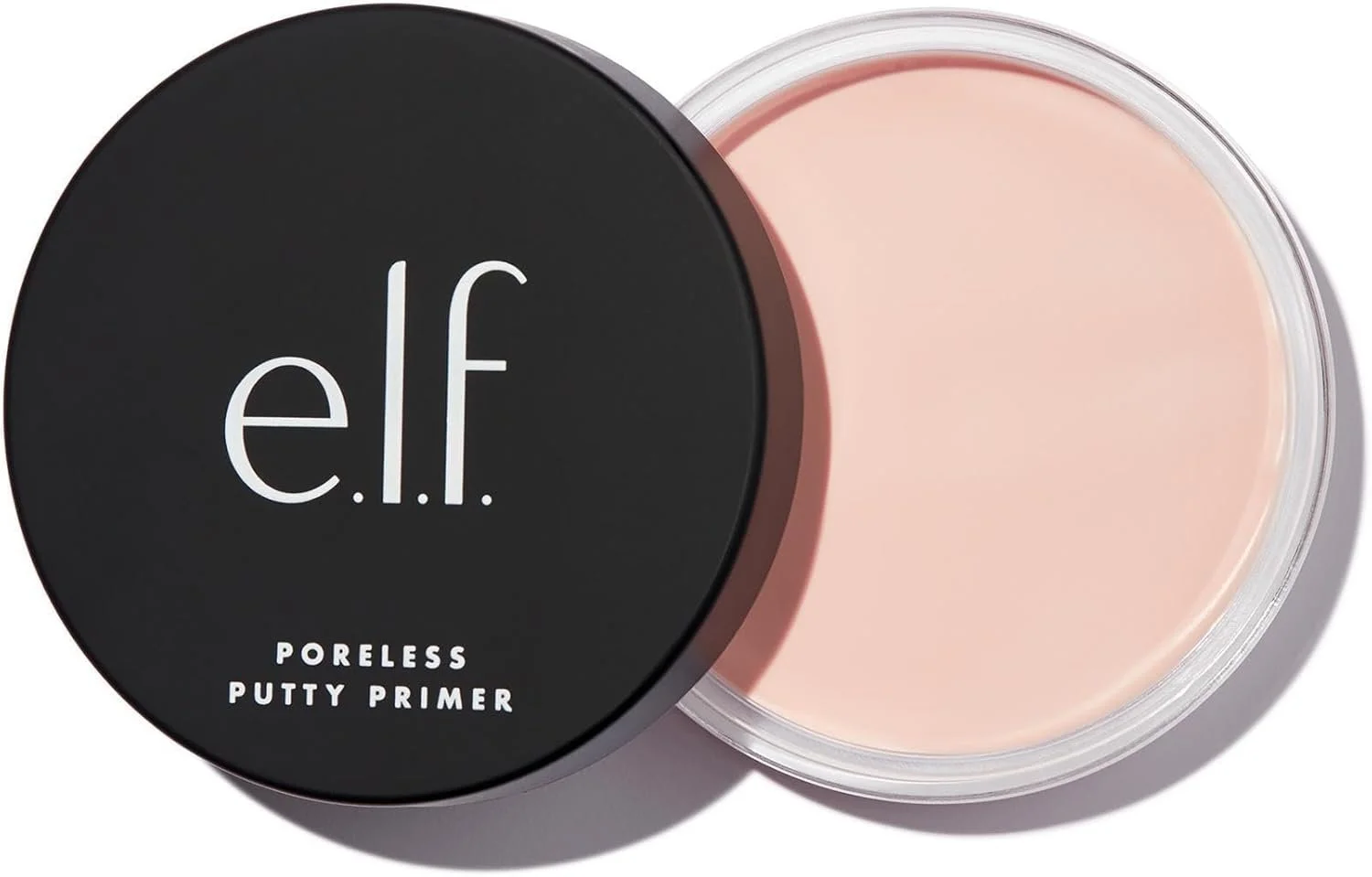
e.l.f. Poreless Putty Primer
a fragrance-free, silicone-based primer that smooths texture and creates an even base without the heavy occlusion that worsens eczema and psoriasis-prone skin. The silicone base fills surface texture differences between affected and unaffected skin — helping foundation apply more evenly across areas where psoriatic scale or eczema dryness creates uneven surface texture. Apply a thin layer to moisturised skin before foundation — a small amount goes significantly further than most primers. One of the most consistently well-reviewed primers for sensitive skin on Amazon UK.
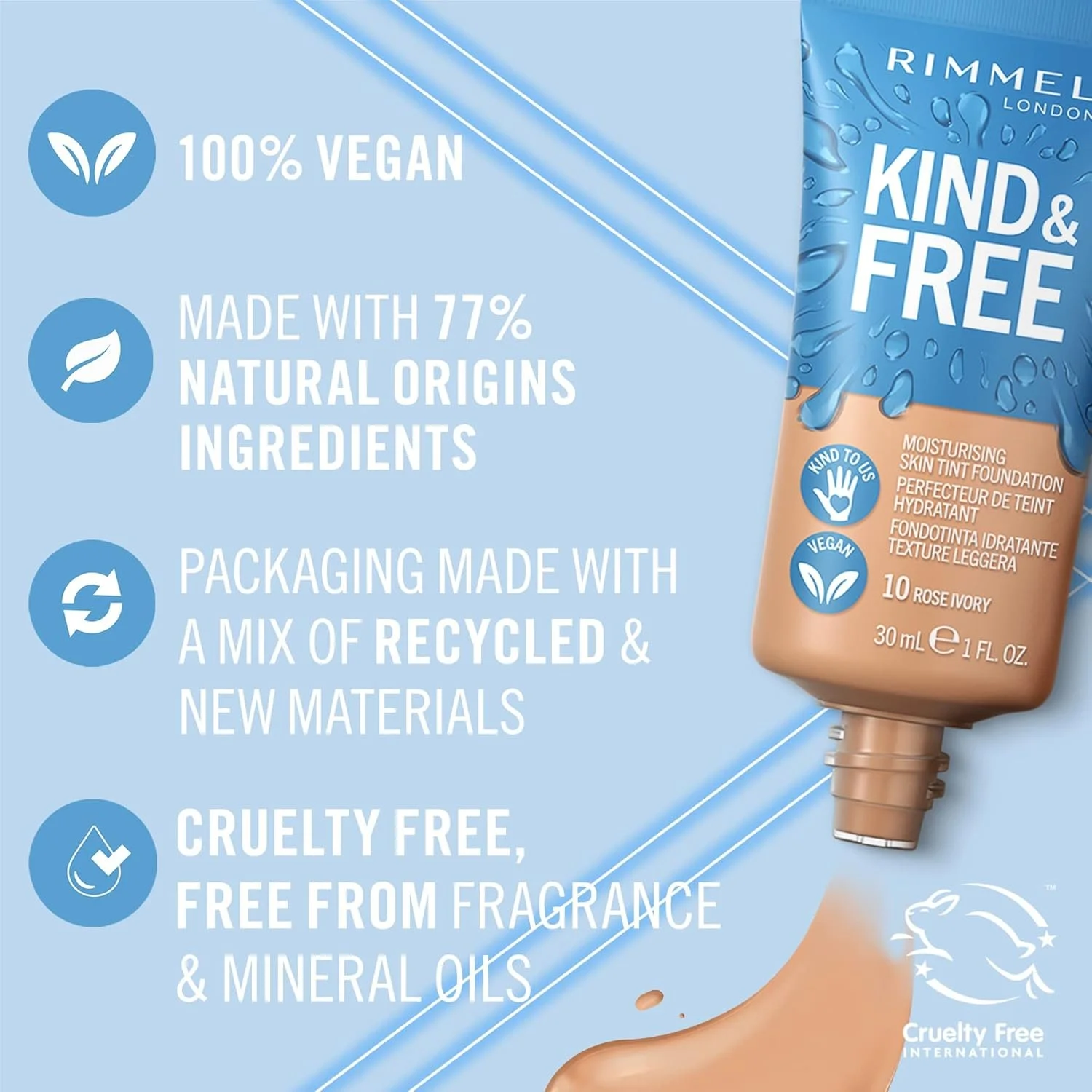
Rimmel Kind + Free Moisturising Skin Tint Foundation
skin tint rather than a full-coverage foundation. Lower coverage is more appropriate for sensitive and reactive skin — it minimises the product load on the skin surface. The moisturising formula suits eczema-prone skin better than matte or long-wear alternatives.
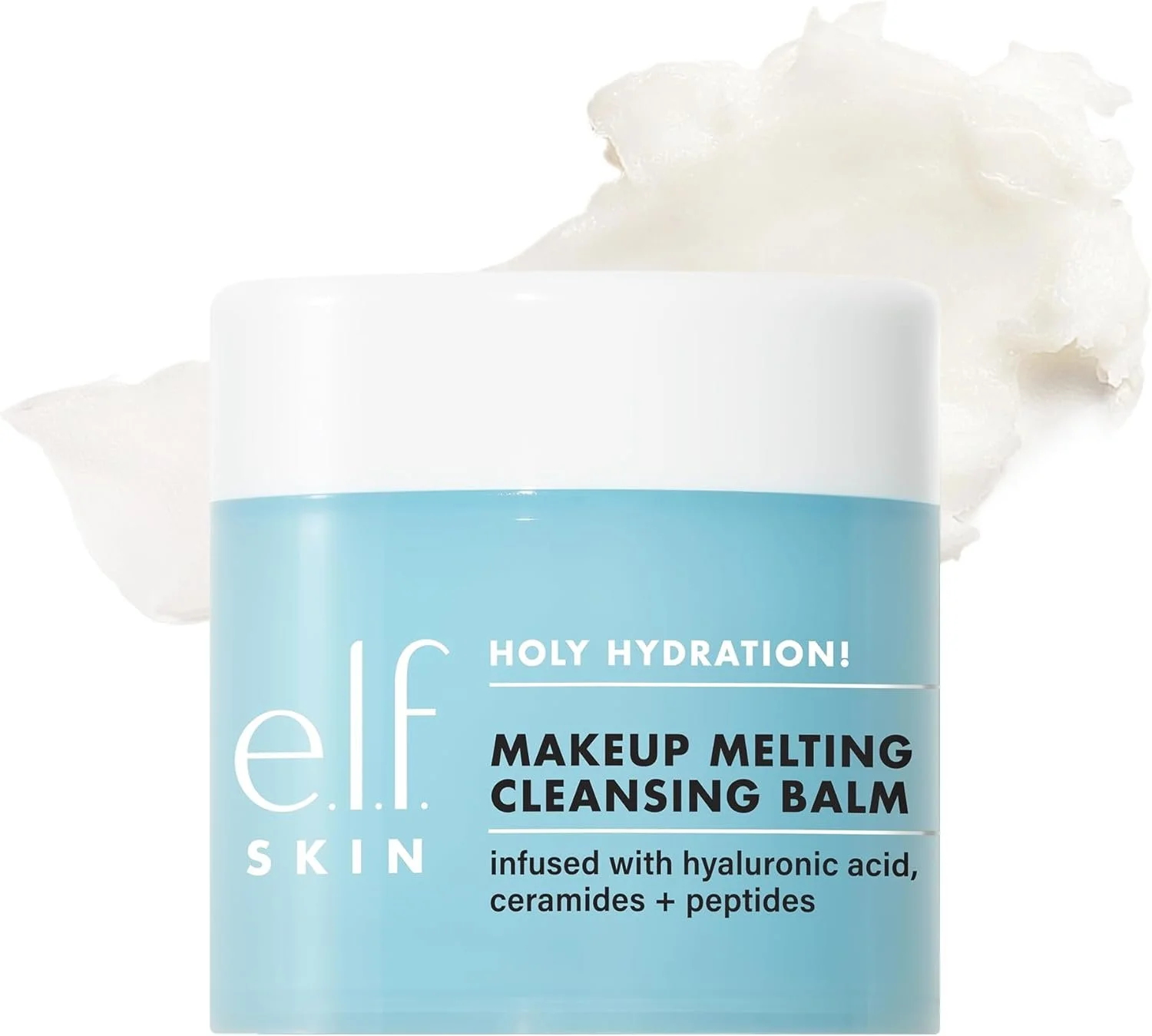
e.l.f. Holy Hydration! Makeup Melting Cleansing Balm
a cleansing balm for gentle makeup removal. Cleansing balms emulsify with water and lift makeup without requiring friction or stripping — significantly gentler on eczema and psoriasis skin than micellar wipes or foaming cleansers applied with pressure.
Application technique: what matters most
Prepare the skin first. Apply a fragrance-free emollient and allow it to absorb for five to ten minutes. For psoriasis plaques that need covering, a thin layer of petroleum jelly applied specifically over the plaque before emollient provides a base for smoother product application.
Use clean, soft tools. Dirty brushes and sponges harbour bacteria that exacerbate both eczema and acne-like psoriasis presentations. Wash brushes weekly with a fragrance-free mild cleanser.
Pat, don't rub. Rubbing generates friction that worsens eczema and can trigger Koebner reactions in psoriasis. Dabbing or pressing product into the skin with a sponge or fingertip is the appropriate technique.
Apply in thin layers. Multiple thin layers applied gently are more effective and less damaging than one thick layer applied with pressure.
Less coverage is more. Heavy full-coverage foundation on eczema or psoriasis-affected skin typically looks worse than lighter coverage — texture shows through, the product creases, and the heavier application requires more friction to apply and more effort to remove. A skin tint or tinted moisturiser that evens tone without attempting to conceal texture entirely produces a more natural result.
Managing Flare‑Ups When You Still Want to Wear Makeup
If you’re having an active flare:
keep makeup minimal
avoid foundation on open or cracked skin
use a tinted moisturizer instead of full coverage
treat dry patches with a thick moisturiser before applying anything
On psoriasis plaques, a thin layer of balm or ointment can help makeup glide more smoothly.
Makeup removal: as important as application
Use a cleansing balm or gentle cream cleanser. These dissolve makeup without requiring friction, alcohol, or surfactants that strip the barrier. Apply to dry skin, massage gently, then emulsify with warm water.
Never use makeup wipes. Wipes require vigorous rubbing to remove makeup and contain preservatives that are common contact allergens. They damage the barrier even on unaffected skin — on eczema or psoriasis skin the effect is significantly worse.
Rinse with lukewarm, not hot, water. Heat triggers histamine release and worsens both itch and inflammation.
Moisturise immediately. The two-to-three minute post-cleanse window applies here as well — apply fragrance-free emollient while the skin is still slightly damp after rinsing.
Skin support for eczema & psoriasis-prone skin
A skin barrier that is nutritionally well-supported — adequate vitamin D, zinc, omega-3s, and magnesium — tolerates makeup better, reacts less strongly to minor irritants, and heals faster when reactions do occur.
Drought's Skin Support Formulaprovides 14 nutrients selected for their roles in skin barrier function and immune regulation — supporting the internal foundations that make makeup more comfortable on sensitive skin. Made in the UK, suitable for vegetarians, designed for consistent long-term daily use.
When to skip makeup entirely
During active flares with inflamed, cracked, or weeping skin — regardless of how much you want the coverage. Makeup on acutely compromised skin delays healing and introduces irritant and allergen exposure at the worst possible time. A commitment to your skin during a flare rather than covering it is the approach that allows you to wear makeup more comfortably when skin is calm.
FAQs: Makeup, eczema & psoriasis
Is makeup bad for eczema and psoriasis?
Not inherently — the act of wearing makeup isn't the problem. The triggers are specific ingredients rather than makeup itself. Fragrance is the most consistently documented contact allergen in cosmetics and the most common makeup trigger for eczema and psoriasis flares — operating through Type IV delayed hypersensitivity that causes reactions 48–72 hours after exposure rather than immediately. Alcohol dehydrates and disrupts the ceramide-rich lipid layer eczema and psoriasis skin is already short of. Harsh preservatives including methylisothiazolinone are documented sensitisers. Removing these three ingredient categories from your makeup routine eliminates most of the trigger risk while keeping makeup use intact.
Can makeup cause eczema and psoriasis flare-ups?
Yes — through contact allergen sensitisation rather than a direct inflammatory effect. Fragrance compounds (particularly linalool, limonene, and cinnamal) penetrate eczema and psoriasis skin's compromised barrier more efficiently than intact skin, reaching immune cells in the dermis and triggering Type IV hypersensitivity reactions. The delayed reaction timing — peaking at 48–72 hours after application — makes it easy to attribute the flare to something else rather than the product applied two days earlier. Systematic elimination of fragranced products one at a time, rather than removing all makeup simultaneously, identifies which specific product is the trigger while maintaining the rest of the routine.
What is the difference between fragrance-free and unscented makeup?
This is one of the most practically important distinctions in makeup for sensitive skin. Fragrance-free means the formulation contains no fragrance compounds — the most reliable choice for eczema and psoriasis-prone skin. Unscented means masking fragrance has been added to neutralise the smell of other ingredients — the product may contain multiple fragrance compounds that are simply undetectable by smell. "Unscented" is not the same as fragrance-free and is not appropriate for people with fragrance contact sensitivity. Always check the ingredient list for "parfum," "fragrance," or specific EU fragrance allergens (linalool, limonene, geraniol, cinnamal) rather than relying on "unscented" label claims.
What type of makeup is best for eczema and psoriasis?
Fragrance-free, alcohol-free, minimal ingredient list formulations with hydrating actives rather than occlusive film-formers. Cream and skin tint formats are more appropriate than powder for both conditions — powder highlights dry patches and psoriatic scale rather than concealing them. Mineral foundations containing titanium dioxide and zinc oxide are well-tolerated by most people with eczema and psoriasis — zinc oxide specifically has mild antimicrobial activity against S. aureus relevant to eczema. For psoriatic scale specifically — applying a thin layer of fragrance-free balm or petroleum jelly to plaque areas before foundation creates a smoother surface and reduces the scale-catching effect that most foundations produce without primer.
Should I stop wearing makeup during a flare-up?
During active, inflamed, cracked, or weeping flares — yes for the affected areas specifically. Applying foundation over broken eczema skin delays healing by occluding the repair process and introduces additional ingredient allergen exposure to the most permeable and most reactive skin state. For psoriatic flares — avoid makeup directly over newly formed or actively inflamed plaques but unaffected skin can be covered normally. Keep the routine minimal during flares — tinted moisturiser rather than full foundation, no setting powder, no eyeshadow over periorbital eczema. Resume full routine only when affected areas have settled completely rather than partially.
How should I remove makeup with eczema or psoriasis?
Cleansing balm applied to dry skin before water contact is the most appropriate removal method — it emulsifies with product and lifts it without the friction that wipes require. Makeup wipes are the most consistently barrier-damaging removal method — the mechanical friction on eczema and psoriasis-prone skin from wiping across affected areas causes the same Koebner-risk mechanical trauma as other friction sources. After cleansing balm, a gentle low-pH gel cleanser removes the emulsified product without stripping the acid mantle. Pat dry with a soft cotton cloth rather than rubbing, and apply fragrance-free emollient within two to three minutes while skin is still slightly damp — the removal routine ends with the same barrier-protective step as the rest of the eczema and psoriasis skincare routine.
Can I wear makeup over prescribed topical treatments?
Wait at least 20–30 minutes after applying prescribed topical steroids or calcineurin inhibitors before applying makeup over the same area. Applying foundation immediately over a topical steroid reduces the treatment's contact time with the skin and distributes it unevenly — reducing efficacy. Tacrolimus and pimecrolimus (calcineurin inhibitors) specifically increase photosensitivity — apply SPF before any tinted base product when using these treatments. Never apply makeup over wet emollient — allow the emollient to absorb partially (two to three minutes) before applying any tinted product over it, as foundation applied over wet emollient tends to slip and provides uneven coverage.
Summary
Makeup is compatible with eczema and psoriasis — but the approach matters significantly. Fragrance-free, minimal-ingredient, cream-based formulas cause the fewest problems. Essential oils, alcohol, and fragranced products are the primary triggers. Eczema skin needs minimum ingredient exposure and careful barrier preparation; psoriasis skin benefits from emollient base layers that allow product to sit more evenly over textured plaques. Gentle application with clean tools, thin layers, and a cleansing balm for removal preserves the barrier through the process. And during active flares, giving skin a break from makeup is the decision that allows you to wear it more comfortably when skin settles.
Written by the Drought Skin team — specialists in natural support for psoriasis and eczema.
Disclaimer: This article contains affiliate links. We earn a very small commission from each purchase made through these links. There is no additional cost to you. All products featured have been specifically selected as products we personally use and love. For further information, please see our disclaimer page.
-
Facial Eczema: Types, Causes, Treatments & the Best Skincare Routine
Tea Tree Oil for Eczema: Benefits, Risks & How to Use It
Lavender for Eczema: Benefits, Risks & the Contact Allergy Issue
Fake Tan with Psoriasis or Eczema: Safe Products, Prep & Technique
Moisturising for Eczema: How to Do It Properly & What Actually Works
