
Facial Psoriasis: Common Sites, Treatment Safety & What Actually Helps

Facial psoriasis is more common than many people with psoriasis realise — it affects approximately 50% of people with the condition at some point. It also presents specific challenges that body psoriasis doesn't: the face is constantly exposed, the skin is significantly thinner than on the trunk or limbs, and the usual treatment hierarchy — moving to more potent preparations when mild ones fail — is constrained by the risk of side effects on delicate facial tissue.
Where facial psoriasis most commonly appears
Facial psoriasis has characteristic distribution patterns that reflect sebum-rich areas and sites of mechanical stress:
Forehead and hairline. One of the most common facial sites, often appearing as redness and scaling at the hairline or across the lower forehead. Psoriasis here often extends from scalp psoriasis and represents the "beyond-the-hairline" extension that is one of its distinguishing features from seborrhoeic dermatitis.
Eyebrows. Covered in depth in the eyebrow psoriasis article in this series. The eyebrow area overlaps significantly with seborrhoeic dermatitis — distinguishing between the two by scale texture (silvery-white and adherent in psoriasis; greasier and yellowish in seborrhoeic dermatitis) guides treatment.
Sides of the nose and nasolabial folds. Sebum-rich areas where both psoriasis and seborrhoeic dermatitis commonly occur. The nasolabial fold (the crease between nose and mouth) is particularly prone to seborrhoeic involvement.
Around the ears. Psoriasis frequently affects the skin around the external ear canal, behind the ears, and on the ear lobes. Like scalp psoriasis, this area can produce significant scale buildup.
Cheeks and chin. Less common than the sebum-rich areas above, but plaque psoriasis can affect the cheeks and chin, particularly in people with widespread disease.
Eyelids. The most delicate site on the face, covered in detail in the eyelid eczema article. The treatment constraints here are the strictest — calcineurin inhibitors are the preferred option and topical steroids carry intraocular pressure risks.
Why treatment is more constrained on the face
Facial skin is significantly thinner than body skin — particularly around the eyes and in skin folds. This has direct consequences for what can be used safely:
Topical steroids are appropriate only at low potency. Hydrocortisone 1% is the standard for facial use — moderate and potent topical steroids (betamethasone, clobetasol) risk skin thinning, telangiectasia, perioral dermatitis, and around the eyes, raised intraocular pressure leading to glaucoma. Short courses only, under medical guidance.
Calcineurin inhibitors are the preferred option for chronic facial psoriasis. Tacrolimus ointment (Protopic) and pimecrolimus cream (Elidel) are steroid-sparing, don't cause skin thinning, and are appropriate for sensitive facial areas including around the eyes. For chronic or frequently recurring facial psoriasis that requires more than occasional short-course topical steroids, a GP or dermatologist prescription for a calcineurin inhibitor is the appropriate escalation. Tacrolimus 0.1% is used for adults; 0.03% for children and sensitive areas.
Vitamin D analogues (calcipotriol) — limited facial use. Generally appropriate for some facial psoriasis sites but should be used with caution around the eyes and avoided on eyelids. Discuss with a dermatologist.
Coal tar — generally avoid on the face. The photosensitising properties and potential irritation on delicate facial skin make it inappropriate for facial use. It remains appropriate for scalp and body psoriasis.
The seborrhoeic dermatitis diagnostic overlap
Facial psoriasis and seborrhoeic dermatitis are two distinct conditions that affect the same facial sites, have overlapping symptoms, and are frequently confused. They require different treatment — antifungal therapy for seborrhoeic dermatitis, psoriasis-specific treatment for plaque psoriasis. Sebopsoriasis (co-existing features of both) is a recognised entity.
Key distinguishing features:
Psoriasis produces well-defined plaques with silvery-white, dry, adherent scale on a red base — often extending beyond the hairline. Seborrhoeic dermatitis produces greasier, yellowish scale with less distinct borders — concentrated in sebum-rich areas (nose folds, eyebrows) and often accompanied by scalp dandruff. Seborrhoeic dermatitis responds to antifungal treatments (ketoconazole, zinc pyrithione); psoriasis does not.
A GP or dermatologist can usually distinguish these clinically. When both are present, treatment may need to address both components.
A gentle skincare routine for facial psoriasis
Cleanser. Fragrance-free, soap-free, gentle cream or gel cleanser. Lukewarm water only — hot water causes vasodilation and worsens itch and redness. Twice daily maximum.
A note on salicylic acid cleansers. The original article recommends a salicylic acid face cleanser for facial psoriasis. This is counterproductive — as covered in the salicylic acid and eczema article, salicylic acid's keratolytic action disrupts the organised lipid structure of already-compromised skin, worsening barrier function rather than improving it. Avoid salicylic acid on facial psoriasis skin.
Emollient. Applied immediately after cleansing, while skin is still slightly damp. Fragrance-free is essential. For scale management, urea at 5–10% concentration is appropriate on the facial skin of adults — more targeted scale removal than emollient alone, with the simultaneous humectant benefit that makes it more appropriate for the face than salicylic acid.
SPF. Mineral sunscreen daily — zinc oxide or titanium dioxide are better tolerated on psoriasis-prone facial skin than chemical filter formulas. Sun protection is important year-round; phototherapy benefits psoriasis at therapeutic doses but sunburn worsens it.
Makeup. As covered in the makeup eczema and psoriasis article in this series — fragrance-free, mineral-based where possible. Apply over emollient once it has absorbed. Remove with a gentle fragrance-free cleansing balm.
Recommended Products
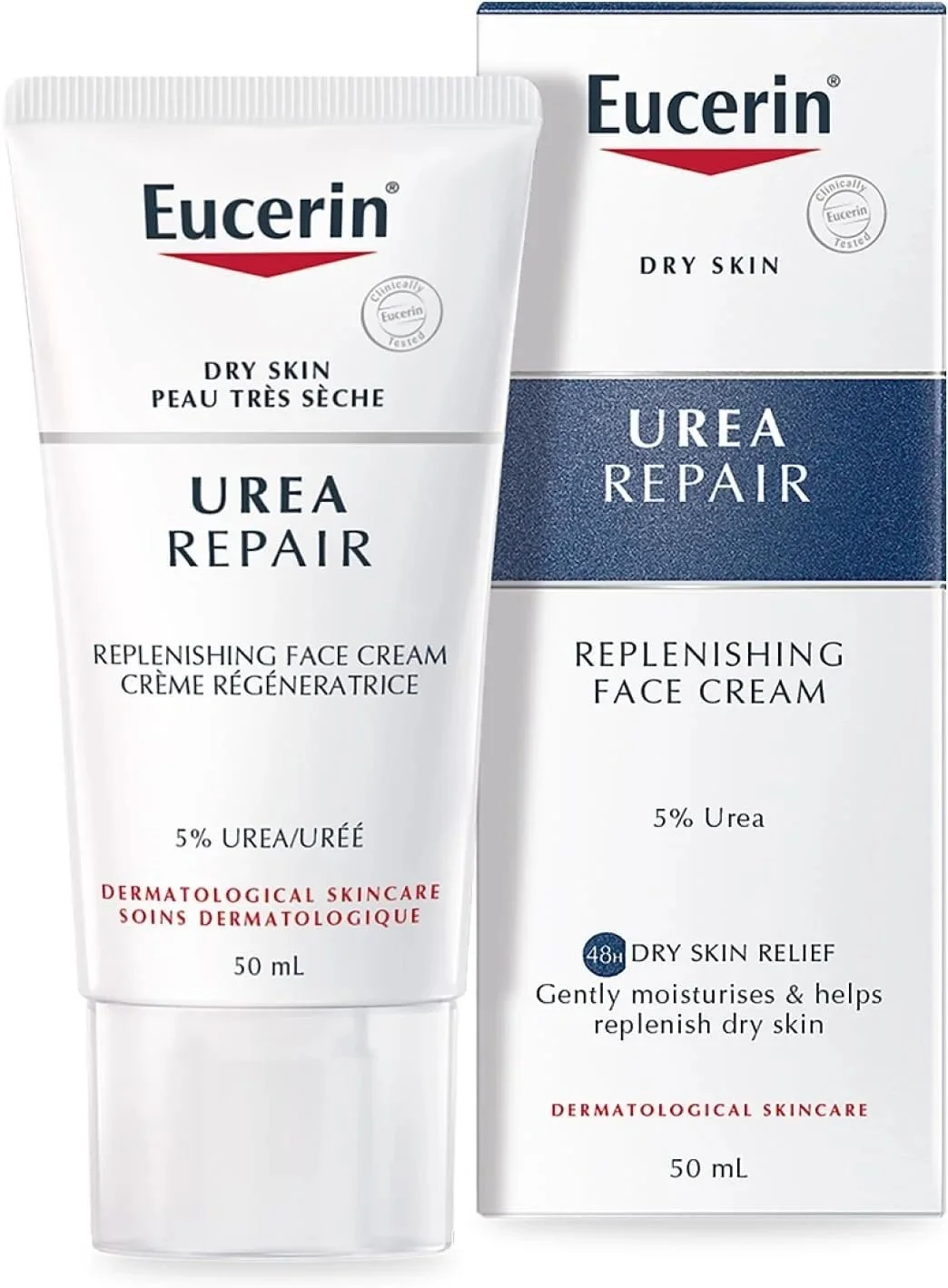
Eucerin UreaRepair PLUS Face Cream 5% Urea
a dermatologist-formulated facial urea preparation providing simultaneous keratolytic and humectant activity appropriate for the face's thinner, more sensitive skin. At 5% concentration, urea progressively softens and loosens the adherent psoriatic scale characteristic of forehead, eyebrow, and nasolabial fold psoriasis without the barrier-disruption risk of salicylic acid or high-concentration AHAs on already-compromised facial skin. The humectant component draws moisture into the stratum corneum as it loosens scale — addressing both the scale and the dryness simultaneously. Apply after cleansing once daily on non-flaring facial psoriasis skin.
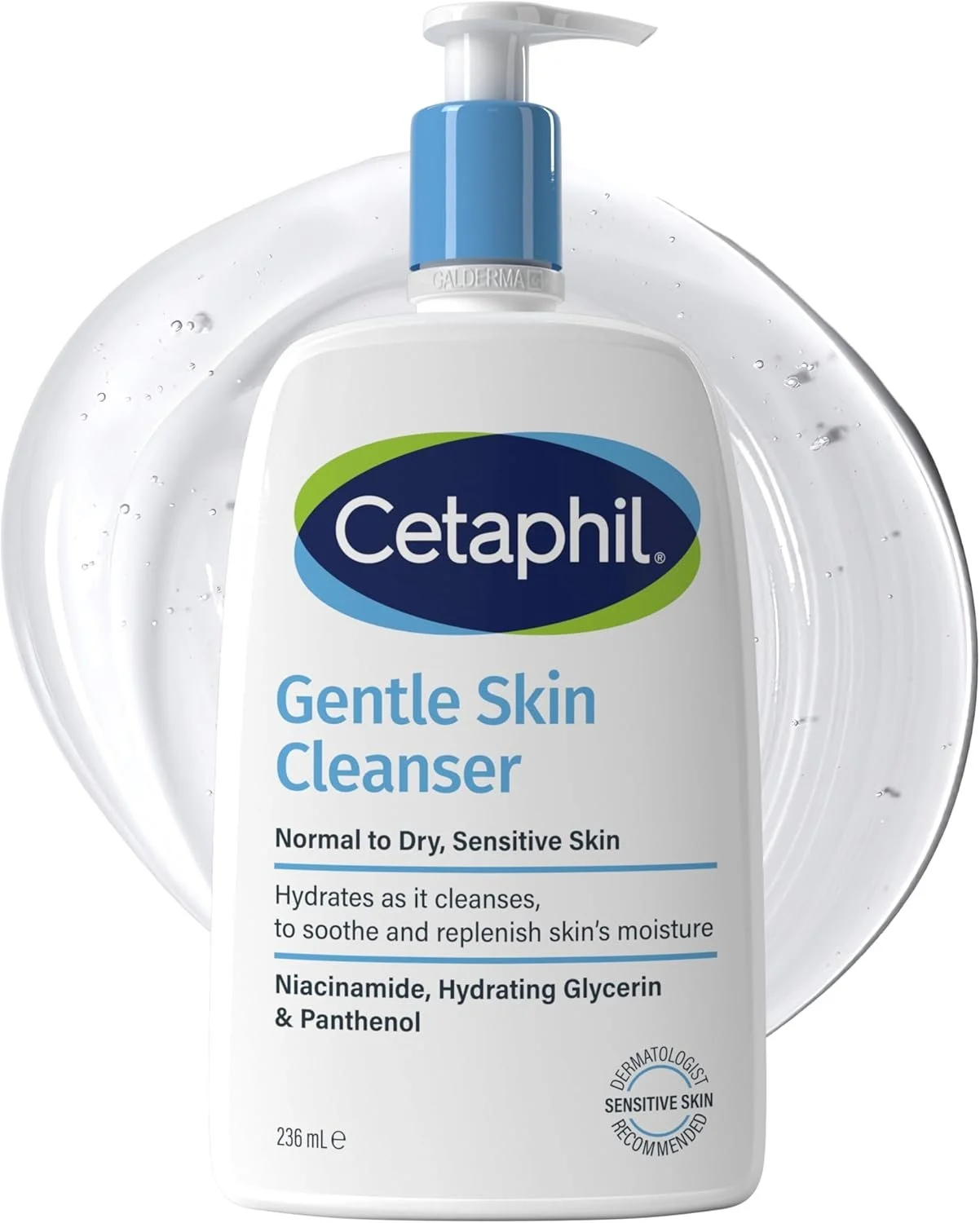
Cetaphil Gentle Skin Cleanser
a fragrance-free, soap-free, SLS-free cleanser appropriate for twice-daily facial cleansing with psoriasis. Formulated without sodium lauryl sulphate — the surfactant that disrupts skin pH and interferes with ceramide processing in an already-compromised psoriatic barrier. As covered in the treatment section, alkaline and SLS-containing cleansers are particularly damaging on facial psoriasis skin whose thinner barrier has less tolerance for pH disruption than body skin. Use with lukewarm water only — hot water causes vasodilation and histamine release that worsens facial psoriasis redness and itch. Pat dry gently rather than rubbing.
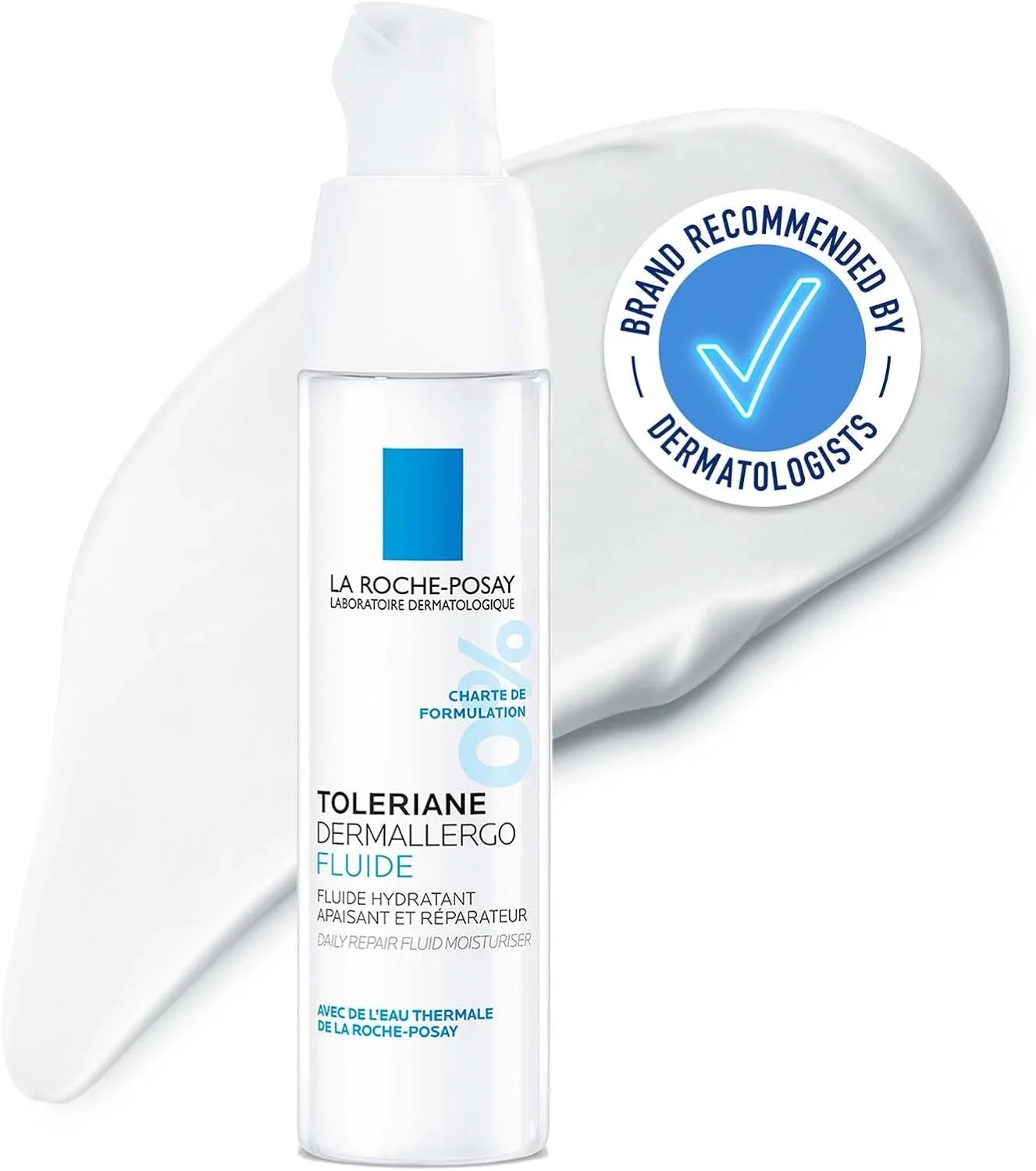
La Roche-Posay Toleriane Soothing Fluid Moisturiser
a minimal-ingredient, fragrance-free facial moisturiser specifically formulated for intolerant and reactive skin. Applied after cleansing as the daily emollient foundation before urea cream or prescribed topical treatment, it provides consistent barrier hydration appropriate for facial psoriasis's heightened sensitivity. The ultra-minimal formulation — specifically designed to reduce preservative and additive exposure on the most reactive skin presentations — reduces the contact sensitisation risk that is elevated in facial psoriasis given the compromised barrier's increased permeability. Suitable as a daytime base before mineral SPF
What to avoid
Fragrance in any form — including products marketed as "natural" or "botanical."
Harsh exfoliants — physical scrubs, high-concentration AHAs, salicylic acid face washes.
Moderate or potent topical steroids on the face — particularly around the eyes.
Hot water — lukewarm only, always.
Over-cleansing — twice daily at most, with a gentle product.
Supplement Support for Psoriasis-Prone Skin
Facial psoriasis responds to the same internal nutritional support as psoriasis elsewhere — the systemic immune dysregulation and vitamin D deficiency that drive body plaques also drive facial disease.
Drought's Skin Support Formula provides 14 nutrients including vitamin D, zinc, vitamin C, and magnesium — supporting the internal foundations of psoriasis management that topical facial care alone cannot address. Made in the UK, suitable for vegetarians, designed for consistent long-term daily use.
FAQ
What causes psoriasis on the face?
The same Th17 immune dysregulation that drives psoriasis at other body sites — elevated IL-17, IL-23, and TNF-α producing keratinocyte hyperproliferation and the accelerated three-to-five day skin cell cycle that creates plaque and scale. The face's characteristic distribution reflects sebum-rich sites (forehead, nasolabial folds, eyebrows) and areas of mechanical stress (hairline, around ears) rather than any distinct immune mechanism. Facial psoriasis frequently co-exists or overlaps with seborrhoeic dermatitis in the same sebum-rich areas — distinguishing the two by scale texture guides whether antifungal treatment is needed alongside psoriasis-specific management.
How do I tell if it's psoriasis or seborrhoeic dermatitis?
Psoriasis produces dry, silvery-white, well-defined scale extending to or beyond the hairline. Seborrhoeic dermatitis produces greasier, yellowish scale without distinct borders, concentrated in sebum-rich areas. Both can co-exist.
Can skincare products worsen facial psoriasis?
Yes — through two specific mechanisms. First, contact sensitisation: facial psoriatic skin's compromised barrier allows fragrance compounds, preservatives, and other contact allergens to penetrate more readily and trigger Type IV delayed hypersensitivity reactions appearing 48–72 hours after application. Second, direct barrier disruption: alkaline cleansers and SLS-containing products raise skin surface pH, activating kallikrein serine proteases that degrade filaggrin and ceramides — directly worsening the barrier deficit that psoriatic skin already has. Both mechanisms are more pronounced on facial skin than body skin given the face's thinner, more permeable barrier. Fragrance-free and SLS-free are the two non-negotiable criteria for facial psoriasis skincare.
Where does psoriasis appear on the face?
Most commonly at the forehead and hairline, around the eyebrows, the nose folds, and around the ears. Less commonly on the cheeks and chin.
Should you exfoliate facial psoriasis?
Avoid physical exfoliants entirely — friction from scrubs on already-inflamed facial psoriasis plaques causes direct barrier damage and carries the Koebner risk of triggering new plaque formation at the friction site. For scale management specifically, urea 5% applied daily provides chemical keratolytic benefit without friction — breaking down the protein bonds between corneocytes while simultaneously drawing moisture into the skin. This is considerably more appropriate for facial psoriasis than salicylic acid (which disrupts barrier lipid organisation) or glycolic acid (which acidifies the skin surface at concentrations that worsen barrier integrity). During active flares, skip scale management entirely and focus on emollient only.
Is steroid cream safe on the face for psoriasis?
Only hydrocortisone 1% at low frequency and in short courses. Moderate or potent steroids risk skin thinning and, near the eyes, glaucoma. Calcineurin inhibitors are the safer long-term option.
What is the best treatment for facial psoriasis?
Fragrance-free emollient as the foundation; calcineurin inhibitor (tacrolimus, pimecrolimus) on prescription for chronic management; low-potency steroids in short courses for flares. Avoid salicylic acid and potent steroids.
Can I use salicylic acid on facial psoriasis?
No — salicylic acid's keratolytic action disrupts the already-compromised skin barrier rather than improving it. Urea 5–10% is a more appropriate scale-managing option for facial use.
Summary
Facial psoriasis most commonly appears at the forehead and hairline, around the eyebrows, nose folds, ears, and in people with widespread disease, on the cheeks and chin. It frequently overlaps with seborrhoeic dermatitis — which requires antifungal rather than psoriasis-specific treatment. Facial skin's relative thinness restricts treatment: low-potency topical steroids in short courses, with calcineurin inhibitors (tacrolimus, pimecrolimus) the preferred option for chronic management. Salicylic acid facial cleansers are inappropriate for psoriasis-affected facial skin. A gentle, fragrance-free routine with urea-based moisturising, consistent SPF, and careful makeup removal provides the practical foundation.
Written by the Drought Skin team — specialists in natural support for psoriasis, eczema and acne
Disclaimer: This article contains affiliate links. We earn a very small commission from each purchase made through these links. There is no additional cost to you. All products featured have been specifically selected as products we personally use and love. For further information, please see our disclaimer page.
-
Eyebrow Psoriasis: Identification, Treatment & Grooming Safely
Scalp Psoriasis: Identification, Treatment & Long-Term Management
Facial Eczema: Types, Causes, Treatments & the Best Skincare Routine
Makeup with Eczema or Psoriasis: Safe Products, Ingredients to Avoid & How to Apply
Topical Steroid Withdrawal (TSW): Symptoms, Causes & What the Evidence Shows
