
Eyebrow Psoriasis: Seborrhoeic Overlap, Safe Topical Treatments & Hair Loss Explained

Psoriasis around the eyebrows is common — the eyebrow area is one of the sites that frequently receives mention in facial psoriasis assessments, alongside the hairline, ears, and nasal folds. Its visible location at the centre of the face makes even mild symptoms noticeable, and the proximity to the eyes limits the treatments that can be used safely.
There's also a genuine diagnostic challenge: the eyebrow area is one of the most likely sites on the face to develop seborrhoeic dermatitis — a different condition with different treatment — and the two can be difficult to distinguish without a clinical assessment.
Psoriasis in Eyebrows: Why It Happens & What May Help
Psoriasis can appear almost anywhere on the body — including the eyebrows and surrounding skin.
For many people, eyebrow psoriasis causes flaky skin, redness, itching and visible scaling that can feel difficult to hide. And because the area is right in the centre of the face, even mild symptoms can affect confidence as much as comfort.
The challenge is that the skin around the eyebrows is delicate, yet many people end up over-scrubbing or using harsh products in an attempt to remove flakes — often making irritation worse.
Managing eyebrow psoriasis usually involves reducing irritation while supporting the skin barrier consistently.
What Does Eyebrow Psoriasis Look Like?
Psoriasis around the eyebrows can vary in severity, but common symptoms include:
Flaky or silvery scales
Red or inflamed patches
Dry skin around the brows
Itching or burning sensations
Thickened areas of skin
Cracked or sore skin during flare-ups
Some people also notice psoriasis spreading slightly into the forehead or eyelid area.
Eyebrow psoriasis is often mistaken for dry skin or dandruff initially.
Psoriasis vs seborrhoeic dermatitis at the eyebrows: the key differences
This distinction matters practically because the two conditions respond to different treatments.
Psoriasis at the eyebrows produces silvery-white, thick, well-defined plaques — the same presentation as plaque psoriasis elsewhere. Scale tends to be dry and adherent. It is likely accompanied by psoriasis at other sites, including the scalp, elbows, or knees. It does not respond to antifungal treatments.
Seborrhoeic dermatitis at the eyebrows produces greasier, yellowish scale with less distinct borders. It tends to affect other sebum-rich sites simultaneously — the sides of the nose, central forehead, and scalp (where it appears as dandruff). The scale is oilier and more loosely attached than psoriatic scale. It responds to antifungal treatments (ketoconazole, zinc pyrithione).
Both at once. Sebopsoriasis — the overlap of seborrhoeic dermatitis and psoriasis at sebum-rich sites — is a recognised clinical entity. When both are present, treatment needs to address both components. If you're unsure which condition you have, or if you have features of both, a GP or dermatologist assessment will guide the most appropriate management.

Why Does Psoriasis Affect the Eyebrows?
Psoriasis is an inflammatory skin condition linked to an overactive immune response and faster-than-normal skin cell production.
When this process happens around the eyebrows, skin cells build up more quickly than they can shed naturally.
Potential triggers may include:
Stress
Cold weather
Skin irritation
Harsh skincare products
Lack of sleep
Illness
Certain medications
The Koebner risk from eyebrow grooming
This is the most specific practical safety point for this location and is entirely absent from the original.
The Koebner phenomenon — new psoriasis plaques appearing at sites of skin trauma — applies to eyebrow grooming. Threading, waxing, and vigorous plucking all create mechanical trauma to the skin around the eyebrows. For people prone to Koebner reactions, eyebrow grooming can trigger new plaque formation precisely in the area being groomed.
Practical implications: avoid waxing over or near active psoriasis plaques at the eyebrow. Threading carries lower but still relevant Koebner risk. Careful, precise plucking of individual hairs away from plaques is the lowest-risk option. Timing grooming for settled, non-flaring periods reduces risk.
Why Picking Flakes Can Make It Worse
One of the most common mistakes people make with eyebrow psoriasis is trying to “scrub away” flakes aggressively.
But removing scales forcefully may:
Increase irritation
Damage the skin barrier
Cause soreness or bleeding
Trigger more inflammation
Worsen redness
The skin around the eyebrows is thinner than many people realise, meaning it becomes irritated easily.
Gentle skincare is usually more effective than aggressive exfoliation.
Treatment: what's appropriate near the eyes
As with eyelid eczema and facial eczema, the proximity to the eyes significantly limits treatment options at the eyebrows.
Emollient as the foundation. A thin layer of fragrance-free emollient — petroleum jelly or a paraffin-based cream like Doublebase — applied carefully to the eyebrow plaques softens scale and reduces dryness. Apply away from the eyelid margin.
Calcineurin inhibitors (tacrolimus/pimecrolimus) — the preferred treatment for facial psoriasis. As covered in the facial eczema and eyelid eczema articles in this series, tacrolimus ointment and pimecrolimus cream are steroid-sparing treatments appropriate for sensitive facial skin. They do not cause skin thinning and do not carry the intraocular pressure risk of topical steroids near the eyes. For chronic eyebrow psoriasis, a GP or dermatologist prescription for a calcineurin inhibitor is the appropriate escalation.
Low-potency topical steroids — short courses only. Hydrocortisone 1% used for no more than seven to ten days may help during significant flares. More potent preparations are not appropriate near the eye area. Never apply any topical steroid to the eyelid itself.
For seborrhoeic component. A mild ketoconazole cream (available from a GP) or zinc pyrithione wash applied to the eyebrow area and rinsed off after a few minutes can address the Malassezia component if seborrhoeic dermatitis is contributing.
Recommended Products
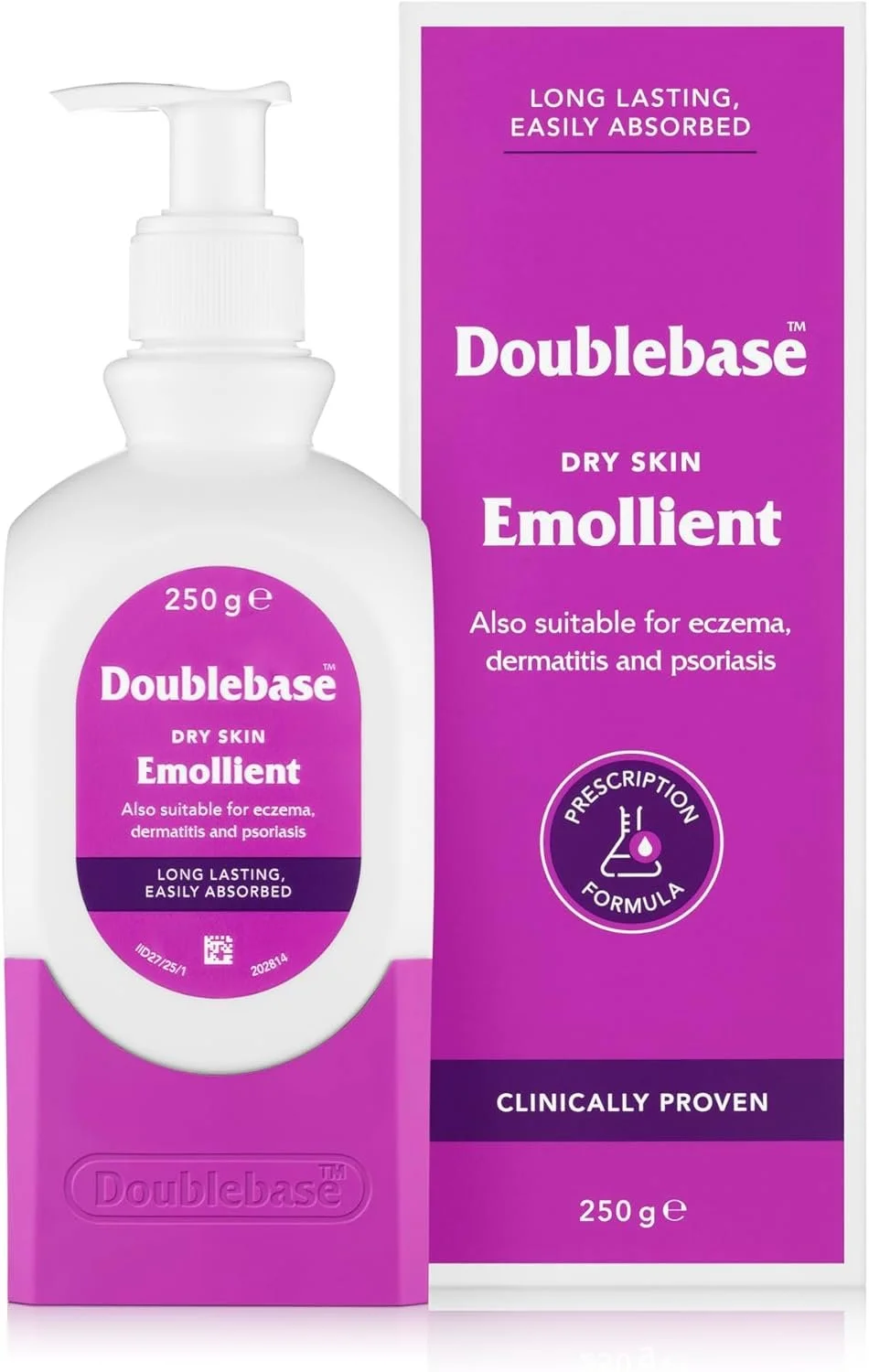
Doublebase Dry Skin Emollient
a paraffin-based emollient appropriate for the eyebrow area. Applied thinly, it provides consistent barrier support without the texture concerns of heavier ointments on a visible facial area.
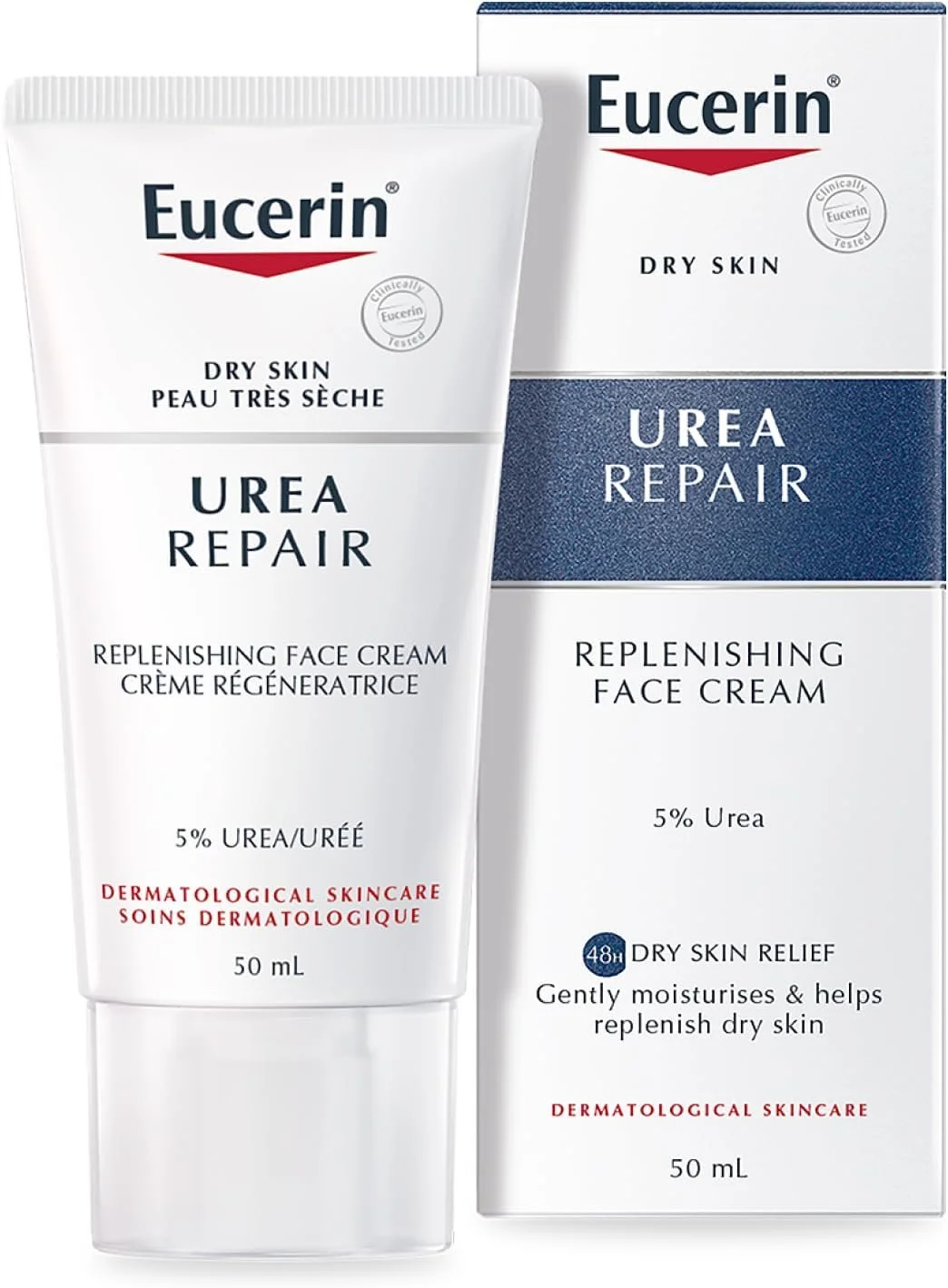
Eucerin UreaRepair PLUS Face Cream 5% Urea
for eyebrow psoriasis with more pronounced scale buildup, a 5% urea face cream provides gentle keratolytic action alongside humectant moisture support. Appropriate for the delicate facial skin around the eyebrows — 5% is the correct concentration for facial use rather than the higher-strength body preparations. Fragrance-free and formulated for sensitive facial skin
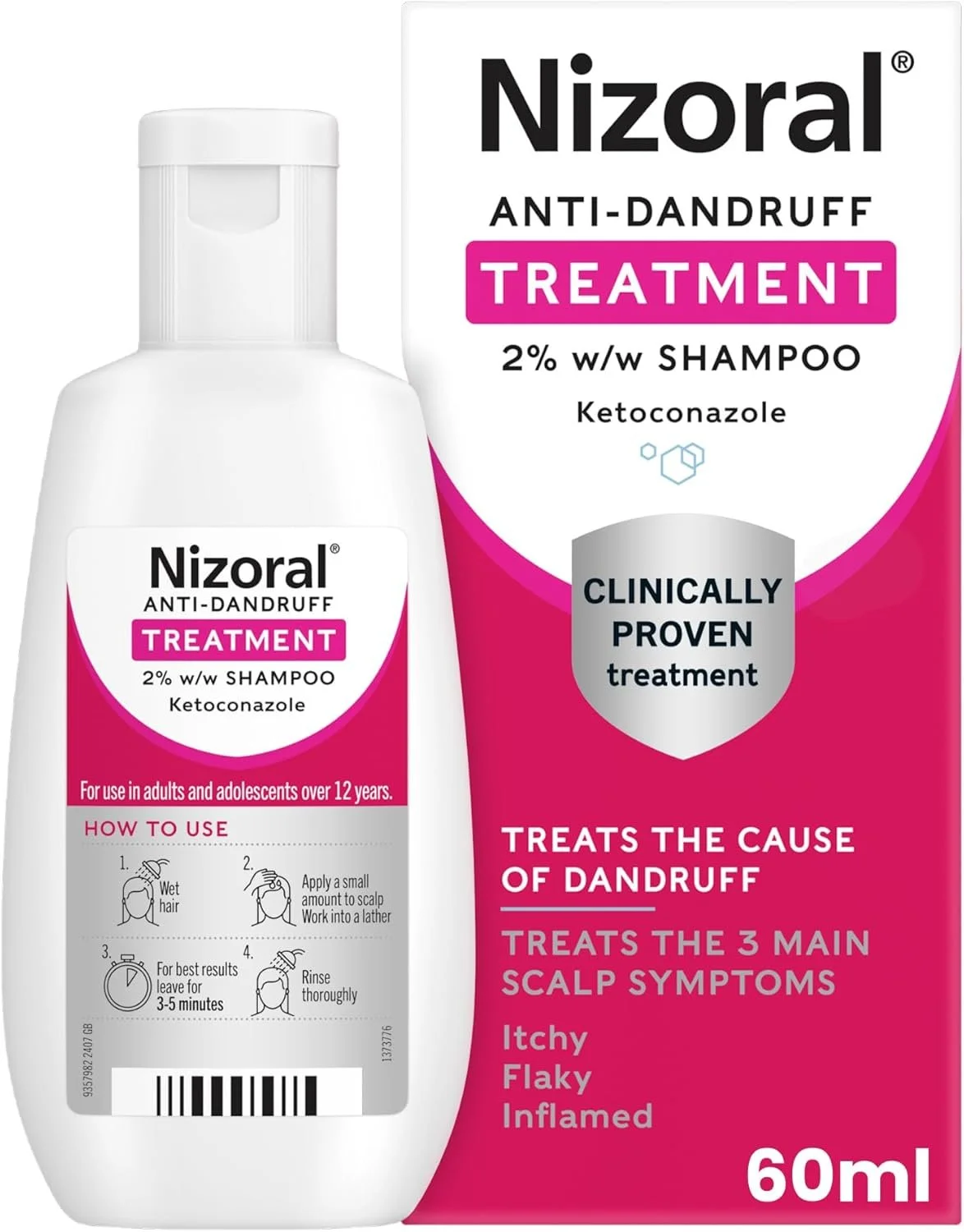
Nizoral Anti-Dandruff Shampoo 2% Ketoconazole
ketoconazole 2% shampoo used as a brief leave-on cleanser for the eyebrow area addresses the Malassezia seborrhoeic component that standard emollient alone doesn't reach. Apply a small amount to the eyebrow area, leave for two to three minutes, then rinse thoroughly. The most specifically appropriate product for eyebrow psoriasis with seborrhoeic overlap — which is the most common eyebrow psoriasis presentation.
Skincare Ingredients That May Irritate Eyebrow Psoriasis
Some skincare and makeup products may worsen symptoms, especially during active flare-ups.
Ingredients some people try avoiding include:
Fragrance
Alcohol-heavy products
Harsh exfoliants
Strong acids
Overly foaming cleansers
Heavy makeup around irritated skin
Even hair products and eyebrow cosmetics may sometimes contribute to irritation.
Practical care tips
Scale removal. Apply a thin layer of emollient or petroleum jelly to softened plaques and leave for 20–30 minutes, then gently remove with a damp soft cloth. This is the safest way to reduce scale visibility without friction that could trigger a Koebner response.
Eyebrow makeup. Filling in sparse areas around psoriasis with brow products is achievable — a fragrance-free, brow pencil or powder applied around rather than directly over plaques minimises the product contact with inflamed skin. Remove carefully at night with a fragrance-free micellar water.
Avoid covering and occluding plaques. Heavy brow gels and waxes applied directly over plaques can trap scale and worsen the appearance rather than concealing it. A lighter approach to the area — accepting that some texture is visible — produces a more natural result than heavy product application.
Water temperature. Hot water on the face during cleansing worsens vasodilation and itch. Lukewarm is always preferable when eyebrow psoriasis is active.
Supplement Support for Dry, Sensitive Skin
Eyebrow psoriasis is driven by the same systemic immune mechanisms as psoriasis anywhere else. Vitamin D, zinc, omega-3s, and magnesium address the internal inflammatory and nutritional dimensions that topical care cannot reach.
Drought's Skin Support Formula provides 14 nutrients selected for their roles in psoriasis management — addressing the internal foundations of the condition that topical eyebrow care alone cannot cover. Made in the UK, suitable for vegetarians, designed for consistent long-term daily use.
FAQ
Can psoriasis affect the eyebrows?
Yes — the eyebrow area is one of the more common facial psoriasis sites. The skin around the eyebrows is sebum-rich, making it prone to the seborrhoeic dermatitis overlap (sebopsoriasis) that frequently accompanies plaque psoriasis at facial sites. Eyebrow psoriasis typically presents as raised, well-demarcated plaques with silvery or yellowish scale along the brow line and surrounding skin, often extending to the forehead margin and glabellar area between the brows. The presentation can be mistaken for severe dandruff, dry skin, or seborrhoeic dermatitis — which matters because the treatment approach differs depending on which component is dominant.
Is eyebrow psoriasis the same as seborrhoeic dermatitis?
Not the same — but they frequently co-occur at the eyebrow site. Psoriasis produces well-demarcated raised plaques with silvery scale driven by Th17 keratinocyte hyperproliferation. Seborrhoeic dermatitis produces less defined, greasier yellowish scale driven by Malassezia yeast overgrowth in sebum-rich areas. The eyebrows are sebum-rich and a classic seborrhoeic dermatitis site — making sebopsoriasis (both conditions simultaneously) a very common eyebrow presentation. This matters practically because emollient and topical steroids address the psoriasis component while antifungal treatment (ketoconazole cream or shampoo used as a brief wash) specifically addresses the Malassezia component that emollient alone won't touch.
Can eyebrow psoriasis cause hair loss?
Yes — temporarily. Psoriatic inflammation around the eyebrow follicular units disrupts the normal hair growth cycle, pushing hairs into the telogen (resting) phase prematurely and causing patchy eyebrow thinning in affected areas. This is not the same as permanent alopecia — once the psoriasis inflammation is controlled the hair follicles typically recover and regrowth occurs over two to four months. Aggressive scratching, picking, or rubbing of psoriatic eyebrow scale accelerates hair loss by mechanically damaging follicles — the most practically important reason not to pick or scrub eyebrow psoriasis regardless of how flaky it appears.
Are topical steroids safe to use on eyebrow psoriasis?
With significant caution — facial skin, and particularly periorbital skin, thins significantly with prolonged topical corticosteroid use. The eyebrow and surrounding forehead skin is more resistant to steroid atrophy than eyelid skin, but extended use of moderate or higher-potency topical steroids still carries meaningful atrophy risk. Calcineurin inhibitors — tacrolimus 0.1% (Protopic) or pimecrolimus 1% (Elidel) — are the preferred steroid-sparing alternatives for facial psoriasis including eyebrow involvement, providing anti-inflammatory activity without the atrophy risk. Any topical treatment near the eyebrows should be discussed with a GP or dermatologist to ensure the appropriate potency and duration.
Can eyebrow psoriasis spread to the eyelids?
Yes — eyebrow psoriasis frequently extends toward the upper eyelid, and eyelid psoriasis is a specific and challenging management problem. Topical corticosteroids cannot be used directly on the eyelid skin or near the eye given the risk of elevated intraocular pressure and cataract formation with ocular absorption. Calcineurin inhibitors are used periocularly for psoriasis but require ophthalmological guidance for very close-to-eye application. If psoriasis appears on the eyelid skin itself or causes eye symptoms — redness, grittiness, photophobia — GP or dermatology referral is the appropriate step rather than self-management with topical products.
Should you remove psoriasis flakes from eyebrows?
Not aggressively — and the reason is specific. Mechanical removal of psoriatic scale from the eyebrow area produces the same Koebner friction risk as any mechanical trauma to psoriatic skin. Forceful picking or rubbing triggers new plaque formation at the trauma site, damages eyebrow hair follicles causing additional hair loss, and worsens inflammation rather than improving it. Scale softening through urea cream or emollient application, then gentle rinsing with lukewarm water, is the appropriate approach — allowing scale to loosen and shed naturally rather than forcing removal. Eyebrow grooming (threading, waxing, harsh tweezing) on actively psoriatic eyebrow skin carries Koebner risk and should be avoided during flares.
Can makeup be worn with eyebrow psoriasis?
Yes — on settled, non-inflamed skin with appropriate product selection. Fragrance-free tinted brow products applied with a clean applicator provide coverage without the contact allergen risk of fragranced formulations. Apply to clean, moisturised skin after any prescribed topical has fully absorbed. Remove with fragrance-free micellar water and gentle patting rather than rubbing — friction during removal is as significant a Koebner risk as friction during application. During active flares with inflamed, scaly, or broken eyebrow skin — avoid all makeup in the affected area and focus on emollient and prescribed treatment until the flare settles.
Summary
Eyebrow psoriasis is a specific and visible presentation that benefits from clear identification — distinguishing it from seborrhoeic dermatitis (which responds to antifungals rather than psoriasis treatment) is the first practical step. The Koebner risk from eyebrow grooming (threading, waxing) is a specific safety consideration not present for other body sites. Treatment is limited by proximity to the eyes — calcineurin inhibitors are the preferred option for chronic facial psoriasis, with low-potency topical steroids only in short courses. Emollient consistently applied, scale softened and removed gently, and grooming timed for settled skin periods are the practical management foundations.
Written by the Drought Skin team — specialists in natural support for psoriasis, eczema and acne
Disclaimer: This article contains affiliate links. We earn a very small commission from each purchase made through these links. There is no additional cost to you. All products featured have been specifically selected as products we personally use and love. For further information, please see our disclaimer page.
-
Facial Eczema: Types, Causes, Treatments & the Best Skincare Routine
Scalp Psoriasis: Identification, Treatment & Long-Term Management
Psoriasis & Eczema Triggers: What Causes Flare-Ups & How to Identify Yours
Makeup with Eczema or Psoriasis: Safe Products, Ingredients to Avoid & How to Apply
Types of Psoriasis Explained: Symptoms, Appearance & How They Differ
