
Turmeric for Acne: The Curcumin NF-κB Mechanism, the Bioavailability Problem & What the Evidence Shows

Turmeric has earned a reputation as a natural acne remedy — and it's not entirely without basis. The active compound in turmeric, curcumin, has genuine anti-inflammatory and antimicrobial properties that are mechanistically relevant to acne. But the gap between what curcumin does in a laboratory and what a turmeric supplement or face mask does for your skin is significant — and largely comes down to one overlooked issue: bioavailability.
Here's what the evidence actually shows, why most people using turmeric for acne don't get the results they expect, and what a more informed approach looks like.
What is turmeric
Turmeric (Curcuma longa) is a root plant used for centuries in South Asian cooking and traditional medicine. Its yellow-orange colour comes from a group of compounds called curcuminoids, of which curcumin is the most studied and most biologically active.
Why turmeric is linked to acne
Turmeric contains an active compound called curcumin, which has been studied for:
anti-inflammatory effects
antioxidant activity
antimicrobial properties
Because acne involves inflammation and bacteria, turmeric is often promoted as a “natural acne remedy.”
Can turmeric help acne?
Turmeric may help support inflammation and skin healing — but it's not a proven acne treatment, and the gap between turmeric's genuine anti-inflammatory properties and its actual evidence base for acne specifically is worth understanding before reaching for a face mask or supplement. The active compound is curcumin — the polyphenol responsible for turmeric's yellow colour and most of its biological activity — which inhibits NF-κB, the master transcription factor regulating the inflammatory cytokines (IL-1β, TNF-α, IL-6) that drive acne's inflammatory cascade. This is a specific and genuinely relevant mechanism. The limitation is bioavailability: curcumin is poorly absorbed from standard turmeric powder, and without piperine (the black pepper compound that increases curcumin absorption by up to 2,000%) most dietary turmeric provides negligible blood levels of the compound responsible for its anti-inflammatory effects.
How turmeric may help acne-prone skin
1. May reduce inflammation
Curcumin inhibits NF-κB — a key molecular switch that controls the production of pro-inflammatory cytokines including IL-1β, IL-6, and TNF-α. These same cytokines drive the redness, swelling, and pain of inflammatory acne lesions. In this respect, curcumin's anti-inflammatory mechanism is both real and directly relevant.
Inflammation is a major part of acne—especially:
red spots
cystic acne
painful breakouts
Curcumin may help calm inflammatory pathways in the skin.
2. May have antibacterial effects
Laboratory studies have shown that curcumin can inhibit the growth of Cutibacterium acnes (formerly Propionibacterium acnes), the bacterium most associated with acne. Some research has also explored curcumin as a photosensitiser in blue light therapy for acne — where it enhances the bactericidal effect of light treatment.
However, lab results don’t always translate into real-world acne improvement.
3. May help post-acne marks
Turmeric is sometimes used to help:
brighten skin tone
reduce post-inflammatory marks
support healing
Evidence for acne scars is still limited.
4. Provides antioxidant support
Oxidative stress contributes to sebum oxidation and inflammatory acne. Curcumin is a potent antioxidant, neutralising free radicals that would otherwise damage skin cells and amplify inflammation. Curcumin’s antioxidant effects may help support overall skin health
Does turmeric actually work for acne?
The mechanisms are sound. The problem is getting curcumin to the skin in meaningful concentrations — and this is where most turmeric products fall short.
What research shows:
Despite the strong in vitro (laboratory) evidence, the clinical evidence for curcumin in acne is limited in scale.
A small randomised trial found that a gel formulation containing 1% curcumin reduced inflammatory acne lesion counts significantly over eight weeks compared to a placebo gel. A separate pilot study combining oral curcumin with standard acne treatment found greater reductions in lesion counts than standard treatment alone.
These results are promising, but the studies are small, not consistently replicated in larger trials, and not yet part of mainstream acne treatment guidelines. The honest position: curcumin shows genuine mechanistic relevance and early clinical signals, but does not yet have the evidence base of established acne treatments like topical retinoids, benzoyl peroxide, salicylic acid, or prescription antibiotics.
Where it sits most credibly is as an adjunct — potentially useful alongside a well-structured skincare and treatment routine, rather than as a replacement for it.
Early studies suggest turmeric and curcumin may help inflammatory acne.
Some small trials showed reductions in acne lesions and inflammation.
However, there are no large, high-quality clinical trials proving turmeric is an effective acne treatment.
The bioavailability problem: why most turmeric supplements don't work
This is the most important thing to understand about turmeric and acne — and the reason most people who try it are disappointed.
Curcumin is very poorly absorbed from the gut in its standard form. Studies have consistently shown that even at high oral doses, plasma curcumin levels remain very low because it is poorly soluble in water, rapidly metabolised in the gut wall and liver, and quickly excreted. Standard turmeric powder — including the kind used in cooking and in most basic supplements — has an oral bioavailability so low that its clinical effects are negligible regardless of the dose.
There are three main ways this problem is addressed in better-formulated supplements:
Piperine. Black pepper contains piperine, which inhibits the metabolic enzymes that break down curcumin before it can be absorbed. Studies have shown that adding piperine to curcumin increases its bioavailability by up to 2,000%. This is why "curcumin with black pepper extract" formulations are significantly more effective than plain turmeric or curcumin.
Lipid-based formulations. Because curcumin is fat-soluble, combining it with lipids (fats) improves absorption. Some supplements use phytosomes (curcumin bound to phospholipids) or other lipid delivery systems that substantially increase bioavailability compared to standard powder.
Nanoparticle formulations. Some clinical-grade products use nanoparticle technology to improve curcumin solubility and absorption. These are more commonly found in clinical research than in standard consumer supplements.
The practical implication: if you want to trial curcumin supplementation for acne, a formulation with piperine (black pepper extract) is the minimum standard. Plain turmeric powder — in capsules, drinks, or golden milk — is unlikely to deliver meaningful plasma concentrations.
Recommended Products
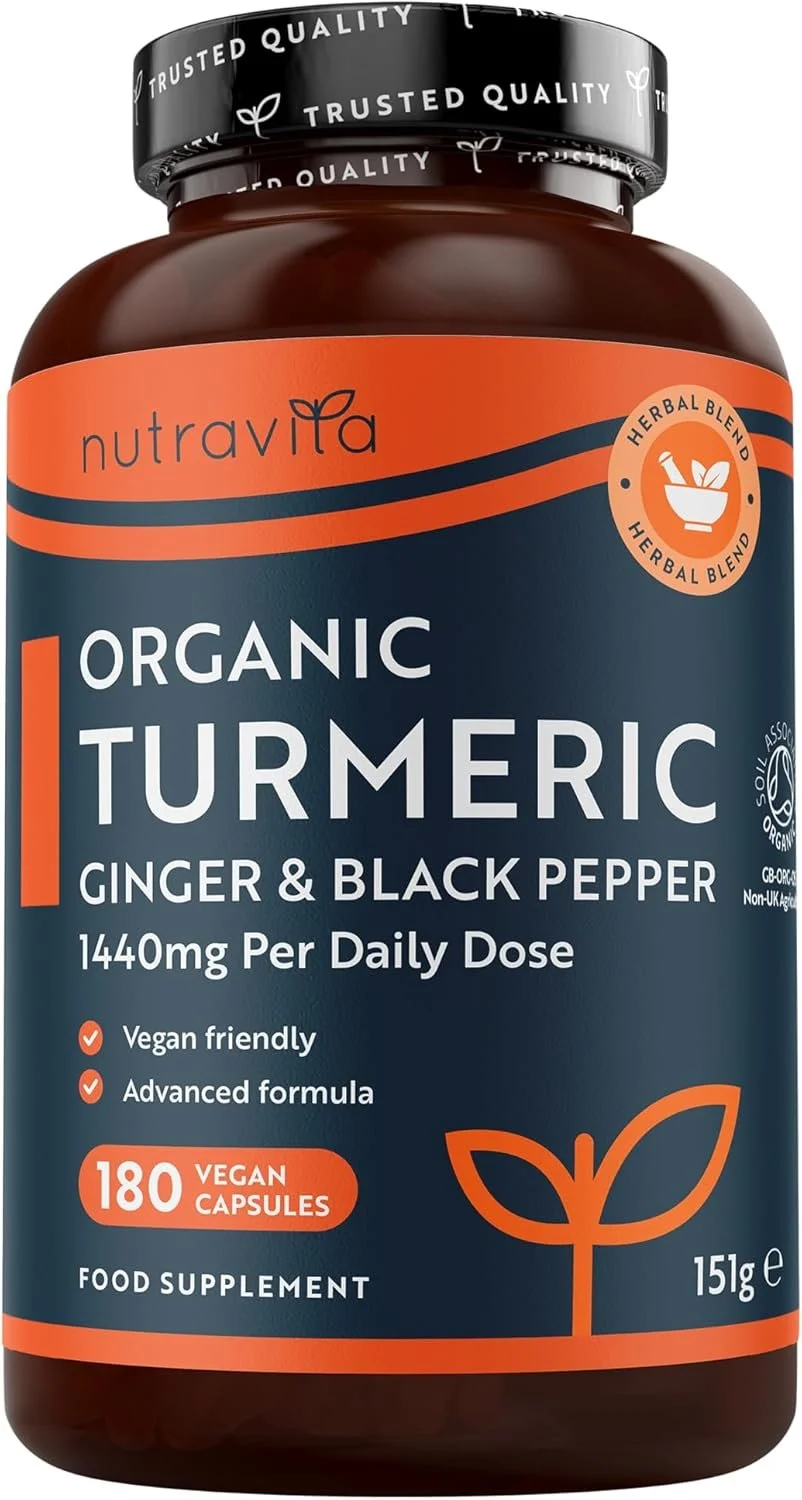
Nutravita Turmeric Curcumin with Black Pepper
a well-regarded UK supplement providing 1,440mg of turmeric root extract standardised to 95% curcuminoids, with added BioPerine (black pepper extract) for enhanced absorption. This is the kind of formulation that gives curcumin a realistic chance of reaching systemic circulation in meaningful amounts.
Topical turmeric vs turmeric supplements
Topical turmeric
Usually found in:
face masks
cleansers
spot treatments
May help calm inflammation temporarily.
Turmeric supplements
Taken for:
inflammation support
general wellness
Some early research suggests oral curcumin may help inflammatory acne when combined with standard treatment.
Topical turmeric: the staining problem and what it means practically
Turmeric face masks are popular on social media for acne and post-acne marks. The anti-inflammatory and antioxidant rationale is plausible — if curcumin can reach the skin cells beneath the surface, it may calm localised inflammation. The issue is that the skin barrier is specifically designed to keep substances out, and penetration of curcumin through intact skin is limited.
The more immediate practical concern is staining. Curcumin is an intensely yellow pigment — it's used as a food colouring (E100) precisely because it's so vivid and stable. Applied to skin, it will stain not just temporarily but can persist for days, particularly on lighter skin tones and around the hairline, eyebrows, and creases where residue accumulates. It will also stain fabrics, towels, and bathroom surfaces on contact.
If you want to try a turmeric mask, keeping it on for no more than 5–10 minutes, rinsing thoroughly, and accepting some temporary yellow tint is realistic. Using it on skin that is actively inflamed or has open spots risks both increased irritation and more pronounced staining in those areas.
Formulated products containing curcumin extract — rather than raw turmeric powder — tend to have significantly lower staining risk because the curcumin is present at lower concentrations in a controlled base.
Downsides and limitations
1. Can irritate sensitive skin
Turmeric may cause:
redness
itching
contact dermatitis in some people.
2. Stains skin and fabrics
DIY turmeric masks can leave a yellow tint.
3. Limited evidence
Most claims are based on:
lab studies
small trials
anecdotal reports
Not strong dermatology evidence.
4. Doesn’t target all acne causes
Turmeric may help inflammation—but acne is also driven by:
hormones
oil production
clogged pores
bacteria
What turmeric can and can't do for acne
Can plausibly help with: Calming the redness and swelling of inflammatory acne lesions, through curcumin's NF-κB inhibition and antioxidant effects. Potentially mild improvement in post-inflammatory hyperpigmentation, through its antioxidant influence on pigmentation pathways. Supporting an overall anti-inflammatory environment internally when taken as a well-formulated supplement.
Unlikely to help with: Unclogging pores or reducing comedone formation — curcumin has no significant effect on follicular keratinisation. Regulating sebum production — the hormonal drivers of sebaceous gland activity are not meaningfully influenced by curcumin. Deep or cystic acne driven primarily by hormonal factors, where systemic or prescription treatment is usually required. Established acne scarring with textural changes.
Skin support for acne-prone skin
Turmeric's anti-inflammatory properties address one pathway in acne — inflammation. But acne is a multi-factor condition involving sebum oxidation, bacterial proliferation, follicular keratinisation, and hormonal regulation. A more comprehensive nutritional approach addresses several of these simultaneously.
The nutrients with the most consistent evidence for acne include zinc (antibacterial, anti-inflammatory, sebum-regulating), vitamin A (regulates cell turnover in follicles), vitamin D (immune modulation), and vitamin C (antioxidant, collagen support for post-acne healing).
Drought's Skin Support Formulacontains zinc, vitamin C, vitamin D, and 11 other nutrients selected for their roles in skin health — covering a broader range of acne-relevant pathways than curcumin alone. Made in the UK, suitable for vegetarians, formulated for consistent daily use.
For people interested in the anti-inflammatory angle specifically, taking a quality curcumin supplement with piperine alongside a multi-nutrient skin formula is a reasonable combined approach.
FAQs: Turmeric & acne
Does turmeric help acne?
Through a specific mechanism rather than vague anti-inflammatory activity — curcumin inhibits NF-κB, the master transcription factor regulating IL-1β, TNF-α, and IL-6 production that drives acne's inflammatory cascade. Curcumin also has documented inhibitory activity against C. acnes specifically through membrane disruption at concentrations achievable with concentrated preparations. The limitation is bioavailability — standard dietary turmeric provides negligible active curcumin at the tissue level without piperine co-administration. With piperine, the mechanism is real and the concentrations potentially relevant; without it, most turmeric consumption for acne provides little clinical benefit regardless of dose.
Is piperine necessary for turmeric to work for acne?
Yes — and this is the most practically important point in the entire turmeric-acne conversation. Curcumin undergoes rapid glucuronidation in the gut wall and liver, producing metabolites with significantly reduced NF-κB inhibitory activity before reaching systemic circulation. Piperine inhibits this glucuronidation, increasing curcumin bioavailability by approximately 2,000% in humans — a 1998 pharmacokinetic study confirmed this figure. Without piperine, consuming large quantities of turmeric powder or standard supplements provides minimal systemic curcumin regardless of dose. Always choose supplements specifying BioPerine or piperine content rather than just curcumin or turmeric extract weight.
Can you put turmeric on your face for acne?
Yes — but with two specific practical limitations. First, curcumin's lipophilic yellow pigment binds to keratin in the skin surface and can stain for hours to days, particularly on lighter skin tones. Using a small amount mixed into a clay or yoghurt base rather than pure turmeric powder reduces staining. Second, turmeric's topical anti-inflammatory and antimicrobial benefit applies to active inflammatory lesions — it has no meaningful penetration through intact skin to affect sebaceous glands or follicular bacteria. Topical turmeric is most appropriate for reducing post-spot redness and mild surface inflammation rather than treating active or cystic acne.
Does turmeric reduce acne scars?
Modestly — through tyrosinase inhibition. Curcumin inhibits tyrosinase, the enzyme responsible for melanin production, giving it mild PIH-fading properties relevant to the post-inflammatory hyperpigmentation that is the most common "scarring" complaint after acne. This is the same mechanism as vitamin C and azelaic acid — curcumin provides it at lower potency but without the irritation risk of high-concentration vitamin C serums on active acne-prone skin. True atrophic acne scarring (ice pick, boxcar, rolling scars) involving dermal tissue loss is not addressed by curcumin's anti-inflammatory or tyrosinase mechanism.
How long does turmeric take to work for acne?
For oral supplementation with piperine — four to eight weeks of consistent daily use is the minimum meaningful assessment period. NF-κB inhibition from curcumin accumulates over weeks rather than producing acute effects, and acne's 10–14 day spot development lag means that even meaningful inflammatory reduction takes two to three spot cycles to visibly manifest. For topical application — redness reduction from active inflammatory spots is more immediate, typically within 24–48 hours of consistent application to settled skin.
Is turmeric safe for acne-prone skin?
Generally yes — orally at supplemental doses and topically at appropriate concentrations. The specific concerns for acne-prone skin are: contact sensitisation from topical turmeric in a subset of users (patch test before full facial application); potential staining on lighter skin tones; and the Asteraceae allergy concern if you also react to chamomile, chrysanthemums, or ragweed. At oral supplemental doses with piperine, turmeric has mild antiplatelet activity — relevant if taking warfarin or aspirin. High-dose oral turmeric stimulates bile production — contraindicated for people with gallstones.
Is a turmeric face mask good for acne?
For mild inflammatory acne on settled skin — yes, with the staining caveat. Mixing a small amount of turmeric powder with natural yoghurt (lactic acid provides gentle AHA exfoliation alongside the curcumin anti-inflammatory) or honey (naturally antimicrobial against C. acnes) produces a more beneficial combination than turmeric alone. Apply for 10–15 minutes rather than leaving overnight — extended contact increases staining risk without proportionally increasing curcumin skin penetration. Never apply to active cystic, nodular, or broken skin — the turmeric particles provide mechanical friction and the direct contact may worsen rather than reduce severe inflammatory lesions.
Summary
Turmeric has a legitimate scientific basis for interest in acne — curcumin's anti-inflammatory and antimicrobial properties are real and mechanistically relevant. But most people who try it are let down by two things: poor bioavailability from standard supplements, and expecting it to do more than it's capable of. Used thoughtfully — as a well-formulated curcumin supplement with piperine, as part of a broader skincare and nutritional approach — it's a reasonable addition. Used as a standalone remedy in low-absorption forms, it's unlikely to move the dial.
Written by the Drought Skin team — specialists in natural support for psoriasis, eczema and acne
Disclaimer: This article contains affiliate links. We earn a very small commission from each purchase made through these links. There is no additional cost to you. All products featured have been specifically selected as products we personally use and love. For further information, please see our disclaimer page.
