
Scalp Psoriasis: How to Identify It, Treat It & Manage It Long-Term

Scalp psoriasis affects approximately 50–80% of people with psoriasis, making it one of the most common sites for the condition. Despite its prevalence, it's frequently misdiagnosed — confused with dandruff or seborrhoeic dermatitis — which delays appropriate treatment and extends the discomfort of a condition that significantly affects daily life, confidence, and sleep.
This guide covers how to identify scalp psoriasis specifically, what distinguishes it from similar conditions, what the evidence supports for treatment, and how to manage it without making things worse.
What is scalp psoriasis?
Scalp psoriasis is a common form of psoriasis that affects the scalp and hairline, causing:
scaling
flaking
itching
redness or irritation
It can range from:
mild dandruff-like flaking
tothick, inflamed plaques covering the scalp.
Identifying scalp psoriasis: what it looks like
Scalp psoriasis produces plaques of thickened, scaling skin — the same process that drives plaque psoriasis elsewhere — but in the unique environment of the scalp, where scale is often trapped by hair and where treatment application is more difficult.
Characteristic features:
The scale of scalp psoriasis is typically silvery-white and forms thick, adherent plaques. This distinguishes it from dandruff, which produces finer, whiter flakes that fall easily. Scalp psoriasis plaques are attached to the scalp surface and require softening to remove — they don't simply shake off.
The affected skin underneath plaques is typically pink to red and well-defined — clear boundaries between affected and unaffected scalp. This is different from seborrhoeic dermatitis, which has less distinct margins.
Scalp psoriasis frequently extends beyond the hairline — appearing as red, scaling patches on the forehead, behind the ears, and at the nape of the neck. This beyond-the-hairline extension is one of the most reliable distinguishing features from both dandruff and seborrhoeic dermatitis.
Itch is common but varies widely — some people experience intense, burning itch; others have surprisingly mild symptoms despite extensive scaling.
What causes scalp psoriasis?
Like other forms of psoriasis, scalp psoriasis is driven by:
immune system dysfunction
chronic inflammation
rapid skin cell turnover
Skin cells build up too quickly, creating thick scales and plaques.
Common scalp psoriasis triggers
Flare-ups may be triggered by:
stress
illness or infections
cold weather
harsh hair products
scratching or irritation
alcohol or smoking
Triggers vary between individuals.
Dandruff vs scalp psoriasis vs seborrhoeic dermatitis
These three conditions cause overlapping symptoms and are frequently confused. They can also co-exist, which complicates the picture further.
Dandruff (pityriasis capitis) is a mild form of seborrhoeic dermatitis — it involves Malassezia yeast acting on scalp sebum, producing irritating fatty acids that trigger mild skin cell turnover and flaking. Flakes are typically small, white or yellowish, and oily. There is minimal scalp redness. It responds to antifungal shampoos (ketoconazole, zinc pyrithione).
Seborrhoeic dermatitis of the scalp is a more significant Malassezia-driven condition with greasier, yellowish scale, more diffuse redness, and commonly affecting other sebum-rich areas (eyebrows, sides of nose, ears). It responds to antifungal treatments. Does not extend beyond the hairline in the same plaques-on-forehead way as psoriasis.
Scalp psoriasis has silvery-white, thick, adherent scale, well-defined borders, and typically extends beyond the hairline. It does not respond to antifungal treatments (because it is not Malassezia-driven) and requires psoriasis-specific treatments. Itch is often more intense than in dandruff.
A GP or dermatologist can usually differentiate these clinically. When doubt exists, dermoscopy (a magnifying examination tool) helps distinguish the vascular patterns.
Hair loss and scalp psoriasis
Hair loss from scalp psoriasis is usually temporary and related to the inflammation and physical trauma of scratching rather than psoriasis directly damaging hair follicles. When inflammation is controlled and scratching stopped, hair typically grows back.
Telogen effluvium — a form of diffuse hair shedding triggered by physiological stress, which significant scalp inflammation can constitute — may produce more pronounced shedding during severe flares. This is also temporary and resolves as the condition is brought under control.
Permanent hair loss from scalp psoriasis alone is rare. Scarring alopecia (permanent) is not a characteristic of psoriasis.
Why scratching and picking worsen scalp psoriasis
The Koebner phenomenon — new psoriasis plaques appearing at sites of skin trauma — applies on the scalp just as it does elsewhere on the body.
Scratching, picking, or attempting to mechanically remove scale damages the scalp skin and can trigger new plaque formation at the scratched site. This is one of the most important practical points about scalp psoriasis management: trying to remove plaques by force makes the condition worse rather than better.
The appropriate approach is to soften scale chemically — through pre-wash oil treatments or salicylic acid scalp applications — and allow loosened scale to be removed gently during washing, rather than scratching or picking.
What actually helps: treatment options
Medicated shampoos — the first step
For mild to moderate scalp psoriasis, medicated shampoos provide the most accessible starting treatment. The most effective over-the-counter options:
Coal tar shampoos — as covered in the coal tar article in this series, coal tar inhibits keratinocyte hyperproliferation through AhR receptor activation. It is one of the most effective scalp psoriasis treatments available without prescription. Apply, leave for five minutes before rinsing.
Salicylic acid shampoos — keratolytic action loosens thick, adherent scale. Most effective when used after softening plaques rather than on fully intact scale.
Pre-wash oil treatments for scale removal
As discussed in the olive oil article, a pre-shampoo oil treatment softens thick scale before washing. Apply warm oil (coconut oil, olive oil, or a dedicated scalp preparation) to the scalp, leave for 20–30 minutes, then shampoo. This loosens adherent scale without mechanical trauma.
Prescription treatments for moderate to severe scalp psoriasis
When OTC medicated shampoos are insufficient, a GP can prescribe:
Potent topical corticosteroids in scalp solution or foam format (betamethasone valerate, clobetasol propionate). Calcipotriol scalp solution (a vitamin D analogue — the same active compound as in topical preparations for body psoriasis). The combination product Dovobet (calcipotriol and betamethasone) in gel format for the scalp. Biologic treatments for people with significant scalp psoriasis alongside moderate-to-severe body disease.
Recommended Products
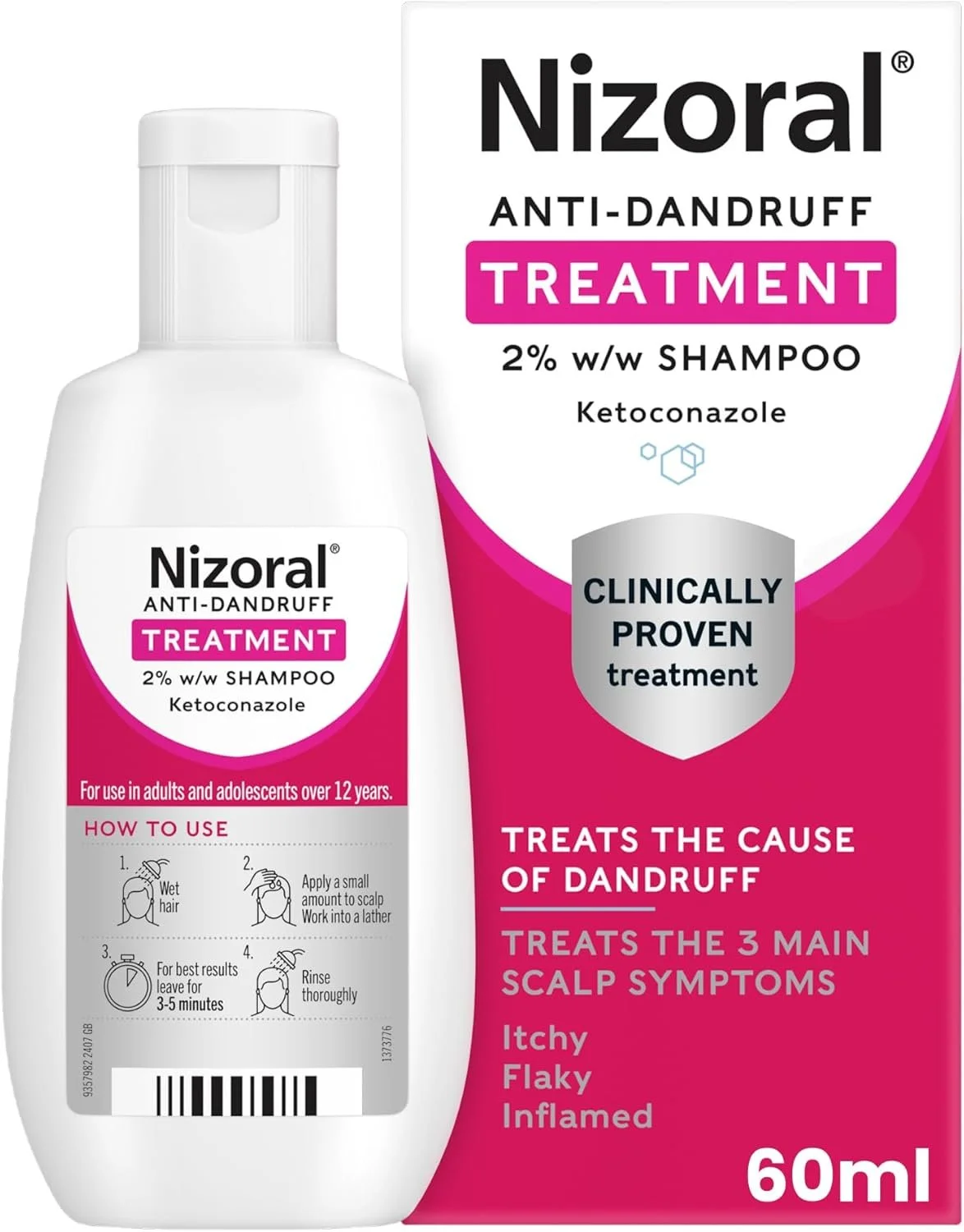
Nizoral Anti-Dandruff Shampoo 2% Ketoconazole
an antifungal shampoo. This is specifically appropriate for scalp psoriasis that has seborrhoeic elements alongside it (Malassezia contribution) — not for pure scalp psoriasis alone. When psoriasis and seborrhoeic dermatitis overlap (which they often do), combining antifungal and coal tar shampoos alternately is more effective than either alone.
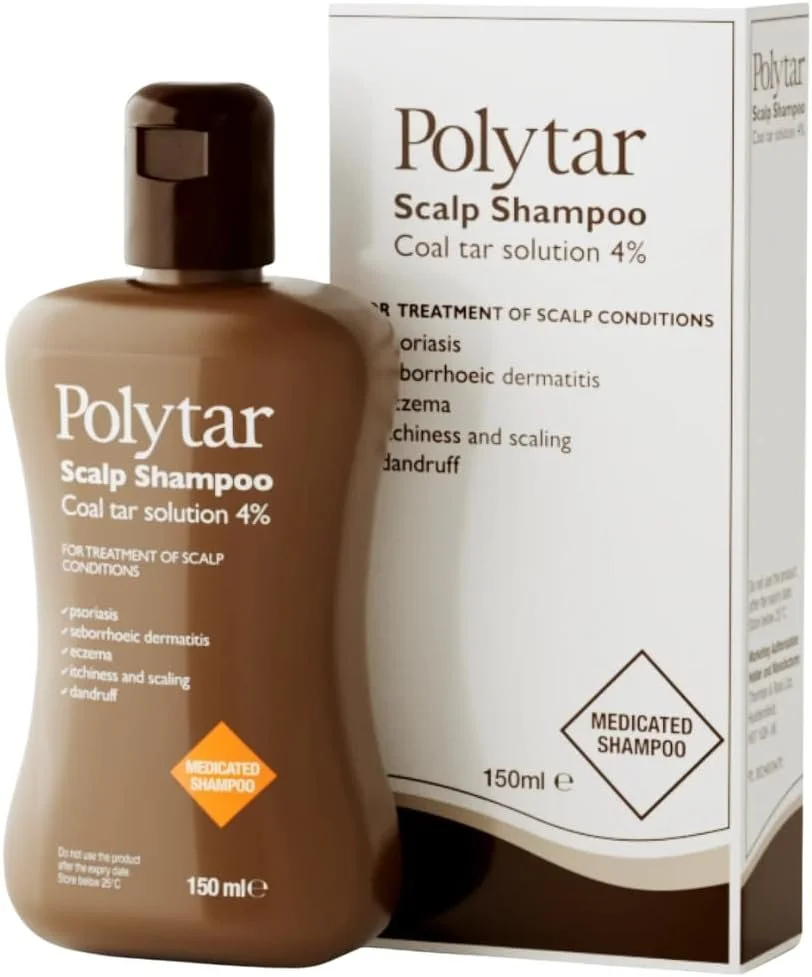
Polytar Shampoo for Scalp Conditions
features a unique coal tar formula with anti-inflammatory, antibacterial, and anti-itch properties. It cleanses and soothes the scalp while slowing excessive skin cell growth to reduce itching and irritation.
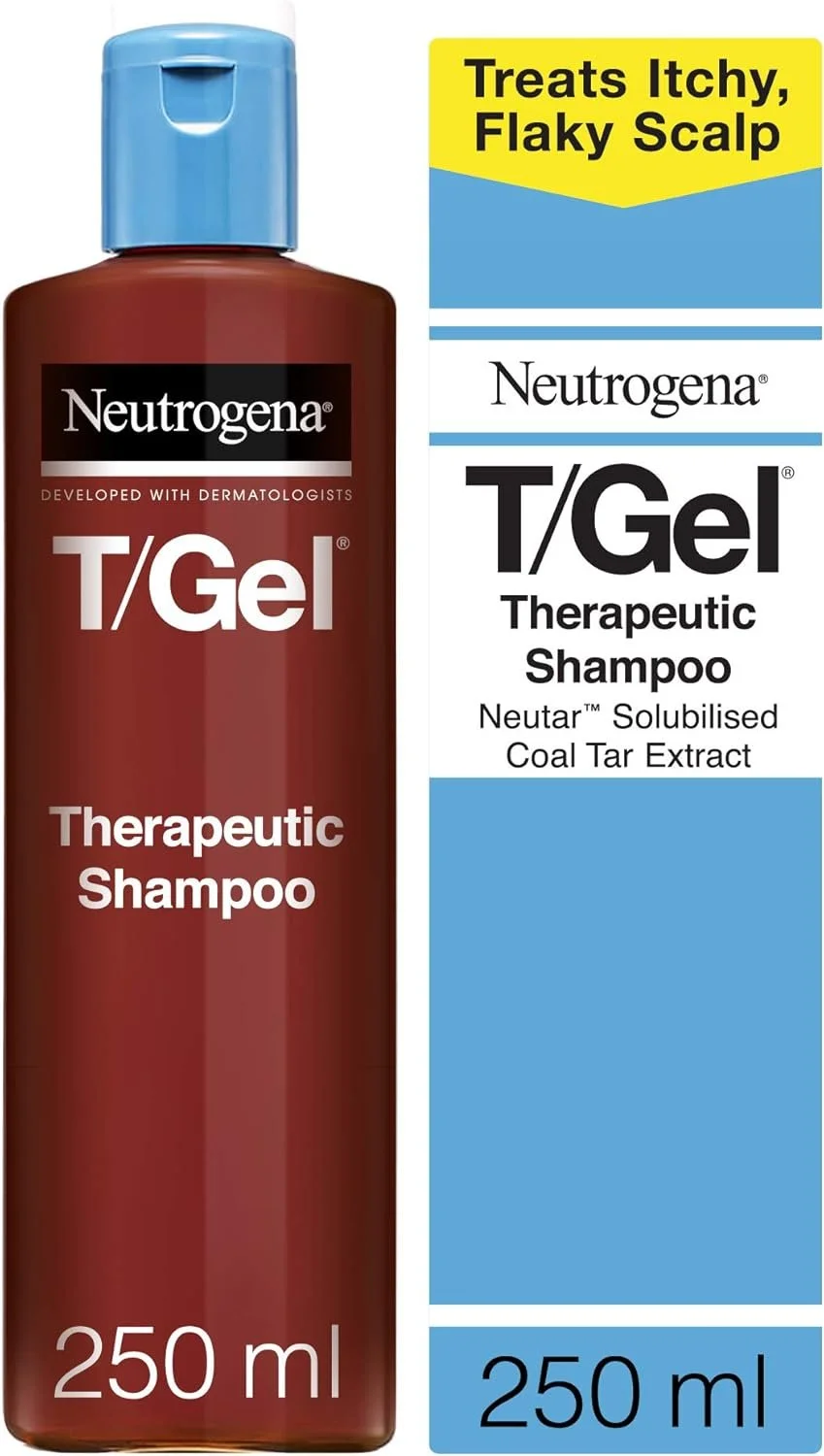
Neutrogena T/Gel Therapeutic Shampoo
a widely used coal tar shampoo for scalp psoriasis. 0.5% coal tar extract. Use two to three times weekly
Practical scalp care for psoriasis
Shampoo gently and less frequently. Daily shampooing strips scalp oils that provide mild barrier protection. Two to three times weekly with a medicated shampoo is typically more effective than daily use of a standard shampoo.
Use lukewarm water, not hot. Heat increases scalp blood flow and itch, and can worsen post-wash dryness.
Pat hair dry — don't rub. Towel friction on the scalp creates the mechanical trauma that risks Koebner reactions.
Avoid tight hairstyles. Friction and pressure from tight ponytails, braids, or buns concentrated on plaque areas can trigger Koebner responses.
Limit heat styling. Blow-drying and heated styling tools on inflamed scalp skin worsen dryness and barrier disruption.
Be cautious with hair dye. Chemical processing over active psoriasis plaques risks significant irritation and potential Koebner reactions. Wait until plaques have settled before colouring. Patch test always.
Common scalp psoriasis mistakes
Picking scales
This can:
worsen inflammation
damage the scalp
increase temporary hair shedding
Using harsh anti-dandruff products excessively
Some products may overly dry or irritate sensitive skin.
Ignoring moisturising
The scalp still needs hydration and barrier support.
Stressing the scalp barrier
Too many treatments at once can increase irritation.
Skin support for psoriasis-prone skin
Scalp psoriasis is driven by the same systemic immune dysfunction as psoriasis elsewhere. The nutritional foundations — vitamin D, zinc, omega-3, and magnesium — address the internal dimensions that no shampoo can reach.
Drought's Skin Support Formula provides 14 nutrients including vitamin D, zinc, vitamin C, and magnesium — supporting the internal foundations of psoriasis management alongside appropriate topical scalp care. Made in the UK, suitable for vegetarians, designed for consistent long-term daily use.
FAQs: Scalp psoriasis
Is scalp psoriasis the same as dandruff?
Scalp psoriasis produces thick, silvery-white adherent plaques, extends beyond the hairline, and has well-defined borders. Dandruff produces finer, oily or white flakes without the plaques or hairline extension. Scalp psoriasis doesn't respond to antifungal shampoos; dandruff does.
Can scalp psoriasis cause hair loss?
No — hair loss from scalp psoriasis is typically temporary, caused by inflammation and scratching rather than follicle damage. Hair grows back when inflammation is controlled.
What worsens scalp psoriasis?
Stress, irritation, harsh products, and scratching are common triggers.
What is the best shampoo for scalp psoriasis?
Coal tar shampoos (T/Gel, MG217) are the most evidence-backed OTC option. For scalp psoriasis with seborrhoeic elements, alternating coal tar with ketoconazole antifungal shampoo is more effective.
Can I dye my hair with scalp psoriasis?
Wait until plaques have settled. Chemical processing over active plaques risks significant irritation and Koebner reactions. Always patch test before applying to the full scalp.
Why should I not pick scalp psoriasis scales?
Mechanical trauma to the scalp triggers the Koebner phenomenon — new plaques appearing at trauma sites. Softening scale chemically with oil pre-treatments and medicated shampoos is the safe alternative.
When should I see a doctor for scalp psoriasis?
When OTC medicated shampoos don't control symptoms after 4–6 weeks of consistent use, when itch is severe and disrupting sleep, or when scalp involvement is part of more widespread psoriasis.
Can scalp psoriasis spread beyond the scalp?
Yes — it may extend to the forehead, neck, or behind the ears.
Summary
Scalp psoriasis affects the majority of people with psoriasis and is consistently distinguished from dandruff by its thick, silvery-white adherent scale, well-defined borders, and extension beyond the hairline. Dandruff responds to antifungal shampoos; scalp psoriasis does not. Coal tar shampoos are the most evidence-backed OTC treatment, working through the same AhR keratinocyte mechanism as topical psoriasis preparations. Pre-wash oil treatments soften scale safely without the Koebner risk of mechanical picking. When medicated shampoos are insufficient, GP prescription of topical corticosteroid or calcipotriol scalp preparations is the appropriate next step.
In short:
Very common in people with psoriasis
Can affect the hairline and behind the ears
Often confused with dandruff
Not caused by poor hygiene
Scalp psoriasis can be frustrating, uncomfortable, and difficult to manage—but gentle scalp care and barrier support can make a significant difference. Because psoriasis is driven internally, the most effective long-term approach supports your skin both externally and internally.
Start your skin support journey →
Written by the Drought Skin team — specialists in natural support for psoriasis, eczema and acne
Disclaimer: This article contains affiliate links. We earn a very small commission from each purchase made through these links. There is no additional cost to you. All products featured have been specifically selected as products we personally use and love. For further information, please see our disclaimer page.
