Toners for Acne-Prone Skin: Do You Need One, What Works & What to Avoid

Toners are one of the most misunderstood products in acne skincare. Many people with acne reach for the most stripping, alcohol-heavy toner they can find on the basis that removing more oil will prevent breakouts. The biology goes in the opposite direction — and understanding this changes how you approach the toner step entirely.
The reactive sebum problem: why stripping backfires
This is the most important mechanism to understand about toners and acne. Sebaceous glands regulate sebum output partly in response to surface lipid levels — a feedback loop where stripped, over-dried skin triggers increased sebum production in the hours after cleansing or toning. Alcohol-based toners that aggressively strip the skin surface temporarily reduce oiliness, but the subsequent reactive sebum response produces more oil than would have been present without the toner. Over time, consistent over-stripping produces chronically oilier skin than leaving it alone.
This is the same mechanism that makes foam-only cleansers with sodium lauryl sulphate counterproductive for acne — and it applies equally to the "squeaky clean" feeling that alcohol-heavy toners produce.
The practical implication: for acne-prone skin, a toner that preserves or supports the skin barrier (rather than strips it) prevents reactive sebum and is considerably more effective long-term.
Do you actually need a toner?
No — toners are optional. A well-chosen cleanser, appropriate serum (niacinamide, azelaic acid, BHA where relevant), moisturiser, and SPF is a complete acne routine without a toner step.
Where toners add value:
Active ingredient delivery. A salicylic acid toner or BHA exfoliating toner applied to the full face provides comedone dissolution that a targeted spot serum doesn't. This is the most legitimate acne-specific use case.
Hydration and barrier preparation. A hydrating toner (glycerin, hyaluronic acid) applied to slightly damp skin before serum increases skin surface hydration at the point where actives are applied — improving both comfort and the skin environment for subsequent steps.
pH preparation. AHAs and BHAs work most effectively at slightly acidic pH. A hydrating, low-pH toner can theoretically improve the effectiveness of acid serums applied on top. In practice, most people don't need to optimise to this degree.
Where toners don't add value: anything alcohol-heavy or fragrance-containing; anything that duplicates what another product in the routine is already doing.
Types of toner for acne: what each does
BHA (salicylic acid) toner — for comedonal acne. Salicylic acid is oil-soluble and penetrates follicles, dissolving the sebum-dead cell mixture that blocks them. A 0.5–2% salicylic acid toner used as an exfoliating step after cleansing addresses comedone formation more systematically than a spot treatment. Most effective for blackheads, whiteheads, and congestion. Less relevant for deep inflammatory cystic acne. Start two to three times weekly and build as tolerated.
Niacinamide toner. Reduces sebum through DGAT-1 inhibition, is anti-inflammatory, and well-tolerated. A niacinamide toner is appropriate for morning and evening use on oily, breakout-prone skin without the dryness risk of BHA. Less directly active on existing comedones than salicylic acid.
Hydrating toner (glycerin, hyaluronic acid, aloe vera, panthenol). Provides hydration without active ingredients. Most appropriate for people whose acne is accompanied by dehydration and reactive sensitivity — typically from overuse of actives or acne medications that dry the skin.
AHA toner (glycolic, lactic acid). Exfoliates at the skin surface rather than inside follicles — more useful for post-acne marks and skin texture than for preventing new breakouts. Lactic acid is gentler than glycolic and also humectant — better tolerated on sensitive acne-prone skin.
Witch hazel toner — use with caution. As covered in the witch hazel and eczema article in this series, commercial witch hazel preparations typically contain 14–15% isopropyl alcohol. The tannin anti-inflammatory properties are real, but the alcohol compounds them with barrier disruption. Alcohol-free witch hazel is considerably more appropriate. The Thayers range (alcohol-free, with aloe vera) is the standard recommendation for sensitive acne-prone skin if witch hazel is wanted.
Avoid: any toner containing alcohol (denatured, isopropyl, or ethanol) as a primary ingredient; anything with fragrance or parfum; and anything marketed as an "astringent" — this category is almost exclusively alcohol-based.
Recommended Products
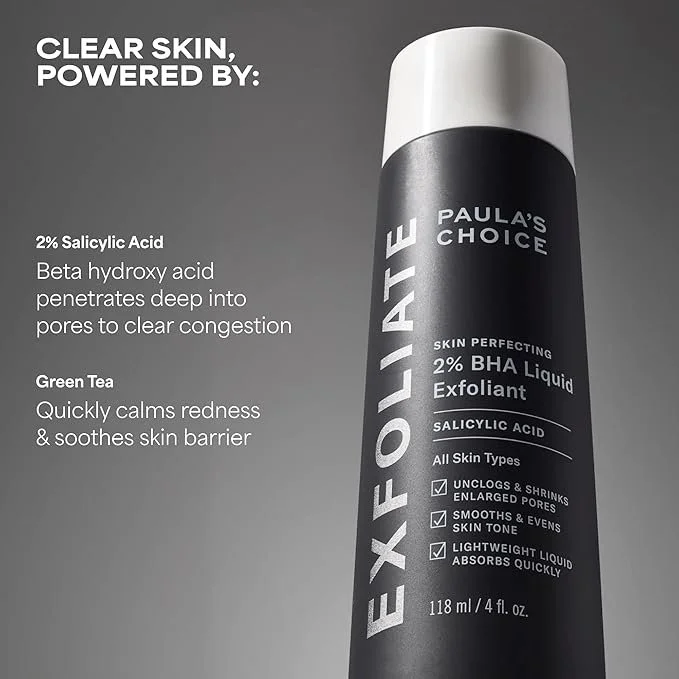
Paula's Choice Skin Perfecting 2% BHA Liquid Exfoliant
one of the most consistently recommended salicylic acid toners by dermatologists and skincare chemists for comedonal acne. Provides 2% salicylic acid in an appropriate low-pH base without fragrance, alcohol, or irritating additives — the format that allows the oil-soluble BHA to penetrate follicles and dissolve the sebum-dead cell mixture systematically across the full face. Apply to cleansed skin with a cotton pad two to three evenings per week initially, building as tolerated. The absence of fragrance and alcohol makes it one of the few BHA toners appropriate for sensitive acne-prone skin without the barrier disruption concerns of alcohol-containing alternatives.
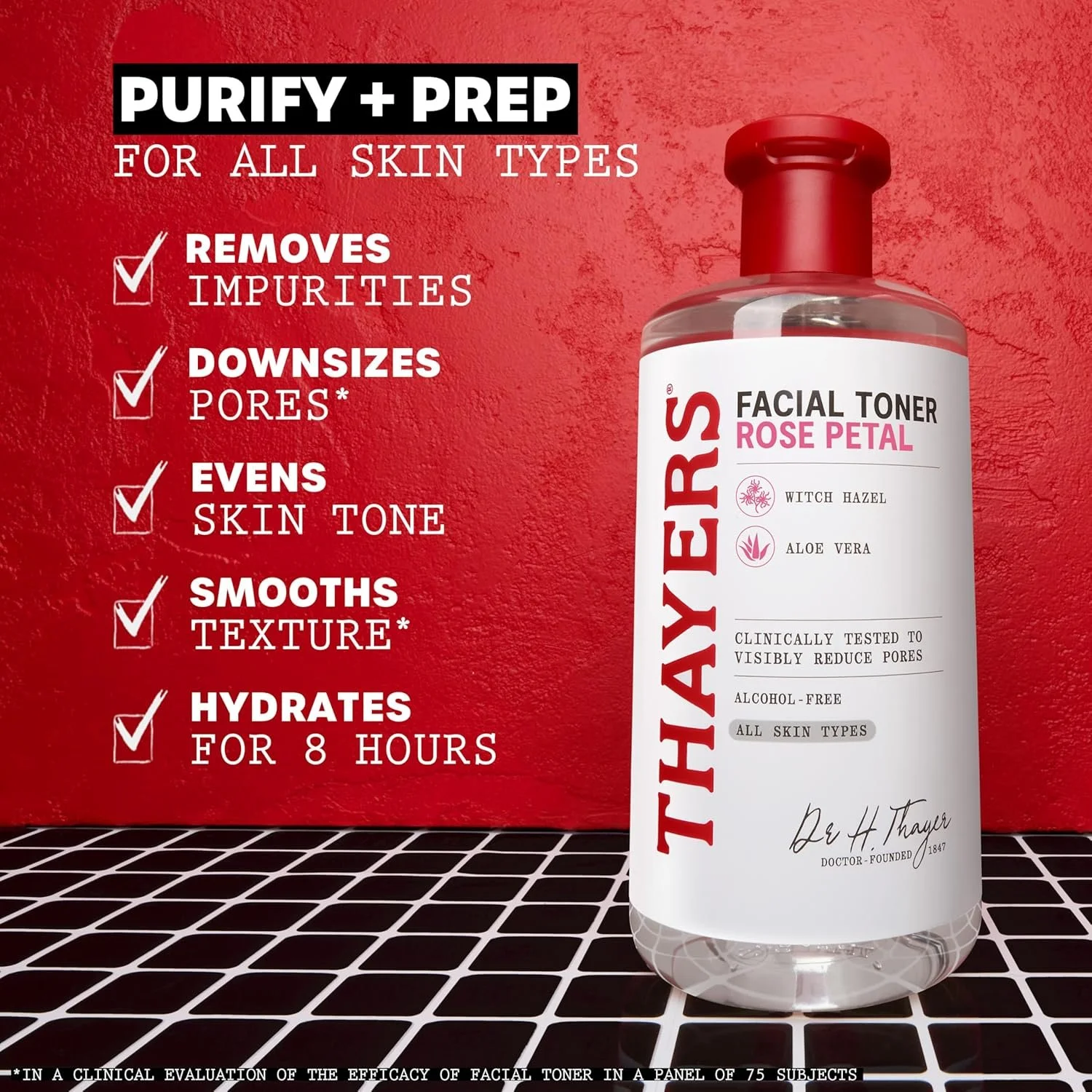
Thayers Alcohol-Free Rose Petal Witch Hazel Toner
a hydrating toner providing polyglutamic acid (a humectant holding four times more moisture than hyaluronic acid) alongside ceramides for barrier support. As covered in the article, hydrating toners are most appropriate for acne-prone skin that is simultaneously dehydrated from overuse of actives or drying acne medications. This format provides barrier hydration without occlusive oils that could worsen comedonal acne — the lightweight texture applies thinly and absorbs rapidly, making it appropriate for the thinnest-to-thickest layering sequence before serum and moisturiser. Use on non-acid evenings or in the morning under SPF
How to use toner in an acne routine
Apply immediately after cleansing — the skin is clean and surface-ready for active delivery. Apply with clean hands (patting) or a cotton pad (avoid if skin is reactive, as cotton friction can irritate). Allow to absorb before applying serum or moisturiser.
Morning: hydrating toner or niacinamide toner — no BHA in the morning before sun exposure.
Evening: BHA or AHA toner if using one; hydrating toner on non-acid nights. Not both on the same night.
Don't layer multiple exfoliating toners — the combined acid load worsens barrier disruption. One acid product per routine session.
The place of toner in an acne routine
Toner sits after cleansing and before serum. It is the thinnest-textured product in the routine — applied first in the sequence that runs from thinnest to thickest. For most people with acne-prone skin, a toner is the least essential step and should be the last thing added to a routine once the foundational steps (cleanser, actives, moisturiser, SPF) are established and working well. Starting with a toner when the basics aren't yet right is a common mistake — adding complexity before stability.
Supplement Support for Breakout-Prone Skin
Toners work at the skin surface. The hormonal, inflammatory, and nutritional drivers of acne require internal support alongside appropriate topical care.
Drought's Skin Support Formula provides zinc, vitamin D, vitamin C, and 11 other nutrients addressing the internal pathways relevant to acne — complementing a well-chosen topical routine. Made in the UK, suitable for vegetarians, designed for consistent long-term daily use.
FAQ
Do I need a toner for acne?
No — toners are optional. A complete acne routine works without one. A well-chosen BHA or niacinamide toner can add value; an alcohol-heavy one worsens acne
Does alcohol in toner make acne worse?
Yes — by stripping the skin barrier and triggering reactive sebum production that increases oil output in the hours after use.
Is salicylic acid toner good for acne?
For comedonal acne (blackheads, congestion) — yes. Salicylic acid penetrates follicles and dissolves the sebum-dead cell mixture. Less relevant for deep inflammatory cystic acne.
Is witch hazel toner good for acne?
In alcohol-free form, the tannins provide mild anti-inflammatory benefit. Standard commercial witch hazel with 14–15% alcohol is counterproductive for acne-prone skin.
When should I use toner in my routine?
After cleansing, before serum — the thinnest-textured product applied first in the thinnest-to-thickest sequence. The morning vs evening distinction matters for active toners specifically. BHA salicylic acid toners should be used in the evening rather than morning — salicylic acid increases photosensitivity and should be followed by SPF if used in the morning, which most people don't do consistently. Niacinamide and hydrating toners are appropriate morning or evening. AHA toners carry the same photosensitivity concern as BHA — use in the evening with morning SPF the following day. Never use a BHA and AHA toner in the same session — the combined acid load increases barrier disruption risk disproportionately.
Can toner cause breakouts?
Yes — fragrance, alcohol, and heavy occlusive ingredients in toners can all worsen acne-prone skin.
Summary
Toners for acne should support or deliver actives — not strip. Alcohol-heavy astringent toners trigger reactive sebum production that makes acne worse over time. BHA (salicylic acid) toners are the most specifically useful for comedonal acne through follicular exfoliation. Niacinamide toners reduce sebum without drying. Hydrating toners support barrier function alongside drying acne treatments. Witch hazel toners are acceptable only in alcohol-free formulations. Toners are optional and should be added to a routine last — after the foundational steps are established.
Written by the Drought Skin team — specialists in natural support for psoriasis, eczema and acne
Disclaimer: This article contains affiliate links. We earn a very small commission from each purchase made through these links. There is no additional cost to you. All products featured have been specifically selected as products we personally use and love. For further information, please see our disclaimer page.
