
Salt Water for Acne: The Osmotic Mechanism, Why Ocean Water Differs from DIY & the Barrier Risk

The observation is real and common: many people notice their acne improves during or after a beach holiday. This has driven significant interest in salt water as a home acne remedy — DIY salt sprays, sea salt face washes, and saline rinses have all accumulated followings on social media. The honest answer is that the beach effect is real, the mechanism is interesting, and home salt water application is a poor way to replicate it.
Salt Water & Acne: Does It Actually Help?
If you’ve ever noticed your skin seeming clearer after a beach holiday, you’re definitely not alone.
Salt water has become increasingly popular online as a “natural” acne remedy, with many people claiming ocean water helps dry out pimples, reduce oiliness and improve breakouts. TikTok and skincare forums are full of DIY salt sprays and sea salt face washes promising clearer skin fast.
But while some people experience temporary improvements, dermatologists also warn that salt water can be harsh, drying and potentially damaging for acne-prone skin when overused.
Salt water may help some mild breakouts short-term, but it’s usually not a complete acne solution.
Why skin sometimes improves at the beach: the actual mechanisms
The "beach effect" on acne involves several simultaneous factors — and salt water is only one of them, and not the most important:
Magnesium and trace minerals in seawater. Natural seawater contains magnesium, zinc, potassium, and calcium at concentrations not found in table salt solutions. Magnesium in particular has documented anti-inflammatory properties when absorbed transdermally — it is the same reason magnesium-rich Dead Sea and Epsom salt baths are used in dermatology for psoriasis and eczema. Topical magnesium has been shown to reduce skin inflammation markers in published research. DIY salt water made from table salt (sodium chloride only) doesn't replicate this mineral profile.
Moderate UV exposure. Sunshine has direct immunosuppressive effects on skin inflammation — UV reduces Th2 immune responses and inflammatory cytokine production. This is why phototherapy is a clinical treatment for psoriasis and eczema, and why moderate sun exposure often temporarily improves inflammatory skin conditions. The UV effect at the beach is independent of the water.
Stress reduction and sleep. Holidays typically involve significantly reduced cortisol from lower stress, more sleep, and physical activity. As covered in the hormonal acne article, cortisol elevation from chronic stress raises DHEAS and androgen-driven sebum production. Reducing stress is a genuine acne intervention.
Exercise from swimming. Physical exercise improves systemic circulation, reduces inflammatory markers, and supports the gut microbiome — all relevant to acne. Swimming as exercise is part of the beach benefit.
When you separate these factors, salt water in ocean exposure has some contribution but is far from the dominant mechanism.
What salt water does on acne skin and where it goes wrong
Salt water has two effects on acne-prone skin that work in opposite directions:
Osmotic drying of sebum. Salt draws moisture out of cells through osmosis. Applied to oily skin, this temporarily reduces surface sebum and can dry out existing pimples. This is the mechanism behind the perceived "drying out" effect.
Barrier disruption and reactive sebum production. As covered in the toner article in this series, the skin's sebaceous glands respond to surface drying by upregulating sebum production — the reactive sebum mechanism. Consistent salt water application that aggressively strips surface lipids produces a rebound oiliness within hours of application. The temporarily dried-out skin subsequently becomes oilier than before.
Additionally, sodium chloride at concentrations typical of DIY salt sprays disrupts the skin's lipid barrier similarly to SLS — extracting ceramides and increasing transepidermal water loss. For acne-prone skin that is also reactive or sensitive, this barrier disruption can worsen inflammatory acne even while temporarily drying surface sebum.

Ocean water vs DIY salt spray: why they're not equivalent
This is the key practical point. Ocean water has a specific mineral composition — approximately 3.5% salinity overall, but rich in magnesium, sulphates, potassium, calcium, and dozens of trace minerals. DIY salt water made from table salt is essentially sodium chloride solution — an irritant without the beneficial mineral content that makes genuine seawater different.
Applying DIY salt spray to acne-prone skin delivers the drying and barrier-disrupting effects of salt without the anti-inflammatory mineral compounds. It is the worst of both worlds.
When salt water might be appropriate
For mild, surface-level congestion on oily, non-reactive skin: occasional use of a diluted saline solution (isotonic at approximately 0.9% — close to the body's own salt concentration rather than the 3.5% of seawater) as a gentle rinse is low-risk. Isotonic saline won't disrupt the barrier as aggressively as concentrated salt solutions.
As a spot treatment to temporarily dry an individual surface pustule overnight: a small amount of salt paste applied with a cotton bud to a single spot, then thoroughly rinsed off, is less risky than applying salt water to the entire face.
These are limited, occasional uses — not a skincare routine.
Safer Ways Some People Use Salt Water
People who still want to experiment with salt water often try:
Short ocean swims rather than daily DIY sprays
Rinsing the skin afterwards
Moisturising immediately after exposure
Avoiding salt scrubs on inflamed acne
Dermatologists generally recommend moderation and caution, especially for sensitive skin types.
Occasional exposure may feel refreshing, but overuse often increases irritation risk.
Recommended Products
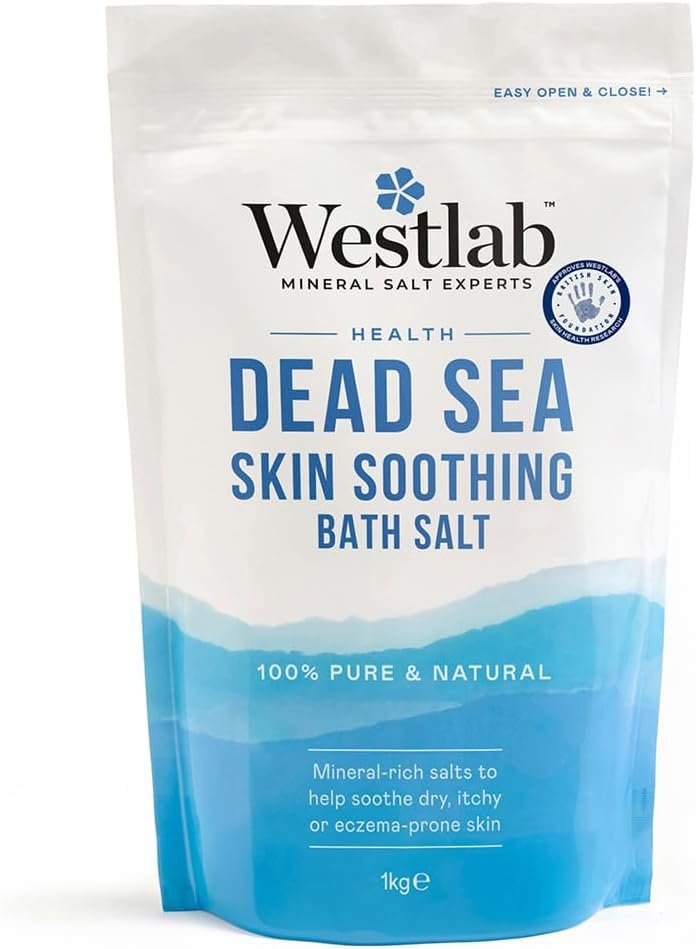
Westlab Dead Sea Mineral Salt
a mineral-rich bath salt providing magnesium, zinc, bromide, and potassium in concentrations closer to ocean water than standard table salt. Used as a bath rather than a face rinse — avoiding the barrier disruption risk of direct facial salt application while providing the transdermal mineral exposure the beach effect article describes.
What works more reliably for acne
The evidence-based alternatives to salt water for each of the mechanisms it attempts:
For oil reduction: niacinamide (DGAT-1 inhibition, reduces sebum without barrier disruption). For surface exfoliation: salicylic acid 0.5–2% (follicular penetration). For inflammation reduction: azelaic acid or low-dose topical retinoid. For antibacterial effect: benzoyl peroxide 2.5%.
All of these work through documented mechanisms without the barrier-disrupting drying effects of salt.
Supplement Support for Breakout-Prone Skin
The acne drivers that salt water cannot address — hormonal androgen pathways, systemic inflammation, gut microbiome balance — require internal nutritional support.
Drought's Skin Support Formula provides zinc, vitamin D, vitamin C, magnesium, and 10 other nutrients — addressing the internal pathways relevant to acne that topical salt water cannot reach. Made in the UK, suitable for vegetarians, designed for consistent long-term daily use.
FAQ
Does salt water help acne?
Temporarily and partially — through a specific osmotic mechanism rather than vague "salt dries things out" effects. Hypertonic salt solution draws fluid from cells through osmotic pressure, temporarily reducing sebaceous gland fluid content and surface oil production. The same osmotic mechanism simultaneously draws moisture from keratinocytes — which is why salt water both reduces oiliness and disrupts barrier function at the same time. Short-term improvement in mild, oily, surface-level acne is real and mechanistically coherent. Long-term regular use is counterproductive — barrier disruption triggers compensatory sebum overproduction that worsens the oiliness it initially reduced.
Can salt water make acne worse?
Yes — through two compounding mechanisms. First, barrier disruption: hypertonic salt exposure disrupts the ceramide-rich lipid matrix between corneocytes, increasing TEWL and compromising the acid mantle that keeps skin-degrading serine proteases inactive. Second, rebound sebum overproduction: dehydrated, barrier-compromised skin upregulates sebaceous gland activity as a compensatory protective response — producing more oil rather than less after repeated salt water exposure. This explains why people who use salt sprays daily often find their skin becomes progressively oilier and more reactive over time rather than clearer.
Is ocean water better than homemade salt water for acne?
Yes — and the reason is specific mineral composition rather than simply "natural is better." Ocean water contains magnesium chloride with documented barrier-supportive properties, zinc at concentrations with mild antimicrobial activity against C. acnes, iodine with antimicrobial effects at seawater concentrations, and a balanced ionic profile that differs fundamentally from sodium chloride dissolved in tap water. DIY salt sprays made with table salt and water provide the osmotic drying effect without the mineral balance that partially counteracts the barrier disruption. Dead Sea water has the most distinctive mineral profile — 21% magnesium chloride and 26% potassium chloride with minimal sodium chloride — explaining why Dead Sea salt products produce different effects from standard sea salt or table salt preparations.
Is salt water good for hormonal acne?
Not specifically — and the mismatch is mechanistic rather than incidental. Hormonal acne is driven by androgen-stimulated sebaceous gland overactivity and androgen receptor sensitivity in the lower face — salt water's osmotic surface drying effect doesn't address DHEA production, SHBG levels, IGF-1 signalling, or any of the internal androgen pathways driving hormonal acne. Temporarily reducing surface oil on a jawline hormonal spot doesn't interrupt the hormonal sebum production cycle that will refill the follicle within hours. For hormonal acne specifically, the dietary interventions (low-glycaemic eating, spearmint), anti-androgenic treatments, and internal nutritional support address the actual mechanism — salt water addresses only the surface consequence.
Should you moisturise after salt water exposure?
Yes — and immediately rather than after waiting for the skin to "breathe." The osmotic fluid extraction from keratinocytes creates a post-exposure window where TEWL is elevated and barrier function is temporarily more compromised than baseline. Applying a fragrance-free emollient within two to three minutes of rinsing off salt water — while skin is still slightly damp — seals surface moisture before evaporation occurs and begins ceramide barrier repair. Skipping moisturiser after salt water exposure and allowing the skin to air-dry maximises the drying effect that initially feels beneficial but triggers the rebound sebum overproduction that worsens acne with repeated use.
What concentration of salt water is safe for acne-prone skin?
Lower than most DIY salt spray recipes suggest. A 0.9% saline solution — equivalent to physiological saline used in medical contexts — is isotonic with skin cells and produces minimal osmotic disruption while still providing mild antimicrobial and cleansing effects. Most DIY salt spray recipes use significantly higher concentrations (typically one teaspoon of salt per 240ml water produces approximately 2% concentration) — sufficient to produce the osmotic drying effect but also significantly more barrier-disruptive than isotonic saline. Ocean water is approximately 3.5% total salinity — higher than isotonic but moderated by its mineral profile. If experimenting with salt water for acne, erring toward lower concentrations and shorter contact times reduces the barrier disruption risk.
What works better than salt water for acne?
Evidence-based actives with specific acne mechanisms that salt water cannot replicate. Salicylic acid (BHA) penetrates sebum-filled follicles and exfoliates from within — addressing comedone formation rather than simply drying surface oil. Benzoyl peroxide produces oxidative killing of C. acnes bacteria — more specifically antimicrobial than salt water's non-specific osmotic effect. Niacinamide reduces sebum production through PPAR-γ receptor modulation and reduces inflammatory lesion counts simultaneously. Azelaic acid combines antimicrobial, comedolytic, anti-inflammatory, and PIH-fading activity in a single ingredient. Each addresses a specific acne mechanism — salt water addresses none of these specifically and is more accurately categorised as a mild, non-specific surface treatment with significant barrier disruption risk at regular use frequency.
Summary
The beach holiday acne improvement that many people notice is real — but is primarily driven by stress reduction, moderate UV exposure, exercise, and sleep rather than salt water specifically. Ocean water's mineral content (particularly magnesium and zinc) provides anti-inflammatory benefit that DIY table salt solution doesn't replicate. DIY salt water triggers reactive sebum production and barrier disruption that can worsen acne with regular use. Occasional, diluted saline as a gentle rinse is low-risk; concentrated salt sprays as a daily routine are not.
Written by the Drought Skin team — specialists in natural support for psoriasis, acne and eczema.
Disclaimer: This article contains affiliate links. We earn a very small commission from each purchase made through these links. There is no additional cost to you. All products featured have been specifically selected as products we personally use and love. For further information, please see our disclaimer page.
-
Acne Skincare Routine: What Actually Works, What to Avoid & Common Mistakes
Toners for Acne-Prone Skin: Do You Need One, What Works & What to Avoid
Best Serums for Acne-Prone Skin
Hormonal Acne: Causes, Why It Happens & What Actually Helps
Bath Salts for Eczema & Psoriasis: What Actually Helps and How to Use Them
