Oregon Grape for Psoriasis: The Berberine Mechanism, Clinical Evidence & How to Use It

Oregon grape (Mahonia aquifolium) occupies an unusual position in the natural treatment landscape for psoriasis — it is one of the very few herbal remedies with genuine, published clinical trial evidence behind it. Most natural treatments discussed in the context of psoriasis are either mechanistically plausible but clinically untested, or tested only in small, poorly-designed studies. Oregon grape has been examined in several randomised controlled trials with meaningful results.
That doesn't make it a cure or a complete treatment. But it does make it worth understanding properly.
What Oregon grape is and what it contains
Oregon grape is a thorny evergreen shrub native to western North America. It has been used in Indigenous North American herbal medicine for centuries and was adopted into Western herbal practice for skin conditions in the 19th century.
Its primary active compound is berberine — an alkaloid also found in goldenseal and barberry. Berberine has been extensively studied for a range of conditions and has well-documented anti-inflammatory, antimicrobial, and antiproliferative properties.
For psoriasis specifically, berberine's most relevant mechanism is its effect on keratinocyte proliferation. Psoriasis is characterised by a dramatically accelerated skin cell turnover — cells that normally take around 28 days to mature and shed complete this cycle in 3–5 days. Berberine inhibits this hyperproliferation through several pathways: it modulates T-cell activity, inhibits specific protein kinases involved in cell cycle regulation, and reduces production of the inflammatory cytokines that drive keratinocyte overactivity. This is a more specific mechanism than simply "anti-inflammatory" — it targets the same cellular process that prescription treatments like calcipotriol (vitamin D analogue) and coal tar address.
Can Oregon grape help psoriasis?
Oregon grape may help reduce psoriasis symptoms when used topically — but it's not a cure, it doesn't work for everyone, and the way it works is specific enough that understanding the mechanism makes a meaningful difference to how you use it and what you expect from it. Unlike most herbal remedies discussed in psoriasis communities, Oregon grape has something relatively rare: actual clinical trial data specifically for psoriasis, not just laboratory findings or general anti-inflammatory properties extrapolated from unrelated research.
What sets Oregon grape apart from the broader category of natural psoriasis remedies is the compound responsible for its effects — berberine, an alkaloid with documented activity at the NF-κB inflammatory pathway that sits at the centre of psoriatic immune dysregulation. This is not a vague "it contains antioxidants" claim; it is a specific mechanism acting on a specific target that dermatologists recognise as central to how psoriasis works. Whether that translates into meaningful clinical benefit at the concentrations found in over-the-counter preparations, for how long, and for which presentations of psoriasis — these are the questions the evidence does and doesn't answer, and getting those answers right is what makes the difference between using Oregon grape effectively and being disappointed by it.
Does Oregon grape actually work?
This is where things get interesting—because compared to many “natural remedies,” there is some real evidence.
What research shows:
The landmark study on Oregon grape for psoriasis is a 2006 randomised, double-blind, controlled trial published in the Journal of the American Academy of Dermatology. Patients with mild to moderate plaque psoriasis were treated with topical Mahonia aquifolium extract (10% concentration) and evaluated over 12 weeks. The trial found statistically significant improvements in PASI scores — the standard psoriasis severity measure — compared to placebo, with good tolerability and no serious adverse effects.
An earlier multicentre study involving 443 patients found that approximately 73% of patients achieved meaningful clinical improvement with topical Mahonia aquifolium cream over 12 weeks of treatment. A further study comparing Mahonia cream to a low-potency topical steroid found broadly similar outcomes — a meaningful result given that the Mahonia preparation had no hormonal side effects and carried no steroid-associated risks for long-term use.
These are genuine clinical trials, not anecdotes. The evidence supports topical Oregon grape extract as an effective option for mild to moderate psoriasis — better evidenced than the vast majority of herbal alternatives.
One context point: the studies involve topical preparations at a 10% extract concentration. Oral Oregon grape supplements have limited evidence for psoriasis specifically. The skin-directed mechanism of berberine — working directly on keratinocyte proliferation in the dermis — logically supports topical rather than oral use for this application.
Multiple clinical trials show significant improvement in psoriasis symptoms with topical Oregon grape
Around 60%+ of patients reported results equal to or better than standard treatments in some studies
Improvements include reduced scaling, redness, and thickness
In some trials, up to 84% of patients rated results as good to excellent
Regulatory recognition
Oregon grape extract (Mahonia aquifolium) for mild psoriasis is recognised in several European regulatory frameworks for traditional herbal medicines — it has a longer history of documented use for skin conditions than most herbal treatments and is included in herbal pharmacopoeias as a traditional remedy for this purpose. This regulatory acknowledgement doesn't equate to the clinical evidence standard for pharmaceutical approval, but it does reflect a level of established, consistent use that distinguishes it from truly speculative natural remedies.
Important: what it doesn’t do
Even though results are promising:
it’s mainly effective for mild to moderate psoriasis
it doesn’t address underlying immune causes
it doesn’t prevent future flare-ups
So it helps symptoms—but doesn’t solve the condition.
How to use Oregon grape
Topical creams (most effective)
Products containing 10% Mahonia aquifolium extract are the formulation used in clinical studies. Applied two to three times daily to affected plaques, with consistency maintained over at least four weeks before assessing results. Eight to twelve weeks is a more realistic timeframe for meaningful evaluation.
It is best suited to mild to moderate psoriasis on accessible body areas. Scalp psoriasis may be less practical to treat with cream; face application should be approached cautiously given the sensitivity of facial skin and the potential for skin yellowing from berberine's natural pigmentation.
A note on skin yellowing: berberine is a yellow-orange pigment. Applied topically at 10% concentration, it can produce a mild yellow tint to the skin — this is temporary and harmless, but worth knowing before use, particularly on light skin or visible areas.
Oral supplements
the evidence for oral Oregon grape or berberine supplements specifically for psoriasis is significantly weaker than for topical application. Berberine has documented effects on metabolic health and gut function, but the skin-directed antiproliferative mechanism works most directly when the compound is in contact with the affected tissue. Oral supplementation is therefore less well-supported for psoriasis specifically.
Most research supports topical use—not oral.
Products worth considering
Topical application has stronger evidence for psoriasis specifically, but for those interested in oral supplementation as part of a broader anti-inflammatory approach, a standardised extract from a reputable brand is preferable to non-standardised preparations. Check for drug interactions with any current medications before use (see below).
For topical products specifically, look for creams labelled as containing 10% Mahonia aquifolium extract — these match the concentration used in clinical studies. Several European herbal medicine brands produce these, though availability varies in the UK. A pharmacist or herbalist may be able to advise on sourcing.
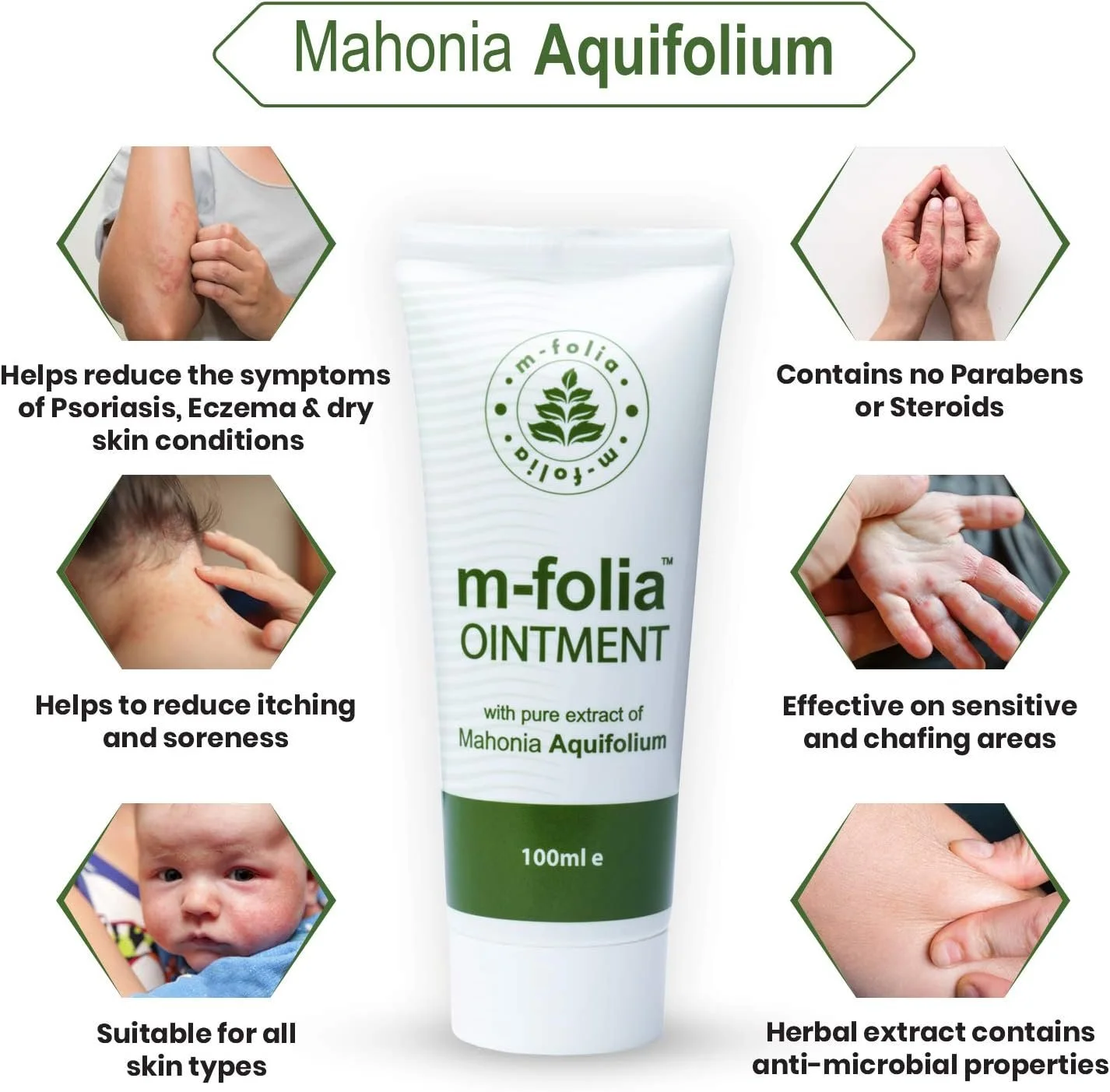
M-Folia Psoriasis Ointment with Mahonia Aquifolium
a topical ointment containing pure mahonia aquifolium extract in a white paraffin base, specifically formulated for psoriasis and eczema. Steroid-free, paraben-free, and fragrance-free — appropriate for psoriasis-prone skin where additional sensitising ingredients are a concern. As covered above, topical application of mahonia aquifolium has stronger clinical trial evidence for psoriasis than oral supplementation — this is the delivery format that the published RCTs studied. Apply two to three times daily to affected areas.
Downsides and limitations
1. Not as strong as medical treatments
Studies suggest it may be less effective than standard therapies
2. Possible irritation
Can cause burning, itching, or sensitivity in some people
3. Temporary results
Symptoms may return after stopping
4. Limited long-term evidence
Most studies are short-term or small-scale
Important safety considerations
Pregnancy: berberine crosses the placenta and has been associated with adverse effects on fetal development in animal studies. Oregon grape — oral or topical — should be avoided during pregnancy.
Breastfeeding: berberine passes into breast milk. Avoid during breastfeeding.
Drug interactions: berberine inhibits CYP3A4 and CYP2D6 — liver enzymes that metabolise many medications, including some antibiotics, anticoagulants, and immunosuppressants used in psoriasis management (methotrexate, ciclosporin). If you are on any prescription medication, check interactions with your GP or pharmacist before using Oregon grape supplements.
Skin irritation: topical Oregon grape can cause localised burning, itching, or sensitivity in some people. A 24-hour patch test on a small, unaffected area before wider application is prudent.
Liver health: high-dose oral berberine has been associated with liver enzyme elevation in some cases. This is more relevant to concentrated oral supplements than to topical use, and is one reason why topical is the preferred application route for psoriasis specifically.
When Oregon grape might help
It may be useful if:
you have mild to moderate psoriasis
you prefer natural topical options
you want to reduce reliance on stronger treatments
Think of it as symptom support—not a full solution.
Where it fits in a psoriasis management approach
Oregon grape's most appropriate role is as a topical treatment option for mild to moderate plaque psoriasis — particularly for people who want to reduce reliance on topical steroids (which can cause skin thinning with prolonged use) or who prefer a plant-based alternative with clinical evidence.
It is not a substitute for systemic treatment in moderate to severe disease. It does not address the underlying immune dysfunction driving psoriasis. Symptoms typically return when treatment is stopped, as with most topical psoriasis treatments. And it is less potent than prescription-strength topical steroids — studies suggest comparable efficacy to low-potency steroids rather than moderate or high-potency preparations.
Used in the context of a comprehensive approach — dietary support, trigger management, internal nutritional support — it is a genuine and worthwhile tool for a specific segment of the psoriasis population.
Skin support for psoriasis-prone skin
Topical treatments address the skin surface. The systemic immune dysregulation driving psoriasis requires internal support that no topical treatment can provide — zinc for immune regulation, vitamin D for immune modulation, vitamin C for antioxidant protection, and magnesium for inflammatory balance.
Drought's Skin Support Formula provides 14 nutrients selected for their roles in skin barrier function and immune regulation — working alongside topical approaches like Oregon grape to address the condition more comprehensively than either approach alone. Made in the UK, suitable for vegetarians, designed for consistent long-term daily use.
FAQs: Oregon grape & psoriasis
Does Oregon grape help psoriasis?
Yes — with more specific clinical evidence than most herbal psoriasis remedies. Multiple published trials using topical 10% Mahonia aquifolium extract have found significant reductions in psoriasis severity scores including PASI. One widely cited trial reported that over 60% of participants rated results equal to or better than their previous conventional treatment, and up to 84% rated overall results as good to excellent. The active compound berberine inhibits keratinocyte proliferation — directly targeting the hyperproliferation that is psoriasis's defining skin feature — and suppresses NF-κB, the master inflammatory transcription factor driving TNF-α and IL-17 production.
How does Oregon grape work for psoriasis?
Through three specific and complementary mechanisms. Berberine inhibits keratinocyte proliferation by reducing the G1-to-S cell cycle transition — slowing the three to five day psoriatic cell cycle closer to the normal 28-day rate. Berberine inhibits NF-κB activation, reducing the production of TNF-α, IL-6, and IL-1β that drive psoriatic inflammation. And berberine has documented antimicrobial activity against S. aureus — the bacterium that colonises psoriatic plaques and amplifies inflammatory severity through bacterial toxin production. These three mechanisms address the proliferative, inflammatory, and microbial dimensions of psoriasis simultaneously.
Is Oregon grape better than steroid creams for psoriasis?
Generally less potent but with a more favourable long-term profile. Direct comparison trials found Oregon grape extract produced meaningful but typically smaller reductions in PASI scores compared to moderate-potency topical corticosteroids over the same treatment period. The clinical relevance is that topical corticosteroids carry tachyphylaxis risk (reducing efficacy with prolonged use), skin atrophy risk at higher potencies, and are not appropriate for long-term facial or flexural use — contexts where Oregon grape's gentler mechanism makes it a more appropriate sustained option. Many dermatologists discuss Oregon grape as a steroid-sparing or intermittent maintenance option rather than a primary treatment replacement.
How long does Oregon grape take to work for psoriasis?
Most published trials show measurable improvements in scaling, redness, and plaque thickness within two to four weeks of twice-daily topical application. Significant improvements in PASI scores are typically documented at four to eight weeks. As with most psoriasis topical treatments, consistent daily application produces significantly better outcomes than intermittent use — the antiproliferative mechanism requires sustained berberine contact with plaque skin to influence the accelerated cell cycle.
Is Oregon grape safe for psoriasis?
Topical preparations at 10% extract concentration are generally well-tolerated in published trials — the most commonly reported side effect is mild transient burning or stinging on application, particularly on actively inflamed or thinned plaque skin. Avoid application to broken or weeping psoriatic skin where increased absorption may occur. Oregon grape belongs to the Berberidaceae family — contact sensitisation is possible with prolonged use, warranting patch testing before widespread application. Oral Oregon grape supplementation for psoriasis has limited evidence and different safety considerations — berberine at oral doses has drug interaction potential (CYP3A4 inhibition) that topical preparations don't carry at the same systemic exposure levels.
Can I use Oregon grape on my face or scalp for psoriasis?
With appropriate caution — facial psoriasis benefits specifically from steroid-sparing topicals given the skin thinning risk of potent corticosteroids on facial skin. Oregon grape cream at 10% concentration is one of the more appropriate options for mild-to-moderate facial psoriasis given its antiproliferative mechanism without corticosteroid-associated atrophy risk. Apply away from the eye margin — avoid periocular application where berberine absorption into the conjunctival tissue is a concern. For scalp psoriasis, liquid or lotion preparations are more practical than cream formats — though most commercial Oregon grape preparations are cream-based.
Where can I buy Oregon grape cream for psoriasis in the UK?
Oregon grape cream is not widely available in mainstream UK pharmacies — specialist herbal medicine retailers, online health stores, and some independent pharmacies stock 10% Mahonia aquifolium preparations. Look specifically for products stating 10% extract concentration — lower concentrations may not deliver the berberine dose used in published trials. Psoraflora and similar European-formulated Oregon grape preparations have the most specific published evidence base. Amazon UK stocks several options — verify the extract percentage and check for fragrance-free formulation given psoriatic skin's elevated fragrance contact allergen sensitivity.
Summary
Oregon grape (Mahonia aquifolium) is one of the best-evidenced herbal treatments available for psoriasis — with multiple randomised controlled trials showing meaningful improvements in PASI scores and clinician-rated outcomes for mild to moderate plaque psoriasis at a 10% topical concentration. Its mechanism — berberine inhibiting keratinocyte proliferation through T-cell modulation and cell cycle regulation — is specific and clinically coherent. Its limitations are equally important: it suits mild to moderate disease, is less potent than prescription steroids, doesn't prevent relapse, and requires awareness of pregnancy contraindication and drug interactions. Within those parameters, it is a legitimate, evidence-backed addition to a comprehensive psoriasis management approach.
Written by the Drought Skin team — specialists in natural support for psoriasis, eczema and acne
Disclaimer: This article contains affiliate links. We earn a very small commission from each purchase made through these links. There is no additional cost to you. All products featured have been specifically selected as products we personally use and love. For further information, please see our disclaimer page.
-
Ayurvedic Treatment for Psoriasis: What Works, What Doesn't & What to Know
Milk Thistle for Psoriasis: Does It Actually Help?
Psoriasis Skincare Routine: What Actually Helps, What to Avoid & Common Mistakes
Types of Psoriasis Explained: Symptoms, Appearance & How They Differ
Best Herbal Teas for Psoriasis & Eczema: What the Evidence Shows
