
Soy and Eczema: Who Needs to Be Careful and Who Doesn't
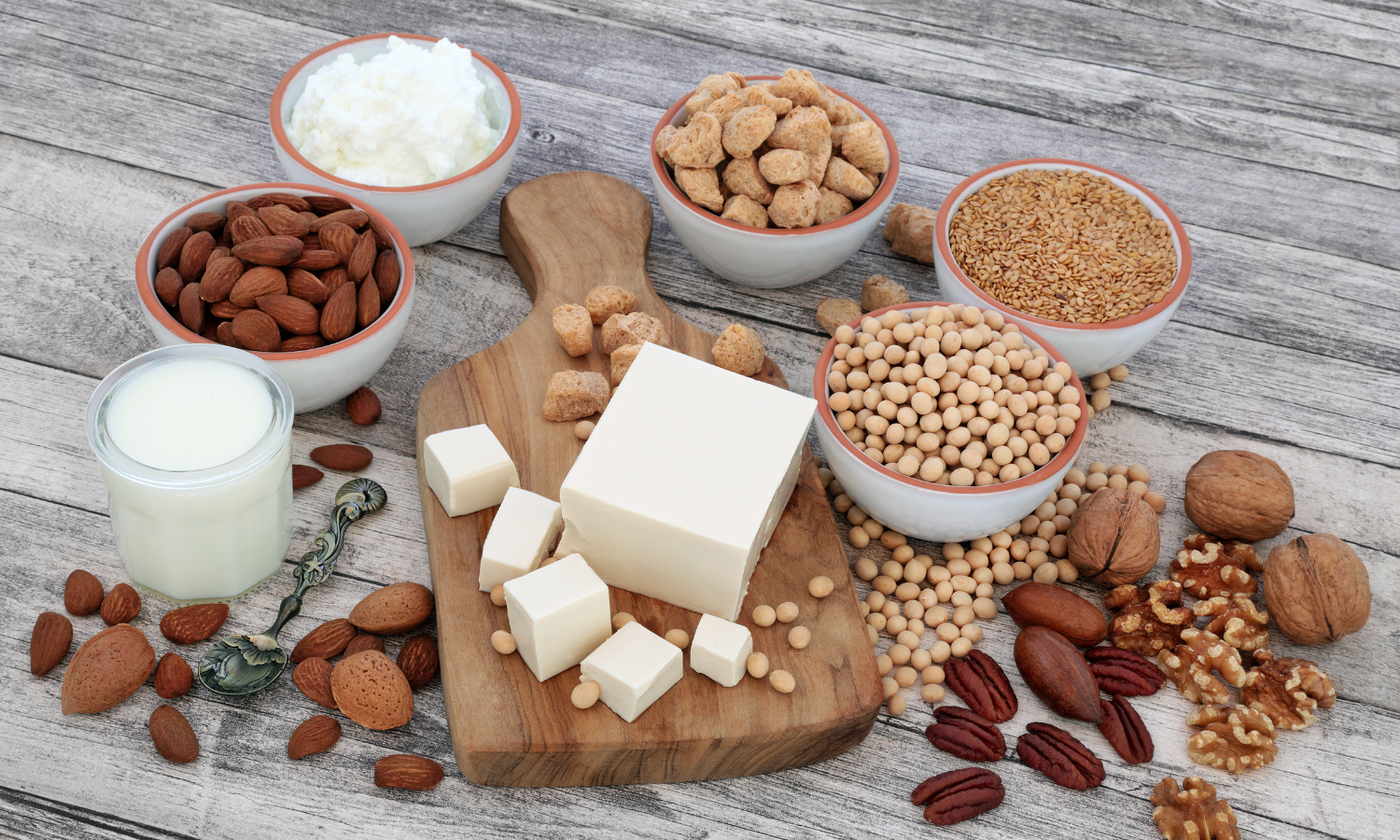
Soy generates more anxiety in the eczema community than it probably deserves for most adults — while being genuinely important to investigate for children with moderate-to-severe eczema. The key is understanding who soy is and isn't likely to be a significant trigger for, and why the answer differs substantially by age and eczema severity.
Soy & Eczema: Can Soy Trigger Flare-Ups?
Soy is one of the most debated foods in the eczema world.
Some people believe removing soy dramatically improved their skin, while others eat soy regularly with no noticeable issues at all. And because soy appears in so many foods — from plant milks to protein bars and processed snacks — it’s become a common ingredient people question when trying to identify eczema triggers.
The reality is that eczema is extremely individual.
For some people, soy may contribute to irritation through:
Allergies
Food sensitivities
Processed food intake
Immune reactions
But for many others, soy causes no problems whatsoever and may even provide beneficial nutrients as part of a balanced diet.
Soy may trigger eczema symptoms for some individuals, but reactions vary significantly from person to person.
Why Soy Is Discussed In Eczema
Soy is one of the major food allergens recognised in many countries.
Researchers know food allergies can sometimes overlap with eczema, especially in children with more severe atopic eczema.
Soy appears in many foods including:
Soy milk
Tofu
Edamame
Vegan products
Protein powders
Processed snacks
Sauces and packaged foods
Because eczema flare-ups can feel unpredictable, soy often becomes one of the foods people experiment with removing.
Food triggers are usually highly individual rather than universal.

Soy as an IgE-mediated allergen: the paediatric picture
Soy is one of the most common IgE-mediated food allergens in childhood — alongside cow's milk, egg, wheat, peanut, and fish. In children with moderate-to-severe atopic eczema, food allergy investigation commonly includes soy because the prevalence of soy-triggered reactions is meaningfully higher in this population than in the general public.
The mechanism is straightforward: soy proteins (particularly Gly m 8, the major soy allergen) are recognised by IgE antibodies produced during sensitisation. Exposure triggers mast cell degranulation, histamine release, and the inflammatory cascade that can produce immediate reactions (urticaria, swelling, gut symptoms) and delayed worsening of eczema in the hours or days after exposure.
For children with moderate-to-severe eczema whose condition is not adequately controlled by topical treatment, soy allergy assessment through a GP or paediatric allergist — alongside the other top-five allergens — is a clinically appropriate step. As covered in the allergies and eczema article in this series, this should involve formal testing rather than unsupervised elimination, particularly in children.
In adults: much less commonly a significant trigger
Adult atopic eczema is a different clinical picture from childhood atopic eczema. IgE-mediated food allergy is considerably less commonly a primary eczema driver in adults than in children. Many children who have soy allergy-related eczema outgrow their soy allergy by adolescence, and adult-onset soy sensitivity as a primary eczema driver is uncommon.
This doesn't mean no adult with eczema reacts to soy — non-IgE-mediated delayed sensitivity can occur at any age and is not detectable by standard allergy tests. But for most adults with eczema who haven't specifically noticed a consistent correlation between soy intake and skin worsening, eliminating soy without a clear hypothesis is low-yield and unnecessarily restrictive.
Soy Allergy vs Soy Sensitivity
One important distinction is the difference between:
A true soy allergy
A suspected sensitivity or intolerance
Soy Allergy
A soy allergy involves an immune response and may trigger:
Hives
Itching
Swelling
Digestive symptoms
Eczema flare-ups
Soy allergy is more common in children and may overlap with eczema.
Soy Sensitivity
Some people report feeling better reducing soy without having a diagnosed allergy, although evidence around food sensitivities remains more controversial.
Not every eczema flare after eating soy automatically means a true allergy is present.
Non-IgE soy sensitivity: when testing doesn't capture it
As covered in the elimination diet article in this series, non-IgE-mediated food sensitivities produce delayed reactions (hours to days) that standard skin prick tests and specific IgE blood tests don't detect. Someone can test negative for soy allergy and still have a non-IgE-mediated delayed reaction that worsens their eczema.
The only way to identify this is through a structured elimination trial — removing all soy for four to six weeks, then reintroducing it systematically. If skin consistently worsens on reintroduction and improves on removal (confirmed at least twice), non-IgE soy sensitivity is likely. Discuss this with a registered dietitian before undertaking significant food group elimination.
Can Soy Actually Worsen Eczema?
For some people, potentially yes.
Research suggests food allergies may worsen eczema symptoms in certain individuals — particularly children with moderate-to-severe eczema.
However, researchers also stress that:
Most eczema is not caused solely by food
Elimination diets don’t help everyone
Over-restricting foods may sometimes worsen stress and nutrition
The fermented soy distinction
Not all soy foods are equivalent. Fermented soy products — tempeh, miso, natto, and some forms of soy sauce — undergo bacterial and fungal fermentation that changes the protein structure significantly.
The fermentation process partially degrades the soy proteins that drive IgE reactions. This means that some people with soy sensitivity tolerate fermented soy products better than unfermented ones (tofu, edamame, soy milk). Additionally, fermented soy provides probiotic bacteria — supporting the gut microbiome in ways that may benefit eczema through the gut-skin axis. This is not universal: some people with soy allergy react to fermented forms too, particularly if the allergy is to the stable Gly m 8 protein. But it's worth noting that fermented soy is a different dietary exposure from the unfermented forms most commonly eliminated.
The processed soy point: often more relevant than soy itself
Highly processed soy-containing foods — soy protein isolate in protein bars, textured soy protein in processed meat substitutes, soy-based ready meals — often contain other ingredients that are more likely to affect eczema than the soy itself. Emulsifiers (polysorbate 80, carrageenan) have been studied for gut microbiome disruption; refined oils and added sugars contribute to glycaemic load and inflammatory signalling. When someone removes "soy foods" and their eczema improves, the improvement may relate to the general reduction in ultra-processed food rather than soy specifically.
The isoflavone-oestrogen question
Soy isoflavones (genistein, daidzein) are phytoestrogens — plant compounds that weakly bind oestrogen receptors. As covered in the eczema and contraceptive pill article in this series, oestrogen influences the immune shift toward Th2 dominance that drives atopic eczema. The phytoestrogenic activity of soy isoflavones is considerably weaker than endogenous oestrogen (approximately 1/1000th the binding affinity), and the clinical evidence that soy isoflavones meaningfully worsen eczema through hormonal mechanisms is not established.
This is sometimes used to recommend avoiding soy in eczema — but at dietary amounts from whole soy foods, the phytoestrogenic effect is not a clinically significant concern for most people. It remains a theoretical consideration worth noting rather than a reason for blanket soy avoidance.
Why Restrictive Diets Can Become Problematic
One of the biggest eczema diet mistakes is becoming overly restrictive without proper guidance.
Eliminating too many foods may potentially lead to:
Nutrient deficiencies
Stress around eating
Poor diet quality
Reduced protein intake
Dermatologists and allergy organisations often recommend caution with unnecessary elimination diets.
Long-term balance is usually more sustainable than extreme restriction.
A practical framework
For children with moderate-to-severe eczema not controlled by topical treatment: formal allergy assessment including soy is clinically appropriate through a GP or paediatric allergist.
For adults who have noticed a consistent correlation between soy intake and eczema worsening: a structured four-to-six week elimination trial with systematic reintroduction is the appropriate investigation — ideally with dietitian guidance.
For adults without a specific hypothesis about soy: broad soy elimination is unlikely to be the highest-yield dietary change. Focusing on general anti-inflammatory dietary patterns (Mediterranean diet, reduced alcohol and processed food, adequate omega-3) is more evidence-based.
Signs Soy May Be Affecting Your Skin
Some people notice flare-ups linked to soy alongside symptoms like:
Itching after eating
Digestive discomfort
Hives
Increased redness
Recurrent flare-ups after certain foods
However, food tracking can become confusing because eczema symptoms are often delayed and influenced by multiple triggers simultaneously.
Identifying triggers usually requires looking at long-term patterns rather than single meals.
Supplement Support for Dry, Sensitive Skin
Soy is one dietary variable among many. The nutritional foundations most relevant to eczema — vitamin D, zinc, omega-3, and magnesium — address the immune and barrier dimensions that dietary trigger management addresses only partially.
Drought's Skin Support Formula provides 14 nutrients including vitamin D, zinc, vitamin C, and magnesium — addressing the internal nutritional foundations of eczema management that no single food elimination can cover. Made in the UK, suitable for vegetarians, designed for consistent long-term daily use.
Common Mistakes People Make With Soy & Eczema
Assuming Soy Is Automatically “Bad”
Many people tolerate soy perfectly well.
Becoming Overly Restrictive
Extreme elimination diets may increase stress and nutrient deficiencies.
Ignoring Processed Food Intake
Highly processed diets may affect inflammation more broadly.
Forgetting Skin Barrier Support
Eczema management still heavily revolves around protecting the skin barrier.
FAQ
Can soy trigger eczema?
In children with IgE-mediated soy allergy — yes, sometimes significantly. In most adults without a specific observed soy correlation — it's not a common primary driver.
Is soy bad for eczema?
Soy affects everyone differently. Some people tolerate it well, while others may react to it.
How do I know if soy is triggering my eczema?
Formal allergy testing (for IgE-mediated allergy) or a structured four-to-six week elimination trial with systematic reintroduction (for non-IgE sensitivity). Discuss with a GP or registered dietitian.
Can soy allergy cause eczema?
Soy allergies may worsen eczema symptoms in certain individuals, particularly children.
Is fermented soy better for eczema?
Often better tolerated than unfermented soy for people with soy sensitivity — fermentation partially degrades allergenic proteins and adds probiotic benefit. Not guaranteed for all soy-sensitive individuals.
Does soy milk affect eczema?
For people with soy sensitivity, yes. For most people, soy milk is a reasonable dairy alternative with no specific eczema impact.
Is soy worse for eczema than dairy?
Dairy has stronger and more consistent evidence as an eczema trigger in both children and adults than soy does. Soy is primarily significant in paediatric eczema specifically.
Is tofu bad for eczema?
Tofu is a whole soy food and may be tolerated well by many people unless they have a soy allergy or sensitivity.
Are processed soy foods inflammatory?
Highly processed foods may contribute to inflammatory stress more broadly, depending on the overall diet.
Should I remove soy if I have eczema?
Only if you have a specific hypothesis — a consistent pattern suggesting soy correlates with flares. Unsupervised broad elimination without a clear reason risks nutritional deficiency and provides no diagnostic information.
Summary
Soy is a top-five IgE-mediated allergen in paediatric eczema and warrants formal allergy investigation in children with significant, poorly controlled eczema. In adults, it is considerably less commonly a primary eczema driver — non-IgE-mediated delayed sensitivity exists but should be investigated through structured elimination rather than assumed. Fermented soy differs meaningfully from unfermented soy in protein structure and gut microbiome effects. For most adults with eczema who haven't noticed a specific soy correlation, broad soy elimination is less useful than focusing on overall dietary pattern quality.
In Short
Soy is a common allergen for some individuals
Certain people with eczema can react to soy-containing foods
Highly processed soy foods may affect inflammation differently from whole soy foods
Research linking soy directly to eczema flare-ups remains mixed
Soy elimination addresses one potential dietary trigger — vitamin D and zinc address the nutritional deficiencies that persist independently of which foods are removed. Drought's Skin Support Formula provides both alongside 12 other nutrients, supporting the internal foundations that dietary elimination alone doesn't correct. Made in the UK, suitable for vegetarians, designed for consistent long-term daily use.
Start your skin support journey →
Written by the Drought Skin team — specialists in natural support for psoriasis, eczema and acne
Disclaimer: This article contains affiliate links. We earn a very small commission from each purchase made through these links. There is no additional cost to you. All products featured have been specifically selected as products we personally use and love. For further information, please see our disclaimer page.
-
The Eczema Diet: Best Foods, Common Triggers & How to Find Your Pattern
Eczema and Allergies: The Connection, Common Triggers & What Actually Helps
The Elimination Diet for Eczema & Psoriasis: How to Do It Right & When It Helps
How Cutting Dairy Out of Your Diet Can Help Clear Up Acne
The Best Probiotics for Eczema: What the Evidence Actually Shows
