
Is Hyaluronic Acid Good for Acne?

Hyaluronic acid is one of the most searched skincare ingredients for acne — largely because it's confusing. People wonder whether a hydrating ingredient is appropriate for oily, acne-prone skin, whether it clogs pores, and whether it does anything useful beyond making skin feel plumper.
The answers are: yes, no, and yes — but understanding why requires knowing a bit about what hyaluronic acid actually is and how it works. This is a short, clear account.
Hyaluronic Acid for Acne: Helpful Hydration or Another Skincare Trend?
Hyaluronic acid has become one of the most talked-about skincare ingredients in recent years.
It’s commonly promoted for:
Hydration
Plumper-looking skin
Barrier support
Sensitive skin routines
But many people with acne-prone skin wonder:
Can hyaluronic acid actually help acne?
Will it clog pores?
Or is it simply another overhyped skincare trend?
The reality is that hyaluronic acid isn’t usually considered a direct acne treatment — but it may help support the skin in other important ways.
What hyaluronic acid is and how it works
Hyaluronic acid (HA) is a naturally occurring polysaccharide found throughout the body — in joints, connective tissue, and the dermis of the skin. Its primary property is hygroscopic: it attracts and holds water molecules, holding up to 1,000 times its weight in water. In skin, it is a key component of the extracellular matrix and plays a central role in maintaining hydration, tissue elasticity, and wound healing.
In topical skincare, HA functions as a humectant — drawing moisture from the environment (and from deeper skin layers) to the skin surface. It doesn't add moisture from outside; it relocates and retains water within the skin.
Molecular weight matters more than most articles acknowledge. HA comes in several molecular weight variants, and they behave differently on skin:
High molecular weight HA (>1,000 kDa) sits on the skin surface, forms a hydrating film, and reduces transepidermal water loss without significantly penetrating the skin. This is the form in most topical serums and moisturisers and is the best-tolerated for acne-prone skin.
Low molecular weight HA (<50 kDa) can penetrate into the epidermis. This deeper penetration is sometimes marketed as more effective, but research has also found that very low molecular weight HA fragments can trigger inflammatory responses in some skin types — which is particularly worth being aware of for acne-prone skin where existing inflammation is already elevated.
Multi-weight HA products — which combine several molecular weights — are the most common commercial approach, providing both surface hydration and some epidermal penetration. For most acne-prone skin, these are well-tolerated.
Why HA is useful in an acne routine — specifically
Hyaluronic acid doesn't treat acne. It won't reduce sebum production, kill C. acnes, unclog pores, or reduce comedone formation. If you're looking for something that directly addresses breakouts, salicylic acid, benzoyl peroxide, niacinamide, and retinoids are the relevant actives.
Where HA is specifically useful in an acne routine is in managing the side effects of those actives. Retinoids, benzoyl peroxide, and salicylic acid all produce varying degrees of dryness, peeling, and barrier disruption during use — particularly when first introduced. This barrier disruption is one of the main reasons people abandon effective acne treatments: they make skin feel worse before it looks better.
Applying a lightweight HA serum under moisturiser cushions this dryness and helps the skin tolerate active treatments more comfortably. It is a supportive ingredient in an acne routine, not an active treatment — used to keep the skin well-hydrated enough to continue using the ingredients that actually address acne.
Additionally — as covered in the acne skincare article in this series — barrier-compromised, dehydrated skin produces more sebum as a compensatory response. Maintaining adequate skin hydration through HA reduces this reactive sebum cycle.
Does hyaluronic acid clog pores?
No. Hyaluronic acid is non-comedogenic — its molecular structure is water-soluble and it does not block follicles. It is one of the most reliably non-comedogenic ingredients in skincare.
The confounding issue is the formula it appears in. An HA serum in a lightweight, water-based base is almost certainly non-comedogenic. An HA moisturiser in a thick, occlusive cream base may contain other ingredients — emollients, silicones, oils — that are comedogenic. The HA itself isn't the problem; the surrounding formula may be.
Potential Benefits of Hyaluronic Acid for Acne-Prone Skin
While results vary between individuals, some people report positive experiences using hyaluronic acid consistently.
Possible benefits may include:
Helping skin feel more hydrated
Supporting the skin barrier
Reducing tightness from acne treatments
Improving overall skin comfort
Some people also find hydrated skin feels:
Less irritated
Less reactive
Easier to manage
Hydrated skin often tolerates skincare routines better overall.
Can HA help with acne marks?
Post-inflammatory hyperpigmentation (the flat dark marks left after spots clear) is not meaningfully addressed by HA alone. Niacinamide, azelaic acid, vitamin C, and alpha arbutin have better evidence for fading PIH.
True acne scarring (textural changes — ice pick, rolling, boxcar scars) requires treatments that reach the dermis — microneedling, fractional laser, chemical peels. Surface hydration from HA doesn't address structural tissue changes.
Where HA may indirectly help is in supporting the barrier during recovery — a well-hydrated skin heals more efficiently than a dry, compromised one, which can slightly improve how quickly surface marks fade. But it's a supportive rather than a targeted effect.
Can Hyaluronic Acid Make Acne Worse?
For most people, hyaluronic acid is considered fairly gentle.
However, not every product works for every skin type.
Some products may contain:
Fragrance
Alcohol
Heavy ingredients
Multiple active ingredients
These additions may irritate sensitive or acne-prone skin in some cases.
Using too many products at once may also overwhelm the skin.
The overall formula often matters more than the hyaluronic acid itself.
Supplement Support for Acne-Prone Skin
HA in skincare addresses surface hydration. The internal drivers of acne — sebum oxidation, C. acnes activity, hormonal influences, and immune-mediated inflammation — are not addressed by topical HA.
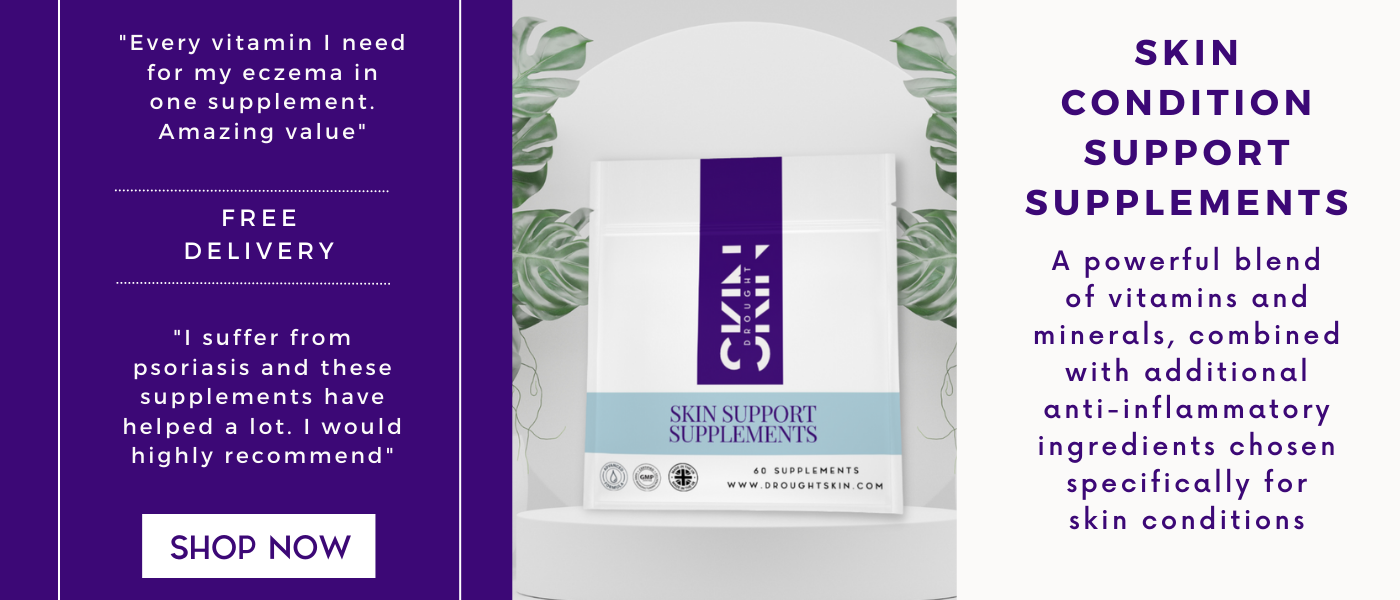
Zinc, vitamin D, and vitamin C each have documented relevance to these internal mechanisms. Drought's Skin Support Formulaprovides 14 nutrients including these alongside other skin-health-relevant compounds — addressing the nutritional dimension of acne that topical skincare cannot reach. Made in the UK, suitable for vegetarians, designed for consistent long-term daily use.
How to use HA correctly for acne-prone skin
Apply to damp skin. Because HA is a humectant that draws water from its environment, applying it to completely dry skin in a dry environment can actually pull moisture from the skin surface rather than adding it. Apply to slightly damp skin immediately after cleansing — or mist the face lightly before applying.
Layer correctly. HA serum goes on first (lightest layer), followed by treatment actives, followed by moisturiser to seal the hydration in. In an acne routine: cleanser → HA serum → niacinamide or BHA (evening, or retinoid on alternate evenings) → lightweight moisturiser → SPF (morning only).
Use a lightweight formula. For acne-prone skin, a water-based HA serum is preferable to HA within a heavy cream. It delivers the hydration benefit without adding occlusive or potentially comedogenic ingredients.
Recommended Products
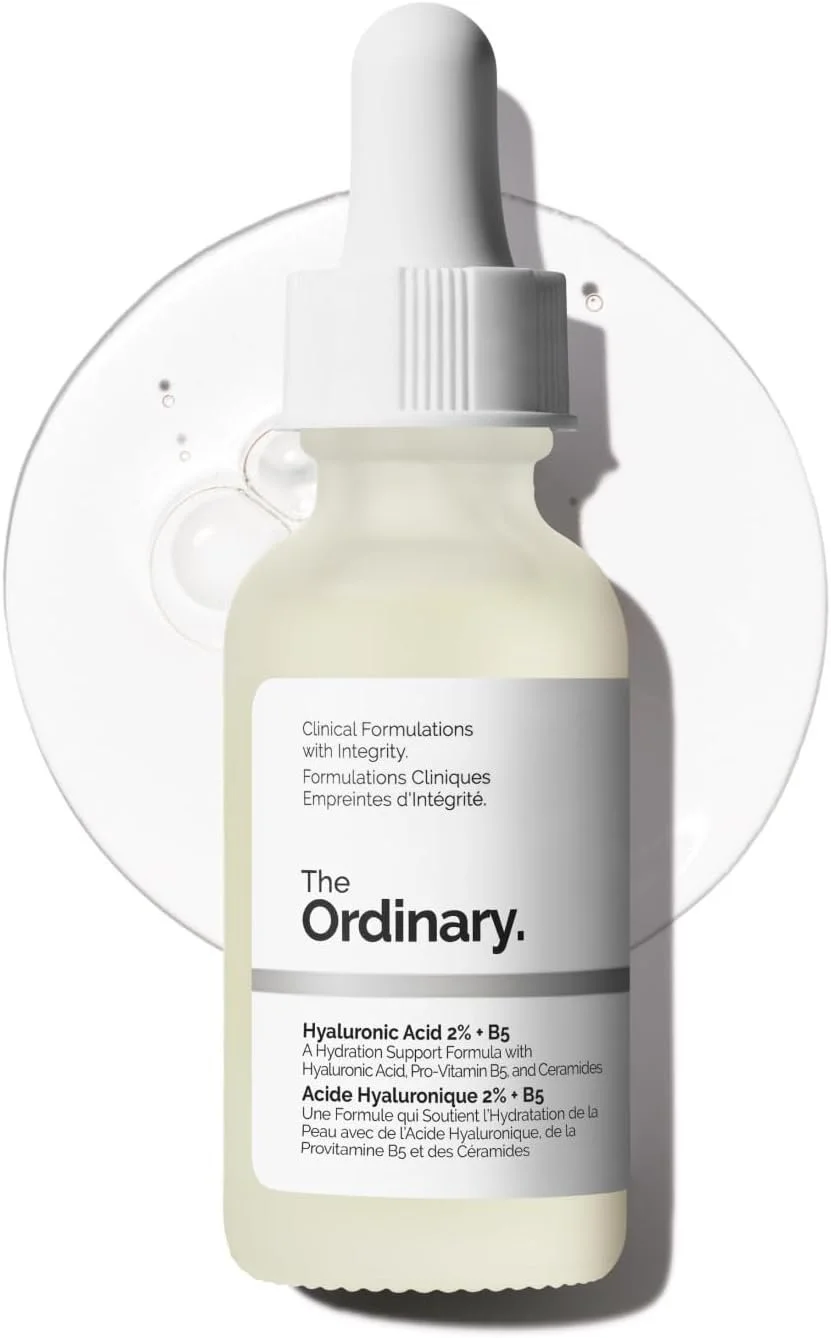
The Ordinary Hyaluronic Acid 2% + B
a lightweight, water-based serum combining multiple molecular weights of HA with vitamin B5 (pantothenic acid) for additional skin barrier support. One of the most widely used and reliably non-comedogenic HA products available in the UK. Fragrance-free and inexpensive enough for daily use.
FAQ
Can hyaluronic acid cure acne?
No — hyaluronic acid is not considered a cure for acne. It’s mainly used to support hydration and the skin barrier.
Does hyaluronic acid help acne?
Not directly — it doesn't address any of acne's primary mechanisms. It helps maintain skin hydration during acne treatment, making active ingredients more tolerable and reducing reactive sebum production.
Is hyaluronic acid good for oily skin?
Yes — dehydrated skin (lacking water, not oil) produces more sebum as compensation. HA addresses the water deficit without adding oil, and can reduce the reactive sebum response in skin that's been over-stripped.
Can hyaluronic acid clog pores?
No — HA is non-comedogenic. Any pore-clogging would come from other ingredients in the formula, not HA itself.
Should I use hyaluronic acid with acne treatments?
Some people use it alongside acne products to help reduce dryness and irritation.
Can hyaluronic acid make acne worse?
For most people, no. Very low molecular weight HA fragments can trigger mild inflammatory responses in some skin types — but this is uncommon with standard topical products and not a relevant concern for high or multi-weight HA serums.
Should I use hyaluronic acid with retinol for acne?
Yes — this is one of the most useful combinations. HA before and/or after retinoid application significantly reduces retinoid-induced dryness and peeling, making it easier to build retinoid tolerance.
Does hyaluronic acid fade acne marks?
Not directly. For PIH (flat dark marks), niacinamide, azelaic acid, or vitamin C have better evidence. HA supports general barrier health and recovery, which may slightly improve healing speed.
Summary
Hyaluronic acid is a safe, non-comedogenic humectant that plays a useful supporting role in acne routines — primarily by cushioning the dryness and barrier disruption caused by effective acne actives (retinoids, BPO, BHAs) and by reducing the reactive sebum production that dehydrated skin triggers. It is not an acne treatment. It does not clog pores. The molecular weight of the HA matters — high molecular weight HA on the surface is the best-tolerated form for acne-prone skin. Apply to damp skin before actives and moisturiser for best results.
In Short
Hyaluronic acid is mainly used for hydration
It may help support the skin barrier and reduce dryness
Some people find it helpful alongside acne treatments
It’s not usually considered a direct acne “cure”
Overcomplicated skincare routines may still irritate the skin
Hyaluronic acid maintains hydration at the surface — the hormonal, immune, and nutritional drivers of acne operate internally. Drought's Skin Support Formula provides zinc, vitamin D, and 12 other nutrients addressing these internal dimensions alongside your topical routine. Made in the UK, suitable for vegetarians, designed for consistent long-term use.
Start your skin support journey →
Written by the Drought Skin team — specialists in natural support for psoriasis, eczema and acne
Disclaimer: This article contains affiliate links. We earn a very small commission from each purchase made through these links. There is no additional cost to you. All products featured have been specifically selected as products we personally use and love. For further information, please see our disclaimer page.
-
Acne Skincare Routine: What Actually Works, What to Avoid & Common Mistakes
Cetyl Alcohol for Acne: Is It Safe or Does It Clog Pores?
The Benefits of Using Serums for Acne Sufferers
Is Vitamin E Good for Acne? What the Evidence Actually Shows
Microdermabrasion for Acne: When It Helps, When It Harms & What Works Better
