

Eyelid eczema is one of the most uncomfortable and most visible places for eczema to appear — the skin is among the thinnest on the body (approximately 0.5mm), it moves constantly, it's exposed to wind, sunlight, and products more than almost any other area, and reactions there produce disproportionate swelling and redness because of the loose subcutaneous tissue.
It's also frequently mismanaged — most commonly by using steroid creams that carry specific and serious risks around the eyes, or by failing to investigate the contact allergy cause that is responsible for a significant proportion of eyelid eczema cases.
Eyelid eczema is often linked to irritation, sensitivity and inflammation — which means identifying triggers is usually just as important as treating symptoms.
The three most common types of eyelid eczema
Atopic eczema on the eyelids. In people with atopic dermatitis, the eyelids and periorbital area are one of the most commonly affected facial sites, particularly in adults. Chronic atopic eyelid eczema produces characteristic darkening and thickening of the eyelid skin, known as Dennie-Morgan lines (double fold lines under the eyes). The mechanism is the same as atopic eczema elsewhere — filaggrin barrier dysfunction, Th2 immune dysregulation, and IgE sensitisation.
Allergic contact dermatitis of the eyelids. This is the most commonly missed cause of eyelid eczema and the type most responsive to specific investigation. The eyelid skin is the most sensitive area on the body for contact sensitisation — contact allergens that cause no reaction elsewhere can produce significant reactions at the eyelid. Common causes include: eye makeup (mascara, eyeliner, eyeshadow), eye creams and serums, contact lens solutions, metal allergens (nickel from glasses frames), and — most commonly missed — nail polish. The allergen in nail polish (tosylamide formaldehyde resin, or similar resins) transfers from fingernails to eyelid skin when people rub their eyes, and many people don't connect their eyelid eczema to their nail polish.
Seborrhoeic dermatitis. Affecting the eyelid margins (blepharitis) rather than the whole eyelid, seborrhoeic dermatitis produces a greasier, yellowish scaling along the lash line driven by Malassezia yeast overgrowth. Unlike atopic and contact eyelid eczema, it responds to antifungal approaches rather than emollient and steroid management.
Why identifying the cause matters more here than elsewhere
At other eczema sites, general management (emollient, topical steroids in short courses) often helps regardless of whether the specific cause is identified. At the eyelids, this approach is more limited because:
Topical steroid risks are highest here. The eyelid skin's thinness, its proximity to the eye, and the occlusive effect of the closed eyelid during sleep mean that topical steroids applied to the eyelids penetrate more systemically and reach the eye itself. Prolonged use of topical corticosteroids near the eyes raises intraocular pressure and is associated with open-angle glaucoma and cataracts. Even mild steroids should be used sparingly on eyelids and only under medical guidance.
Contact allergy eyelid eczema won't resolve without allergen identification. If contact dermatitis is driving the eyelid eczema, no amount of emollient or steroid will produce lasting improvement — the allergen is continuously reapplying the trigger. Patch testing by a dermatologist identifies the specific allergen and is the appropriate investigation for eyelid eczema that doesn't respond to standard management.
Contact allergens commonly causing eyelid eczema
Eye makeup: mascara (particularly black dyes), eyeliners, and eyeshadow — fragrance and preservative components are the most common allergens.
Eye creams and serums: fragrance, preservatives (MI/MCI), and vitamin E derivatives in eye products can all cause contact sensitisation.
Nail polish: tosylamide formaldehyde resin transferred from fingernails. The patient never puts nail polish near their eyes — but rubbing the eyes transfers the allergen repeatedly. Classic presentation is eyelid eczema that clears when nail polish is removed for a week.
Contact lens solutions: preservatives such as benzalkonium chloride (BAK) are common contact allergens, particularly in people who wear contact lenses for long periods.
Metals: nickel in glasses frames contacts the eyelid at the bridge and nose area. Less common but worth investigating in people who wear glasses..
What is safe to use on eyelid eczema
Emollient. Pure, fragrance-free, preservative-minimal emollient is the safest and most appropriate first step. Petroleum jelly (applied very carefully, avoiding direct eye contact) is one of the most inert options. Products designed specifically for the eye area with minimal ingredient lists are preferable to general face moisturisers.
Calcineurin inhibitors — the preferred treatment for chronic eyelid eczema. Tacrolimus ointment (Protopic) and pimecrolimus cream (Elidel) are steroid-sparing treatments that do not cause skin thinning and do not carry the intraocular pressure risk of topical steroids. They are the dermatological standard for chronic, recurrent eyelid eczema management. Available on prescription from a GP or dermatologist. Tacrolimus 0.03% is the appropriate concentration for the eyelid area.
Topical corticosteroids — short courses only, lowest potency, under medical guidance. Hydrocortisone 1% used for no more than seven to ten days at a time, with breaks between courses. Never use moderate or potent topical steroids on eyelid skin.
Cold compresses. Simple and effective for reducing swelling and itch during acute flares. A clean, damp cool cloth applied for a few minutes provides immediate comfort without any product exposure risk.
Recommended Products
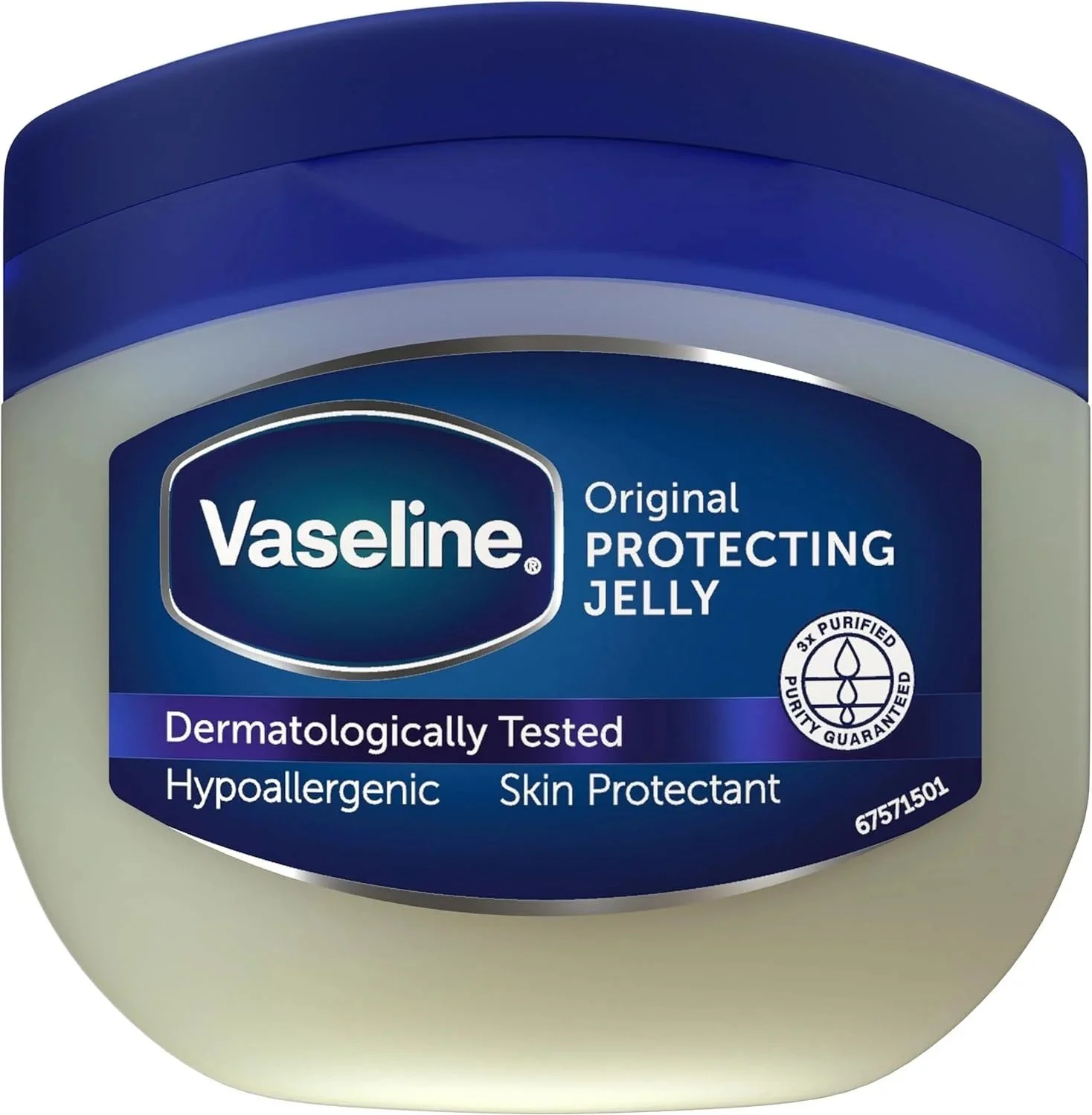
Vaseline Original Pure Petroleum Jelly
pure petroleum jelly applied very carefully to the eyelid skin (avoiding direct contact with the eye itself) is one of the most appropriate emollient options for this location. Single ingredient, no fragrance, no preservatives, no additives — the minimum possible ingredient exposure on the most sensitive and most permeable facial skin. Apply with a clean fingertip in a thin layer, avoiding the lash line and eye margin.
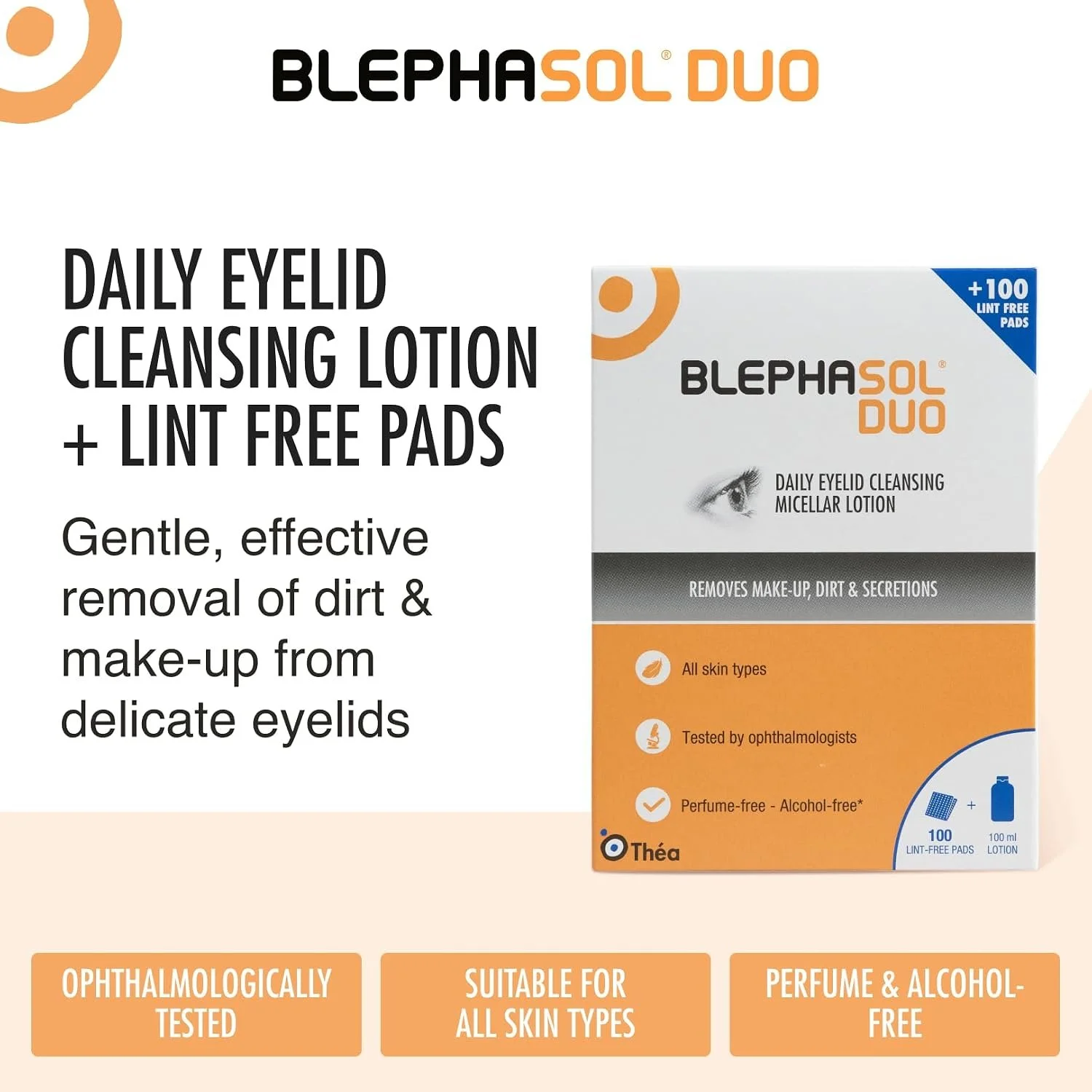
Blephasol Duo Eyelid Hygiene Solution
a preservative-free, fragrance-free micellar solution specifically formulated for eyelid hygiene. Particularly relevant for the seborrhoeic dermatitis type of eyelid eczema where gentle eyelid cleansing alongside antifungal management is the standard approach. Removes Malassezia-feeding sebum and debris from the lash line without the fragrance, preservative, or alcohol content of standard facial cleansers.
What to avoid
Fragrance in any product near the eyelid area. This includes eye creams, makeup removers, and any skincare applied to the face that spreads to the eyelid.
Alcohol-based products near the eyes. Common in toners and setting sprays — causes direct irritation and barrier disruption on the thinnest skin on the body.
Moderate or potent topical steroids. Betamethasone, clobetasol, and similar preparations should never be applied to eyelid skin. The glaucoma risk is real and documented.
Rubbing. Mechanical friction on already-compromised eyelid skin worsens barrier damage and can worsen existing eczema through physical trauma. Use gentle patting rather than rubbing when cleansing or drying.
When to see a dermatologist
Eyelid eczema that doesn't improve with simple emollient and trigger avoidance over two to three weeks warrants GP discussion. If patch testing hasn't been done, a dermatologist referral for contact allergy investigation is the most important diagnostic step — particularly for adult-onset eyelid eczema that appears without obvious atopic history.
If there is any concern about vision changes, eye redness, or halos around lights during a period of topical steroid use near the eye, seek same-day GP or optometrist assessment. These may indicate elevated intraocular pressure.
Supplement Support for Sensitive, Dry Skin
Eyelid eczema — when atopic — is driven by the same internal immune and nutritional factors as eczema elsewhere. Vitamin D, zinc, and omega-3s support the barrier and immune pathways relevant to atopic eczema regardless of location.
Drought's Skin Support Formula provides 14 nutrients including vitamin D, zinc, vitamin C, and magnesium — addressing the internal foundations of atopic eczema that topical eyelid care alone cannot reach. Made in the UK, suitable for vegetarians, designed for consistent long-term daily use.
FAQ
Can eczema appear only on the eyelids?
Yes. Some people only experience eczema around the eyes, while others have symptoms elsewhere on the body too.
What causes eczema on eyelids?
The three most common causes are atopic eczema (filaggrin barrier dysfunction), allergic contact dermatitis (to makeup, eye creams, nail polish, or metals), and seborrhoeic dermatitis (Malassezia yeast). Each requires different management.
Is steroid cream safe for eyelid eczema?
Only at the lowest potency (hydrocortisone 1%), in short courses, under medical guidance. Prolonged topical steroid use near the eyes risks raised intraocular pressure, glaucoma, and cataracts.
What is the best treatment for eyelid eczema?
For chronic atopic eyelid eczema, tacrolimus ointment (Protopic) — a calcineurin inhibitor — is the dermatological standard. It is steroid-sparing and doesn't carry the intraocular pressure risk. For contact eyelid eczema, allergen identification through patch testing is the most important step.
Can nail polish cause eyelid eczema?
Yes — tosylamide formaldehyde resin in nail polish transfers from fingernails to eyelid skin when rubbing the eyes. The eczema appears on the eyelids, not near the nails. Removing nail polish for a week typically confirms this cause.
Why does eyelid eczema swell so much?
The subcutaneous tissue under eyelid skin is very loose — it holds fluid easily. Even mild inflammation produces disproportionate visible swelling compared to thicker-skinned areas.
When should I see a doctor for eyelid eczema?
If it doesn't improve with simple emollient over two to three weeks, if there is any vision concern during topical steroid use, or if adult-onset eyelid eczema appears without obvious atopic history — patch testing through a dermatology referral is the appropriate next step.
Can makeup trigger eyelid eczema?
Yes — and through more routes than direct eyelid application. Mascara's black dyes, eyeshadow pigments, and eyeliner preservatives can all cause allergic contact dermatitis at the eyelid. More commonly missed is the transfer mechanism — nail polish allergens (tosylamide formaldehyde resin), hair product residue, and face cream fragrance all reach the eyelid skin through hand contact without ever being applied near the eyes directly. The classic pattern is eyelid eczema that clears completely when one product is eliminated — confirming contact allergy rather than atopic eczema. Patch testing identifies which specific allergen is responsible when the source isn't obvious.
Should you moisturise eyelid eczema?
Yes — with specific product requirements. Pure petroleum jelly applied with a clean fingertip is the most inert option — single ingredient, no fragrance, no preservatives, appropriate for the most sensitive and most allergen-exposed skin on the body. Fragrance-free, preservative-minimal eye area emollients are appropriate where petroleum jelly's texture is too heavy. Avoid general face moisturisers near the eyelids — even products labelled "sensitive" frequently contain fragrance or preservatives that are relevant contact allergens at this location. Never apply emollient directly onto the lash line or into the eye margin — apply to the eyelid skin itself only.
Summary
Eyelid eczema has three distinct types — atopic, allergic contact, and seborrhoeic — that require different management approaches. Contact dermatitis of the eyelids is the most commonly missed cause and the most rewarding to investigate through patch testing: removing the specific allergen resolves the eczema. Nail polish is the most frequently missed contact allergen source. Calcineurin inhibitors (tacrolimus, pimecrolimus) are the preferred treatments for chronic eyelid eczema — avoiding the glaucoma risk of topical steroids used around the eyes. Topical steroids should be the lowest potency, shortest course possible, and always under medical guidance.
Written by the Drought Skin team — specialists in natural support for psoriasis, eczema and acne
Disclaimer: This article contains affiliate links. We earn a very small commission from each purchase made through these links. There is no additional cost to you. All products featured have been specifically selected as products we personally use and love. For further information, please see our disclaimer page.
-
Facial Eczema: Types, Causes, Treatments & the Best Skincare Routine
Eczema and Allergies: The Connection, Common Triggers & What Actually Helps
Topical Steroid Withdrawal (TSW): Symptoms, Causes & What the Evidence Shows
Tea Tree Oil for Eczema: Benefits, Risks & How to Use It
Types of Eczema Explained: Atopic, Contact, Seborrhoeic & More
