
Exfoliation & Psoriasis: The Safe Scale Removal Hierarchy & the Koebner Risk
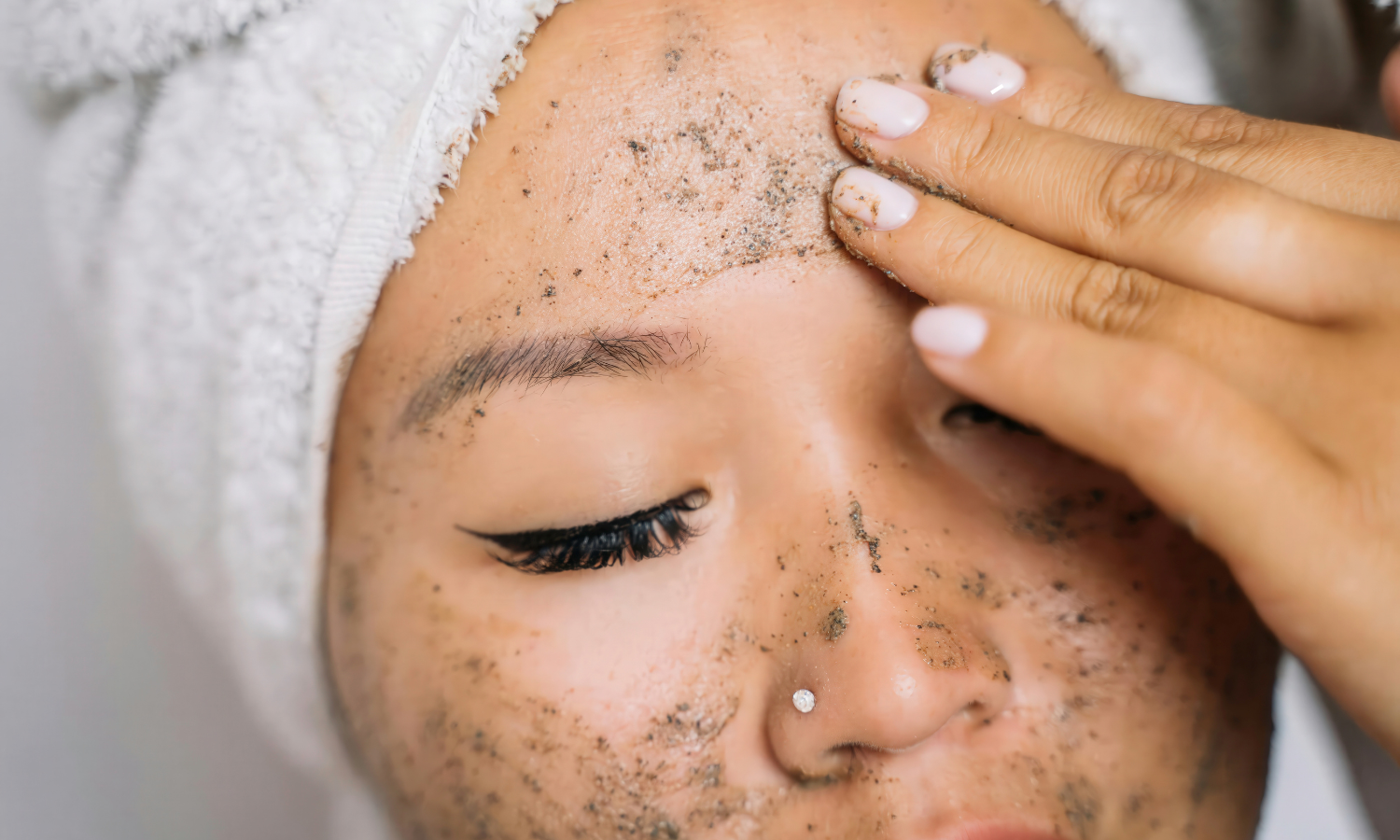
Scale buildup is one of the most practically challenging aspects of psoriasis — it reduces the effectiveness of topical treatments, contributes significantly to the visible presentation that affects confidence, and creates a persistent comfort problem that emollient alone doesn't fully address. Whether and how to exfoliate is one of the most consistently asked psoriasis skincare questions, and the answer requires more nuance than "be gentle."
Why psoriasis scale forms: the mechanism
In healthy skin, keratinocytes complete their lifecycle from basal layer to surface shedding in approximately 28 days. In psoriatic skin, the same cycle completes in three to five days — driven by the Th17 immune dysregulation that activates keratinocyte hyperproliferation through TNF-α, IL-17, and IL-23. The result is a surface accumulation of incompletely matured keratinocytes that form the characteristic silvery-white scale — not dead skin in the conventional sense, but rapidly produced, structurally abnormal skin cells that haven't had time to mature normally before reaching the surface.
This distinction matters for exfoliation because psoriatic scale is denser, more adherent, and differently structured than the dead skin cells that standard exfoliation is designed to address. Physical exfoliation approaches developed for normal skin cell turnover are not calibrated for psoriatic scale — and carry a specific risk that standard exfoliation articles don't address.
The Koebner risk from physical exfoliation
The Koebner phenomenon — where mechanical trauma to psoriasis-prone skin triggers new plaque formation at the trauma site — affects approximately 25–30% of people with psoriasis. As covered in the dedicated Koebner phenomenon article in this series, the mechanism involves HMGB1 and IL-1α danger signal release from traumatised keratinocytes activating the Th17 immune cascade at the injury site.
Physical exfoliation — scrubs, brushes, exfoliating mitts, loofah — delivers precisely the kind of repeated friction that triggers Koebner responses in susceptible individuals. This is not a theoretical risk. Vigorous rubbing of psoriatic plaques with physical exfoliants can and does trigger new plaque formation in the 25–30% of patients who are Koebner-positive. Even in Koebner-negative individuals, physical exfoliation can worsen active inflammation and compromise the barrier that topical treatments depend on.
The practical rule: physical exfoliation is contraindicated for psoriatic skin. Chemical keratolysis is the appropriate approach.
The chemical exfoliation hierarchy for psoriasis
Chemical exfoliation for psoriasis works through keratolysis — softening and loosening the protein bonds that hold scale to the plaque surface — rather than mechanical removal. Three specific ingredients provide this effect with different profiles of efficacy, tolerability, and mechanism:
Urea (10–20%): The most appropriate first-line keratolytic for psoriasis. Urea is both a humectant (drawing moisture into scale) and a keratolytic (breaking down keratin protein bonds), making it effective at softening scale while simultaneously hydrating the underlying skin. At 10% concentration it is primarily emollient with mild keratolytic effect; at 20% the keratolytic effect becomes more significant. Urea is particularly appropriate for the thick palmoplantar scale where it has the strongest evidence base. It does not carry the Koebner friction risk of physical exfoliation and can be applied as part of an emollient routine.
Salicylic acid (2–6%): A lipophilic beta-hydroxy acid with specific keratolytic properties — it penetrates the intercellular lipid layers between scale cells and disrupts the protein bonds holding scale together. Salicylic acid has a longer evidence base in psoriasis than urea and is a component of many licensed psoriasis preparations including coal tar and betamethasone combination products. At 2% (OTC) it is appropriate for body and scalp psoriasis; higher concentrations require pharmacy or prescription access. Avoid on large body surface areas due to systemic absorption risk.
Coal tar: The oldest keratolytic approach for psoriasis with the most established efficacy evidence. Coal tar reduces keratinocyte proliferation through AhR receptor modulation alongside its keratolytic effect — addressing the underlying hyperproliferation rather than simply softening its output. Available OTC in shampoos (T/Gel) and in stronger pharmacy preparations. The odour and staining limit its cosmetic acceptability but its dual mechanism makes it the most clinically complete keratolytic available without prescription.
Physical exfoliation: Contraindicated for psoriatic plaques due to Koebner risk. The only appropriate physical approach is gentle patting dry with a soft cotton towel after bathing — never rubbing.
Scalp-specific guidance
Scalp psoriasis scale is mechanically trapped within the hair, making it the most practically difficult site to manage. The appropriate approach:
Apply a generous amount of emollient oil (coconut oil, olive oil, or a prescribed preparation) to the scalp the night before washing. Cover with a soft shower cap or cotton cloth overnight. The prolonged emollient contact softens scale significantly before washing, reducing the mechanical effort required during shampooing and avoiding the scalp trauma that Koebner-positive individuals need to avoid.
Use a medicated shampoo with salicylic acid or coal tar during the wash — T/Gel Therapeutic Shampoo or similar — allowing adequate contact time before rinsing. Never scrub the scalp vigorously. Gentle massage only.
Do not forcibly remove scale between washes. Picking or scratching loosens scale before it is ready and produces the friction that Koebner responses require.
The pre-treatment emollient protocol
For significant scale buildup, the most effective first step is not exfoliation but emollient occlusion — applying a generous layer of thick emollient or plain petroleum jelly to plaques and covering with a soft cotton cloth for one to two hours or overnight before washing. This softening step reduces the scale's adherence before any chemical keratolytic is applied, making the subsequent removal less physically demanding and reducing the temptation to rub or pick.
This protocol is particularly important for palmoplantar psoriasis where scale is thickest, and for scalp psoriasis where oil pre-treatment before washing is the most effective scale management approach.
Common Exfoliation Mistakes
Scrubbing Too Hard
More force does not mean better results.
Exfoliating Inflamed Skin
Very red, sore, or cracked skin may need soothing rather than exfoliating.
Exfoliating Too Frequently
Overdoing exfoliation can disrupt the skin barrier.
Ignoring Moisturiser
Exfoliation without moisturisation can increase dryness and irritation.
When to avoid scale removal entirely
Active, inflamed, painful, or broken psoriatic skin should not be exfoliated — chemically or otherwise. Compromised skin barrier with active inflammation is more susceptible to chemical irritation from keratolytics and more vulnerable to Koebner responses from any mechanical stimulus. Allow inflammation to settle before introducing any exfoliation approach.
Signs that exfoliation should be paused: new plaque formation in areas being treated, increased redness beyond the plaque margin, pain or burning from keratolytic application, bleeding or cracking at plaque edges.
Recommended products
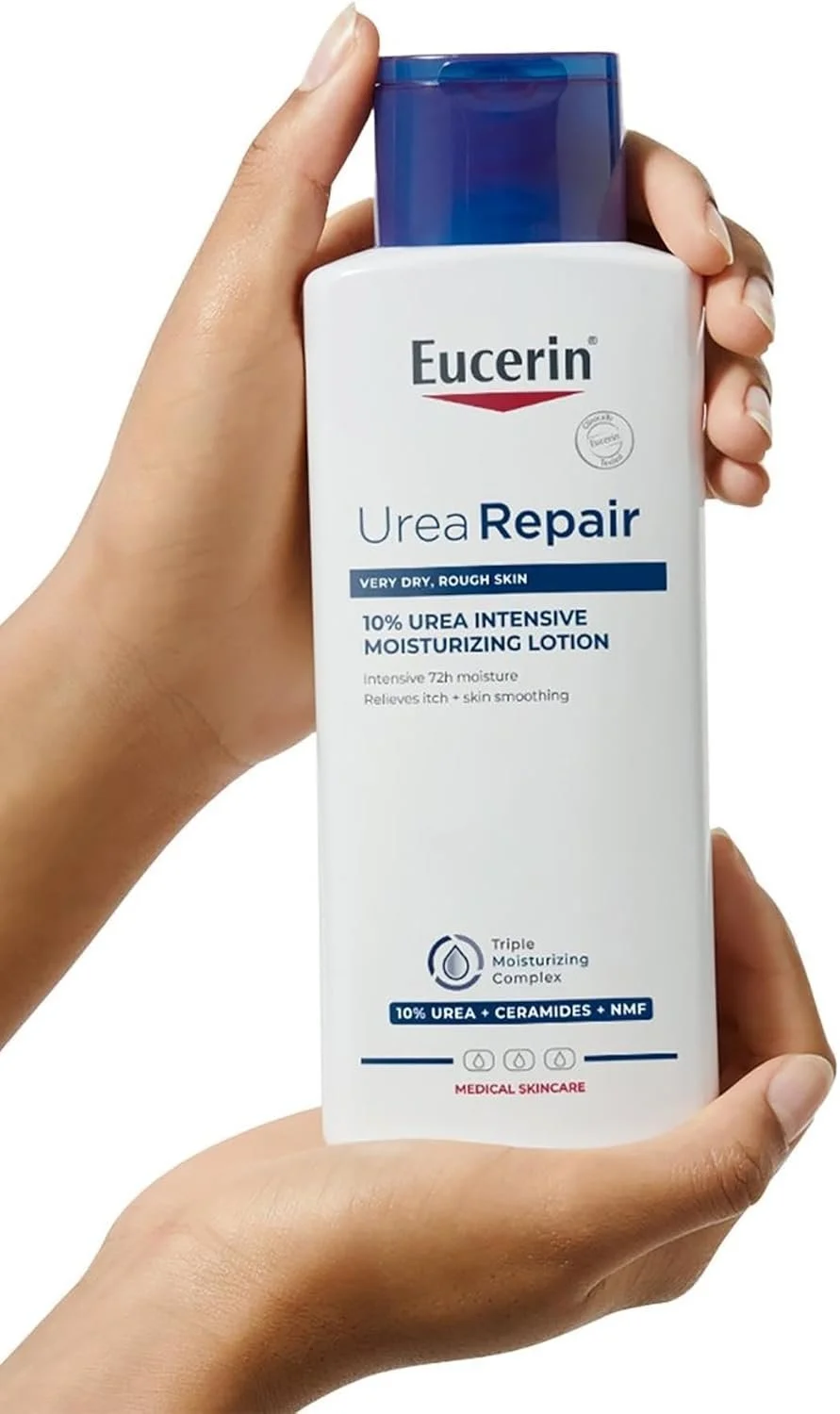
Eucerin UreaRepair Plus 10% Urea Body Lotion
a 10% urea preparation providing simultaneous hydration and mild keratolytic effect appropriate for daily application to psoriatic plaques on the body. The most practical first-line scale management product for widespread plaque psoriasis — gentle enough for daily use, effective enough to reduce buildup with consistent application.
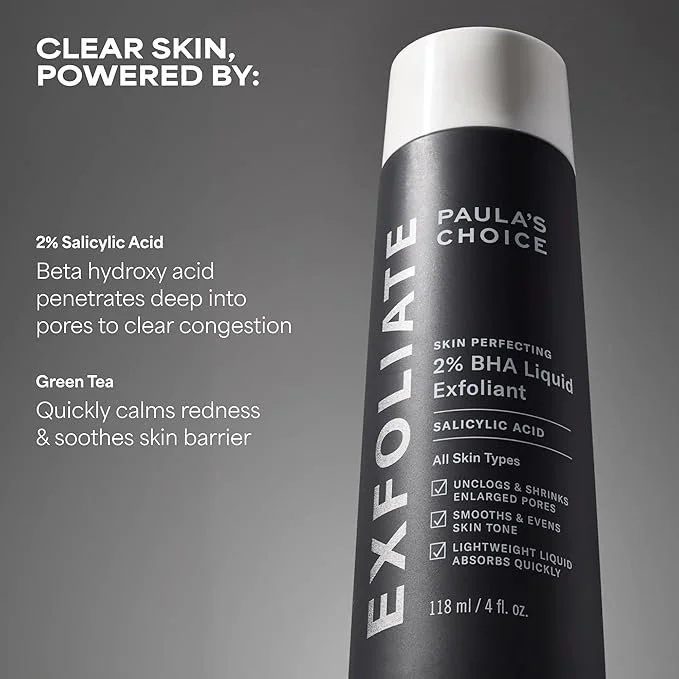
Paula's Choice Skin Perfecting 2% BHA Liquid Exfoliant
a 2% salicylic acid liquid exfoliant appropriate for localised psoriatic scale on settled, non-inflamed skin. Apply with a cotton pad to affected areas — do not rub, allow contact time, then rinse or leave on depending on skin tolerance. Avoid on large surface areas due to systemic absorption considerations
Supplement Support For Skin Health
Chemical keratolysis addresses the accumulated scale at the surface — the Th17 immune hyperproliferation that produces scale at three to five times the normal rate requires internal support that no topical keratolytic reaches.
Drought's Skin Support Formula provides vitamin D for Th17 modulation and keratinocyte regulation, zinc for immune function and barrier repair, vitamin C for antioxidant protection, and 11 other nutrients — addressing the internal immune foundations that determine how quickly scale reforms after keratolytic treatment. Made in the UK, suitable for vegetarians, designed for consistent long-term daily use.
FAQ
Should you exfoliate psoriasis?
Only chemically — urea, salicylic acid, or coal tar keratolytics on settled skin. Physical exfoliation carries a Koebner risk and is contraindicated for psoriatic plaques.
Is salicylic acid good for psoriasis?
Yes, at 2% OTC concentration on localised settled plaques. Avoid on large body surface areas due to systemic absorption risk at higher concentrations.
Can exfoliation make psoriasis worse?
Yes — physical exfoliation can trigger Koebner responses producing new plaque formation in the 25–30% of psoriasis patients who are Koebner-positive. Even Koebner-negative individuals risk worsening inflammation from mechanical friction on active plaques.
Is physical or chemical exfoliation better for psoriasis?
Many experts prefer gentle chemical exfoliation because it can soften scales without causing as much mechanical irritation.
What is the best exfoliant for psoriasis?
Urea 10–20% as a first-line daily approach; salicylic acid 2% for more significant scale on settled skin; coal tar for dual keratolytic and antiproliferative benefit.
How often should you exfoliate psoriasis?
This varies from person to person. Over-exfoliation can increase irritation, so frequency should be guided by skin tolerance and professional advice.
How do I soften psoriasis scales before removal?
Apply generous emollient or petroleum jelly to plaques, cover with soft cotton cloth, leave for one to two hours or overnight before washing. This softening step reduces scale adherence without friction.
When should I not exfoliate psoriasis?
During active flares, on inflamed or broken skin, or when new plaques are forming in previously treated areas — all are signs to pause keratolytic treatment until inflammation settles.
Summary
Physical exfoliation is contraindicated for psoriatic skin due to the Koebner phenomenon — friction on psoriatic plaques triggers new plaque formation in approximately 25–30% of patients. Chemical keratolysis is the appropriate approach, with urea (10–20%) as first-line for its combined humectant and keratolytic properties, salicylic acid (2%) for more significant scale on settled skin, and coal tar for its dual keratolytic and antiproliferative mechanism. Emollient pre-treatment before chemical keratolysis is the most effective scale softening approach for thick plaques. Active, inflamed, or broken skin should not be exfoliated at all.
In Short
Gentle exfoliation may help reduce psoriasis scale build-up.
Harsh scrubs and vigorous rubbing can worsen symptoms.
Chemical exfoliants such as salicylic acid are often preferred over physical scrubs.
Removing scales may improve the effectiveness of moisturisers and topical treatments.
Exfoliation should focus on reducing scale, not scrubbing plaques away.
Chemical keratolysis manages scale accumulation — vitamin D and zinc address the Th17 hyperproliferation producing it at source. Drought's Skin Support Formula provides both alongside 12 other nutrients, reducing the internal immune activity that determines how quickly scale reforms after treatment. Made in the UK, suitable for vegetarians, designed for consistent long-term daily use.
Start your skin support journey →
Written by the Drought Skin team — specialists in natural support for psoriasis, eczema and acne
Disclaimer: This article contains affiliate links. We earn a very small commission from each purchase made through these links. There is no additional cost to you. All products featured have been specifically selected as products we personally use and love. For further information, please see our disclaimer page.
-
The Koebner Phenomenon: Why Skin Trauma Triggers Psoriasis Plaques
Emollients for Psoriasis: Which Type Works Best & How to Use Them
Palmoplantar Psoriasis: Why Hands & Feet Are Especially Challenging
Scalp Psoriasis: Treatment, Shampoos & Managing Flares
Coal Tar for Psoriasis: How It Works & Is It Still Worth Using?
