
Palmoplantar Psoriasis: Why Hands & Feet Are Especially Challenging & What Helps

Palmoplantar psoriasis — affecting the palms of the hands and soles of the feet — is one of the most functionally disabling forms of psoriasis despite often covering a relatively small body surface area. A PASI score that would be considered mild in terms of percentage body coverage produces an entirely different quality of life impact when the affected area is the skin you stand on, walk on, grip with, and use for almost every activity in daily life.
Understanding what makes this location specifically challenging, how it differs from plaque psoriasis elsewhere, and what treatments are most appropriate for the unique mechanical demands of hands and feet makes management significantly more effective.
Palmoplantar Psoriasis: Symptoms on Hands & Feet Explained
Psoriasis affecting the hands and feet can be one of the most uncomfortable and frustrating forms of the condition.
Known as palmoplantar psoriasis, it often causes:
Thickened skin
Painful cracks
Dryness
Scaling
Irritation that can interfere with daily life
Because we constantly use our hands and feet, flare-ups in these areas can feel especially difficult to manage.
Even simple tasks like:
Walking
Typing
Cleaning
Exercising
Holding objects
…may become uncomfortable during flare-ups.
What palmoplantar psoriasis looks like
Palmoplantar psoriasis presents differently from plaque psoriasis on the trunk and limbs because the skin of the palms and soles is structurally different — much thicker, with no hair follicles, and subject to constant mechanical stress.
The characteristic features:
Thickened plaques. The already-thicker skin of the palms and soles produces particularly dense, adherent scale when psoriatic hyperproliferation occurs. The resulting plaques are harder and more waxy in appearance than the silvery-white scale of classic plaque psoriasis.
Fissuring. Deep, painful cracks that split through the plaque and into the dermis. Fissures occur because psoriatic skin lacks the elasticity of normal skin — the combination of scale buildup and the constant flexion of hands and feet splits the thickened surface. Fissures on the heel can be severe enough to bleed and become infected.
Erythema and scaling beneath plaques. Where scale is present, the underlying skin is typically red to orange-pink rather than the brighter red of trunk plaques.
Pustular variant. Some people develop palmoplantar pustular psoriasis (PPP) — a distinct subtype involving sterile yellow-white pustules on a red base, primarily on the thenar and hypothenar eminences of the hands and on the insteps of the feet. PPP is not an infection; the pustules contain neutrophils, not bacteria. It is more resistant to standard psoriasis treatment than plaque-type palmoplantar psoriasis and often requires systemic treatment.

Why palmoplantar psoriasis is disproportionately disabling
This is the most important clinical point about this location. The DLQI (Dermatology Life Quality Index) scores for palmoplantar psoriasis are consistently higher than for psoriasis covering equivalent or greater body surface area elsewhere. The reasons are specific:
Constant mechanical demand. Every step taken with plantar psoriasis, every object gripped with palmar psoriasis, exerts mechanical stress on plaques that are already on the edge of fissuring. This is unavoidable in a way that, say, back psoriasis is not — you can rest your back but you cannot rest your hands and feet.
Koebner responses from occupational and daily hand use. The Koebner phenomenon — new plaques appearing at trauma sites — is constantly activated by the mechanical demands placed on psoriatic palmar skin. Keyboard use, tool handling, gripping, and friction from footwear all provide repeated low-level trauma that perpetuates and spreads plaque formation.
Functional interference. Writing, typing, cooking, cleaning, exercising, and walking are all directly affected. People with severe palmoplantar psoriasis may require modifications to working conditions and daily activities that profoundly affect quality of life and independence.
Sleep disruption from pain. Plantar fissuring in particular can be painful enough to disrupt sleep — adding the sleep-psoriasis-inflammatory cycle covered in the sleep article to the condition's burden.
Why Can Palmoplantar Psoriasis Feel So Painful?
Unlike psoriasis on other areas of the body, the hands and feet are under constant stress.
Daily activities create:
Friction
Pressure
Repeated movement
Contact with irritants
Deep fissures in particular may become painful when:
Walking
Standing
Using the hands
Exercising
Even small areas of psoriasis on the hands or feet can have a major impact on daily life.
Why treatment is more difficult at this location
Several factors make palmoplantar psoriasis harder to treat than trunk or limb psoriasis:
Skin thickness limits topical penetration. The stratum corneum on the palms is significantly thicker than elsewhere — reducing the penetration of topical treatments including corticosteroids and calcipotriol. Higher-potency preparations or occlusive application methods are typically needed to achieve the same effect that lower-potency products achieve at other sites.
Constant exposure limits treatment contact time. Treatments applied to the hands are removed by handwashing, work activities, and handling objects throughout the day. Foot treatments are abraded by shoes and walking. Consistent re-application is required.
The pustular variant responds differently. Palmoplantar pustular psoriasis (PPP) responds poorly to the same topical treatments effective for plaque-type psoriasis. Acitretin (the oral retinoid covered in the vitamin A psoriasis article) is often considered the first-line systemic treatment for PPP specifically.
Common Triggers for Hand & Foot Psoriasis
Triggers vary massively between individuals, but common flare-up triggers may include:
Stress
Friction
Skin injuries
Harsh soaps
Cleaning chemicals
Smoking
Cold weather
Dry air
Repeated irritation may worsen symptoms over time.
Some people also notice flare-ups worsen after:
Manual work
Excessive hand washing
Tight footwear
Sweaty shoes or gloves
Reducing irritation where possible may help support calmer skin.
What helps: treatment approaches
Potent topical corticosteroids under occlusion. For palmoplantar psoriasis, moderate-to-potent topical steroids (betamethasone valerate, clobetasol propionate) are typically required given the skin thickness. Applied and then covered with cling film or cotton gloves/socks overnight significantly increases penetration and effectiveness. Discuss with a GP before starting potent topical steroids.
Calcipotriol. Vitamin D analogues applied to palmoplantar plaques, typically as part of combination treatment with a topical steroid. The Dovobet gel formulation is commonly used.
Urea preparations. As covered in the elbow psoriasis and salicylic acid articles, urea at higher concentrations (25–40%) provides keratolytic action on the very thick scale of palmoplantar psoriasis that 10% concentrations used elsewhere cannot penetrate. A GP can prescribe higher-concentration urea preparations.
Systemic treatment for moderate-to-severe palmoplantar psoriasis. When topical treatment is insufficient — particularly for PPP or extensive palmoplantar plaque psoriasis — GP or dermatology referral is appropriate. Acitretin, methotrexate, and biologics are all used for palmoplantar psoriasis depending on subtype and severity.
Practical management: reducing the mechanical burden
Emollient — the most important daily habit. Applied consistently, generous emollient on the palms and soles maintains the skin's flexibility, reducing the likelihood of fissuring. An ointment formulation stays in place better than cream on weight-bearing skin.
Protect hands during wet work. Water softens and macerate psoriatic skin; chemical cleaning products are direct irritants and Koebner triggers. Wearing cotton gloves under rubber gloves during cleaning removes the most consistent daily chemical exposure.
Footwear choices. Tight footwear concentrating pressure on plantar plaques worsens both fissuring and Koebner responses. Wider fitting shoes with cushioned insoles reduce plantar pressure. Seamless socks (bamboo or cotton) reduce friction on heel and sole plaques.
Overnight occlusion. For fissures and resistant plaques: apply generous emollient or prescribed treatment then cover with cotton socks or cotton gloves overnight. This sustained occlusion is one of the most effective non-prescription interventions for fissure management and penetration improvement.
Fissure management. Deep heel fissures that are painful or have started to bleed: clean gently with lukewarm water, apply petroleum jelly or emollient, and cover with a plaster or cotton sock. Infected fissures (increasing warmth, redness, discharge) require GP assessment for antibiotic treatment.
Recommended Products
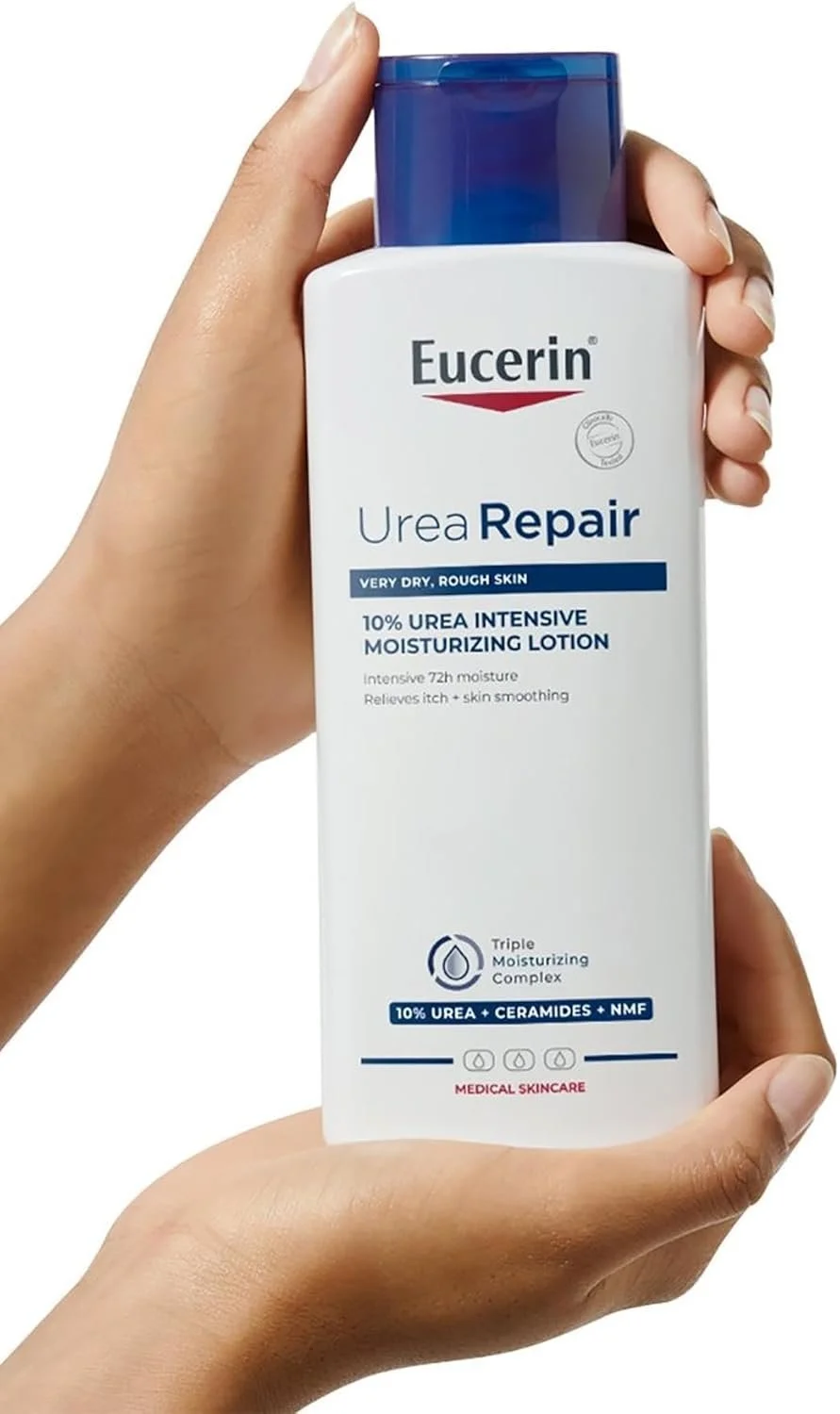
Eucerin UreaRepair Plus 10% Urea Lotion
an OTC urea preparation appropriate for daily use on the hands and feet between flares and for milder scale management. The 10% concentration provides keratolytic and humectant benefit without the prescription requirement of higher-concentration preparations. Apply after emollient has absorbed.
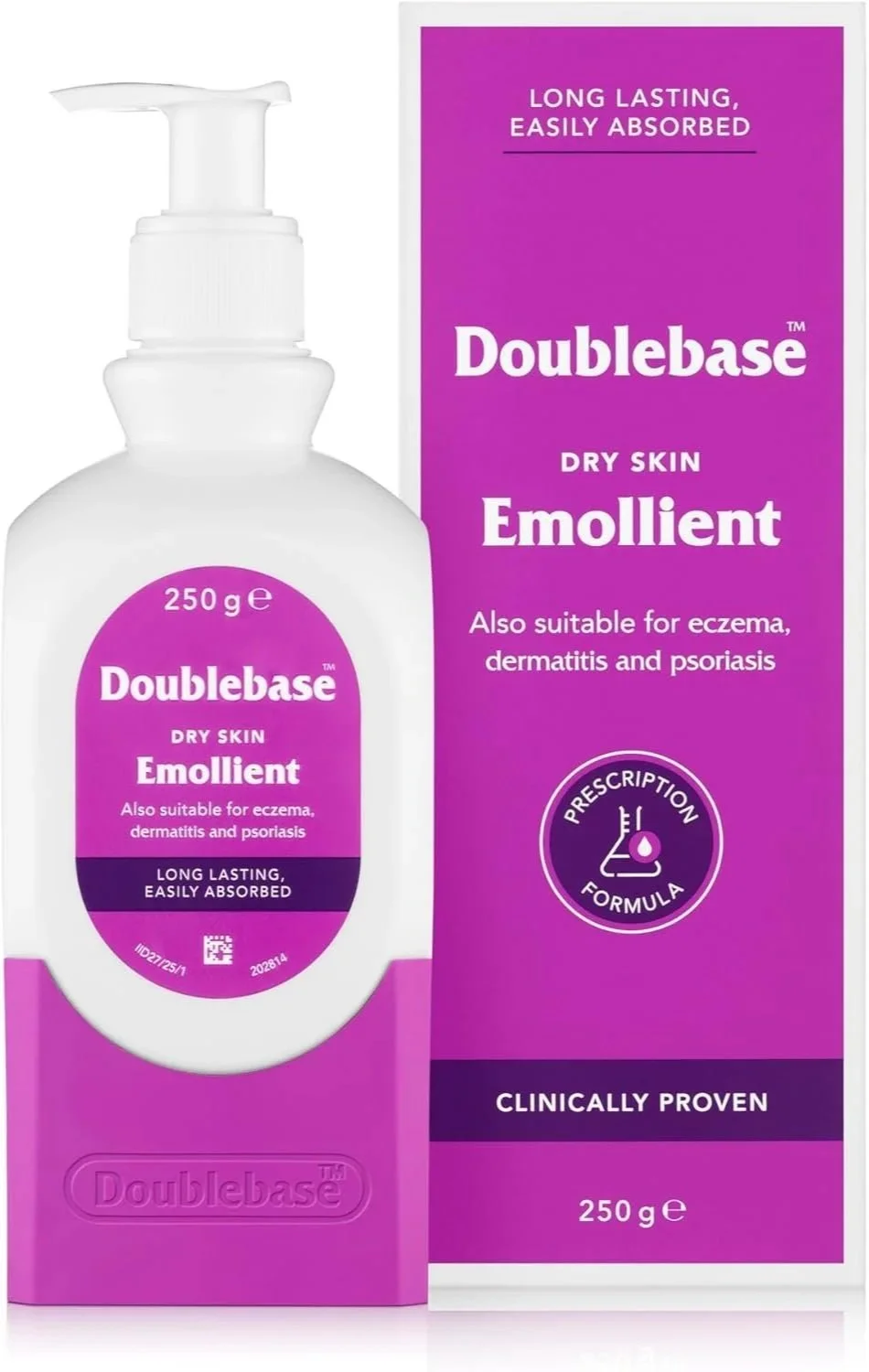
Doublebase Dry Skin Emollient
a paraffin-based emollient appropriate for daily application to hands and feet. Applied after bathing within the two-to-three minute post-bath window and reapplied throughout the day. The pump format makes reapplication practical.
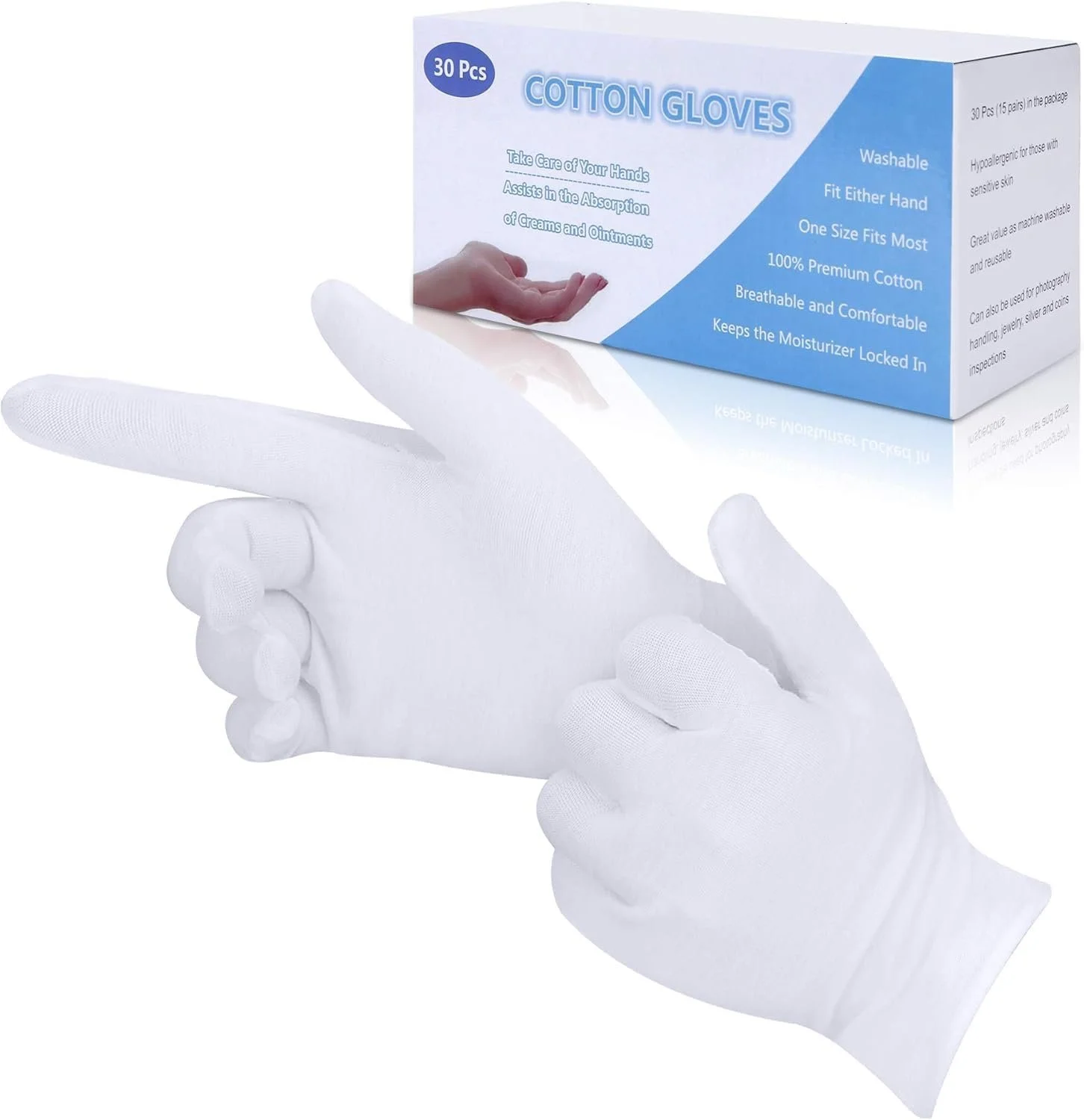
MEDT Cotton Gloves for Eczema and Psoriasis
pure cotton gloves for overnight occlusion of palmar psoriasis. Apply generous emollient or prescribed treatment to the hands then wear cotton gloves overnight — the sustained occlusion significantly increases treatment penetration through the thick palmoplantar stratum corneum while maintaining the emollient contact time that daytime hand use and washing removes. The cotton material avoids the sweating and maceration risk of rubber or synthetic glove materials.
Supplement Support for Psoriasis-Prone Skin
Palmoplantar psoriasis is driven by the same systemic Th17 immune dysregulation as psoriasis elsewhere — but its severity and resistance to treatment makes the internal nutritional foundations particularly important. Vitamin D's keratinocyte regulation and Th17 modulation, zinc's immune function and barrier repair, and omega-3's leukotriene pathway anti-inflammatory effects all address the internal dimensions that topical hand and foot care cannot reach.
Drought's Skin Support Formula provides vitamin D, zinc, vitamin C, magnesium, and 10 other nutrients — supporting the systemic inflammatory and nutritional foundations of psoriasis management regardless of which body sites are affected. Made in the UK, suitable for vegetarians, designed for consistent long-term daily use.
FAQ
What is palmoplantar psoriasis?
Psoriasis affecting the palms of the hands and soles of the feet — producing thickened plaques, scale, and painful fissures in skin under constant mechanical demand.
Why does psoriasis on the feet hurt so much?
The hands and feet are under constant mechanical stress — walking, gripping, and daily activities exert pressure on plaques that are already on the edge of fissuring. Deep heel fissures can split to the dermis and bleed.
Can palmoplantar psoriasis crack and bleed?
Yes — deep painful fissures and cracks are very common with this type of psoriasis.
What is palmoplantar pustular psoriasis?
A distinct subtype producing sterile pustules on a red base on the hands and feet. Not an infection — the pustules contain neutrophils. Responds differently to standard psoriasis treatment; often requires systemic treatment including acitretin.
Why is palmoplantar psoriasis hard to treat?
Thick palmoplantar skin limits topical penetration; treatment contact time is reduced by handwashing and movement; and the pustular variant responds poorly to standard plaque psoriasis treatments.
What is the best emollient for palmoplantar psoriasis?
Ointment formulations (petroleum jelly, paraffin-based emollients) stay in place better than creams on weight-bearing skin. Applied after bathing and reapplied throughout the day, with overnight occlusion under cotton gloves or socks.
When should I see a GP for palmoplantar psoriasis?
When topical treatment is insufficient, when fissures are infected, when the pustular variant is present, or when functional disability is significantly affecting daily life and work.
Summary
Palmoplantar psoriasis on the hands and feet produces disproportionate functional disability relative to its visible extent because these are the areas under constant mechanical demand. The pustular variant (PPP) is clinically distinct from plaque-type and responds differently to treatment — acitretin is often the preferred systemic option for PPP. The thick palmoplantar stratum corneum requires higher-potency topicals and occlusive application methods. Consistent emollient use, overnight occlusion, protection from wet work and friction, and appropriate footwear reduce the mechanical factors perpetuating fissuring and Koebner responses. Systemic treatment through GP or dermatology referral is appropriate when topical treatment is insufficient.
In Short
Palmoplantar psoriasis affects the palms of the hands and soles of the feet
Symptoms often include thickened, dry, cracked skin
Painful fissures and scaling are common
Friction and irritation may worsen flare-ups
Palmoplantar psoriasis faces unavoidable mechanical demand that topical treatment can only partially compensate for — the Th17 immune activity and nutritional deficiencies driving it require internal support. Drought's Skin Support Formula provides vitamin D, zinc, and 12 other nutrients addressing the internal inflammatory foundations that determine how reactive and how treatment-resistant palmoplantar psoriasis is. Made in the UK, suitable for vegetarians, designed for consistent long-term daily use.
Start your skin support journey →
Written by the Drought Skin team — specialists in natural support for psoriasis, eczema and acne
Disclaimer: This article contains affiliate links. We earn a very small commission from each purchase made through these links. There is no additional cost to you. All products featured have been specifically selected as products we personally use and love. For further information, please see our disclaimer page.
-
Types of Psoriasis Explained: Symptoms, Appearance & How They Differ
Psoriasis on Elbows: Why It Appears There & What Actually Helps
Emollients for Psoriasis: Which Type Works Best & How to Use Them
Psoriatic Arthritis: Symptoms, Types, Early Signs & Why to Act Quickly
The Koebner Phenomenon: Why Skin Trauma Triggers Psoriasis Plaques
