
Salicylic Acid & Eczema: When It Helps, When It Worsens Symptoms & What to Use Instead

Salicylic acid is one of the most effective exfoliating ingredients in skincare — which is precisely why it needs to be used carefully with eczema. The same mechanism that makes it valuable for acne and psoriasis scale can actively worsen the compromised skin barrier that defines atopic eczema. Whether it's appropriate depends on the type of eczema and the state of the skin.
What salicylic acid actually does
Salicylic acid is a beta-hydroxy acid (BHA) with two relevant properties for skin:
Keratolytic action. Salicylic acid dissolves the intercellular cement — the protein bonds holding the outermost dead skin cells (corneocytes) together — causing them to shed more rapidly. This is why it's effective for softening and lifting thick, adherent scale in psoriasis, keratosis pilaris, and calluses. It's also why it can be used in medicated shampoos for scalp conditions.
Oil-solubility. Unlike water-soluble AHAs (glycolic and lactic acid), salicylic acid penetrates into oily follicles and pores, making it particularly useful for acne and comedone management.
Both properties are useful in specific contexts. The keratolytic action is the relevant one for eczema discussions — and it's a double-edged mechanism.
Is salicylic acid good for eczema?
Salicylic acid can help remove dead skin and reduce scaling, but it can also irritate sensitive or eczema-prone skin—especially if overused.
In short:
Helps exfoliate and reduce buildup
May improve rough, thickened skin
Can cause dryness and irritation
Not suitable for all eczema types
Why salicylic acid is problematic for atopic eczema
Atopic eczema involves a structurally compromised skin barrier — specifically, reduced ceramides, impaired tight junction proteins, and often reduced filaggrin. This barrier is thinner, more permeable, and more fragile than healthy skin. It doesn't have the robust corneocyte layer that makes keratolytic treatment appropriate.
Applying a keratolytic agent to this already-thin, fragile barrier doesn't improve it — it further disrupts it. The result is increased transepidermal water loss, worsening dryness, potential stinging and burning (particularly on inflamed or cracked skin where salicylic acid penetrates more deeply), and in some cases worsened barrier dysfunction that amplifies inflammatory responses.
Additionally, salicylic acid has a mild antimicrobial effect — but not specifically against Staphylococcus aureus, the bacterium that colonises eczema skin and perpetuates the inflammatory cycle. It doesn't address the specific microbial challenge relevant to eczema.
For these reasons, salicylic acid is generally not recommended as a regular skincare ingredient for atopic eczema.
Where salicylic acid does have a legitimate role in eczema management
This is the nuance the original article gestures toward but doesn't explain clearly enough.
Scalp seborrhoeic eczema. This is a specific and appropriate use case. Seborrhoeic dermatitis of the scalp produces thick, greasy, adherent scale on a sebum-rich environment — a presentation much more similar to psoriasis than to atopic eczema. Medicated shampoos containing low-concentration salicylic acid (1–3%) used as a scalp treatment help loosen and lift scale before shampooing. The scalp's thicker stratum corneum makes it more tolerant of keratolytic treatment than the thin skin of eczema-affected body sites.
Lichenified eczema. Chronic, repeatedly scratched eczema can develop lichenification — a thickening of the skin into a leathery, intensified texture. In this specific presentation, where the stratum corneum has actually thickened (unlike acute atopic eczema where it's fragile), careful keratolytic treatment under dermatological guidance may occasionally be appropriate.
As a specialist-supervised adjunct for thick plaques. Some dermatologists use low-concentration salicylic acid preparations in specific presentations — always under supervision, never as an over-the-counter self-directed routine.
The common thread: these are scenarios where the skin is thick rather than fragile. Salicylic acid is appropriate for thick, scaly, adherent skin — not for the thin, inflamed, fragile barrier of active atopic eczema.
Urea: the better-evidenced keratolytic alternative for eczema
If scale removal and skin texture improvement are the goal, urea is significantly better suited to eczema-prone skin than salicylic acid — and is the option most consistently recommended by dermatologists for this purpose.
Urea at 10–25% concentration is keratolytic — it softens and removes scale — but it also acts as a powerful humectant, drawing moisture to the skin surface. Unlike salicylic acid, which is purely exfoliating and can worsen dryness, urea addresses both the scale buildup and the dryness simultaneously. It is also substantially better tolerated on eczema-prone skin at appropriate concentrations.
10% urea is appropriate for everyday moisturising and mild scale management on body skin. 25% urea is used for more significant scale reduction — on thickened plaques and hyperkeratotic areas specifically. Both are available over the counter in the UK.
Recommended Products
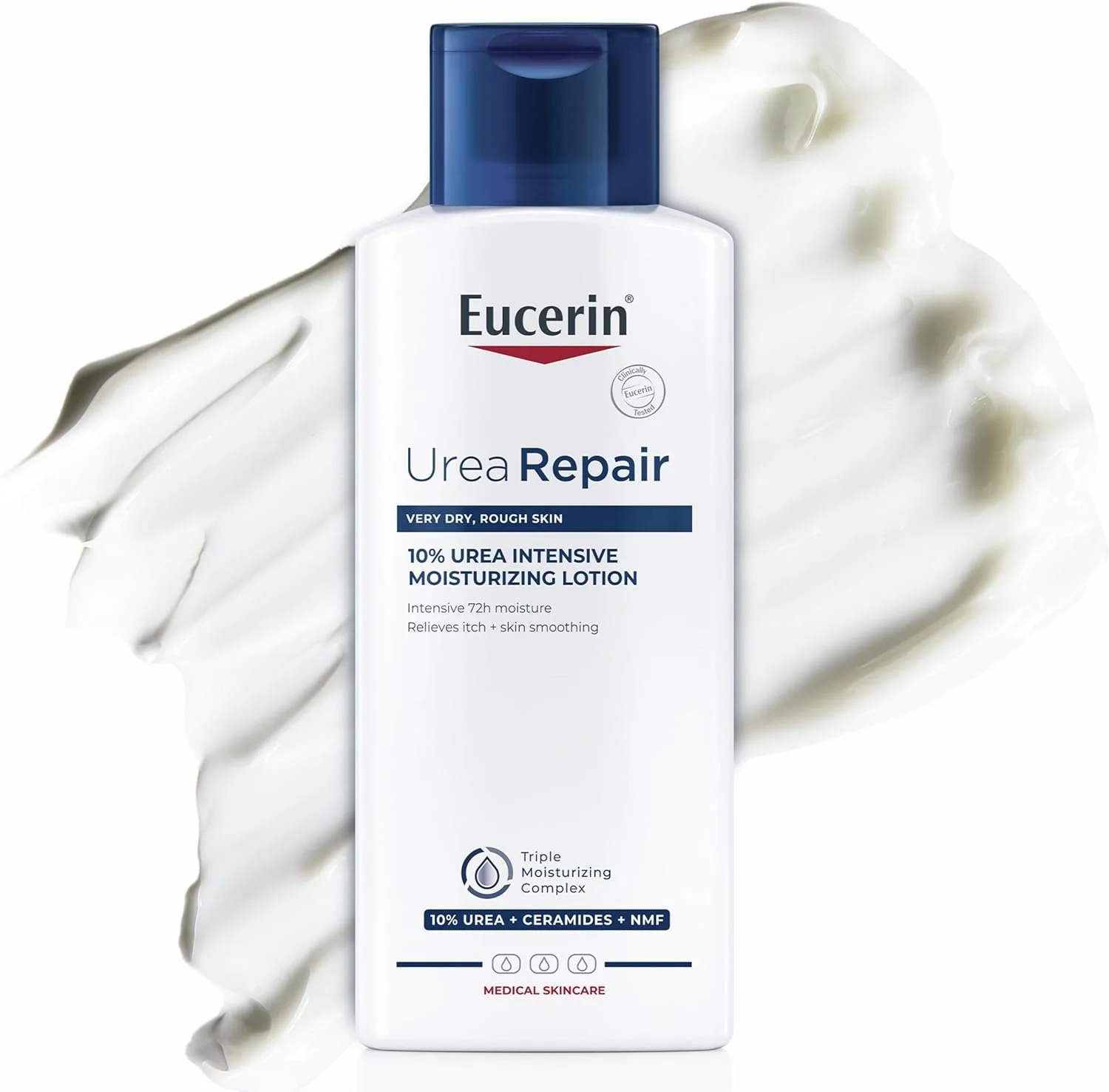
Eucerin UreaRepair Plus 10% Urea Lotion
a well-formulated, dermatologist-recommended urea lotion that provides both keratolytic and humectant benefit. Well-tolerated on eczema-prone skin and suitable for daily use on rough, dry, or scaly body skin. One of the most consistently recommended products in this category by UK dermatologists
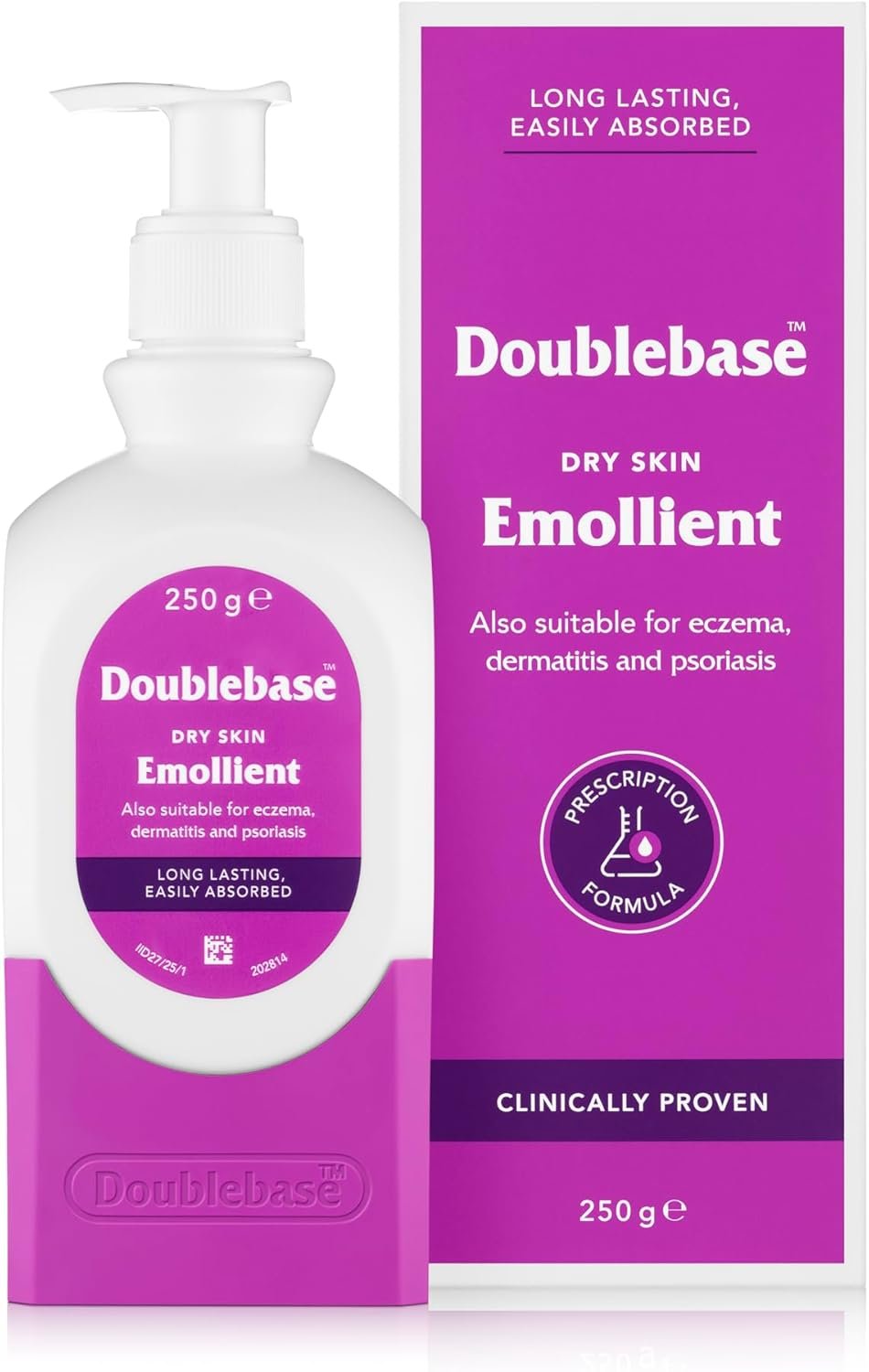
Doublebase Dry Skin Emollient
a paraffin-based emollient applied to damp skin after bathing as the softening foundation before urea application. Well-tolerated on eczema-prone skin and available in a practical pump format. Applying emollient first and urea second maximises the keratolytic effect of the urea by working on already-hydrated, softened skin rather than dry, tightly bound scale.
Gentler exfoliation approaches for eczema skin
Beyond urea, several other options address the scale and texture concerns that lead people to try salicylic acid — without the barrier disruption risk:
Polyhydroxy acids (PHAs) — gluconolactone and lactobionic acid — are large-molecule acids that exfoliate only on the skin surface without penetrating deeply. They are considerably gentler than BHAs or AHAs and are specifically marketed for sensitive and eczema-prone skin.
Low-concentration lactic acid (5% or below) is gentler than salicylic acid, is also humectant (retains moisture), and is better tolerated on reactive skin.
Colloidal oatmeal baths provide gentle physical softening of scale without chemical exfoliation — covered in the eczema facials and bath salts articles in this series.
Regular generous emollient use is the most effective approach for reducing the dead skin buildup that drives people to reach for exfoliants in the first place. Well-moisturised skin sheds normally; chronically dry skin builds up scale. Addressing dryness through consistent emollient use reduces the need for keratolytic intervention.
Signs salicylic acid is worsening your eczema
If you have used salicylic acid on eczema-prone skin and noticed any of the following, it's the ingredient rather than eczema progression:
Stinging or burning on application. Increased redness in the treated area within 24–48 hours. Worsening dryness or tightness despite continued use. New itching in areas that were previously calm.
Stop the product, return to gentle emollient-only skincare for a week, and assess whether skin recovers. If it does, salicylic acid was the trigger.
Skin support for eczema-prone skin
Skin texture and barrier quality are influenced by nutritional status — zinc for keratinocyte function and barrier repair, biotin for normal skin cell metabolism, and vitamin D for filaggrin expression are the most directly relevant.
Drought's Skin Support Formula provides 14 nutrients including zinc, vitamin D, biotin, vitamin C, and magnesium — addressing the internal nutritional foundations of skin barrier function that even the best topical approach cannot fully substitute for. Made in the UK, suitable for vegetarians, designed for consistent long-term daily use.
FAQs: Salicylic acid and eczema
Is salicylic acid safe for eczema?
Conditionally — it depends on the presentation, concentration, and where it's applied. Salicylic acid's keratolytic mechanism (breaking down the protein bonds between corneocytes to accelerate desquamation) is specifically useful for thick, scaly, or hyperkeratotic eczema presentations — scalp seborrhoeic overlap, lichenified chronic patches, and keratosis pilaris alongside eczema. On actively inflamed, broken, or weeping eczema skin, the same lipophilic penetration that makes salicylic acid effective for scale removal delivers it through the compromised barrier to deeper skin layers, causing stinging, burning, and worsening inflammation. The answer is yes for settled hyperkeratotic presentations and no for active eczema flares.
What percentage of salicylic acid is safe for eczema?
The lowest effective concentration for the specific indication. For scalp seborrhoeic eczema — medicated shampoos at 1–3% are appropriate and widely used. For thick body patches between flares — 2% OTC preparations used sparingly on settled skin. Above 2% requires pharmacy or prescription access in the UK and should be used under dermatological guidance for eczema. High concentrations (above 5%) carry specific systemic absorption risk when applied to large body surface areas — salicylate toxicity is a documented concern with high-concentration salicylic acid used on widespread eczema-affected skin. Patch test at any concentration before full application.
Can salicylic acid make eczema worse?
Yes — and this is the most important practical point for most people with eczema. Salicylic acid's lipophilic structure allows it to penetrate the compromised eczema barrier more efficiently than intact skin — the same property that makes it effective for scale removal delivers it to sensitised nerve endings and inflammatory cells beneath the stratum corneum. The result is stinging, burning, and inflammatory cascade activation that worsens rather than improves active eczema. Additionally, salicylic acid's keratolytic effect removes the stratum corneum faster than eczema skin can rebuild it — worsening the barrier deficit that is the central problem in eczema. Never apply to actively inflamed, cracked, or weeping skin.
Is salicylic acid good for scalp eczema?
More appropriate for scalp eczema than for body eczema — and specifically for the seborrhoeic dermatitis overlap that makes scalp eczema particularly challenging to manage. Salicylic acid shampoos at 1–3% loosen and lift the thick, adherent scale that traps medicated treatments and prevents their penetration — applied as a pre-shampoo treatment or leave-on shampoo with contact time before rinsing. The rinse-off format reduces systemic absorption and skin contact time compared to leave-on body applications. Combine with coal tar or ketoconazole shampoo for the Malassezia seborrhoeic dimension if seborrhoeic overlap is present.
What is better than salicylic acid for eczema?
For daily moisturising and barrier repair — ceramide-containing fragrance-free emollients address the specific deficit that eczema skin has rather than accelerating the removal of what little stratum corneum it retains. For scale removal on settled skin — urea at 10–20% provides combined humectant and keratolytic activity that is more appropriate for eczema than salicylic acid; urea hydrates while it loosens rather than simply removing. For exfoliation on settled eczema skin specifically — lactic acid 5% or PHAs provide gentler keratolytic activity with significantly lower irritation potential than salicylic acid. As covered in the psoriasis exfoliation article in this series, chemical keratolysis hierarchy for scaly skin conditions puts urea first, salicylic acid second — particularly relevant for eczema where the barrier is more fragile.
Can I use salicylic acid on my face with eczema?
Not during active facial eczema — the face's thinner skin and elevated sensitivity make it the highest-risk application site for salicylic acid on eczema-prone skin. Around the eyes and lips, where periorbital and perioral eczema commonly presents, salicylic acid causes stinging and worsening even at low concentrations. On settled facial eczema skin without active inflammation — very low concentration salicylic acid face wash (0.5–1%) used occasionally for comedonal congestion is the most cautious approach. Avoid leave-on salicylic acid preparations on eczema-prone facial skin entirely.
Does salicylic acid help eczema itching?
No — salicylic acid does not have antipruritic activity. Its keratolytic and antimicrobial mechanisms reduce scaling and bacterial load (relevant for the S. aureus colonisation that amplifies eczema itch) indirectly, but this is not the same as directly relieving itch. For itch specifically, the most evidence-based approaches are thick emollient applied cold from the fridge (cooling reduces histamine-mediated itch), wet wrap therapy, topical antihistamines (limited evidence), and appropriate prescribed topical treatment for the underlying inflammation. Applying salicylic acid specifically for itch relief on eczema skin is likely to worsen rather than reduce the symptom.
Summary
Salicylic acid is generally not appropriate for atopic eczema — its keratolytic mechanism disrupts a barrier that is already fragile and thin rather than improving it. It has specific limited uses: scalp seborrhoeic eczema, lichenified (thickened) eczema under professional guidance, and selected thick-scale presentations. For the scale management and skin texture goals that lead people to try salicylic acid on eczema skin, urea 10–25% is the better-evidenced and better-tolerated alternative — keratolytic and humectant simultaneously, without the barrier disruption risk. And consistent daily emollient use remains the most effective long-term approach to the dryness and scale buildup that makes exfoliation seem necessary.
Written by the Drought Skin team — specialists in natural support for psoriasis, eczema and acne
Disclaimer: This article contains affiliate links. We earn a very small commission from each purchase made through these links. There is no additional cost to you. All products featured have been specifically selected as products we personally use and love. For further information, please see our disclaimer page.
