
Vitamin C for Acne: What It Does, When It Helps & How to Choose the Right Formula

Vitamin C is one of the most used skincare ingredients globally — and for acne-prone skin specifically, it has genuine and specific applications that go beyond generic "brightening" claims. It also has genuine limitations, and the wrong formula at the wrong time can worsen acne-prone skin. Understanding what vitamin C actually does for acne makes the difference between using it effectively and adding another irritating active to an already reactive routine.
What vitamin C does for acne: the specific mechanisms
Sebum oxidation protection. This is the most specific and least discussed mechanism for acne. Sebum itself is not directly comedogenic — but oxidised sebum is. When sebum on the skin surface or inside follicles is exposed to UV radiation and environmental oxidants, it oxidises and becomes more inflammatory and more pore-blocking. Vitamin C is the skin's primary water-soluble antioxidant — and it directly inhibits this sebum oxidation pathway. As covered in the vitamin E and acne article in this series, both vitamin C and vitamin E work together to protect against the oxidative stress that makes sebum pro-acne. This makes vitamin C specifically relevant to acne prevention rather than just surface brightening.
Post-inflammatory hyperpigmentation (PIH) fading. Vitamin C inhibits tyrosinase — the enzyme that controls melanin production — reducing the excess melanin that eczema, acne, and other inflammatory skin events deposit as dark marks. As covered in the acne scars article, PIH responds to topical tyrosinase inhibitors including vitamin C, azelaic acid, and niacinamide. This is vitamin C's most consistent and most visible benefit for acne-prone skin: fading the marks that active spots leave behind.
Anti-inflammatory activity. Vitamin C reduces pro-inflammatory cytokine production and supports skin barrier integrity — both relevant to the inflammatory environment of acne-prone skin. This is a supporting mechanism rather than a primary anti-acne action.
What vitamin C does not do for acne: it does not directly kill C. acnes, does not regulate sebum production, and does not address the hormonal androgen pathway driving hormonal acne. It is not a primary acne treatment — it is a protective and pigment-fading addition to a routine that already addresses the primary acne mechanisms.
Why some vitamin C formulas worsen acne-prone skin
This is the most practically important section for people who have tried vitamin C and found it broke them out.
L-ascorbic acid at high concentrations. The most potent form of vitamin C is also the most acidic — L-ascorbic acid at 15–20% produces a skin surface pH of approximately 3. For acne-prone skin where barrier integrity is already compromised, this acidity disrupts the skin barrier, triggers reactive inflammation, and can worsen active breakouts. The benefit doesn't justify the disruption for acne-prone skin in most cases.
Oxidised vitamin C. Vitamin C is notoriously unstable — L-ascorbic acid oxidises when exposed to air and light, turning the serum yellow to brown. Oxidised vitamin C not only loses efficacy but may generate reactive oxygen species that irritate acne-prone skin. Any vitamin C serum that has changed colour should be discarded.
Vehicle ingredients. The formulation around the vitamin C matters as much as the vitamin C itself. Silicone-heavy, oil-rich, or fragrance-containing vehicles can contribute to comedogenicity and irritation independently of the vitamin C. Many vitamin C products are formulated for anti-ageing use on normal to dry skin and are not formulated with acne-prone skin in mind.m.
Which forms of vitamin C are most appropriate for acne-prone skin
Sodium ascorbyl phosphate (SAP) — a stable, less acidic vitamin C derivative. SAP converts to ascorbic acid on the skin but at a lower pH than L-ascorbic acid directly, reducing irritation risk. It has documented antibacterial activity against C. acnes in published research — making it one of the more specifically acne-relevant vitamin C forms. Appropriate for daily use on acne-prone skin.
Ascorbyl glucoside — another stable derivative, gentler than L-ascorbic acid, appropriate for sensitive and reactive acne-prone skin.
L-ascorbic acid at 10% or below — lower concentrations produce lower acidity and are considerably better tolerated than 15–20% formulations on acne-prone skin, with meaningful antioxidant and PIH benefits retained.
How to use vitamin C in an acne routine
Timing. Morning use is the most logical — vitamin C's antioxidant protection against UV-related sebum oxidation is most relevant during daytime UV exposure. Apply after cleansing and before SPF.
Sequence. Apply vitamin C serum to clean skin, allow to absorb for one to two minutes, then apply niacinamide (if using) and moisturiser. Then SPF. Vitamin C and niacinamide can be layered — the concern about their interaction producing niacin has been largely debunked at standard product concentrations.
Not on the same evening as retinoids or strong AHAs. Layering vitamin C with other actives that lower skin pH increases irritation risk. Evening retinoid, morning vitamin C — the cleanest and most effective separation.
Introduce gradually. Every two to three days for the first two weeks before daily use, allowing acne-prone skin to confirm tolerance before committing.
Store correctly. In a cool, dark place; close the cap immediately after use; discard if the serum changes colour.
Products worth considering
(Affiliate links — we may earn a small commission at no extra cost to you.)
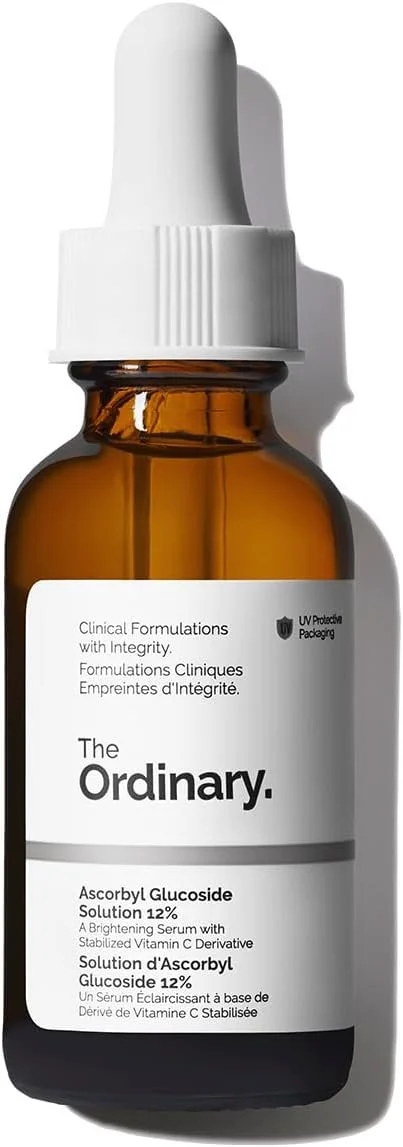
The Ordinary Ascorbyl Glucoside Solution 12%
a stable, water-based vitamin C derivative serum providing ascorbyl glucoside at 12% concentration. Ascorbyl glucoside converts to ascorbic acid enzymatically on the skin at a gentler pH than L-ascorbic acid formulations — appropriate for acne-prone skin where L-ascorbic acid's low pH causes barrier disruption and reactive inflammation. The stable derivative format avoids the oxidation instability of L-ascorbic acid that turns serums yellow-brown and generates reactive oxygen species. Apply to clean skin in the morning before SPF. The lightweight, water-based texture suits oily and acne-prone skin without adding comedogenic vehicle ingredients.
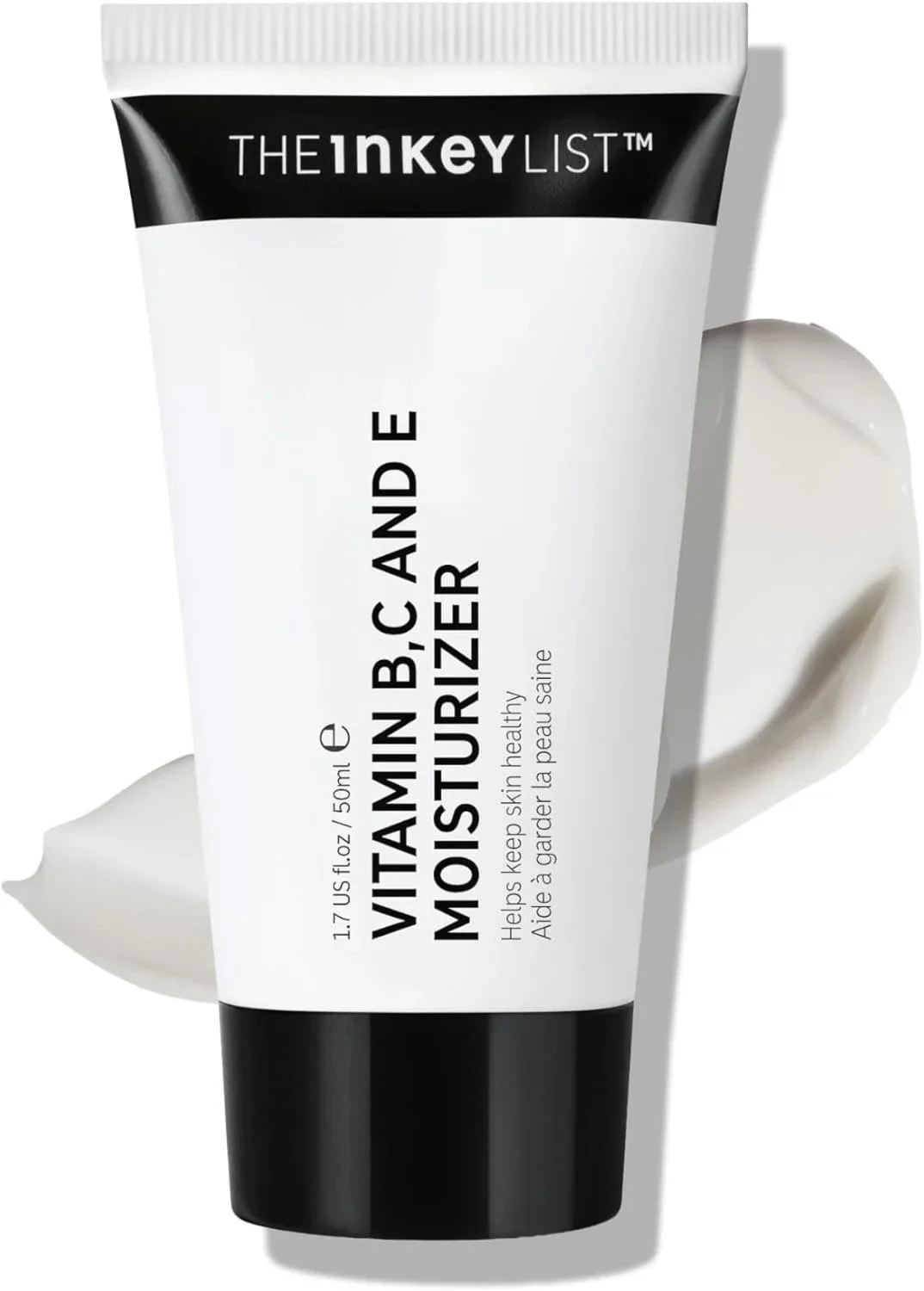
The INKEY List Vitamin B, C and E Moisturiser
a lightweight moisturiser combining niacinamide (vitamin B3 for PPAR-γ sebum regulation and PIH reduction), vitamin C (tyrosinase inhibition and sebum oxidation protection), and vitamin E (antioxidant stabilisation) alongside hyaluronic acid. Provides vitamin C benefit within a single moisturising step rather than as a standalone serum — appropriate for people managing acne who want to reduce the number of active product layers. The combination of vitamin C and vitamin E is specifically relevant to acne: as covered in the article, both vitamins work together to protect against sebum oxidation through complementary antioxidant pathways. Confirm fragrance-free status on current formulation before purchasing.
Supplement Support for Breakout-Prone Skin
Topical vitamin C addresses sebum oxidation and PIH at the skin surface. The hormonal androgen pathways, gut microbiome balance, and systemic inflammatory burden driving acne require internal nutritional support alongside topical care.
Drought's Skin Support Formula provides vitamin C alongside zinc, vitamin D, and 11 other nutrients — addressing both the antioxidant dimension topically relevant to acne and the broader internal pathways that topical vitamin C cannot reach. Made in the UK, suitable for vegetarians, designed for consistent long-term daily use.
FAQ
Does vitamin C help acne?
Through two specific mechanisms: protecting sebum from oxidation (preventing pro-acne conversion) and fading post-inflammatory hyperpigmentation. It doesn't treat active acne directly.
Can vitamin C cause breakouts?
High-concentration L-ascorbic acid can worsen acne-prone skin through barrier-disrupting acidity and irritation. Gentler derivatives (SAP, ascorbyl glucoside) or lower concentrations are better tolerated.
Which vitamin C is best for acne-prone skin?
Sodium ascorbyl phosphate (SAP) — stable, less acidic, and with documented antibacterial activity against C. acnes. Ascorbyl glucoside and L-ascorbic acid at 10% or below are appropriate alternatives.
Can vitamin C help acne scars?
For flat dark marks (PIH) — yes, through tyrosinase inhibition fading excess melanin. For structural scars (ice pick, boxcar) — no, topical vitamin C cannot remodel dermal collagen.
Why does vitamin C sting my skin?
The pH of the formula is the primary cause. L-ascorbic acid is most stable and most effective at pH 3–3.5 — highly acidic relative to skin's natural pH of 4.5–5.5. Applied to acne-prone skin where the barrier is already compromised, this acidity disrupts tight junction proteins and triggers reactive inflammation. The stinging is the barrier responding to acid disruption rather than a "working" sensation. Switching to a gentler derivative — SAP, ascorbyl glucoside — or reducing L-ascorbic acid concentration to 10% or below typically resolves the stinging. If a low-concentration stable derivative still stings, check the vehicle for fragrance, alcohol, or other irritants that may be the actual cause.
When should I use vitamin C in my acne routine?
Morning — before SPF. Vitamin C's antioxidant protection against UV-related sebum oxidation is most relevant during daytime.
Why did vitamin C make my acne worse?
Likely the formula rather than the vitamin C itself — high L-ascorbic acid concentration, heavy vehicle ingredients, fragrance, or an oxidised product. Switch to a gentler derivative at a lower concentration in a simple, fragrance-free base.
Should you use vitamin C with retinol?
Not in the same session — but the concern is pH interaction rather than ingredient incompatibility. Vitamin C works best at low pH (3–3.5); retinoids are more stable at higher pH and low pH can degrade them. Applying vitamin C before a retinoid in the same session lowers the skin surface pH at the point the retinoid is applied. The practical solution: vitamin C in the morning, retinoid in the evening. This separation also avoids the combined irritation of two actives on already-sensitive acne skin in the same routine session. Niacinamide and vitamin C can be layered without this concern — the niacin flush concern at standard concentrations has been largely debunked in the literature.
Summary
Vitamin C's most specific acne-relevant mechanisms are sebum oxidation protection (reducing the oxidative conversion of sebum to a pro-acne form) and PIH fading through tyrosinase inhibition. It is not a primary acne treatment — it doesn't address bacterial, hormonal, or follicular mechanisms directly. L-ascorbic acid at high concentrations is too acidic for most acne-prone skin; sodium ascorbyl phosphate, ascorbyl glucoside, and lower-concentration L-ascorbic acid (10% or below) are more appropriate. Morning use makes the most mechanistic sense for antioxidant UV protection. Introduce gradually on calm, non-flaring skin; discard oxidised serums; avoid layering with other low-pH actives.
Written by the Drought Skin team — specialists in natural support for psoriasis, eczema and acne
Disclaimer: This article contains affiliate links. We earn a very small commission from each purchase made through these links. There is no additional cost to you. All products featured have been specifically selected as products we personally use and love. For further information, please see our disclaimer page.
