
Pregnancy Acne: Why It Happens, What's Safe & What Actually Helps

Pregnancy acne is one of the most common and most frustrating skin changes of early pregnancy. People who've never had acne before develop it; people with controlled acne find it flaring despite their usual routine; and many standard acne treatments are off the table during pregnancy. Understanding why it happens — specifically — and what is and isn't safe to use makes the situation considerably more manageable.
Pregnancy Acne: Why It Happens & How to Support Your Skin Safely
Pregnancy can bring huge changes to the body — including the skin.
For some people, pregnancy leads to a healthy “glow.”
For others, it can trigger unexpected breakouts, oiliness, and irritated skin.
Pregnancy acne is extremely common, especially during the:
First trimester
Early second trimester
But why does it happen? And what can you safely do about it while pregnant?
Why pregnancy causes acne: the specific hormonal mechanism
Pregnancy acne is driven primarily by hormonal changes in the first trimester, when hormone levels are changing most rapidly.
Human chorionic gonadotrophin (hCG) — the hormone produced by the developing placenta, and the one detected by pregnancy tests — rises sharply in the first trimester. hCG stimulates the corpus luteum to produce progesterone. Progesterone in turn stimulates 5-alpha-reductase activity — the enzyme that converts testosterone to the more potent DHT, which directly drives sebaceous gland activity and sebum production. This is the same hormonal pathway driving cyclical and hormonal acne generally, activated more intensely by the rapid hormonal changes of early pregnancy.
Progesterone also has mild androgenic activity at sebaceous gland receptors — combining with the hCG-driven androgen pathway to produce the peak sebum-stimulating environment of the first trimester.
Why it typically improves in the second and third trimesters: as oestrogen rises progressively through pregnancy, it increases sex hormone-binding globulin (SHBG), which binds free androgens and reduces their availability to sebaceous glands. The first trimester hormonal shift is therefore the most acne-unfriendly; the skin often settles by the second trimester as oestrogen rises.
This is why pregnancy acne is typically worse in weeks 6–14 and may improve significantly by weeks 16–20 for many people. For some, it persists throughout.
Can Pregnancy Make Skin More Oily?
Yes — for many people, pregnancy increases oil production.
This may lead to:
Shinier skin
Congested pores
More frequent breakouts
Changes in skin texture
However, not everyone becomes oilier. Some people instead experience:
Dryness
Sensitivity
Irritation
Skin changes during pregnancy can vary massively from person to person.
Treatment Safety During pregnancy
Any specific treatment decision should be discussed with your GP or midwife. The information below reflects general guidance rather than individual advice.
Safe for use during pregnancy:
Gentle cleansers — fragrance-free, soap-free, twice daily. No active ingredients needed in the cleanser.
Glycolic acid and lactic acid at low concentrations (up to 10%) — the absorption from topical use is considered very low. At standard skincare concentrations, these are generally regarded as acceptable during pregnancy. Avoid high-concentration chemical peels.
Niacinamide — generally considered safe during pregnancy. Reduces sebum production through DGAT-1 inhibition, has anti-inflammatory properties, and fades post-inflammatory marks. One of the most appropriate pregnancy-safe actives for acne-prone skin.
Azelaic acid — this is the most specifically pregnancy-appropriate acne active. It is antibacterial against C. acnes, anti-inflammatory, and reduces PIH through tyrosinase inhibition. It is classified as Pregnancy Category B in the US (no evidence of foetal risk in animal studies, no adequate human studies). At 10% OTC concentration, it is considered safe during pregnancy by most dermatological guidance. It is one of the few acne treatments that a dermatologist can comfortably recommend during pregnancy.
Benzoyl peroxide — considered acceptable at standard concentrations (2.5–5%) in limited areas during pregnancy. Systemic absorption is very low. Used cautiously rather than across large areas.
Emollient and fragrance-free moisturiser — essential. Maintaining barrier function reduces reactive sebum production and makes skin more resilient.
Not recommended during pregnancy:
Topical retinoids (tretinoin, adapalene, retinol) — topical retinoids are contraindicated in pregnancy due to theoretical teratogenic risk. Oral retinoids (isotretinoin) are strictly contraindicated with mandatory pregnancy prevention programmes. Stop topical retinoids before or as soon as pregnancy is confirmed.
Oral antibiotics for acne — most acne antibiotics (tetracyclines) are specifically contraindicated in pregnancy. Some alternatives may be considered by a doctor but require specific medical assessment.
High-dose salicylic acid treatments — low concentrations in rinse-off cleansers (0.5–2%) are generally considered acceptable, but leave-on treatments and high-concentration salicylic acid products should be avoided during pregnancy.
Prescription-strength actives — always discuss any prescription treatment with your GP before continuing during pregnancy.
Building a safe routine for pregnancy acne
Morning: gentle fragrance-free cleanser → niacinamide serum → lightweight fragrance-free moisturiser → mineral SPF (zinc oxide or titanium dioxide)
Evening: gentle fragrance-free cleanser → azelaic acid 10% on affected areas → lightweight fragrance-free moisturiser
This is a simple, effective, and pregnancy-appropriate routine that addresses the key acne mechanisms (sebum reduction through niacinamide, antibacterial and anti-inflammatory through azelaic acid) without any of the contraindicated actives.
Why azelaic acid specifically
Azelaic acid is worth emphasising because it is one of the most underused and most appropriate acne treatments during pregnancy. Unlike salicylic acid (which needs caution in leave-on formulations) and retinoids (which are contraindicated), azelaic acid is:
Antibacterial against C. acnes through inhibition of bacterial protein synthesis. Anti-inflammatory — reducing IL-1α and IL-1β production relevant to inflammatory acne. Pregnancy-appropriate at 10% OTC concentrations according to most guidance. Also safe during breastfeeding.
If your GP or dermatologist has recommended prescription azelaic acid (15 or 20%) for pre-pregnancy acne, discuss whether to continue during pregnancy. At standard OTC concentrations (10%), most guidance supports its use.
Recommended Products
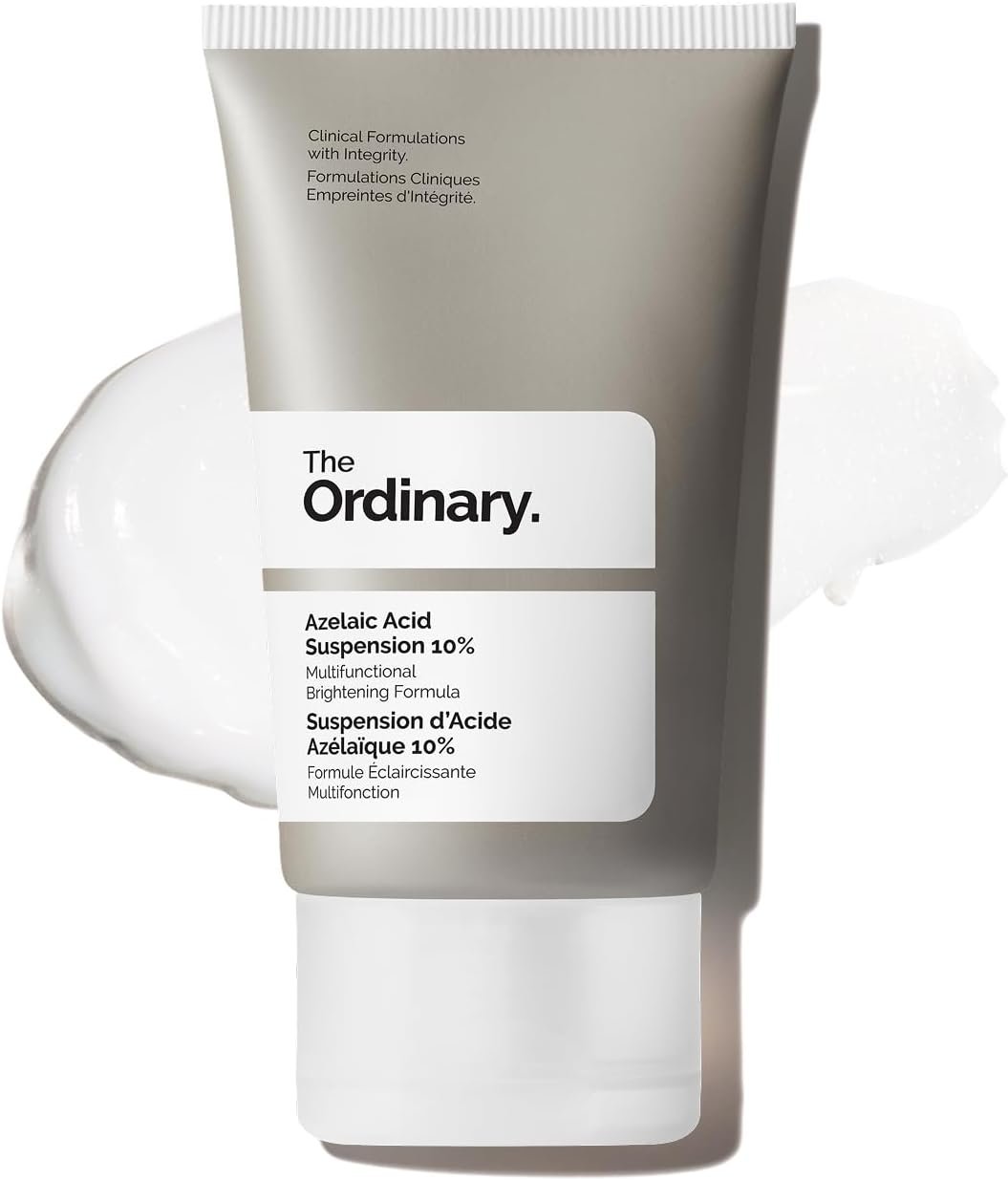
The Ordinary Azelaic Acid Suspension 10%
a 10% azelaic acid suspension appropriate for use during pregnancy at this OTC concentration, as covered above. Provides antibacterial activity against C. acnes, anti-inflammatory effects, and PIH-fading through tyrosinase inhibition — addressing three dimensions of pregnancy acne in one pregnancy-appropriate product. Fragrance-free. Always confirm with your GP or midwife before introducing any new skincare during pregnancy.
Lifestyle Factors That May Influence Pregnancy Acne
Hormones are a major factor — but they’re not the only influence on skin health.
Other factors may include:
Stress
Sleep quality
Diet
Hydration
Overall lifestyle habits
Pregnancy itself can also impact:
Sleep patterns
Stress levels
Energy levels
Postpartum acne: what to expect
For many people, pregnancy acne improves significantly after delivery as hCG and progesterone levels fall. Some experience a postpartum flare as hormones readjust — similar to the pattern of psoriasis and eczema postpartum described in the pregnancy eczema/psoriasis article in this series.
If breastfeeding, the same treatment restrictions that apply during pregnancy broadly apply during lactation — retinoids remain contraindicated; azelaic acid and niacinamide are generally considered safe. Discuss with your GP or midwife before restarting any previously used acne treatments.
Skincare habits that help regardless of trimester
Don't over-cleanse. Twice daily with a gentle cleanser is appropriate. More frequent cleansing strips the barrier and triggers reactive sebum production.
Fragrance-free throughout. Pregnancy can increase skin sensitivity; fragrance in any product adds unnecessary contact allergen risk.
Hands off. Picking and squeezing inflamed pregnancy acne increases the risk of post-inflammatory hyperpigmentation, which is more pronounced during pregnancy due to increased melanin activity (the same process causing linea nigra and melasma).
Mineral SPF. Pregnancy increases photosensitivity, making sun protection more important. Mineral sunscreens (zinc oxide, titanium dioxide) are generally preferred during pregnancy.
Manage stress. As covered in the hormonal acne article, stress elevates DHEAS alongside cortisol, increasing androgen drive on sebaceous glands. The stress of pregnancy-related anxiety compounds this.
Supplement Support for Acne-Prone Skin
The Drought Skin Support Formula is formulated for non-pregnant adults. During pregnancy, any supplementation should be discussed with a midwife or GP — prenatal vitamins prescribed or recommended by your healthcare team should be the primary supplement, and additional supplementation beyond these requires specific guidance given increased nutrient sensitivities during pregnancy.
FAQ
Is acne during pregnancy normal?
Yes — pregnancy acne is extremely common and is often linked to hormonal changes.
When does pregnancy acne usually start?
Most commonly weeks 6–14 of the first trimester, when hCG and progesterone are rising most rapidly.
Can pregnancy acne happen if I never had acne before?
Yes. Hormonal changes during pregnancy can trigger acne even in people who don’t normally experience breakouts.
Why do you get acne in pregnancy?
Primarily because hCG in the first trimester stimulates progesterone production, which activates 5-alpha-reductase — converting testosterone to DHT, which drives sebum production. The same hormonal pathway as hormonal acne, amplified by early pregnancy hormone levels.
Does pregnancy acne mean I’m having a boy or girl?
There’s no scientific evidence proving acne predicts the baby’s sex.
Does pregnancy acne improve?
Often yes — as oestrogen rises through the second trimester, SHBG increases and free androgen levels fall, typically improving sebum production and acne for many people.
What acne treatments are safe in pregnancy?
Azelaic acid 10%, niacinamide, gentle glycolic or lactic acid at low concentrations, and benzoyl peroxide 2.5–5% in limited areas are generally considered appropriate. Always confirm with your GP.
Can I use retinol in pregnancy?
No — topical retinoids including retinol are contraindicated during pregnancy due to theoretical teratogenic risk. Stop before or as soon as pregnancy is confirmed.
Is azelaic acid safe in pregnancy?
Yes — azelaic acid at 10% OTC concentration is generally considered safe during pregnancy and breastfeeding, making it one of the most appropriate acne actives to use during this period.
What skincare should I avoid during pregnancy?
Some acne ingredients may not be recommended during pregnancy, including certain retinoids and prescription treatments. Always check with a healthcare professional if unsure.
Summary
Pregnancy acne is driven by hCG-stimulated progesterone and 5-alpha-reductase activity in the first trimester, producing elevated DHT-driven sebum production. It typically peaks in weeks 6–14 and may improve significantly in the second trimester as oestrogen rises and SHBG increases. The treatment safety picture is the most practically important information: retinoids are contraindicated; azelaic acid 10% and niacinamide are the most appropriate pregnancy-safe acne actives; benzoyl peroxide is acceptable in limited areas; and any prescription treatment requires GP discussion. A simple, fragrance-free routine built around these safe actives manages pregnancy acne effectively without exposing the developing foetus to contraindicated compounds.
In Short
Pregnancy acne is commonly linked to hormonal changes
Increased oil production may contribute to breakouts
Acne can appear even if you’ve never had it before
Some acne treatments are not recommended during pregnancy
The nutritional foundations most relevant to hormonal acne — zinc, vitamin D, and magnesium — remain important postpartum when hormone levels readjust and acne often persists. Drought's Skin Support Formula provides all three alongside 11 other nutrients — discuss with your GP or midwife what is appropriate during pregnancy and breastfeeding. Made in the UK, suitable for vegetarians.
Start your skin support journey →
Written by the Drought Skin team — specialists in natural support for psoriasis, eczema and acne
Disclaimer: This article contains affiliate links. We earn a very small commission from each purchase made through these links. There is no additional cost to you. All products featured have been specifically selected as products we personally use and love. For further information, please see our disclaimer page.
