
Eczema & Psoriasis During Pregnancy: Why Skin Changes, What's Safe & What to Expect

Pregnancy produces one of the most significant immune system shifts the body undergoes. For many people with eczema or psoriasis, this produces dramatic and sometimes unexpected changes — improvement in some, worsening in others, and frequently a significant post-birth flare as the immune system returns to its pre-pregnancy state.
Understanding why these changes happen — specifically which immune mechanisms are involved — makes the unpredictability feel less random and helps with practical management.
Why eczema often worsens during pregnancy
The same Th2 immune shift that helps psoriasis works against eczema — because eczema is itself a Th2-dominant condition.
Atopic eczema is characterised by elevated IL-4, IL-13, and IL-31 — the same Th2 cytokines that pregnancy promotes. The shift toward Th2 dominance during pregnancy can therefore amplify the immune imbalance driving eczema. This explains the consistent finding that eczema worsens or appears for the first time in pregnancy more frequently than it improves.
The most common pattern described in eczema and pregnancy research is a condition called "eczema of pregnancy" (also termed atopic eruption of pregnancy) — flares of pre-existing eczema or de novo eczema developing, typically affecting the flexures, neck, face, and hands. This affects approximately 50% of pregnant women with pre-existing atopic eczema.
Additional factors during pregnancy that may worsen eczema include: increased sweating (a direct irritant), stretching skin (particularly on the abdomen), pregnancy-related nutritional changes, and sleep disruption that reduces skin repair capacity.
Why psoriasis often improves during pregnancy
Psoriasis is driven primarily by Th1 and Th17 immune responses — specifically IL-17, IL-23, and TNF-α are the cytokines most central to psoriatic inflammation. These are the targets of modern psoriasis biologics.
During pregnancy, the immune system undergoes a well-documented shift toward Th2 dominance. This shift occurs to protect the developing foetus — a Th1-dominant environment would risk rejection of the genetically foreign foetus, so the maternal immune system suppresses Th1 and Th17 activity. Progesterone and oestrogen both promote this shift. For psoriasis — a Th1/Th17-driven condition — this immune rebalancing directly suppresses the pathways driving the disease.
This explains the consistent finding in published research that approximately 50–60% of pregnant women with psoriasis experience significant improvement during pregnancy, with the improvement often being most pronounced in the second and third trimesters as progesterone and oestrogen reach their highest levels.
For the remaining 40–50%, psoriasis remains unchanged or worsens — less well understood, but likely relating to individual variation in immune shift magnitude and the balance of Th2 cytokines (particularly IL-4) that may worsen certain psoriasis presentations.
The postpartum flare
The pattern of skin change often reverses sharply after delivery. As progesterone and oestrogen levels fall rapidly in the days after birth, the Th2-protective immune shift ends and the immune system begins returning to its pre-pregnancy state.
For psoriasis patients who improved during pregnancy, this postpartum period is frequently when their worst flares occur — the immune system swings back toward Th1/Th17 dominance, sometimes overshooting. Studies suggest up to 40–50% of psoriasis patients who improved during pregnancy experience a significant postpartum flare.
For eczema patients, the postpartum period can go either way — eczema may improve as Th2 dominance resolves, or sleep deprivation, breastfeeding hormonal changes, and stress may maintain or worsen it.
Treatment safety during pregnancy: the most important practical section
This is where the original article provides no guidance at all, despite being the most commonly searched question by pregnant women with skin conditions.
General principle: always discuss any treatment changes with your GP, dermatologist, or midwife. The information below reflects general guidance, not individual recommendations.
Emollients — safe throughout pregnancy. Fragrance-free, paraffin-based emollients are considered safe during pregnancy. Regular generous use remains the foundation of management. The fire risk from paraffin emollients and bedding remains relevant.
Mild-to-moderate topical corticosteroids — generally considered safe for short courses. The evidence on topical steroids in pregnancy is reassuring at standard doses on limited body surface areas. Some concerns exist around long-term, high-potency topical steroid use potentially affecting foetal growth, and potent steroids should generally be avoided. Discuss with a GP before use, particularly in the first trimester.
Coal tar — generally avoided during pregnancy. Coal tar contains PAH compounds with potential carcinogenic and developmental concerns. Most guidance recommends avoiding coal tar preparations during pregnancy. The coal tar shampoo preparations used briefly for scalp conditions carry lower risk than body preparations, but discussion with a GP is recommended.
Topical calcipotriol (vitamin D analogues) — limited data. The Medicines and Healthcare products Regulatory Agency (MHRA) advises caution. Small amounts used on localised areas may be acceptable, but large-area use is not recommended. Discuss with a dermatologist.
Topical retinoids (tretinoin, adapalene) — contraindicated. Retinoids are teratogenic (cause birth defects) in oral form; topical absorption is low but there remains theoretical risk. Standard guidance is to avoid topical retinoids during pregnancy.
Oral retinoids (isotretinoin, acitretin) — strictly contraindicated. Both require effective contraception and have mandatory pregnancy prevention programmes due to high teratogenic risk.
Biologics (adalimumab, secukinumab, ixekizumab, etc.) — complex; specialist decision. Some biologics are used through pregnancy under specialist supervision; others are avoided. Monoclonal antibodies cross the placenta in the third trimester. The decision about continuing or stopping biologics during pregnancy should be made by a specialist dermatologist who can weigh the risks of undertreated disease against medication exposure.
Antihistamines — chlorphenamine is considered acceptable for short-term use during pregnancy under medical guidance; newer non-sedating antihistamines have less data.
Skincare during pregnancy: practical guidance
The general approach during pregnancy is to simplify and reduce — fewer products, no actives that carry risk, fragrance-free throughout.
Moisturise generously and consistently. The skin barrier under stress needs consistent support. Fragrance-free emollients remain the foundation.
Avoid fragrance and essential oils. Both are common contact sensitisers and should be avoided as a precaution during pregnancy when skin may be more reactive. Fragrance is the most common contact allergen in cosmetics.
Avoid coal tar preparations. Particularly during the first trimester when organogenesis is occurring.
Stop topical retinoids. Before conception if possible.
Discuss any prescription treatment with your GP or dermatologist. Don't stop prescribed treatments without medical guidance — undertreated psoriasis or eczema during pregnancy carries its own risks and stresses..
Supplement Support for Dry, Sensitive Skin
Vitamin D deficiency is common during pregnancy — both the pregnant woman's requirements and foetal development draw on vitamin D stores, and the UK's UVB deficit compounds this. Zinc and omega-3s support the immune and barrier function relevant to both conditions.
Note: supplementation during pregnancy should be discussed with a midwife or GP. Not all supplements are appropriate in pregnancy. The Drought Skin Support Formula is designed for non-pregnant adults; if pregnant, discuss any supplementation with your healthcare team.
Recommended Products
Grow Healthy Babies: The Evidence-Based Guide to a Healthy Pregnancy and Reducing Your Child's Risk of Asthma, Eczema, and Allergies by Michelle Henning
a genuinely useful evidence-based guide covering the prenatal factors that influence eczema and allergy risk in children. Relevant for parents planning pregnancy who want to reduce their child's atopic risk.
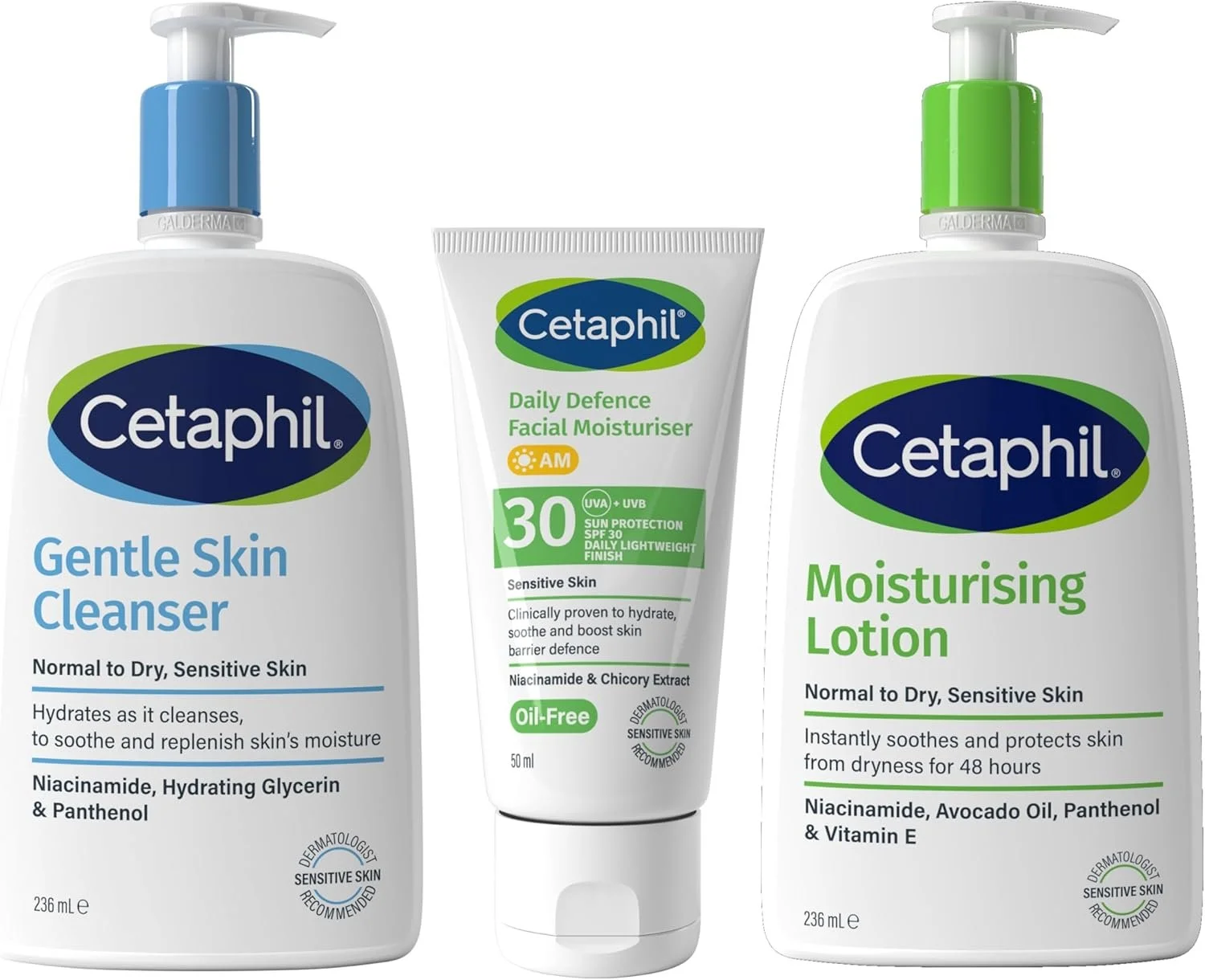
Cetaphil Gentle Skin Cleanser and Moisturising Lotion Bundle
fragrance-free, soap-free, and consistently recommended by dermatologists for sensitive and eczema-prone skin. Both the cleanser and moisturiser are fragrance-free and SLS-free — appropriate for the simplified, minimal-ingredient skincare approach recommended during pregnancy. A practical and widely available option for maintaining barrier support throughout pregnancy without introducing any of the actives the treatment safety section advises avoiding.

Optibac Probiotics For Every Day
a multi-strain Lactobacillus and Bifidobacterium supplement. Published evidence including the Kalliomäki trial shows maternal probiotic supplementation during pregnancy reduces eczema incidence in offspring. Note: discuss any supplementation with your midwife or GP during pregnancy.
Breastfeeding considerations
Many of the same treatment safety questions apply during breastfeeding. Emollients are safe. Topical steroids at standard doses on limited areas are generally considered acceptable but should be kept away from the nipple area and any area where the infant might have direct skin contact. Retinoids remain contraindicated. Biologics — complex; specialist guidance required.
FAQ
Can pregnancy make eczema worse?
Yes — for approximately 25% of people with eczema, pregnancy worsens symptoms significantly. The mechanism is the Th2 immune shift that occurs naturally during pregnancy to prevent maternal immune rejection of the foetus. Eczema is driven by Th2 immune polarisation — the same shift that protects the pregnancy also amplifies the inflammatory pathway underlying eczema. Oestrogen specifically upregulates IL-4 and IL-13 — the cytokines driving eczema's Th2 cascade. For people whose eczema was already Th2-dominant, pregnancy amplifies the existing immune imbalance. For a minority of people whose eczema has a significant Th1 component, pregnancy may paradoxically improve their skin through Th1 suppression.
Why does psoriasis improve during pregnancy?
Pregnancy shifts immune responses toward Th2 dominance to protect the foetus. Psoriasis is Th1/Th17-driven — this shift directly suppresses psoriatic inflammation, improving symptoms in approximately 50–60% of cases.
Why does eczema get worse during pregnancy?
Eczema is Th2-driven — the same Th2 immune shift that helps psoriasis amplifies the immune imbalance of eczema. Around 50% of pregnant women with pre-existing atopic eczema experience worsening.
Why does eczema flare postpartum?
The postpartum period produces variable eczema outcomes — unlike psoriasis which has a more predictable rebound pattern. As the Th2 dominance of pregnancy resolves, the underlying immune state that drives atopic eczema may improve — but this is frequently offset by sleep deprivation, breastfeeding hormonal changes, and the significant stress of early parenthood. The HPA axis cortisol elevation from sleep disruption amplifies Th2 immune activity, potentially maintaining or worsening eczema despite the theoretical improvement from reduced Th2 dominance. For many people, the six to twelve weeks postpartum represent a particularly challenging eczema period where both immune and lifestyle factors are working against skin stability simultaneously.
Why does psoriasis flare after birth?
The postpartum period carries a significant rebound risk for psoriasis — particularly in people whose psoriasis improved during pregnancy. The Th1 immune suppression that improved psoriasis reverses within weeks of delivery, often producing a significant flare in the first one to three months postpartum. This rebound can be more severe than the pre-pregnancy baseline in some people. Breastfeeding delays some of the hormonal reversal and may partially extend the improvement — but also restricts treatment options, as methotrexate, acitretin, and most biologics are contraindicated during breastfeeding. Discussing postpartum treatment plans with a dermatologist before delivery allows appropriate treatment to be initiated promptly when the rebound occurs rather than waiting for the flare to establish.
Can retinoid creams be used during pregnancy?
No — topical retinoids (tretinoin, adapalene) and oral retinoids (isotretinoin, acitretin) are contraindicated during pregnancy due to teratogenic risk.
Should I stop biologics during pregnancy?
Discuss with your specialist dermatologist — this is not a decision to make unilaterally. Some biologics are used during pregnancy under supervision; stopping without medical guidance may lead to undertreated disease which also carries risks.
Can pregnancy hormones affect skin conditions?
Yes. Estrogen and progesterone changes may influence inflammation and skin barrier function.
Is it safe to use steroid creams during pregnancy?
Mild to moderate potency topical steroids on limited body areas are generally considered acceptable during pregnancy based on published safety data — the risk is low when used as directed. The specific concern is high-potency topical steroids (Betamethasone, Clobetasol) applied to large body surface areas over extended periods — these carry a documented association with foetal growth restriction through systemic absorption. The face, flexures, and periorbital area should use only mild potency regardless of pregnancy. Calcineurin inhibitors (tacrolimus, pimecrolimus) are generally avoided in pregnancy due to limited safety data despite low systemic absorption. Emollients — fragrance-free — are unrestricted and should be the first-line daily management. Always discuss any topical treatment with your GP or midwife during pregnancy.
Is it safe to treat eczema during pregnancy?
Fragrance-free emollients are safe throughout pregnancy. Mild-to-moderate topical corticosteroids are generally considered acceptable for short courses on limited areas. Discuss any prescribed treatment with your GP before continuing or changing during pregnancy.
Summary
The immune shift of pregnancy — toward Th2 dominance — explains why psoriasis (Th1/Th17-driven) often improves while eczema (Th2-driven) often worsens during pregnancy. The postpartum period reverses this shift rapidly, frequently producing psoriasis flares and variable eczema changes. Treatment safety during pregnancy requires specific discussion with healthcare professionals — emollients are safe; mild topical steroids generally acceptable in limited use; coal tar and retinoids should be avoided; biologics require specialist guidance. Simplifying skincare, maintaining fragrance-free emollient use, and avoiding unsafe actives provides a practical baseline while medical guidance is sought for anything beyond this.
Written by the Drought Skin team — specialists in natural support for psoriasis, eczema and acne
Disclaimer: This article contains affiliate links. We earn a very small commission from each purchase made through these links. There is no additional cost to you. All products featured have been specifically selected as products we personally use and love. For further information, please see our disclaimer page.
-
How Stress Triggers Eczema & Psoriasis Flare-Ups
Eczema and Allergies: The Connection, Common Triggers & What Actually Helps
Menopause & Eczema: Why Your Skin Changes and What Actually Helps
Eczema and the Contraceptive Pill: The Hormonal Connection Explained
Topical Steroid Withdrawal (TSW): Symptoms, Causes & What the Evidence Shows
