
Acne Extractions: What Works, What Doesn't & When to Leave Spots Alone

The instinct to extract a spot is almost universal. Most people have done it. Most people have regretted it. Understanding why the results are so unpredictable — and why some extractions are genuinely useful while others cause more damage than the original spot — comes down to knowing what you're actually dealing with.
What Are Acne Extractions?
Acne extractions are a skincare treatment used to manually remove:
Blackheads
Whiteheads
Blocked pores
Trapped oil and debris
They’re commonly performed during facials or dermatology treatments using specialised tools and sterile techniques.
The goal is usually to reduce congestion and improve the appearance of clogged pores.
Extractions target existing blockages — they don’t necessarily prevent future breakouts.
Acne Extractions: Helpful or Harmful?
If you’ve ever been tempted to squeeze a spot in the mirror, you’re definitely not alone.
Acne extractions — the process of removing clogged pores, blackheads or pimples — have become increasingly popular thanks to skincare clinics, facials and even social media videos. For some people, professional extractions may help improve congestion temporarily. But when done incorrectly, they can also lead to irritation, inflammation and even scarring.
That’s why understanding the difference between safe extractions and aggressive picking matters.
Acne extractions may improve congestion short-term, but overdoing them can damage the skin barrier.
What a comedone actually is — and why this matters
A blackhead is not dirt. This is the most common and most unhelpful misconception about comedones. The dark colour of a blackhead comes from melanin pigment oxidising when sebum and dead skin cells are exposed to air at the pore opening — not from accumulated grime.
An open comedone (blackhead) has a dilated follicle opening through which the oxidised plug is accessible. A closed comedone (whitehead) has skin grown over the opening, trapping the sebum and dead cell mixture beneath the surface.
This matters for extraction because: the accessibility of the plug determines whether extraction is likely to be clean and effective or traumatic and damaging. Open comedones — blackheads — can often be expressed cleanly. Closed comedones require the skin to be broken or softened before the plug can come free. Inflamed papules and pustules contain bacteria and inflammatory cells, not just a keratin plug, and squeezing them spreads both deeper into the tissue.
What professional extractions actually do
In a professional context — a facial treatment with a trained aesthetician, dermatologist, or dermal therapist — extraction involves:
Skin preparation. Steam or warm compresses soften the follicle and loosen the plug before extraction. This is the step most at-home attempts skip, which is why home extractions are so much more likely to cause trauma.
Sterile technique. Gloved hands, sterile tools, and a clean environment prevent bacterial contamination of open follicles.
Controlled pressure. A comedone extractor (a small looped metal tool that applies even pressure around the follicle opening) or wrapped fingertips apply even, outward pressure rather than the inward downward pressure of pinching, which pushes contents deeper.
Appropriate selection. A professional recognises which lesions can be safely extracted and which should be left alone. Blackheads and some mature whiteheads — yes. Red, inflamed papules, pustules under pressure, and any cystic or nodular acne — no.
At-home extractions: when they work and when they don't
For people who want to manage comedones at home, a comedone extractor tool is significantly safer than using fingernails — the even loop pressure is less likely to rupture the follicle wall and drive contents into the surrounding dermis.
The single most important rule for at-home extraction: if it doesn't come easily with gentle pressure, leave it. A forced extraction that drives contents into the dermis produces an inflamed papule that takes far longer to heal than the original comedone.
Recommended Products
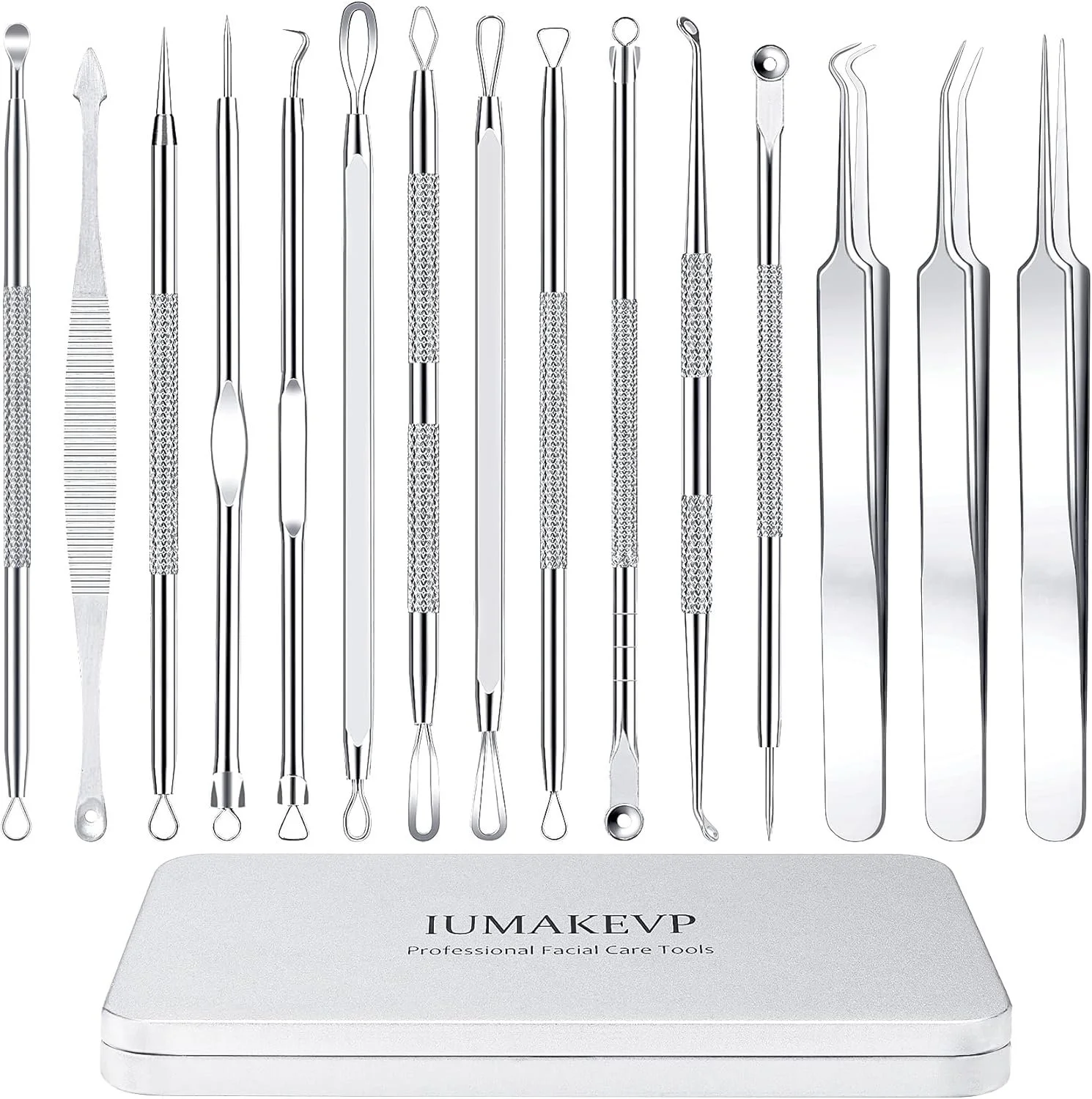
Blackhead Remover Comedone Extractor Tool Kit
a stainless steel tool set including the standard loop extractor and lancet. Clean with alcohol before and after use. Apply only to open blackheads on softened skin — after a warm shower is ideal. Apply the loop around the blackhead and apply gentle, even lateral pressure. If nothing comes free with gentle pressure, stop. Forcing extraction that isn't ready causes far more damage than the original comedone
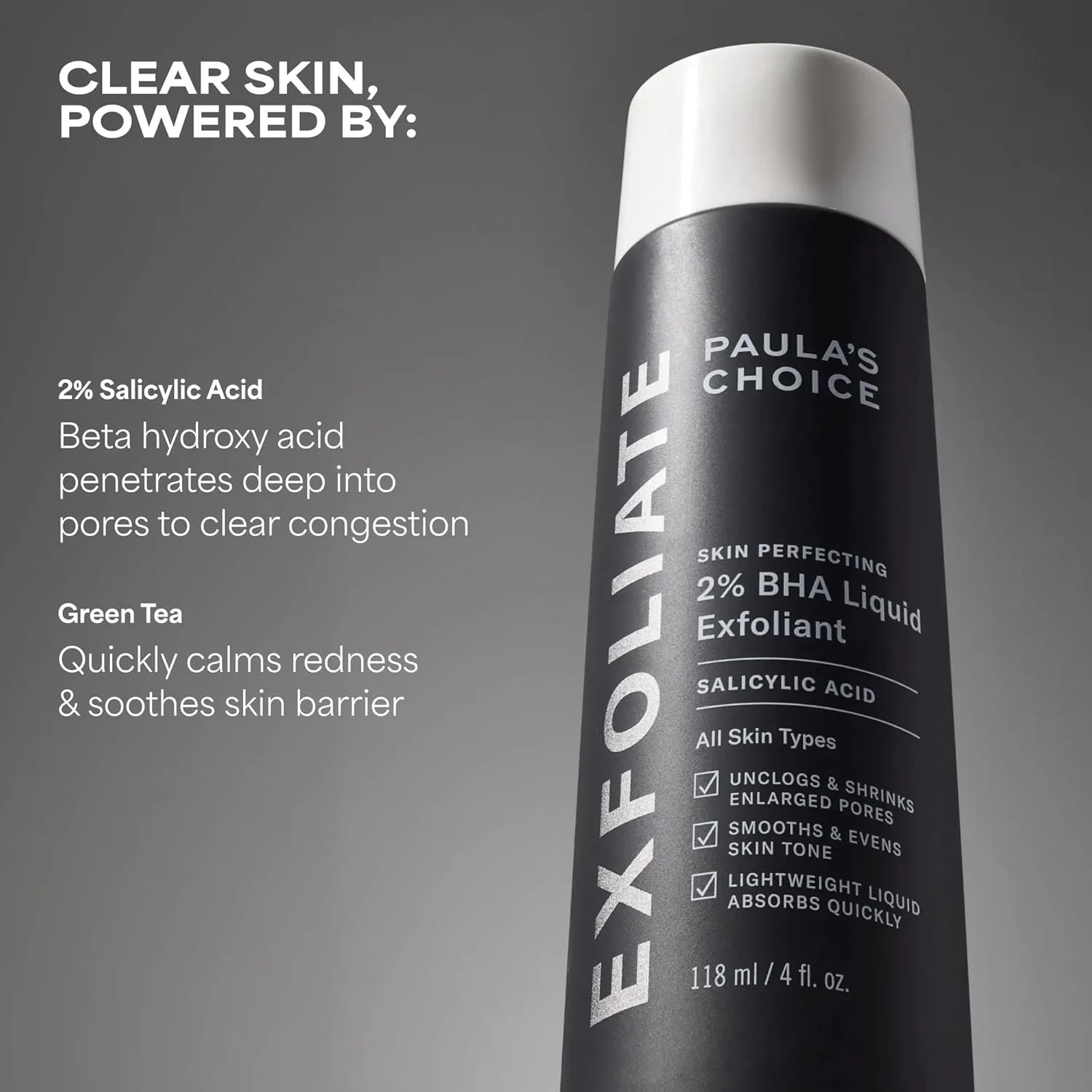
Paula's Choice Skin Perfecting 2% BHA Liquid Exfoliant
a leave-on salicylic acid toner applied after extraction to dissolve the residual sebum and dead cell mixture inside the follicle before it reforms. As covered above, extraction removes the surface plug but not the underlying follicular environment that produced it — consistent salicylic acid use addresses this prevention dimension. Apply to clean skin after extraction, allow to absorb, then moisturise. Use every two to three days initially and build frequency as tolerated.
The Risks of Picking Spots Yourself
This is where problems often begin.
Trying to squeeze acne aggressively at home may push bacteria and inflammation deeper into the skin.
Potential risks include:
Increased redness
Swelling
Skin damage
Scarring
Post-inflammatory pigmentation
Delayed healing
In many cases, the damage caused by picking becomes more noticeable than the original spot itself.
If a spot isn’t ready to come out naturally, forcing it usually makes things worse.
The triangular danger zone
This is a specific clinical concern rarely mentioned in general acne content but worth knowing for anyone extracting spots on the central face.
The "triangle of death" or danger triangle is the area between the corners of the mouth and the nasal bridge. This area has venous drainage that connects to the cavernous sinus — a large vein inside the skull. Severe infection spreading from an extracted spot in this area can, in extremely rare cases, travel to the cavernous sinus and cause cavernous sinus thrombosis — a life-threatening condition.
This is rare, but it explains why dermatologists specifically advise against squeezing spots in the central face, particularly around the nose and upper lip. Infection risk from improperly extracted spots elsewhere on the face is far lower.
Lesions you should never extract
Inflamed papules and pustules. These contain bacteria alongside the follicular contents. Squeezing spreads bacteria across the skin surface and ruptures the follicle wall, pushing inflammatory material into the surrounding dermis — causing a much larger, deeper, and slower-healing lesion.
Cystic and nodular acne. These form deep in the dermis, not in the follicle. There is no surface access point for extraction. Any attempt to force extraction traumatises the tissue without removing the contents.
Anything that doesn't come free immediately with gentle pressure. The follicle wall is not ready. Forcing it ruptures it.
Anything in the danger triangle during active infection. Central facial spots with significant redness, warmth, or systemic symptoms (fever, feeling unwell) warrant GP assessment, not extraction.
Supplement Support for Breakout-Prone Skin
Extractions are a surface-level intervention. The hormonal, metabolic, and inflammatory drivers of acne — sebum oxidation, C. acnes activity, androgen sensitivity — are not affected by extraction.
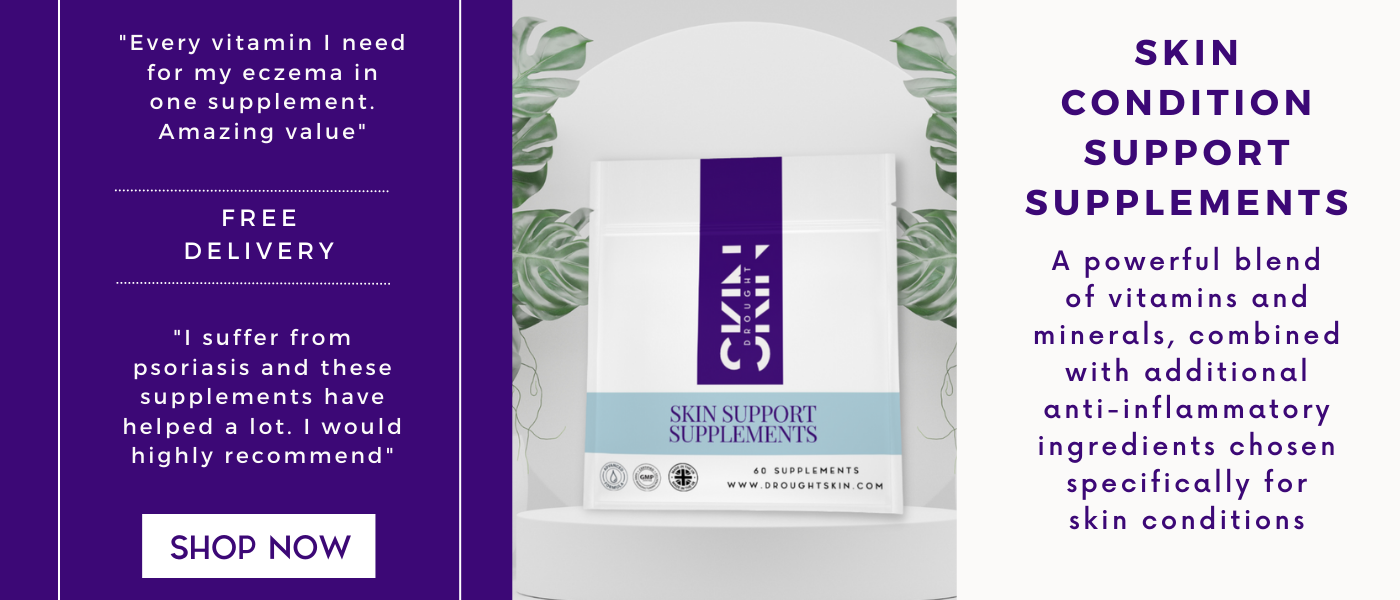
Drought's Skin Support Formulaprovides zinc, vitamin D, vitamin C, and 11 other nutrients addressing the internal pathways relevant to acne — working alongside consistent skincare to address what topical treatment and extraction cannot reach. Made in the UK, suitable for vegetarians, designed for consistent long-term daily use.
Post-extraction aftercare
After any extraction — professional or careful at-home — the skin has an open or slightly traumatised follicle that is more vulnerable to bacterial entry and more reactive than usual.
Apply a thin layer of niacinamide serum or azelaic acid to calm inflammation and support healing. These are both anti-inflammatory and support the skin's own antibacterial defence. Avoid applying heavy emollients directly over freshly extracted pores — they can trap bacteria.
Avoid SPF with physical filters immediately post-extraction if they contain thick mineral particles that could block the open follicle. A lightweight chemical or hybrid SPF is more appropriate for the first 24 hours.
Avoid makeup directly over extraction sites for at least 24 hours — particularly powder or cakey formulas that can plug the open follicle.
Do not re-extract the same area for at least a week. The follicle needs time to heal.
What actually reduces comedone formation
Extractions address existing blockages — they don't prevent new ones from forming. For consistent reduction in comedone formation, the most effective approaches are:
Salicylic acid (BHA) — oil-soluble, penetrates into follicles, dissolves the sebum-dead cell mix before it becomes a comedone. The most directly appropriate active for preventing comedone formation.
Retinoids — regulate cell turnover and prevent follicular hyperkeratinisation. The best evidence-based approach for preventing both comedones and inflammatory acne.
Consistent, simple skincare — over-cleansing and over-exfoliation stimulate sebum production and worsen congestion. Covered in the acne skincare routine article in this series.
FAQ
Are acne extractions good for acne?
Professional extractions are appropriate for open comedones (blackheads) and some non-inflamed closed comedones on settled skin — removing the keratin and sebum plug that forms the comedone reduces the substrate that C. acnes colonises. They are not appropriate for inflammatory papules, pustules, cystic or nodular acne, or any active infection. The distinction between extractable and non-extractable lesions is the most important practical decision in extraction — getting it wrong worsens the presentation rather than improving it.
Can squeezing spots make acne worse?
Yes — and through a specific mechanism. Applying lateral pressure with fingernails or incorrect technique pushes the follicular contents sideways into adjacent dermis rather than upward through the pore opening, rupturing the follicle wall and releasing C. acnes and sebum into surrounding tissue. This triggers a significantly more intense inflammatory response than the original lesion — producing the painful, swollen, post-picking nodule that takes considerably longer to heal than the original spot and carries a much higher scarring risk.
Do dermatologists recommend extractions?
For appropriate lesion types — yes. Comedone extraction is a standard component of dermatological acne management for non-inflammatory congestion. What dermatologists consistently advise against is unsterile home extraction using fingernails on inflammatory lesions — the specific combination most likely to cause dermis rupture, secondary infection, and post-inflammatory hyperpigmentation. Professional extraction uses specifically designed looped comedone extractors applied with controlled perpendicular pressure on softened skin — significantly different from home squeezing.
Can acne extractions cause scarring?
Yes — incorrectly performed extractions on inflammatory or unsuitable lesions cause two types of scarring. Atrophic scarring (ice pick, boxcar, rolling scars) results from collagen loss in the dermis following the inflammatory cascade from dermis rupture. Post-inflammatory hyperpigmentation (PIH) — flat brown marks — results from melanin overproduction in response to skin trauma. Both are more likely with aggressive home squeezing than with correctly performed professional extraction on appropriate lesions.
Are blackheads safe to extract?
Conditionally — blackheads (open comedones) are the most appropriate lesion type for extraction. The open pore means the comedone contents can be expressed upward without rupturing the follicle wall. Preparation with a gentle AHA or BHA to soften the comedone contents, clean hands or a sterile looped extractor, and perpendicular (not lateral) pressure makes home blackhead extraction significantly safer than squeezing other lesion types. Never extract blackheads adjacent to active inflammatory lesions — bacteria transfer risk is significant.
What's better than picking spots?
Chemical exfoliation with salicylic acid (2% BHA) softens comedones through lipophilic follicular penetration — reducing the need for physical extraction by dissolving the keratin bonds that hold comedone contents together. Applied consistently three to four times weekly on settled skin, 2% BHA reduces comedone formation upstream rather than managing individual spots downstream. For inflammatory lesions specifically — benzoyl peroxide's oxidative bacterial kill and azelaic acid's combined antimicrobial and anti-inflammatory activity are more appropriate interventions than extraction of any kind.
How long should I wait before extracting after a breakout?
Allow any active inflammation to fully resolve before attempting extraction in the same area — typically two to four weeks after an inflammatory lesion clears. Extracting in recently inflamed skin disrupts healing tissue, increases PIH risk significantly, and removes the protective granulation tissue that prevents secondary infection during repair. If an area is still red, tender, or showing any active inflammation, it is not ready for extraction regardless of how long it has been since the original spot appeared.
Summary
Professional extractions are useful for blackheads and mature whiteheads when performed with skin preparation, sterile technique, and appropriate patient selection. At-home extraction with a loop tool is safer than fingernails but only appropriate for open comedones with gentle pressure. Inflamed acne, cysts, and anything in the central facial danger zone should never be extracted. Aftercare with niacinamide or azelaic acid and avoidance of pore-blocking makeup matters more than most people realise. And preventing future comedones — through salicylic acid and retinoids — is far more valuable than extracting existing ones.
Written by the Drought Skin team — specialists in natural support for psoriasis, acne and eczema.
Disclaimer: This article contains affiliate links. We earn a very small commission from each purchase made through these links. There is no additional cost to you. All products featured have been specifically selected as products we personally use and love. For further information, please see our disclaimer page.
