
Microplastics & Eczema: The TLR4 Inflammatory Mechanism, What the Research Shows & What to Do
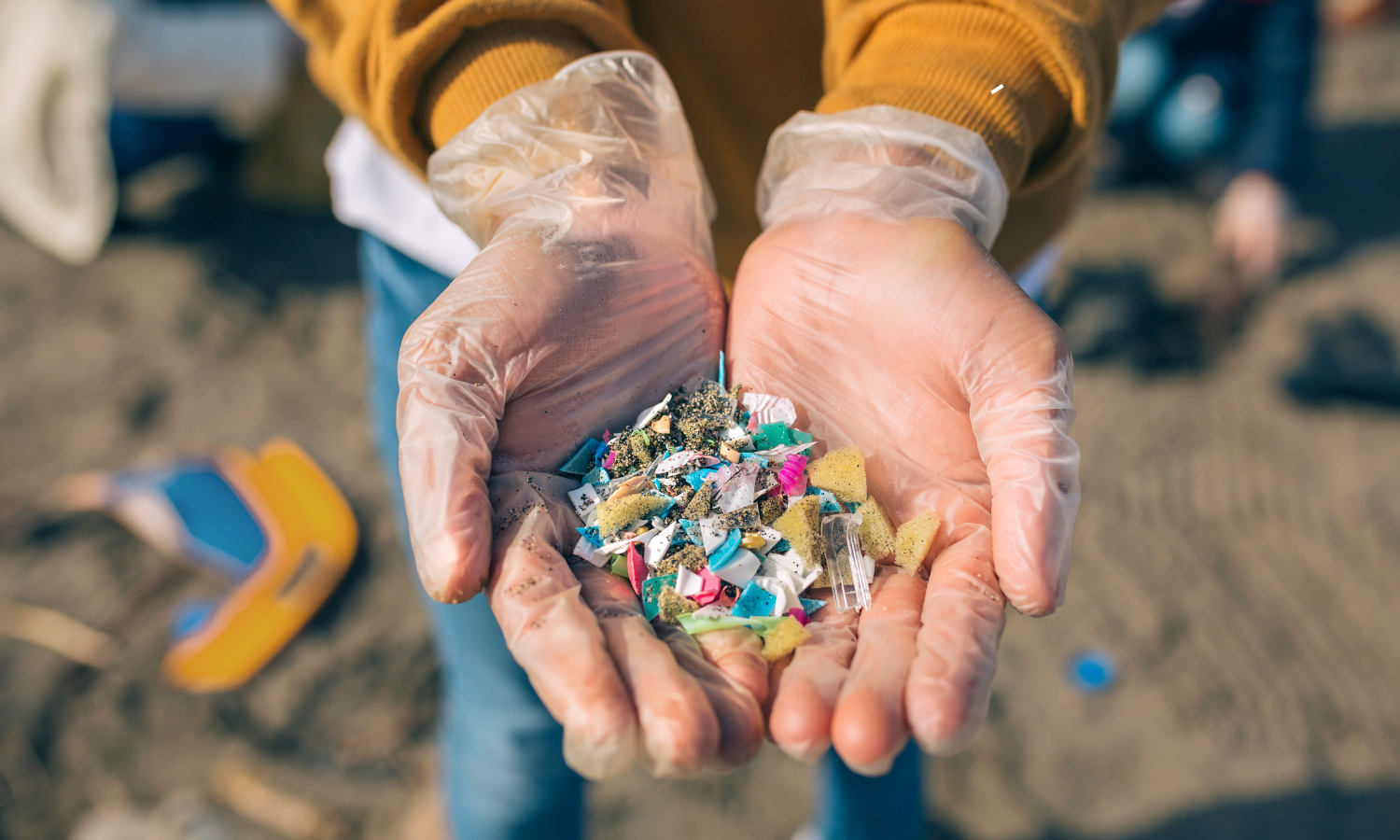
Microplastics — plastic particles smaller than 5mm — have been detected in human blood, breast milk, lung tissue, and even the placenta. Scientists are now asking whether this ubiquitous environmental contaminant has any role in inflammatory skin conditions including eczema. The honest answer is: the research is early and incomplete, but the mechanisms being studied are specific and plausible, not vague health anxiety.
Microplastics & Eczema: Could They Affect Sensitive Skin?
Microplastics have become one of the biggest environmental health concerns in recent years.
Researchers have now detected tiny plastic particles in:
Water
Food
Air
Clothing
Dust
Human blood
Even human tissue
And as scientists learn more about how microplastics may affect inflammation and the immune system, many people with eczema are beginning to ask:
Could microplastics also affect sensitive skin?
The truth is, research is still developing — but scientists are increasingly studying whether environmental pollutants, including microplastics, may contribute to skin barrier stress, irritation and inflammation.
Scientists are increasingly investigating whether environmental pollution may contribute to inflammatory skin stress.
What Are Microplastics?
Microplastics are extremely small plastic particles, usually less than 5mm in size.
They come from:
Synthetic clothing fibres
Plastic packaging
Car tyres
Cosmetics and skincare
Industrial waste
Plastic breakdown in the environment
Tiny plastic particles can now be found in:
Indoor dust
Oceans
Food chains
Drinking water
Air pollution
Microplastics are now considered almost unavoidable in modern environments.
Why microplastics and eczema are connected in theory
The research connecting microplastics to eczema-relevant biology operates through three proposed pathways:
AhR activation. Certain microplastic particles and the chemical additives they carry — including phthalates and bisphenols — can activate the aryl hydrocarbon receptor (AhR). Readers of the air pollution and coal tar articles in this series will recognise this receptor: PAH compounds in air pollution activate AhR to drive Th2 immune responses characteristic of eczema; coal tar uses the same receptor therapeutically for psoriasis. Microplastic chemical additives activating AhR in skin immune cells would be expected to worsen the Th2 inflammatory environment of atopic eczema. Research in this specific area is developing.
Direct barrier disruption. Nanoplastics (particles below 1 micrometre) are small enough to potentially penetrate the skin barrier. For eczema-prone skin — which already has a compromised, more permeable barrier — this penetration capacity may be higher than for intact skin. Once inside the epidermis, plastic particles could trigger innate immune responses and oxidative stress similar to the mechanisms documented for fine particulate matter (PM2.5) in the pollution article.
Gut microbiome disruption from ingested microplastics. Dietary exposure to microplastics — from food stored in plastic, water in plastic bottles, seafood, and food packaging — produces consistent gut microbiome disruption in animal studies. The beneficial bacteria most depleted include Lactobacillus species — the same bacteria most consistently lower in eczema patients and most studied in probiotic interventions. Given the gut-skin axis documented throughout this series, gut microbiome disruption from ingested microplastics provides a plausible indirect pathway to worsening eczema.
Air Pollution, Inflammation & Eczema
Much of the research around microplastics overlaps with wider pollution research.
Studies suggest air pollution may be associated with:
Increased eczema prevalence
More severe flare-ups
Increased skin sensitivity
Higher inflammatory stress
Pollution particles may contribute to:
Oxidative stress
Skin barrier disruption
Immune activation
which are all closely linked to eczema.
Environmental pollution may increase inflammatory pressure on sensitive skin.
What the actual research shows
Being honest about the current state is important. The evidence base specifically for microplastics and eczema is:
Animal studies: several studies in mice have found increased inflammatory cytokine production, reduced gut microbiome diversity, and skin barrier changes following microplastic exposure. These are mechanistically relevant findings but not directly translatable to human clinical outcomes.
Epidemiological associations: studies in children have found associations between higher environmental microplastic exposure and increased atopic disease prevalence, but these are observational correlations in a field full of confounding variables.
No randomised controlled trials: there are no human clinical trials testing whether reducing microplastic exposure improves eczema outcomes. This is both unsurprising (trials would be technically extremely difficult) and limiting.
The honest framing: plausible mechanisms, suggestive early evidence, no definitive clinical proof. This article should not create health anxiety — it should inform realistic expectation and practical steps.
Skincare, Cosmetics & Microplastics
Some cosmetics and personal care products historically contained microplastic ingredients, especially:
Exfoliating beads
Glitter products
Certain thickening agents
Many countries have now restricted some microplastic ingredients, but researchers are still studying the long-term impact of repeated exposure.
Modern skincare trends are increasingly focusing on reducing unnecessary irritation and environmental exposure.
Practical steps that address microplastic exposure with eczema relevance
Rather than anxiety-inducing general "reduce toxin exposure" advice, specific steps that are both microplastic-reducing and have parallel eczema benefit:
Improve indoor air quality. Microplastic particles and the broader category of environmental pollutants (PM2.5, VOCs) all respond to HEPA air filtration. As covered in the air pollution and eczema article, a HEPA purifier in the bedroom reduces the airborne environmental burden on eczema skin — the microplastic and pollution benefits are simultaneously achieved. The Levoit Core 300 recommended in that article is equally relevant here.
Reduce dietary microplastic intake where practical. Choose glass or stainless steel water bottles rather than single-use plastic. Reduce heating food in plastic containers (heat increases plastic chemical leaching). Eat more whole foods from fresh sources rather than heavily packaged processed food — which also reduces the ultra-processed food inflammatory burden documented elsewhere in this series.
Support gut microbiome. Given the documented gut microbiome disruption from microplastics, consistent probiotic intake (from kefir, yogurt, probiotic supplements) and prebiotic fibre from diverse plant foods addresses the gut-skin pathway regardless of whether microplastics are the primary driver.
Consistent barrier support. A well-maintained skin barrier — through daily generous emollient use — is more resistant to environmental particle penetration. This is relevant whether the environmental challenge is PM2.5, pollen, or microplastics.
Supplement Support for Dry, Sensitive Skin
The oxidative stress from environmental pollutants including microplastic chemical additives is addressed by antioxidant nutrition — vitamin C, CoQ10, and zinc. The gut microbiome pathway is addressed by consistent dietary probiotic and prebiotic support.
Drought's Skin Support Formula provides vitamin C, CoQ10, zinc, vitamin D, and 10 other nutrients relevant to skin barrier function and immune regulation — providing internal antioxidant and nutritional support that is appropriate regardless of which environmental stressor is the primary concern. Made in the UK, suitable for vegetarians, designed for consistent long-term daily use.
FAQ
Can microplastics affect eczema?
Emerging research suggests yes — through specific mechanisms rather than vague "pollution is bad for skin" framing. Microplastic particles activate TLR4 (Toll-like receptor 4) on keratinocytes and immune cells, triggering the NF-κB inflammatory cascade that is central to eczema's Th2 immune dysregulation. Nanoplastics — particles under 1 micron — penetrate eczema's compromised tight junction structure more efficiently than intact skin, potentially reaching immune cells in the dermis. Neither mechanism has been confirmed in large human eczema trials, but both are biologically plausible and consistent with what is known about eczema's barrier vulnerability and inflammatory biology.
Are microplastics in clothing bad for eczema?
Synthetic fabrics shed microfibres during washing and wearing — polyester, nylon, and acrylic being the primary sources. The microfibre shedding itself may be less relevant for eczema than the direct skin contact effects of synthetic fabrics: heat trapping, moisture retention, and friction on sensitised skin. These physical irritation mechanisms are more consistently documented in eczema than the microplastic particle concern specifically. Natural fibres — cotton, bamboo, silk — avoid both the synthetic fabric physical irritation and the microfibre shedding simultaneously. For people with eczema whose symptoms worsen in synthetic clothing, switching to natural fibres addresses the most practically relevant exposure.
Are microplastics in skincare bad for eczema?
Some cosmetic products historically contained plastic microbeads as exfoliants — now restricted in the UK under microplastic regulations. More relevant for eczema is that microplastics can act as vectors for chemical additives including plasticisers, stabilisers, and PFAS compounds that have independent immunotoxic effects. Products in plastic packaging leach microplastics and chemical additives into the product over time — particularly relevant for products in flexible plastic tubes or soft packaging that is frequently squeezed. For eczema-prone skin, fragrance-free products in glass or aluminium packaging eliminate both the microplastic leaching concern and the fragrance contact allergen risk simultaneously.
Can reducing microplastic exposure help eczema?
There is no published evidence that specifically reducing microplastic exposure improves eczema outcomes — the research establishing TLR4 activation and nanoplastic barrier penetration is mechanistic and emerging rather than clinical. What reducing general environmental irritant exposure does consistently support is reducing the cumulative inflammatory burden on already-stressed eczema skin. Practical reductions — natural fabric clothing, glass or stainless steel water bottles, reducing ultra-processed food consumption (which carries high microplastic contamination from packaging) — are worth pursuing as part of a comprehensive eczema environmental management approach, not as standalone interventions.
Is air pollution linked to eczema?
Yes — the association between air pollution exposure and eczema prevalence and severity is one of the more consistently documented environmental connections in published eczema research. Particulate matter (PM2.5 and PM10), nitrogen dioxide, and polycyclic aromatic hydrocarbons activate AhR (aryl hydrocarbon receptor) pathways that modulate Th2 and Th22 immune responses relevant to atopic disease. Microplastic particles in air pollution share some of these AhR activation properties alongside their TLR4-mediated inflammatory effects. Urban eczema patients have consistently higher eczema severity than rural counterparts in epidemiological studies — air quality is a genuine and measurable environmental eczema variable.
Should people with eczema use water filters to reduce microplastics?
Filtered water reduces microplastic ingestion — relevant given that drinking water is a documented microplastic source and that gut microplastic accumulation may contribute to the intestinal permeability and systemic inflammation relevant to the gut-skin axis. Whether reducing dietary microplastic intake produces measurable eczema improvement hasn't been tested in clinical trials. A high-quality water filter (reverse osmosis or solid carbon block) removes both microplastics and chlorine — chlorine is a documented eczema barrier irritant from bathing, making filtered or dechlorinated bath water a more evidence-supported eczema environmental modification than microplastic reduction specifically.
What is the most practical thing to do about microplastics and eczema?
Focus on the environmental modifications with the most evidence-supported eczema benefit that also happen to reduce microplastic exposure simultaneously — rather than targeting microplastics specifically. Natural fabric clothing reduces both synthetic microfibre shedding and the physical skin irritation that synthetic fabrics produce. HEPA air purification reduces both particulate matter and airborne microplastics. Fragrance-free products in non-plastic packaging reduce both chemical additive exposure and fragrance contact allergen risk. These overlapping actions address eczema's most consistently documented environmental triggers while reducing microplastic exposure as a secondary benefit — the most practical and most evidence-proportionate approach given the current state of the research.
Summary
Microplastics have plausible biological mechanisms for worsening eczema — through AhR activation from plastic-associated chemicals, potential direct barrier penetration by nanoplastics, and gut microbiome disruption from ingested particles. The research is preliminary and no definitive clinical evidence exists for human eczema specifically. The practical response is proportionate: improve indoor air quality (HEPA filtration, which also addresses PM2.5), reduce dietary microplastic exposure through practical food packaging choices, support gut microbiome health, and maintain consistent barrier support with emollient. This addresses the plausible mechanisms without requiring anxiety-driven lifestyle overhaul.
Written by the Drought Skin team — specialists in natural support for psoriasis, eczema and acne
Disclaimer: This article contains affiliate links. We earn a very small commission from each purchase made through these links. There is no additional cost to you. All products featured have been specifically selected as products we personally use and love. For further information, please see our disclaimer page.
