
Sunbeds & Psoriasis: Why They're Not Phototherapy, the DNA Damage Distinction & What Dermatologists Recommend
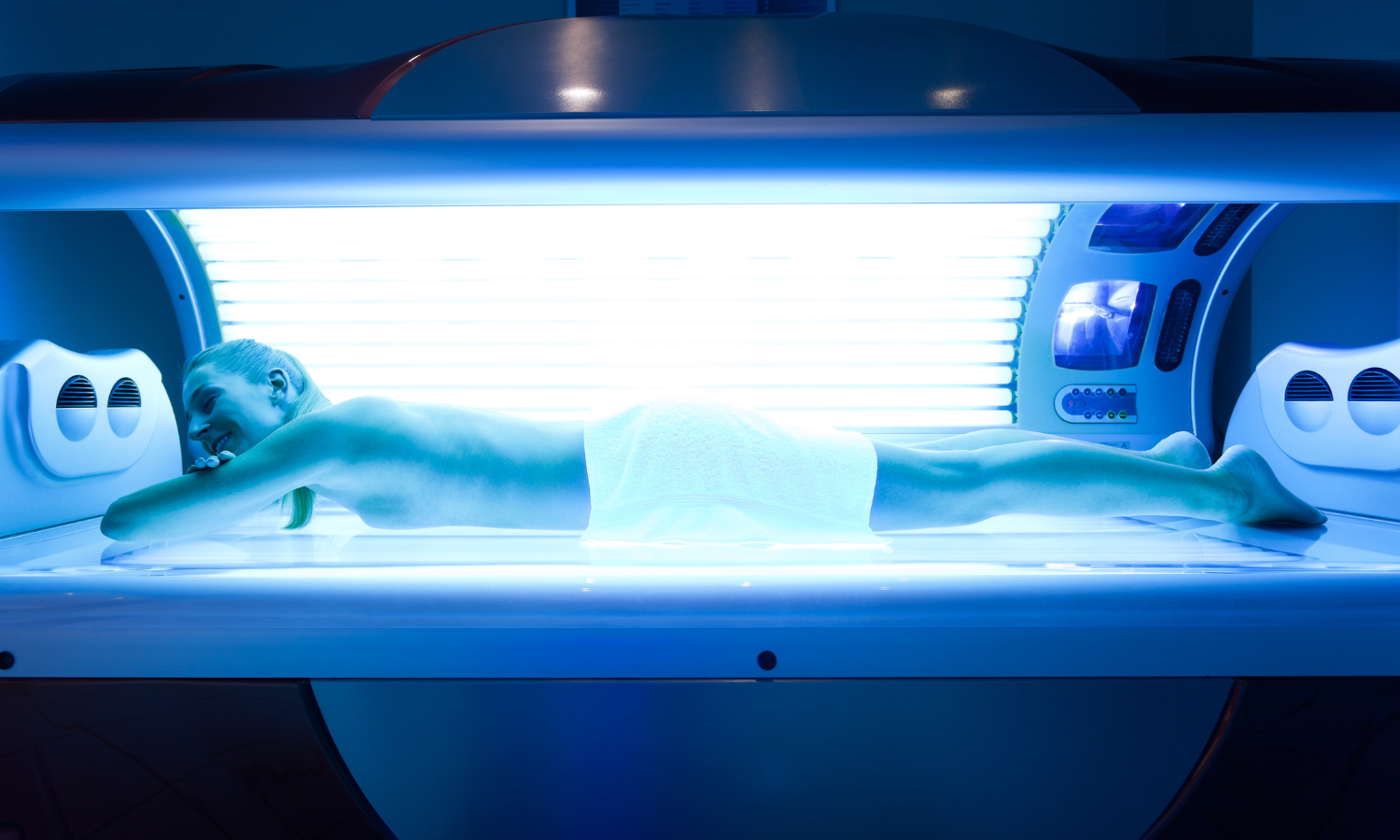
UV light genuinely does help psoriasis — this is one of the oldest and best-evidenced observations in dermatology, and the basis for medical phototherapy as a standard NHS treatment. The problem with sunbeds isn't that the UV principle is wrong. It's that commercial sunbeds are a fundamentally different thing from medical UV treatment, with a substantially different risk profile and considerably less therapeutic benefit.
Understanding why that distinction matters — mechanistically, not just as a blanket warning — is more useful than either the dismissive "sunbeds are dangerous, don't use them" or the optimistic "UV helps psoriasis so sunbeds must help too."
Sunbeds & Psoriasis: Why UV Light Is So Controversial
Sunbeds remain one of the most debated topics in the psoriasis world.
Some people with psoriasis report their skin temporarily improves after UV exposure, while dermatologists and psoriasis organisations continue warning about the serious risks linked to tanning beds — especially skin cancer and premature skin ageing.
Part of the confusion comes from the fact that controlled UV light therapy is an established medical psoriasis treatment. But medical phototherapy is very different from using commercial sunbeds.
Why UV light helps psoriasis
Psoriasis is driven by a dysregulated immune response that causes keratinocytes — the cells of the outer skin — to multiply at around ten times their normal rate. This accelerated turnover produces the thick, scaling plaques of the condition.
UV radiation slows this process through several specific mechanisms. UVB light in particular penetrates the epidermis and induces apoptosis (programmed cell death) in the T-cells that drive the immune dysregulation — effectively reducing the inflammatory signal at its source. It also suppresses cytokine production, including IL-17 and TNF-α, that are central to the psoriatic cascade. Additionally, UV exposure generates local immunosuppression by triggering cis-urocanic acid formation in the skin, which modulates T-cell activity.
The result is measurable, clinically meaningful improvement in plaques — reduced thickness, scaling, and redness — that has been documented consistently for over a century of clinical observation and in numerous controlled trials.
Why sunbeds are not the same as medical phototherapy
This is the central distinction, and it matters in several specific ways.
Wavelength. Medical phototherapy for psoriasis uses narrowband UVB — specifically the 311–313nm wavelength range, which has been identified as the most therapeutically effective for psoriasis while minimising exposure to wavelengths associated with higher skin cancer risk. Commercial sunbeds primarily emit UVA light (315–400nm) rather than UVB, and UVA is considerably less effective for psoriasis than UVB. Some older or commercial broadband UVB sunbeds exist, but they produce a broader spectrum that includes more carcinogenic wavelengths than narrowband UVB.
Dose control. Medical phototherapy is delivered in precise, calculated doses — measured in millijoules per centimetre squared, adjusted for skin type and individual response, titrated gradually from sub-erythema doses upward. This is fundamental to the safety and efficacy of phototherapy. Commercial sunbeds have no such precision. The UV output varies between machines, fades with bulb age, and cannot be calibrated for therapeutic psoriasis dosing.
Monitoring. NHS phototherapy is delivered by trained staff who monitor treatment response, skin reactions, cumulative dose, and risk factors including medication interactions and personal skin cancer history. Commercial sunbeds involve none of this oversight.
PUVA therapy. Another medical UV approach worth knowing about is PUVA — psoralen combined with UVA light. Psoralen is a photosensitising agent (taken orally or applied topically) that dramatically increases the skin's UVA sensitivity and renders UVA therapeutically effective for psoriasis. PUVA is more effective than UVB for some forms of psoriasis, particularly palmoplantar pustular psoriasis. It requires strict medical supervision, including eye protection and sun avoidance afterwards. Attempting to replicate PUVA at a commercial sunbed — even if someone obtained psoralen separately — would be genuinely dangerous and is not something to consider without specialist oversight.
Why Some People Say Sunbeds Help Psoriasis
Despite the risks, many people still report temporary improvements after tanning or sunbed use.
Possible reasons include:
UV exposure temporarily suppressing inflammation
Reduced scaling
Plaques appearing flatter
Increased vitamin D from sunlight exposure (though tanning beds mainly emit UVA)
However, experts repeatedly warn that temporary improvement does not mean sunbeds are safe long-term. Temporary skin improvement doesn’t remove the long-term risks of excessive UV exposure.
The skin cancer risk
This is not a minor footnote. Cumulative UV exposure — from any source, including sunbeds — is the primary modifiable risk factor for skin cancer.
The World Health Organization classifies tanning devices as Group 1 carcinogens — the highest risk category, meaning there is sufficient evidence that they cause cancer in humans. Regular sunbed use increases melanoma risk by around 20% overall, rising substantially with frequency of use and younger age at first use. In the UK, the Sunbeds (Regulation) Act 2010 bans sunbed use by under-18s specifically because of the elevated risk associated with exposure during development.
For people with psoriasis this risk is compounded by two factors. First, psoriasis treatments — both topical steroids and systemic medications including ciclosporin and methotrexate — can increase photosensitivity or impair normal skin immune surveillance, potentially amplifying carcinogenic risk from UV exposure. Second, psoriasis itself is associated with slightly elevated skin cancer rates, likely due to the chronic inflammatory environment and cumulative UV exposure from phototherapy over years of treatment.
The risk from sunbeds is real and meaningful — not a theoretical concern to be weighed against psoriasis benefit. This is why every major dermatological and psoriasis organisation, including the British Association of Dermatologists and the Psoriasis Association, advises against sunbed use.
The Koebner phenomenon and sunburn
An additional practical concern: the Koebner phenomenon — new psoriasis plaques appearing at sites of skin trauma or injury — means that sunburn on psoriasis-prone skin can trigger new plaque formation rather than improvement. This is a direct reversal of the intended effect.
Controlled phototherapy carefully avoids exceeding erythema doses specifically to prevent this. Sunbed use, without dose control, makes sunburn a realistic risk — particularly in people with fairer skin who may have unpredictable UV sensitivity.
Safer Alternatives To Sunbeds
Dermatologists and psoriasis organisations usually recommend safer options such as:
Prescription phototherapy
Narrowband UVB treatment
Topical treatments
Biologic medications
Stress management
Lifestyle support
Many experts also encourage discussing light therapy with a dermatologist rather than self-managing with tanning beds.
Controlled medical treatments are generally considered safer than unsupervised UV exposure.
The vitamin D question
One reason some people believe sunbeds may help psoriasis through mechanisms beyond direct UV effects is vitamin D synthesis. UV exposure triggers vitamin D production in the skin, and vitamin D deficiency is consistently associated with more severe psoriasis.
However, vitamin D synthesis occurs through UVB exposure — specifically the UVB that sunbeds emit in smaller quantities than natural sunlight. The predominantly UVA output of most commercial sunbeds produces relatively little vitamin D compared to equivalent natural sun exposure. Vitamin D supplementation — at appropriate doses confirmed by blood testing — is a more reliable and considerably safer route to addressing vitamin D status than sunbed use.
What medical phototherapy involves
For people interested in UV treatment for psoriasis through proper channels, NHS phototherapy is available through dermatology departments. The referral pathway is through a GP or dermatologist, and treatment typically involves two to three sessions per week over eight to twelve weeks. Narrowband UVB (NB-UVB) is the most commonly offered modality and has a good evidence base for plaque psoriasis. PUVA is used for specific cases where NB-UVB hasn't been effective.
The main practical barrier for many people is time — three sessions per week at a hospital department is a significant commitment. For those who find this impractical, home phototherapy units can sometimes be arranged with dermatological oversight, though these are not available to all.
Supplement Support for Dry, Psoriasis-Prone Skin
UV treatment — medical or otherwise — addresses psoriasis at the surface and through localised immune suppression. The systemic nutritional and inflammatory dimensions of the condition respond to a different approach.
Vitamin D deficiency, which is common in psoriasis patients, is more reliably and safely addressed through supplementation than through UV exposure. Zinc, magnesium, and vitamin C support the immune regulation and barrier function relevant to psoriasis through distinct pathways.
Drought's Skin Support Formula provides 14 nutrients including vitamin D, zinc, vitamin C, and magnesium — addressing the internal nutritional foundations of psoriasis management alongside any external treatment approach. Made in the UK, suitable for vegetarians, designed for consistent long-term daily use.
FAQ
Can sunbeds help psoriasis?
Temporarily and partially — UV light does slow the T-cell driven keratinocyte hyperproliferation underlying psoriasis, and some people notice short-term plaque reduction after sunbed use. The problem is that commercial sunbeds primarily emit UVA rather than the narrowband UVB (311–313nm) that medical phototherapy uses — making them considerably less therapeutically effective and exposing users to a wavelength profile with a significantly higher skin cancer risk relative to psoriasis benefit.
Why does UV light help psoriasis?
UVB light penetrates the epidermis and induces apoptosis in the T-cells driving psoriasis's immune dysregulation — directly reducing the inflammatory signal at its source. It also suppresses IL-17 and TNF-α cytokine production central to the psoriatic cascade, and generates cis-urocanic acid in the skin that modulates local T-cell activity. The result is measurable reduction in plaque thickness, scaling, and redness through specific immunological mechanisms — not simply "UV is good for skin."
Are tanning beds the same as phototherapy?
No — and the differences are clinically significant. Medical narrowband UVB phototherapy delivers the specific 311–313nm wavelength most therapeutically effective for psoriasis, at precisely calculated doses adjusted for skin type and individual response, monitored by trained staff who track cumulative dose and skin cancer risk factors. Commercial sunbeds primarily emit UVA, have no dose calibration, and carry no medical oversight. They are fundamentally different interventions with fundamentally different risk and benefit profiles.
Do sunbeds provide vitamin D for psoriasis?
Minimally — vitamin D synthesis requires UVB exposure specifically, and most commercial sunbeds emit predominantly UVA which produces little vitamin D. The vitamin D case for sunbed use is therefore largely unfounded in practice. Vitamin D supplementation confirmed by blood testing is a more reliable, more effective, and considerably safer route to correcting the deficiency that is significantly more prevalent in psoriasis patients than the general UK population.
Can sunbeds make psoriasis worse?
Yes — through the Koebner phenomenon. Uncontrolled UV exposure from sunbeds makes sunburn a realistic risk, and sunburn on psoriasis-prone skin can trigger new plaque formation at the burned site rather than improvement. Medical phototherapy carefully avoids exceeding erythema doses specifically to prevent this response. Additionally, cumulative UV exposure from sunbeds — without the dose calibration of medical phototherapy — accelerates the skin cancer risk that already runs higher in psoriasis patients due to the chronic inflammatory environment and potential immunosuppressive medication use.
Are sunbeds dangerous for people with psoriasis?
Yes — and the risk is compounded compared to the general population. The WHO classifies tanning devices as Group 1 carcinogens. For psoriasis patients, this risk is amplified by two specific factors: many common psoriasis treatments including ciclosporin, methotrexate, and some biologics increase photosensitivity or alter skin immune surveillance; and psoriasis itself is associated with elevated baseline skin cancer rates. Every major dermatological organisation including the British Association of Dermatologists and the Psoriasis Association advises against sunbed use.
How do I access medical phototherapy for psoriasis?
Through GP referral to a dermatology department — request a referral specifically mentioning interest in phototherapy. NHS narrowband UVB is available through dermatology and typically involves two to three sessions per week over eight to twelve weeks. PUVA (psoralen plus UVA) is used for specific cases where narrowband UVB hasn't been effective. For people who find the hospital attendance impractical, home phototherapy units can sometimes be arranged with dermatological oversight — worth discussing with your dermatologist if access is the barrier.
What is the safest light therapy for psoriasis?
NHS-supervised narrowband UVB phototherapy — calibrated to the 311–313nm therapeutic wavelength, dose-controlled, and monitored by trained staff — is the evidence-based safe option. It has the strongest published evidence for plaque psoriasis of any phototherapy modality and the best therapeutic benefit to skin cancer risk ratio. PUVA is effective for specific presentations but carries higher long-term skin cancer risk than narrowband UVB and is reserved for cases where UVB alone hasn't been sufficient.
Summary
UV light genuinely helps psoriasis — this is established medicine, not wellness speculation. But medical phototherapy and commercial sunbeds are not the same thing. The difference in UV wavelength (narrowband UVB vs predominantly UVA), dose control, and professional oversight are not technicalities — they are what make one a safe, evidence-based treatment and the other a significant skin cancer risk without comparable therapeutic benefit. For people with psoriasis interested in UV therapy, the appropriate route is NHS phototherapy through dermatological referral, not commercial tanning. Vitamin D deficiency is more safely addressed through supplementation than through sunbed exposure. And for managing psoriasis comprehensively, UV treatment addresses one dimension — the skin surface — while nutritional and lifestyle support addresses others.
Written by the Drought Skin team — specialists in natural support for psoriasis, eczema and acne
Disclaimer: This article contains affiliate links. We earn a very small commission from each purchase made through these links. There is no additional cost to you. All products featured have been specifically selected as products we personally use and love. For further information, please see our disclaimer page.
-
How Light Therapy Can Help Treat Psoriasis
Can Vitamin D Help Treat Psoriasis? Here's What Science Says
Types of Psoriasis Explained: Symptoms, Appearance & How They Differ
Best Sunscreen for Eczema: What to Use, What to Avoid & How to Apply
Psoriasis Skincare Routine: What Actually Helps, What to Avoid & Common Mistakes
