
Vitamin D and Psoriasis: What the Evidence Actually Shows

Vitamin D sits at the intersection of two defining features of psoriasis: immune dysregulation and abnormal keratinocyte behaviour. This is why synthetic vitamin D compounds are already embedded in the most commonly prescribed topical psoriasis treatments — not as an alternative or complementary approach, but as a first-line medical therapy.
Understanding how vitamin D works at the cellular level in psoriasis, why deficiency is particularly prevalent in this population, and what supplementation realistically offers provides a clearer picture than either the enthusiastic "cure" framing or the dismissive "evidence is mixed" response.
Vitamin D & Psoriasis: Why The Connection Gets So Much Attention
Vitamin D is one of the most talked-about nutrients in the psoriasis world — and for good reason.
Researchers have spent years studying the relationship between vitamin D, inflammation and psoriasis because vitamin D appears to play a role in both immune system regulation and skin cell growth. In fact, synthetic vitamin D compounds are already used in some topical psoriasis treatments.
At the same time, several studies have found people with psoriasis are more likely to have lower vitamin D levels compared to the general population.
Vitamin D can influence psoriasis through both inflammation and skin cell regulation.
How vitamin D works in psoriasis: the specific mechanisms
Vitamin D is a steroid hormone precursor that acts through vitamin D receptors (VDRs) expressed in keratinocytes, dendritic cells, and T-cells — all central players in psoriasis pathology.
Keratinocyte proliferation and differentiation. Psoriasis is characterised by a dramatically accelerated skin cell turnover — keratinocytes completing their lifecycle in 3–5 days rather than the normal 28. Vitamin D directly inhibits this hyperproliferation and promotes normal keratinocyte differentiation through VDR-mediated transcription. This is the mechanism behind topical vitamin D analogue treatments — they deliver this effect directly to plaque tissue at concentrations that systemic supplementation cannot match.
Th17 immune modulation. Psoriasis is a Th17-dominant condition — IL-17A, IL-17F, and IL-23 are the primary cytokines driving inflammation, and are the targets of several psoriasis biologics. Vitamin D modulates the Th17/Treg balance, reducing IL-17 and IL-23 production and supporting the regulatory T-cells that help contain autoimmune responses. This is an immunomodulatory effect operating at the same biological level as the condition's core pathology.
Antimicrobial peptide induction. Vitamin D stimulates the production of cathelicidins and beta-defensins — antimicrobial peptides that provide innate immune protection at the skin surface. Reduced antimicrobial peptide production is associated with worse skin barrier vulnerability and increased colonisation risk.

Topical vitamin D analogues: already an established treatment
This context matters for understanding where oral supplementation fits. Calcipotriol (or calcipotriene) — a synthetic vitamin D3 analogue — is one of the most commonly prescribed topical treatments for plaque psoriasis in the UK, typically as a first-line option for mild to moderate disease. The combination product Dovobet (calcipotriol with betamethasone dipropionate, a potent corticosteroid) is among the most prescribed topical preparations for psoriasis globally.
Calcipotriol works through the same VDR mechanism described above — inhibiting keratinocyte hyperproliferation and normalising differentiation — at concentrations that produce localised therapeutic effect without the systemic side effects of high-dose oral vitamin D. The clinical evidence for topical calcipotriol in psoriasis is robust — multiple randomised controlled trials demonstrate reductions in PASI scores, plaque thickness, and scaling comparable to moderate-potency steroids.
The existence of prescription-grade topical vitamin D treatments reinforces that vitamin D's mechanism in psoriasis is pharmacologically validated, not speculative. The question for oral supplementation is different — can maintaining adequate systemic vitamin D status support the immune and keratinocyte effects that complement topical treatment?
What the evidence shows for vitamin D status and psoriasis
Multiple studies have found consistently lower serum 25-hydroxyvitamin D [25(OH)D] levels in people with psoriasis compared to healthy controls. More specifically, several studies have found inverse correlations between vitamin D status and PASI severity scores — lower vitamin D associated with more severe disease. This correlation has been demonstrated across multiple populations and psoriasis severities.
The association doesn't establish causation — it's possible that more severe psoriasis leads to vitamin D deficiency (through reduced sun exposure from covering skin, reduced outdoor time, or disease-related metabolic effects) rather than low vitamin D causing more severe psoriasis. But the relationship is consistent and the mechanistic basis for a causal contribution is strong.
Supplementation trials in psoriasis have produced variable results — some showing meaningful PASI reductions with vitamin D3 supplementation, others showing modest or no effect. The variability likely reflects differences in baseline vitamin D status, dosing protocols, and psoriasis severity. The most positive results tend to be in populations with confirmed deficiency at baseline, consistent with supplementation correcting a deficit rather than producing pharmacological effects beyond sufficiency.
Supplementation: practical approach
For most people with psoriasis in the UK, testing serum 25(OH)D through a GP and dosing accordingly is the most targeted approach. Deficiency (below 25 nmol/L) requires higher correction doses; insufficiency (25–50 nmol/L) benefits from consistent daily supplementation; adequacy (above 50 nmol/L) needs maintenance supplementation rather than loading.
Vitamin D3 (cholecalciferol) is the preferred supplemental form — it raises serum 25(OH)D more effectively than D2 (ergocalciferol). Taking it with a fat-containing meal improves absorption.
For people with significant obesity alongside psoriasis, standard doses (1,000–2,000 IU) may be insufficient to achieve adequate serum levels — higher doses under medical guidance may be needed.
The UK safe upper intake limit is 4,000 IU (100 micrograms) daily for adults. Toxicity (hypercalcaemia) occurs with sustained very high doses well above this.
Recommended Products
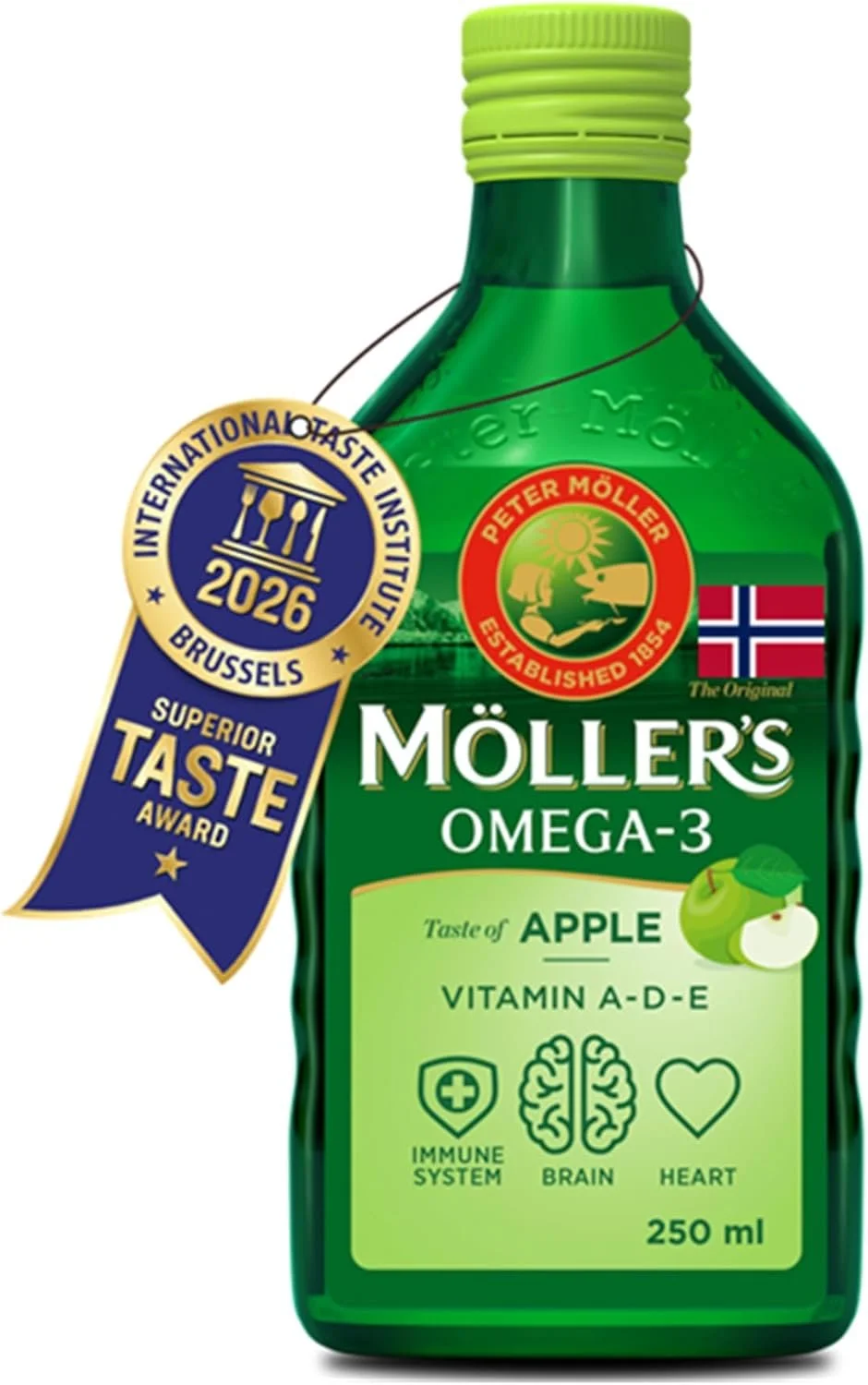
Moller's Omega 3 Cod Liver Oil
combined omega-3 and vitamin D supplement providing both EPA/DHA (for direct anti-inflammatory benefit) and vitamin D3. Cod liver oil's combination of these two nutrients is particularly relevant for psoriasis, where both omega-3 PASI-reducing evidence and vitamin D's keratinocyte-modulating mechanism apply simultaneously. A practical single-product approach to two of the most evidence-based nutritional interventions for psoriasis
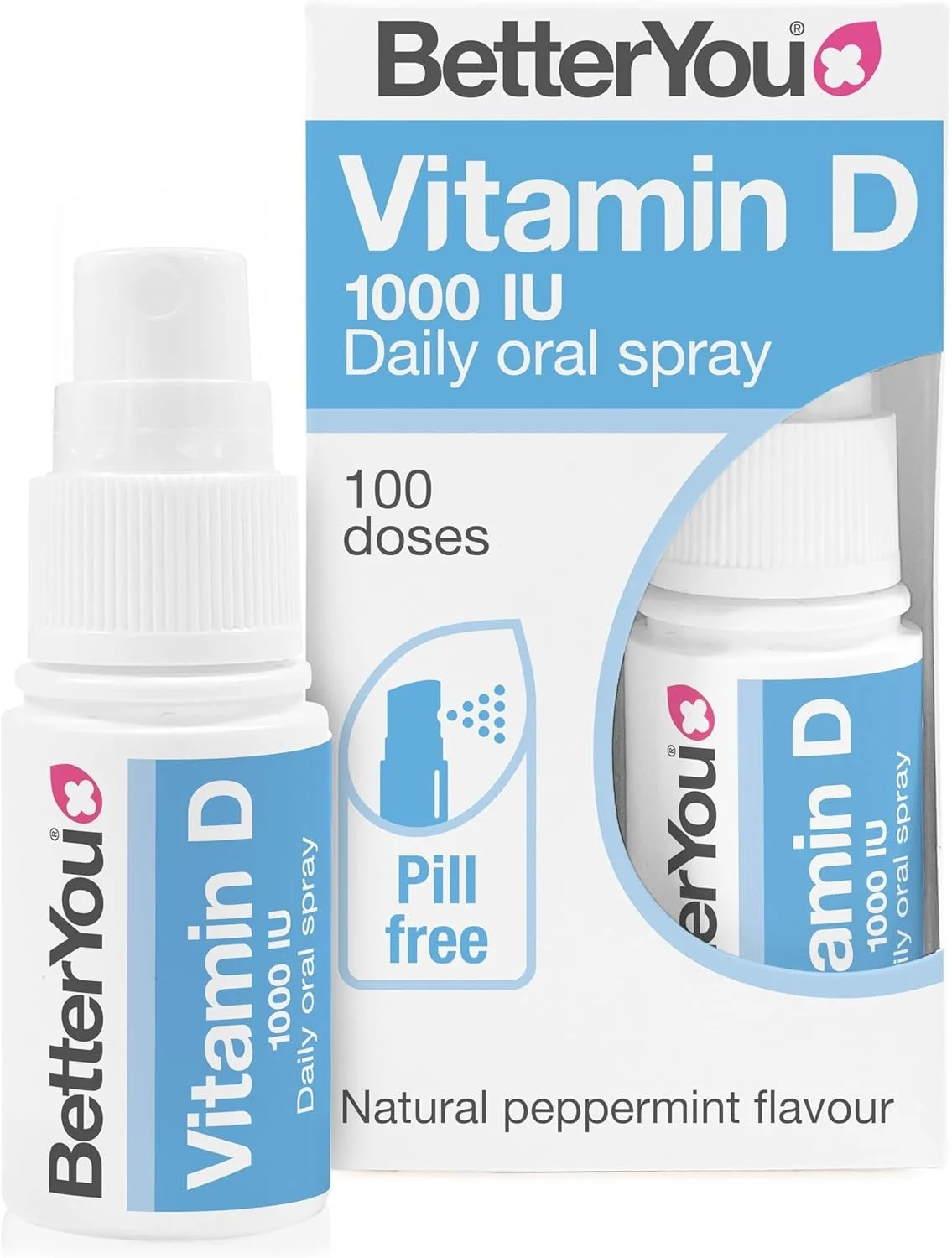
BetterYou DLux 1000 Vitamin D Oral Spray
a standalone vitamin D3 oral spray providing 1,000 IU per dose, absorbed sublingually. The appropriate choice for vegetarians, vegans, or anyone who wants vitamin D supplementation without the combined omega-3 of cod liver oil. From the same BetterYou range as the higher-dose DLux 3000 — start at 1,000 IU daily for maintenance and discuss higher doses with your GP if deficiency is confirmed.
Why psoriasis patients are at particular risk of vitamin D deficiency
Beyond the general UK context of insufficient UVB from October to April, psoriasis patients have several specific additional risk factors:
Covering affected skin. People with widespread or visually distressing psoriasis often cover skin with clothing — reducing UV exposure on large body surface areas that would otherwise synthesise vitamin D.
Photosensitising medications. Methotrexate, ciclosporin, and some other systemic psoriasis treatments can increase photosensitivity, making patients more cautious about sun exposure.
Psoriatic metabolic comorbidities. Obesity is significantly more prevalent in psoriasis patients. Adipose tissue sequesters vitamin D — people with higher body fat require more vitamin D to achieve equivalent serum levels. This is one reason some psoriasis patients have persistently low vitamin D despite adequate supplementation until dose is adjusted.
Reduced outdoor activity during flares. Pain (particularly with psoriatic arthritis), fatigue, and psychological impact of visible skin disease all reduce outdoor activity during active disease.
Sunlight, UVB & Psoriasis
Sunlight is another reason vitamin D is heavily connected to psoriasis.
UVB light exposure helps the body produce vitamin D naturally, and UVB phototherapy is already used as a psoriasis treatment.
Many people notice:
Psoriasis improves during summer
Symptoms worsen during winter
Sunlight temporarily reduces plaques
However, excessive sun exposure may still damage the skin.
Controlled UVB exposure can help some people with psoriasis, but balance remains important.
Foods Rich In Vitamin D
Vitamin D can be found in:
Oily fish
Egg yolks
Fortified foods
Supplements
Some people with psoriasis also focus on overall nutrition and metabolic health alongside skincare routines.
Balanced nutrition can help support overall skin and immune health.
Supplement Support for Dry, Psoriasis-Prone Skin
Vitamin D addresses the keratinocyte and immune dimensions of psoriasis with the strongest nutritional evidence in this space. It works best alongside the other nutrients that address complementary pathways — omega-3 EPA/DHA for leukotriene anti-inflammatory effects, zinc for immune regulation, and selenium for antioxidant defence through glutathione peroxidase.
Drought's Skin Support Formula includes vitamin D alongside 13 other nutrients selected for their roles in skin barrier function and immune regulation — providing consistent multi-pathway nutritional support at appropriate doses. Made in the UK, suitable for vegetarians, designed for consistent long-term daily use.
FAQ
Is vitamin D linked to psoriasis?
Yes. Research suggests vitamin D may play a role in immune regulation and skin cell growth linked to psoriasis.
Can vitamin D help psoriasis?
Through specific mechanisms — VDR-mediated keratinocyte proliferation inhibition and Th17 immune modulation. Topical vitamin D analogues (calcipotriol) are established first-line treatments. Oral supplementation evidence is positive but variable.
Are people with psoriasis low in vitamin D?
The general UK UVB insufficiency (October–April) is compounded by psoriasis-specific factors: skin covering, photosensitising medications, obesity-related sequestration, and reduced outdoor activity during flares.
Why does sunlight help psoriasis?
UVB light may slow excessive skin cell growth and helps the body produce vitamin D.
Can vitamin D supplements cure psoriasis?
No. It addresses specific pathological mechanisms but not the genetic predisposition or the full immune-mediated cascade driving the condition.
What foods contain vitamin D?
Vitamin D is found in oily fish, egg yolks, fortified foods and supplements.
What is calcipotriol and how is it different from supplements?
Calcipotriol is a synthetic vitamin D3 analogue delivered topically at concentrations that produce localised keratinocyte effects. It's a prescription treatment for psoriasis plaques — not a supplement. Oral supplementation maintains systemic vitamin D status for immune and general health support.
How much vitamin D should I take for psoriasis?
Testing serum 25(OH)D allows dose calibration. 1,000–2,000 IU daily is a standard starting dose; people with obesity may need more to achieve adequate levels. The safe upper intake limit is 4,000 IU daily.
Is there an inverse relationship between vitamin D and psoriasis severity?
Multiple studies have found lower serum vitamin D correlates with higher PASI scores. The relationship is consistent, though whether causation runs primarily in one direction or both is still debated.
Summary
Vitamin D's role in psoriasis is better established than for most nutrients in inflammatory skin conditions — grounded in a clear VDR-mediated mechanism (keratinocyte proliferation inhibition, Th17 immune modulation), pharmacologically validated through topical vitamin D analogue treatments that are first-line prescribed therapy, and supported by consistent correlations between vitamin D status and PASI severity. Oral supplementation evidence is positive but variable, with the strongest results in correcting confirmed deficiency. Psoriasis patients have multiple specific reasons for elevated deficiency risk beyond the general UK UVB issue — skin covering, obesity, and photosensitising medications are the most significant. Testing and dosing to adequacy is the most targeted approach.
In Short
Vitamin D is closely linked to immune system and skin function
Low vitamin D levels are commonly discussed in psoriasis research
Topical vitamin D treatments are already used for psoriasis management
Research on oral vitamin D supplements remains mixed
Vitamin D addresses Th17 modulation and keratinocyte proliferation — zinc and magnesium address the complementary immune and barrier dimensions that vitamin D alone doesn't cover. Drought's Skin Support Formula provides all three alongside 11 other nutrients, addressing the full internal nutritional picture that psoriasis management requires beyond any single supplement. Made in the UK, suitable for vegetarians, designed for consistent long-term daily use.
Start your skin support journey →
Written by the Drought Skin team — specialists in natural support for psoriasis and eczema.
Disclaimer: This article contains affiliate links. We earn a very small commission from each purchase made through these links. There is no additional cost to you. All products featured have been specifically selected as products we personally use and love. For further information, please see our disclaimer page.
-
Vitamins & Supplements for Psoriasis: What the Evidence Shows for Each
Vitamin D and Eczema: What the Evidence Actually Shows
Sunbeds & Psoriasis: The Difference From Medical Phototherapy
Thyroid Disease, Eczema & Psoriasis: Understanding the Connection
Best Probiotics for Psoriasis: Strains, Evidence & What to Expect
