
Best Probiotics for Psoriasis: The Gut-Skin Axis Mechanism, Specific Strains & What the Evidence Shows

The gut-psoriasis connection is one of the most actively researched areas in dermatology right now — and it has more substance behind it than many people realise. Psoriasis is not simply a skin condition; it's a systemic immune-mediated disease with documented associations with gut microbiome imbalance, intestinal permeability, and inflammatory bowel conditions. Probiotics sit within this picture as a potentially useful tool for supporting gut health and immune regulation — but their role is specific, indirect, and best understood within a realistic framework.
This article covers what the gut-psoriasis evidence actually shows, which probiotic strains are most relevant, what to look for in a supplement, and what to expect realistically from consistent use.
What Are Probiotics?
Probiotics are beneficial live bacteria that help keep your digestive system balanced. They work alongside prebiotics (fiber that feeds those bacteria) to support digestion, immunity, and inflammation control.
Healthy gut flora can help:
regulate immune responses
lower inflammation in the body
aid nutrient absorption
strengthen the gut barrier
These are all crucial for people managing psoriasis.
Pairing probiotics with anti‑inflammatory nutrients creates even stronger results.
Can probiotics help psoriasis?
The connection between gut health and psoriasis is getting more attention — and for good reason. Studies now suggest that supporting a healthy gut microbiome may help calm systemic inflammation, which lies at the heart of psoriasis.
Probiotics aren’t a cure, but they can play a key role in reducing flare frequency, balancing the immune response, and improving skin comfort from the inside out.
Probiotics may help improve psoriasis symptoms by supporting gut health and reducing inflammation.
Research suggests probiotics may improve psoriasis severity scores and inflammatory markers, particularly when used consistently.
The gut-psoriasis connection: stronger than most people know
The relationship between gut health and psoriasis is covered in detail in the leaky gut and psoriasis article in this series. The headline findings are worth restating here because they contextualise why probiotics are a legitimate consideration — not just wellness speculation.
People with psoriasis consistently show differences in gut microbiome composition compared to healthy controls. Specifically, research has found reduced levels of Faecalibacterium prausnitzii — a bacterium associated with anti-inflammatory short-chain fatty acid production and gut barrier integrity — in psoriasis patients. Lower F. prausnitzii is also found in Crohn's disease, and there is a well-documented overlap between psoriasis and inflammatory bowel conditions (people with psoriasis have significantly elevated rates of Crohn's disease and ulcerative colitis compared to the general population). This shared pattern suggests overlapping immune and gut microbiome pathways, not coincidence.
Increased intestinal permeability has also been found in a proportion of psoriasis patients — the same gut barrier compromise that allows bacterial fragments such as lipopolysaccharide (LPS) to enter the bloodstream and drive systemic inflammation. Probiotics address both microbiome imbalance and gut barrier integrity, which gives them a specific and coherent rationale for psoriasis support.
How probiotics may help psoriasis
1. Support a healthier gut microbiome
Probiotics help increase “good” bacteria in the gut, which may:
improve digestion
balance gut flora
reduce harmful bacteria
This balance is linked to better immune regulation.
2. Help reduce inflammation
Psoriasis is driven by inflammation.
Some probiotic strains may:
reduce inflammatory markers
influence immune responses
support regulatory immune cells
This can potentially lead to reduced symptom severity.
3. Support the immune system
Your immune system plays a central role in psoriasis.
Probiotics may:
help regulate immune activity
reduce overactive responses
support long-term balance
4. Improve skin barrier function (indirectly)
A healthier gut may support:
better nutrient absorption
improved skin resilience
Which can help the skin barrier function more effectively over time.
Probiotic strains most relevant to psoriasis
As covered in the eczema probiotics article in this series, strains matter — different bacteria have different mechanisms and effects. For psoriasis specifically:
Lactobacillus rhamnosus has the most research across inflammatory skin conditions and produces anti-inflammatory short-chain fatty acids that support gut barrier function. It modulates regulatory T-cell activity — relevant to the Th17 immune dysregulation driving psoriasis.
Lactobacillus plantarum has shown reductions in PASI scores and inflammatory markers in psoriasis trials. It is one of the more consistently studied strains for psoriasis specifically and has demonstrated anti-inflammatory effects through multiple cytokine pathways.
Bifidobacterium longum is among the species most consistently depleted in psoriasis patients. Supplementation supports gut barrier integrity and has shown anti-inflammatory effects in clinical trials for inflammatory conditions.
Lactobacillus casei has been studied for inflammatory immune modulation, including in the context of skin conditions, with some evidence of IL-10 upregulation — an anti-inflammatory cytokine relevant to reducing Th17 activity.
Saccharomyces boulardii is worth specific mention because it is a yeast rather than a bacterium, which makes it uniquely resistant to antibiotics. It acts differently from bacterial probiotics — it supports gut barrier integrity through a different mechanism (stimulating IgA secretion and reducing intestinal permeability) and is not displaced by antibiotic use. For psoriasis patients who take antibiotics periodically, or those who have taken them heavily in the past, S. boulardii addresses gut barrier support in ways that bacterial probiotics cannot.
Products worth considering
(Affiliate links — we may earn a small commission at no extra cost to you.)
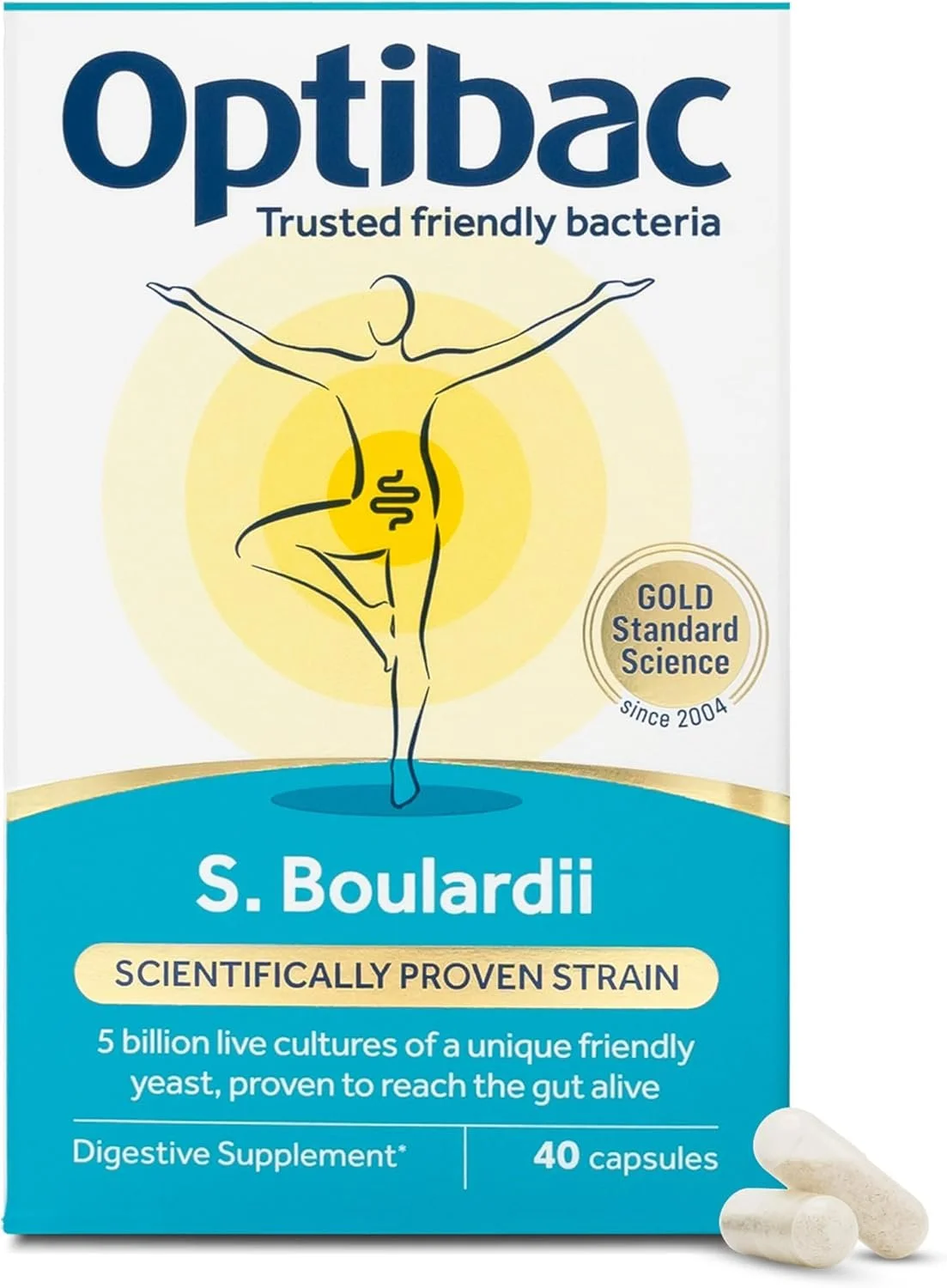
Optibac Probiotics Saccharomyces Boulardii
a well-formulated S. boulardii supplement from one of the most established UK probiotic brands. Optibac's quality standards are consistently reliable, and their S. boulardii product is a particularly appropriate choice for people who have taken antibiotics, those with IBD-related gut issues alongside psoriasis, or those wanting to address gut barrier integrity specifically. 5 billion live cultures per capsule.
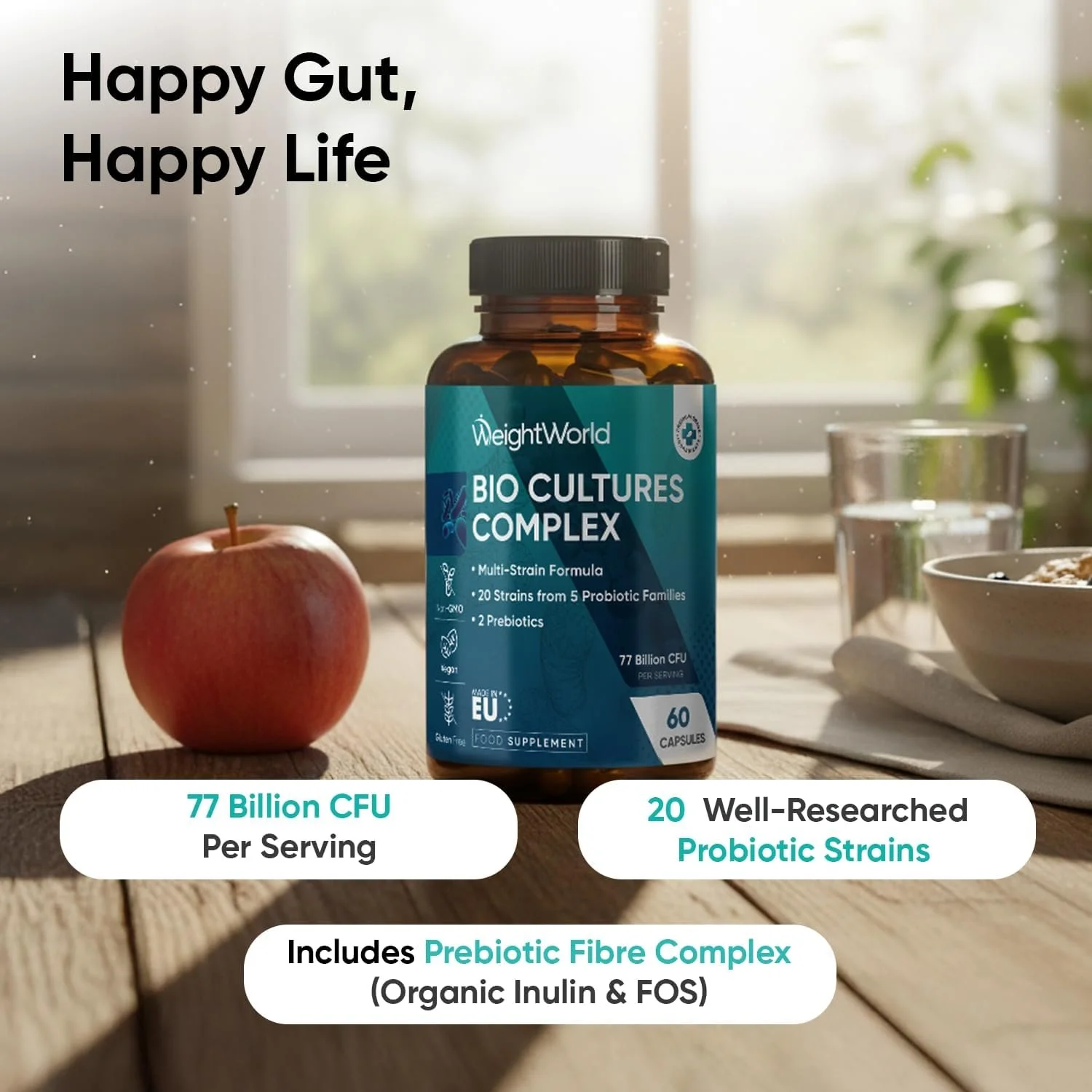
Bio Cultures Complex Probiotics and Prebiotics
a multi-strain formulation containing Lactobacillus acidophilus, Lactobacillus casei, and other relevant strains alongside prebiotic fibre. Vegan-friendly. The multi-strain approach addresses microbiome diversity rather than relying on any single species, which is generally preferable for sustained gut health support. A practical everyday option for consistent use.
Foods vs supplements: what’s better?
Probiotic-rich foods
Yogurt
Kefir
Sauerkraut
Kombucha
Good for general gut health—but may not deliver consistent doses.
Probiotic supplements
More concentrated
Targeted strains
Easier to take consistently
Often used when aiming for more noticeable results.
Fermented foods provide a broader range of probiotic strains than any single supplement and have additional nutritional benefits. Natural live yogurt, kefir, kimchi, sauerkraut, miso, and tempeh all support microbiome diversity. Including at least one or two fermented foods daily alongside a targeted supplement produces a more comprehensive gut health approach than supplementation alone.
The prebiotic dimension also matters — probiotics need substrate to survive and proliferate. Prebiotic-rich foods including oats, garlic, onion, leeks, asparagus, and bananas feed the beneficial bacteria introduced by probiotic supplementation, supporting longer-term colonisation and effect.
How long do probiotics take to work?
Most people won’t see immediate changes. Start slowly if your digestion is sensitive; probiotics can occasionally cause mild bloating at first.
Typical timeline:
2–4 weeks: gut changes begin
4–8 weeks: possible symptom improvement
8+ weeks: more noticeable results (if effective)
Consistency matters more than anything.
Saccharomyces boulardii: the case for including a yeast probiotic
Most probiotic conversations focus on Lactobacillus and Bifidobacterium bacteria. S. boulardii deserves specific attention for psoriasis for several reasons.
It is not displaced by antibiotics — a significant advantage for people whose gut microbiome has been repeatedly disrupted by antibiotic courses, which is common in those managing chronic skin conditions (antibiotics are occasionally prescribed for secondary skin infections). It has documented evidence for reducing intestinal permeability — the gut barrier compromise associated with increased psoriasis severity. And it stimulates secretory IgA production, which supports mucosal immune function in the gut lining. Used alongside a bacterial multi-strain probiotic, S. boulardii addresses gut barrier support through a complementary mechanism.
What the Research Says
The evidence for probiotics in psoriasis is more developed than for most natural interventions, though still preliminary by the standards of clinical medicine.
Several randomised controlled trials have examined probiotic supplementation in psoriasis patients. A 2019 study found that Lactobacillus acidophilus and Lactobacillus paracasei supplementation reduced PASI scores (the standard psoriasis severity measure) and decreased circulating inflammatory markers including TNF-α and IL-6. A separate trial using a multi-strain formulation found that patients combining probiotics with conventional treatment showed greater reductions in PASI than those on conventional treatment alone. A 2020 systematic review concluded that probiotic supplementation produced meaningful reductions in inflammatory cytokines in people with autoimmune skin conditions, with consistent use being a key variable in positive outcomes.
The honest summary: the evidence is promising but not definitive. Study sizes are small, protocols vary, and results aren't universal. Probiotics are not a primary treatment for psoriasis, but the mechanistic rationale is sound and early clinical data is positive enough to justify their inclusion in a gut-focused management approach.
Early studies suggest that probiotics may:
reduce inflammatory cytokines linked to psoriasis
modulate immune cell signaling
improve gut‑skin barrier integrity
Setting realistic expectations
Probiotics are not a psoriasis treatment. They will not clear plaques, prevent flares reliably on their own, or replace medical management for moderate to severe disease. The evidence suggests a supporting role through gut microbiome restoration, gut barrier repair, and downstream immune modulation — a meaningful but modest contribution to a multi-factor management approach.
The people most likely to benefit are those with gut symptoms alongside psoriasis (bloating, irregular digestion, known IgBD), those with a history of antibiotic use affecting gut microbiome composition, and those adopting a comprehensive dietary and lifestyle approach to managing inflammation. Consistency is the most important variable — eight to twelve weeks of daily use is the minimum meaningful trial period.
Skin support for psoriasis-prone skin
Probiotics address one pathway — gut microbiome and barrier integrity. The full range of nutritional factors relevant to psoriasis also includes zinc for immune regulation, vitamin D for immune modulation (consistently associated with psoriasis severity in clinical research), vitamin C for antioxidant protection, and magnesium for inflammatory balance.
Drought's Skin Support Formula brings 14 of these nutrients together in a daily supplement designed specifically for reactive and inflammatory skin — addressing the nutritional dimensions that probiotic supplementation alone doesn't cover. Made in the UK, suitable for vegetarians, formulated for consistent long-term daily use. Combining a quality probiotic with this kind of comprehensive nutritional support addresses gut health and skin barrier nutrition simultaneously.
FAQs: Probiotics and psoriasis
Do probiotics help psoriasis?
Through the gut-skin axis rather than directly — probiotics support the microbiome balance that modulates systemic immune activity relevant to psoriasis. Published studies consistently find that psoriasis patients have reduced Faecalibacterium prausnitzii, reduced Akkermansia muciniphila, and increased Prevotella copri compared to healthy controls — a specific dysbiosis pattern associated with increased intestinal permeability and elevated systemic inflammatory burden. Targeted probiotic supplementation addresses some of these deficits, with published trials showing reductions in PASI scores and inflammatory cytokines. The effect is adjunctive rather than primary — probiotics reduce the inflammatory baseline that psoriasis operates from rather than clearing plaques directly.
What is the best probiotic strain for psoriasis?
The strains with the most specific published evidence for psoriasis are Lactobacillus rhamnosus (immune tolerance modulation and gut barrier support), Lactobacillus plantarum (documented anti-inflammatory activity and tight junction strengthening), and Bifidobacterium longum (reduction of oxidative stress and inflammatory cytokine production). Multi-strain formulations covering both Lactobacillus and Bifidobacterium genera are more consistently effective than single-strain products in psoriasis trials — the different species address different aspects of the gut-skin axis simultaneously. Saccharomyces boulardii, a yeast rather than a bacterial probiotic, has separate evidence for gut barrier repair and is worth considering alongside bacterial strains for people with significant intestinal permeability concerns.
How long do probiotics take to work for psoriasis?
Four to eight weeks for measurable gut microbiome shifts — the psoriasis-specific bacterial deficits (reduced F. prausnitzii, reduced Akkermansia) begin to respond to probiotic supplementation within two to four weeks, but visible skin improvement typically lags behind microbiome changes by a further two to four weeks given psoriasis's skin cell turnover rate. Eight to twelve weeks of consistent daily use is the appropriate minimum assessment period before concluding probiotics are or aren't working. Intermittent use produces inconsistent microbiome changes — daily consistency matters more than dose size.
Can probiotics make psoriasis worse?
Generally no — but two specific scenarios are worth noting. First, people with significant small intestinal bacterial overgrowth (SIBO) alongside psoriasis may experience bloating and digestive discomfort from probiotic supplementation that temporarily worsens overall wellbeing. Second, high-dose supplementation at the start can cause temporary increased gas and bloating as the microbiome adjusts. Starting at a lower CFU count (5 billion rather than 50 billion) and building gradually over two to three weeks avoids most initial digestive discomfort. If digestive symptoms persist beyond two weeks, discuss with a GP to rule out SIBO.
Do I need prebiotics as well as probiotics for psoriasis?
Yes — prebiotics and probiotics work through complementary and non-overlapping mechanisms. Probiotic bacteria require fermentable substrate to colonise and maintain populations in the colon — without adequate prebiotic fibre, probiotic supplementation has reduced efficacy. The specific prebiotic fibres most relevant to restoring the F. prausnitzii deficit documented in psoriasis are inulin-type fructans (from chicory, Jerusalem artichokes, onions) and resistant starch (from oats, slightly underripe bananas, cooked and cooled potatoes). Psyllium husk provides complementary soluble fibre for gut barrier integrity. A synbiotic approach — probiotics alongside dietary prebiotic fibre — is consistently more effective than probiotics alone in gut microbiome restoration.
Are fermented foods as effective as probiotic supplements for psoriasis?
For general gut microbiome diversity support — fermented foods (kefir, kimchi, sauerkraut, kombucha) provide live cultures alongside prebiotic substrate and anti-inflammatory compounds. For specific strain targeting of the F. prausnitzii and Akkermansia deficits documented in psoriasis — supplements allow strain selection and consistent dose delivery that fermented foods don't. Both are worth incorporating. Kefir specifically provides Lactobacillus and Bifidobacterium species in variable concentrations depending on fermentation time and temperature — it's one of the most complete fermented food sources for psoriasis-relevant gut support but less predictable than standardised supplements.
Should I take probiotics alongside my psoriasis medication?
Generally yes — probiotics don't interact with topical treatments, phototherapy, or standard systemic psoriasis medications including methotrexate, ciclosporin, or biologics at typical supplemental doses. The exception to discuss with your GP is immunosuppressive biologics — while published safety data is reassuring, the theoretical concern about introducing live bacteria in significantly immunosuppressed individuals warrants a brief conversation with your prescriber before starting high-dose probiotic supplementation. Methotrexate and ciclosporin don't require specific probiotic precautions.
Summary
Probiotics have a more evidence-grounded rationale for psoriasis than for many natural interventions — anchored in documented microbiome differences, F. prausnitzii depletion, gut barrier compromise, and the shared immune pathways with inflammatory bowel disease. The most relevant strains are Lactobacillus plantarum, Lactobacillus rhamnosus, Bifidobacterium longum, and Saccharomyces boulardii — particularly the latter for anyone with a history of antibiotic disruption. Clinical trials show modest, promising results in psoriasis populations. Realistic expectations, consistent use, and integration with dietary and broader nutritional support give probiotics their best chance of contributing meaningfully to psoriasis management.
Written by the Drought Skin team — specialists in natural support for psoriasis, eczema and acne
Disclaimer: This article contains affiliate links. We earn a very small commission from each purchase made through these links. There is no additional cost to you. All products featured have been specifically selected as products we personally use and love. For further information, please see our disclaimer page.
