
Drinking Water & Eczema/Psoriasis: The TEWL Mechanism, NMF Distinction & What Actually Hydrates Skin
"Drink more water" is one of the most commonly given pieces of advice for skin problems — and one of the most misunderstood. It sits somewhere between genuine physiological truth and oversimplification, and for people managing eczema or psoriasis, accepting either extreme does them a disservice.
Hydration is genuinely relevant to skin health. But the relationship between drinking water and eczema or psoriasis is more complicated than a simple cause and effect — and there are dimensions of the water-skin question that most articles don't address at all.
Here's what the evidence actually shows, why skin hydration is more complex than water intake, and what matters more than how much you're drinking.
The basic biology: how water relates to skin
Skin is approximately 64% water by composition, and the outermost layer — the stratum corneum — needs to maintain a water content of around 10–20% to function as an effective barrier. Below that threshold, skin becomes dry, tight, and more permeable to irritants and allergens.
The skin barrier maintains its moisture through two mechanisms: natural moisturising factors (NMFs) — a collection of hygroscopic compounds including amino acids, urea, and lactic acid that draw and hold water within the skin — and a lipid matrix of ceramides, fatty acids, and cholesterol that seals the skin and reduces transepidermal water loss (TEWL).
Both of these systems are compromised in eczema and psoriasis. In eczema, reduced filaggrin production (filaggrin is the protein that breaks down into several key NMFs) leads to depleted natural moisturising factors and an impaired lipid matrix. In psoriasis, the accelerated cell turnover disrupts normal barrier formation. The result in both cases is skin that loses water faster than healthy skin, and can't effectively retain what it has.
This is the critical point: for most people with eczema or psoriasis, the problem isn't that not enough water is getting into the skin. It's that water is escaping from it too quickly, because the barrier that should retain it is compromised. Drinking more water doesn't meaningfully address this — it's like pouring water into a cracked bowl and wondering why it remains empty.
Can drinking more water improve eczema or psoriasis?
Water is important for overall skin health — but drinking more water alone is unlikely to fix eczema or psoriasis, and the relationship between hydration and these specific conditions is more nuanced than the general "drink more water for better skin" wellness advice suggests. Eczema and psoriasis are immune-mediated conditions driven by specific genetic and inflammatory pathways that hydration status doesn't directly modify — a well-hydrated person with a filaggrin mutation still has a compromised barrier, and a well-hydrated person with Th17 dysregulation still produces psoriatic plaques. Where hydration is genuinely relevant is at the margins: chronic dehydration worsens the transepidermal water loss that eczema and psoriasis already accelerate, and adequate hydration supports the cellular processes underlying barrier repair. But the water you wash in may matter considerably more than the water you drink — and for entirely different reasons than most hydration advice addresses.

Does drinking water actually help eczema?
This is where expectations need to stay realistic.
The evidence for increased water intake improving eczema or psoriasis specifically is limited. No large clinical trials have demonstrated that increasing water consumption produces clinically meaningful improvements in either condition.
What research does show is more nuanced. A study published in the International Journal of Cosmetic Science found that increased water intake improved skin hydration in people who were habitually low consumers — those drinking less than 2 litres per day. In people who were already adequately hydrated, additional water produced no measurable improvement in skin hydration.
This suggests a threshold effect: if you're genuinely under-hydrated, bringing intake up to an adequate level will benefit your skin. But if you're already drinking enough, drinking more won't help. The question isn't "is water good for my skin?" — yes, it is — it's "is water intake the limiting factor for my skin's hydration?" For most people managing eczema or psoriasis, it isn't.
The limiting factors are almost always the barrier: its structural integrity, its lipid composition, its NMF content, and the inflammatory processes disrupting its function. These are addressed by emollients, barrier repair treatments, managing triggers, and nutritional support — not by increased water consumption.
What research shows:
There’s no strong evidence that simply drinking more water improves eczema symptoms.
However, dehydration can worsen skin dryness and barrier function.
People who normally drink very little water may notice improved skin hydration when increasing intake.
In simple terms:
Staying hydrated supports skin health—but extra water isn’t a treatment.
Can water help psoriasis?
Similarly, hydration may support:
skin comfort
barrier function
overall skin appearance
But psoriasis is primarily driven by:
immune system dysfunction
inflammation
rapid skin cell turnover
Drinking more water won’t directly stop flare-ups.
Why skin hydration is more complicated than “drink more water”
This is where many people get confused.
Your skin hydration depends on:
skin barrier integrity
moisturisers and emollients
humidity and environment
inflammation levels
internal hydration
So even if you drink plenty of water, your skin can still feel dry if the barrier is damaged.
Where water does matter: the hard water question
Here is where the water-eczema relationship gets genuinely interesting — and most articles about this topic miss it entirely.
The water you wash in may matter significantly more than the water you drink.
Hard water — water with high concentrations of calcium and magnesium ions — is the water supply for most of England. London and the South East have some of the hardest water in the UK. Several studies have now found a positive association between living in a hard water area and the prevalence and severity of eczema.
A large UK study published in the Journal of Investigative Dermatology found that children living in hard water areas had a significantly higher risk of developing eczema compared to those in soft water areas, even after controlling for other factors. The proposed mechanisms include: hard water disrupting the skin's natural lipid barrier by interacting with soap to form calcium and magnesium soaps that deposit on the skin; and direct irritant effects of hard water minerals on already compromised skin.
A randomised controlled trial — the SWET trial — installed water softeners in homes of children with eczema in hard water areas and found a modest but measurable improvement in eczema severity scores, though the result was not statistically significant at the primary endpoint. Subsequent research has continued to explore this relationship.
For UK readers specifically — particularly those in England — this means that a water softener or shower filter may be worth considering as part of an eczema or psoriasis management approach. It's not a treatment, but reducing the daily irritant burden of hard water on compromised skin is a legitimate environmental modification.
Recommended Products
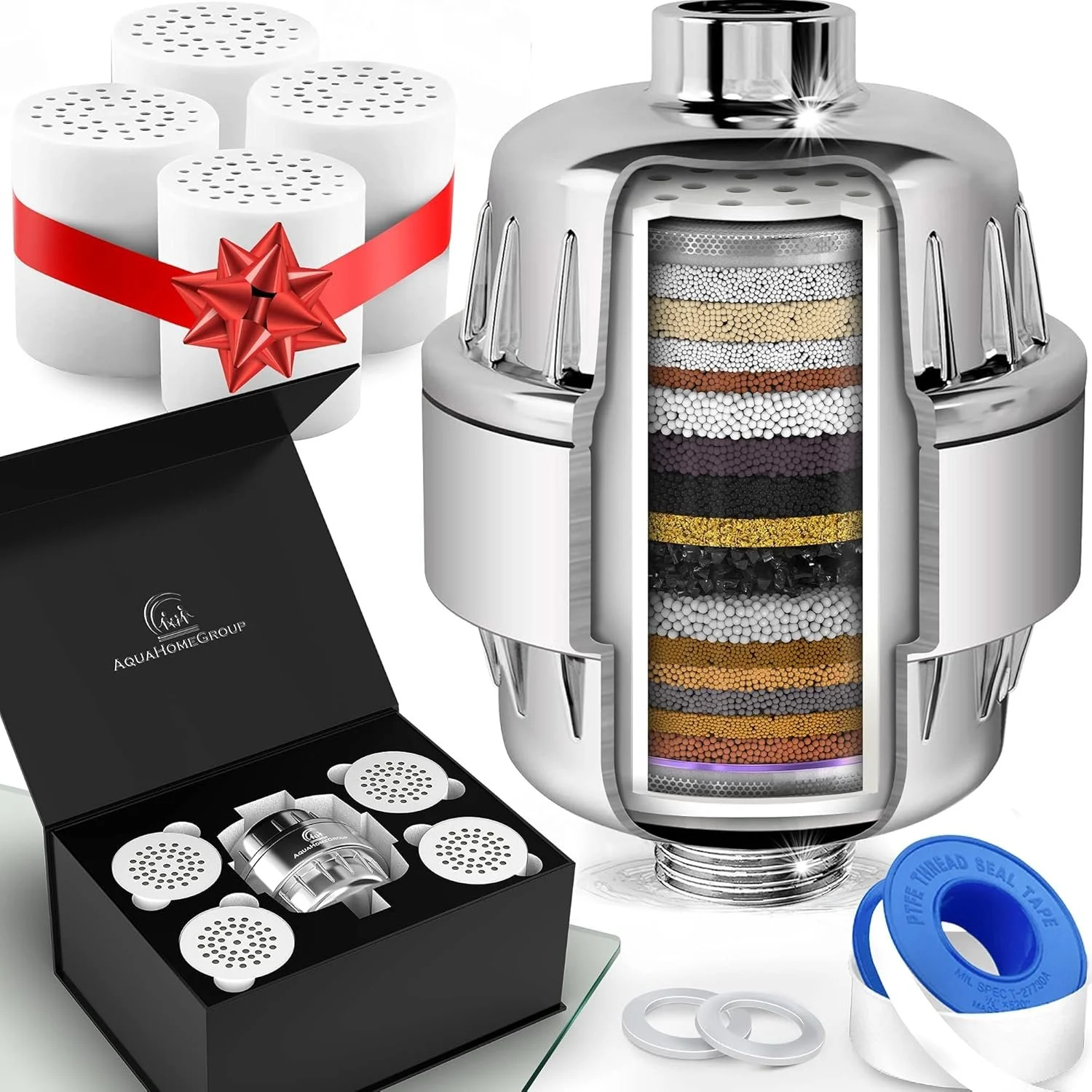
AquaHomeGroup Shower Filter
a straightforward option for reducing chlorine and mineral content in shower water. It fits standard shower heads without tools and requires no plumbing. For people in hard water areas with scalp or facial eczema particularly, this is a low-effort change worth trying.
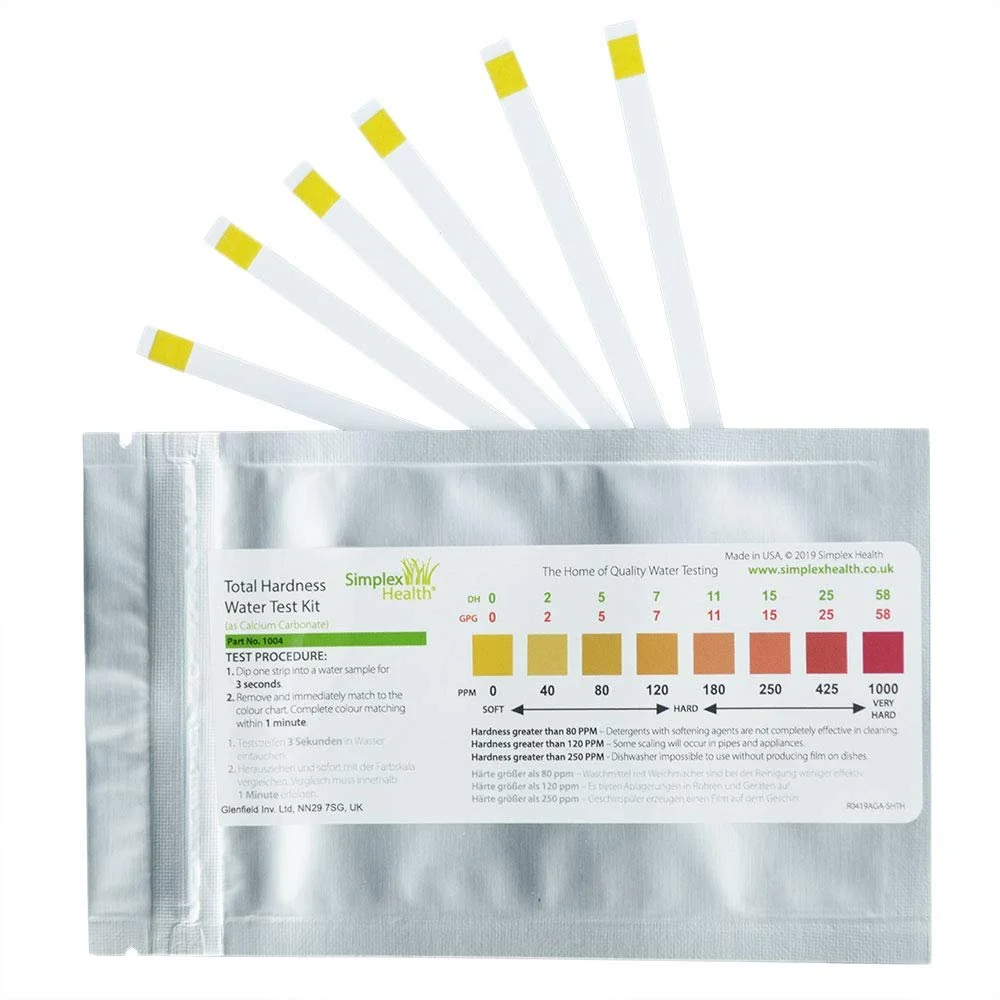
SimplexHealth Water Hardness Test Strips
a simple dip-and-read test strip for measuring water hardness at home. Results in seconds — soft, slightly hard, moderately hard, or very hard. If you're in an area shown as hard on the UK water hardness map but want to confirm your specific supply, or if you're in a border area, testing your tap water directly removes any uncertainty before investing in filtration
The chlorine question
Alongside hard water minerals, chlorine — used in UK water treatment to kill pathogens — is a potential skin irritant for those with eczema. Chlorine can disrupt the skin microbiome and strip natural oils, and some people with eczema report that their skin responds better after bathing in filtered or softened water.
The evidence for chlorine's direct role in eczema flares is less developed than for hard water minerals, but the irritant mechanism is plausible and the intervention is low-risk. Shower filters that remove both minerals and chlorine are a reasonable step for sensitive skin.
Bathing and showering: how water use affects eczema
Beyond what's in the water, how you bathe matters significantly for eczema and psoriasis.
Temperature. Hot water temporarily softens the skin and can provide momentary itch relief, but it accelerates transepidermal water loss as the water evaporates, and can trigger histamine release in sensitive skin. Warm rather than hot showers — and getting out before skin is fully red or flushed — is consistently the better approach.
Duration. Prolonged immersion, while sometimes soothing in the short term, increases water absorption into the stratum corneum which then causes swelling and can disrupt the tight junction structure of the skin barrier. Five to ten minute showers or baths, rather than extended soaks, are generally recommended.
Immediate post-bath moisturising. This is the principle that the "soak and seal" approach is based on — applying emollient within two to three minutes of bathing, while the skin is still slightly damp, to trap the surface moisture before it evaporates. This is one of the most evidence-based practical recommendations in eczema management and uses water contact as a therapeutic tool rather than treating it as a neutral or negative input.
Best ways to support skin hydration
1. Drink enough water
Aim for consistent hydration throughout the day.
2. Moisturise regularly
This is far more important for eczema and psoriasis than water intake alone.
Moisturisers help lock water into the skin barrier.
3. Avoid over-drying the skin
hot showers
harsh soaps
over-cleansing
These can strip moisture from the skin.
4. Support hydration through diet
Healthy fats and nutrient-rich foods help maintain the skin barrier.
5. Protect skin from dry environments
Cold weather and indoor heating can worsen dryness.
Hydration through food, not just drink
An underappreciated aspect of skin hydration is that a significant proportion of daily water intake comes from food — typically around 20–30%. Foods high in water content include cucumber (96% water), courgette (95%), strawberries (91%), watermelon (92%), and leafy greens generally.
More relevant for eczema and psoriasis management is that dietary fats directly influence the skin barrier. Omega-3 fatty acids found in oily fish, flaxseed, and walnuts are incorporated into skin cell membranes and influence their fluidity and barrier function. Diets low in essential fatty acids are associated with drier, more reactive skin. This is a more mechanistically direct route to supporting skin hydration than water intake alone — because you're providing the structural components the barrier needs, not just the water it struggles to retain.
Can too much water help?
Not really.
Drinking excessive amounts of water:
won’t “flush out” eczema or psoriasis
won’t cure inflammation
can even be harmful in extreme cases
More water isn’t always better.
Other drinks that affect eczema and psoriasis
Not all fluids have equal effects on skin conditions.
Alcohol is one of the most reliably documented dietary triggers for both eczema and psoriasis — it dilates blood vessels, promotes inflammatory responses, is dehydrating, and in psoriasis specifically has been associated with reduced treatment effectiveness. Reducing or eliminating alcohol has more consistent evidence for improving symptoms than increasing water intake.
Caffeine in moderate amounts is unlikely to worsen eczema or psoriasis and has some anti-inflammatory properties. At high intakes, the mild diuretic effect may contribute marginally to dehydration. This is not a meaningful concern for most people drinking one to three cups of tea or coffee per day.
Herbal teas containing anti-inflammatory botanicals — chamomile, nettle, green tea — are popular in the eczema and psoriasis community. The evidence for specific therapeutic benefit is limited, but they contribute to hydration, are generally well-tolerated, and represent a replacement for more inflammatory beverages.
Skin support for eczema & psoriasis-prone skin
The skin barrier's ability to retain moisture depends on more than water intake. The structural components of the barrier — ceramides, natural moisturising factors, lipids — are influenced by nutritional status, and several key nutrients play well-documented roles in maintaining normal skin function.
Drought's Skin Support Formula contains 14 nutrients selected for their roles in skin health, including zinc for barrier integrity and immune function, vitamin C for collagen and ceramide formation, biotin for normal skin maintenance, and magnesium for physiological balance. Made in the UK, suitable for vegetarians, designed for consistent daily use over time.
For eczema and psoriasis sufferers, addressing nutritional foundations provides the kind of internal support that no amount of water intake can substitute for.
FAQs: Water & skin conditions
Does drinking water help eczema?
Not significantly — and the reason is mechanistically specific rather than vague. Eczema dryness is caused by transepidermal water loss (TEWL) through a compromised barrier — water is already present in the skin but escaping through the deficient ceramide lipid matrix rather than being absent due to insufficient intake. The stratum corneum is a relatively avascular structure that receives moisture from the epidermis below and topical products above — not meaningfully from drinking. Drinking more water increases systemic hydration but doesn't reach the stratum corneum in the concentrations needed to compensate for the structural barrier deficit driving eczema dryness. Correcting the barrier through ceramide emollients, filaggrin-supporting vitamin D, and topical moisture retention addresses the actual mechanism; drinking more water does not.
Can dehydration worsen psoriasis or eczema?
Yes — but the threshold is significant dehydration rather than mild under-drinking. Severe dehydration reduces dermal blood flow and impairs the skin's capacity for barrier repair and inflammatory resolution. Mild under-hydration in otherwise healthy people produces negligible skin effects in the absence of severe barrier compromise. For eczema and psoriasis patients, the more relevant hydration concern is not daily water intake but specific dehydrating exposures — alcohol (vasodilation and diuretic effects that worsen both conditions through multiple documented mechanisms), caffeine at high intake, and hot environments that increase TEWL and systemic fluid loss simultaneously.
Is bathing water quality more important than drinking water for eczema?
Yes — and considerably so. The water used for bathing has more direct and more specific relevance to eczema than drinking water quantity. Chlorine in tap water disrupts the skin's acid mantle and damages the ceramide barrier on direct contact. Calcium carbonate in hard water areas — the UK has extensive hard water regions particularly in the South East and East of England — increases skin surface pH, activating serine proteases that degrade filaggrin and worsen the structural barrier deficit defining eczema. Published research has found associations between living in hard water areas and increased eczema prevalence in children. Water softeners, shower filters, or bathing in filtered water are more specifically relevant to eczema management than increasing daily water intake.
Why is moisturising more important than drinking water for eczema and psoriasis?
Because the barrier deficit in both conditions is structural rather than hydration-related. Eczema's filaggrin deficit reduces Natural Moisturising Factor (NMF) production — the hygroscopic compounds including pyrrolidone carboxylic acid, urea, and amino acids that give the stratum corneum its water-holding capacity. No amount of drinking water restores NMF production, which is determined by filaggrin gene expression regulated by vitamin D and genetic factors. Ceramide-containing emollients applied topically replace the specific lipid component of the barrier that is deficient — directly addressing the structural cause of TEWL. The post-bath two-to-three minute application window seals water absorbed during bathing before evaporation occurs — a mechanism that drinking water cannot replicate.
How much water should I drink if I have eczema or psoriasis?
The standard guidance — approximately 1.5–2 litres daily from all sources including food — is appropriate for general health maintenance including skin function. There is no evidence that exceeding this amount produces additional eczema or psoriasis benefit. The practical focus should be on consistency rather than quantity — maintaining steady hydration throughout the day supports the dermal circulation and cellular processes that underpin barrier repair more reliably than large quantities consumed irregularly. Replacing alcohol and high-caffeine drinks with water has more specific eczema and psoriasis relevance than increasing total water intake — removing dehydrating exposures reduces the inflammatory and barrier-disrupting effects those specific drinks produce independently of hydration status.
Can hard water make eczema worse?
Yes — through two specific mechanisms. First, calcium carbonate in hard water raises skin surface pH from its normal mildly acidic level (pH 4.5–5.5) toward alkaline — activating serine proteases including kallikrein-5 that degrade filaggrin, tight junction proteins, and ceramides, worsening all three components of the eczema barrier deficit simultaneously. Second, chlorine and other disinfection byproducts in tap water have direct irritant and contact sensitisation effects on eczema-prone skin. Published epidemiological research — including a 2016 study of over 1,300 UK neonates — found that hard water exposure in infancy was associated with significantly increased eczema risk and severity. Practical mitigation includes shower head filters that remove chlorine, water softeners for the household supply, or adding emollient directly to bath water which buffers the water's alkalinity.
Does the type of water matter — sparkling, filtered, alkaline?
For drinking — no meaningful difference for eczema or psoriasis. Alkaline water, sparkling water, and filtered water all provide equivalent systemic hydration. The alkaline water trend specifically — claiming that higher-pH water improves skin alkalinity — is not supported by physiology: stomach acid rapidly neutralises any consumed water to pH 1–3 regardless of its starting pH, and blood pH is tightly regulated within 7.35–7.45 regardless of dietary input. For bathing — filtered water removing chlorine and calcium has specific documented relevance to eczema as covered above. The water type distinction matters for external contact not internal consumption in this context.
Summary
Staying well hydrated is a basic foundation of health that supports skin function — but for people with eczema or psoriasis, it is one of the least powerful levers available. If you're consistently under-drinking, addressing that will likely benefit your skin alongside everything else. If you're already adequately hydrated, adding more water will not meaningfully move the dial on your condition.
Written by the Drought Skin team — specialists in natural support for psoriasis and eczema.
Disclaimer: This article contains affiliate links. We earn a very small commission from each purchase made through these links. There is no additional cost to you. All products featured have been specifically selected as products we personally use and love. For further information, please see our disclaimer page.
