
Back Psoriasis: Why It's Harder to Manage, the Koebner Risk & the Emollient Application Problem

The back is one of the most common sites for psoriasis — and one of the most practically challenging to manage. The lower back in particular is a classic location for plaque psoriasis, and for many people the back is where the most extensive plaques develop. The challenges are specific: the back is hard to see, hard to reach, subject to constant friction from clothing and chairs, prone to sweating during physical activity, and difficult to treat without assistance.
Understanding what makes back psoriasis different from psoriasis elsewhere — and what practical approaches address those specific challenges — is more useful than generic advice about managing psoriasis generally.
Back Psoriasis: Symptoms, Triggers & How to Support Your Skin
Psoriasis can appear almost anywhere on the body — including the back.
For many people, back psoriasis causes:
Dry scaly patches
Itching
Flaking
Red or discoloured plaques
Tight uncomfortable skin
Because the back covers such a large area of the body, flare-ups may sometimes feel:
Difficult to manage
Irritating during movement
Worse with sweating or friction
Uncomfortable during sleep or exercise
Back psoriasis is often linked to plaque psoriasis, the most common form of the condition.
Why the back is a common location for plaque psoriasis
The lower back, sacral area (base of the spine), and the area between the shoulder blades are among the most frequently affected sites in plaque psoriasis. The reasons are partly anatomical: skin in these areas tends to be thicker and more sebaceous-gland-rich than on the limbs, and is subject to more pressure and mechanical stress (from sitting, lying, carrying bags, waistbands) than many other body areas.
Plaque psoriasis on the back often develops as large, confluent plaques — individual plaques merging into broader areas — rather than the discrete isolated patches more common on elbows and knees. This makes back psoriasis more likely to cover significant body surface area, which influences both treatment decisions and the scale of the self-management challenge.
The specific challenges of back psoriasis
Difficulty reaching. The middle and lower back are the areas of the body most difficult to apply topical treatment to independently. This means daily emollient use and prescribed topical applications are often skipped or applied incompletely — reducing the effectiveness of treatment regimens that work well when properly applied.
Friction from clothing and furniture. The back is in constant contact with clothing (particularly waistbands, bra straps, and shirt collars), chairs, car seats, and bedding. This friction is a direct source of mechanical skin irritation — and via the Koebner phenomenon (covered in the types of psoriasis and psoriasis skincare articles in this series), it can trigger new plaque formation at friction sites.
Heat and sweating. The back generates significant heat during physical activity and traps sweat, particularly against clothing. Sweat on psoriasis-affected skin is a direct irritant — it contains salt and proteins that cause itch and inflammation. The back's relatively poor ventilation compared to exposed areas like the arms compounds this.
Pressure during sleep. Eight hours of pressure and friction on the back during sleep means plaques there are subject to more physical stress than psoriasis on most other body areas. This is why psoriasis on the lower back can be particularly resistant to treatment — it's being mechanically irritated for a third of every day.
Visibility and psychological impact. Back psoriasis is hidden under clothing most of the time, which has benefits (less visible to others) but also means it's often forgotten about in daily management routines. It can also make people reluctant to wear swimming costumes, attend gyms, or engage in activities that involve removing clothing.
Common Triggers for Back Psoriasis
Psoriasis flare-ups are often influenced by multiple triggers rather than one single cause.
Common triggers may include:
Stress
Skin injury or scratching
Cold dry weather
Alcohol
Smoking
Infections
Certain medications
Back flare-ups may also worsen due to:
Sunburn
Tight clothing
Excessive sweating
Friction during exercise
Stress is considered one of the most common psoriasis triggers overall.
The Koebner phenomenon and friction management
The Koebner phenomenon — new plaques appearing at sites of skin trauma — is directly relevant to back psoriasis given the constant friction the area experiences. Waistbands rubbing the lower back, bra straps sitting across the upper back, and shoulder bags creating repetitive friction are all potential Koebner triggers for people with active psoriasis.
Practical responses: loose-fitting clothing in natural fibres (cotton and bamboo are less abrasive than synthetic fabrics); seamless underwear to reduce friction at waistbands; avoiding rucksacks or laptop bags across active plaque areas; and keeping nails short to reduce damage from scratching.
Solving the application problem
The hardest part of managing back psoriasis is getting treatment on consistently. A few practical solutions:
Long-handled applicators. Purpose-designed tools that allow creams and ointments to be applied across the full back without assistance. This transforms what is otherwise a significant daily obstacle into a straightforward two-minute routine.
Pump dispensers and lotion formulations. Thicker ointments that need to be scooped are harder to use on the back than pump-dispensed lotions or squeeze tubes. Where clinical effectiveness allows, choosing products that are easier to apply increases the likelihood of consistent use.
Partner application. For people with a partner or household member who can assist, applying topical treatments to the back before bed is both more effective (allows longer absorption time) and practically easier than self-application. If systemic or biologic treatment is being considered, the difficulty of consistent topical self-management on the back is a legitimate factor to mention to a dermatologist.
Roll-on applicators for some medicated products. Some calcipotriol and betamethasone formulations are available in roll-on or foam formats that are more practical for large-area back application than standard cream or ointment.
Recommended Products
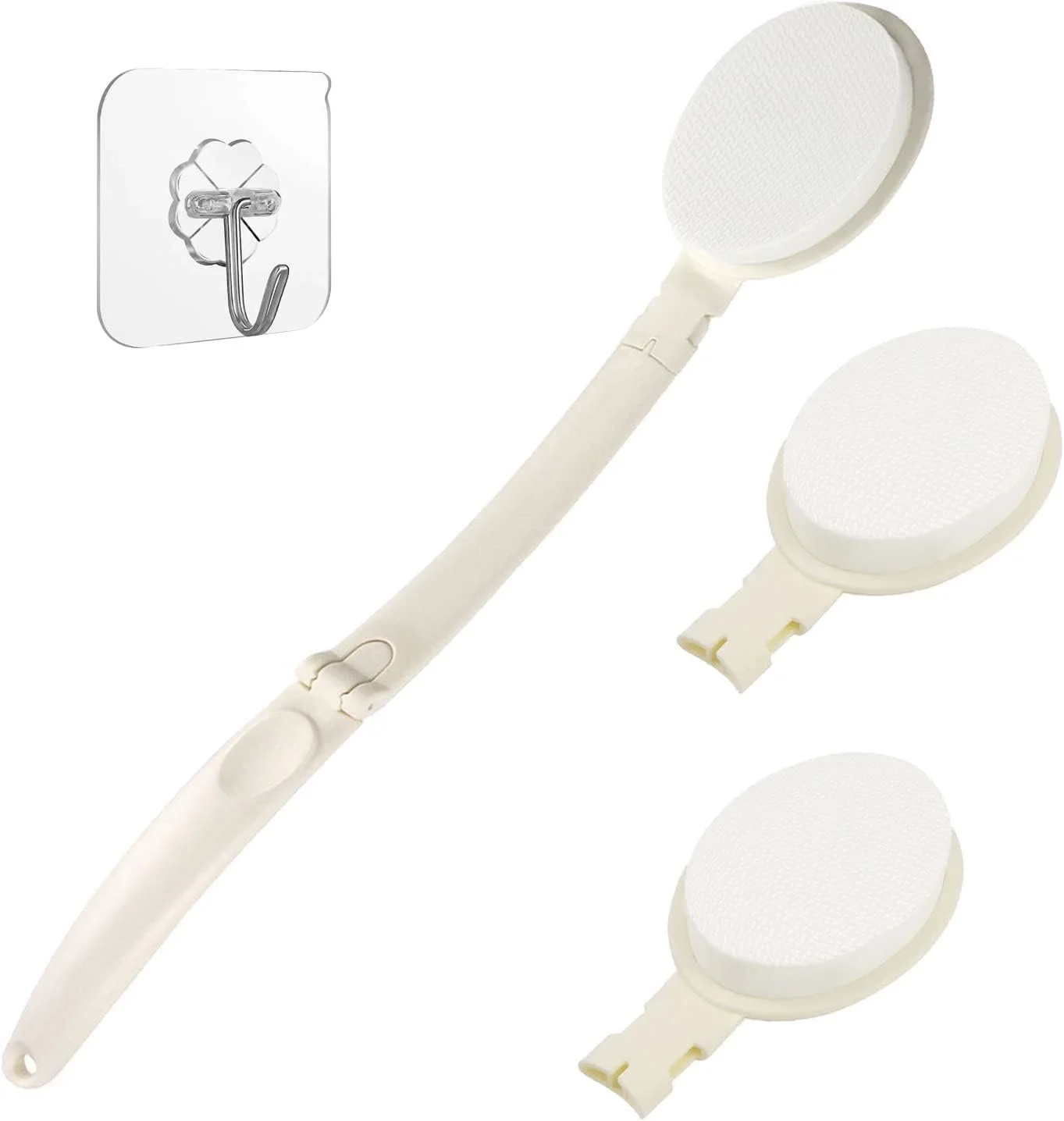
LFJ Body Lotion Applicator for Back
a long-handled applicator designed for back application of creams and lotions. Practical for applying emollient to the full back independently and consistently.
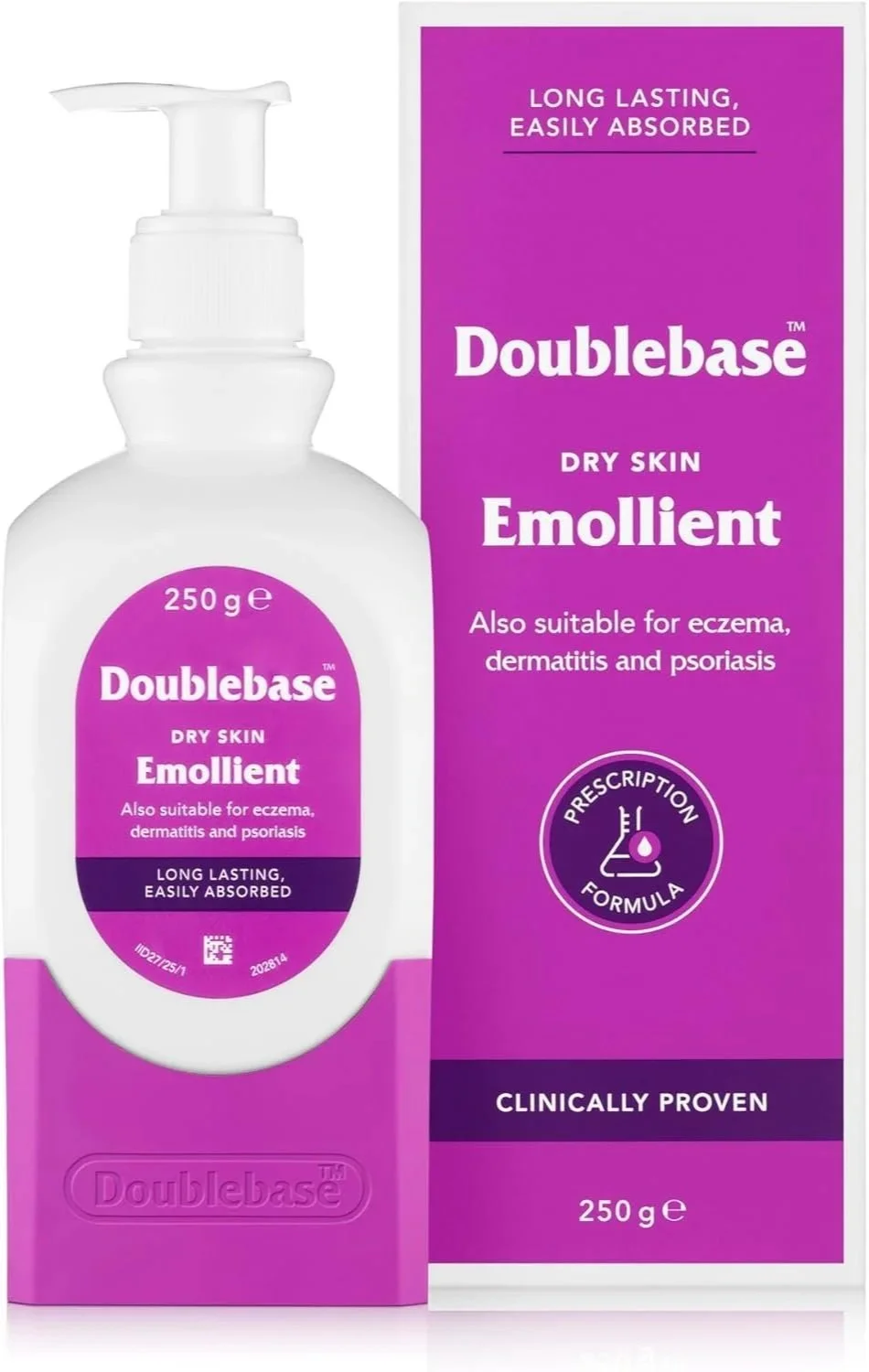
Doublebase Dry Skin Emollient Pump
a paraffin-based emollient in a pump format, which is particularly practical for back application. The pump dispenses a consistent amount directly onto the Body Back Buddy applicator pad without requiring a separate step to decant from a tub. Fragrance-free, suitable for psoriasis-prone skin, and available in large sizes appropriate for the generous weekly quantities the back's large surface area requires
Clothing, bedding, and the environment
Clothing: loose-fitting, natural fibre tops are significantly better than tight synthetic fabrics for back psoriasis. The friction reduction alone makes a meaningful difference to daily comfort and Koebner risk. Seamless or soft-waistband options reduce lower back irritation.
Bedding: cooling cotton or bamboo bedding reduces heat and sweating during sleep, which is directly relevant to back comfort overnight. Washing bedding at 60°C weekly reduces dust mite allergen load and maintains a clean surface against compromised skin. The cooling duvet discussed in the sleep article is specifically relevant here.
Post-exercise: showering promptly after exercise to remove sweat from back skin, followed by immediate emollient application, reduces the irritant window significantly. Avoiding tight compression clothing on active plaques during sport reduces Koebner risk.
Bathing and scale management
For back psoriasis with significant scaling, bath additives — Dead Sea salts and colloidal oatmeal, covered in depth in the bath salts article — are particularly useful because they address large body surface areas simultaneously. Soaking loosens scale across the entire back without requiring manual intervention.
Following immediately with emollient application — the soak and seal approach — delivers more effective barrier support to a large area than cream application alone. Having a long-handled applicator ready for the post-bath application makes this practical rather than aspirational.
Treatment escalation for extensive back psoriasis
When back psoriasis covers a significant proportion of body surface area — or when the back is consistently the worst-affected site despite good topical management — it's worth discussing this explicitly with a GP or dermatologist.
Extensive back psoriasis is a factor that supports escalation to phototherapy (narrowband UVB is particularly effective for large-area psoriasis since the back can be treated as a whole), or systemic treatment (biologics targeting IL-17 or IL-23 are highly effective for moderate-to-severe plaque psoriasis regardless of location).
The difficulty of consistent topical self-management on the back specifically is a legitimate reason to seek more powerful treatment options — it's not simply about how bad the psoriasis looks.
Supplement Support for Psoriasis-Prone Skin
The internal dimensions of psoriasis management — immune regulation, inflammatory balance, nutritional support — are not affected by location. Whether psoriasis is on the back or elsewhere, zinc, vitamin D, magnesium, and vitamin C support the same immune and barrier pathways.
Drought's Skin Support Formula provides 14 nutrients including vitamin D, zinc, vitamin C, and magnesium — addressing the internal nutritional foundations that topical back treatment and emollient use can't reach. Made in the UK, suitable for vegetarians, designed for consistent long-term daily use.
FAQ
What does psoriasis on the back look like?
Back psoriasis most commonly presents as raised, well-demarcated plaques with silvery-white scale on a red, pink, or on darker skin tones purple or brown base — typically on the upper back, lower back, and around the shoulder blades. Plaque psoriasis is the most common type affecting the back, though guttate psoriasis — smaller, droplet-shaped patches — can appear across the back following a streptococcal infection. The back's large surface area means plaques are often more extensive and more difficult to manage topically than plaques on smaller body sites. On darker skin tones the inflammatory red component may not be visible — presenting instead as hyperpigmented brown or grey patches with scale that lightens as plaques resolve.
Why is back psoriasis harder to manage than other body sites?
Four specific reasons compound each other. First, the back's large body surface area means back psoriasis often represents a significant PASI score contribution — making it clinically relevant for treatment escalation decisions. Second, self-application of emollients and prescribed topicals is difficult without assistance — the mid-back is physically inaccessible for most people, meaning applications are incomplete or inconsistent. Third, clothing contact creates continuous friction and occlusion across active plaques — synthetic fabrics, tight waistbands, bra straps, and backpack straps produce the mechanical trauma that triggers Koebner responses at specific back locations. Fourth, sweating under clothing creates an occluded warm-moist environment that promotes secondary bacterial colonisation and worsens inflammatory activity.
Can clothing and friction worsen back psoriasis?
Yes — this is the most practically important and most underappreciated specific mechanism for back psoriasis. The Koebner phenomenon — where new psoriatic plaques form at sites of skin trauma — affects approximately 25–30% of psoriasis patients. Continuous clothing friction on the back creates exactly the sustained mechanical trauma most likely to trigger Koebner responses, which typically appear at the friction site within one to two weeks. Bra straps, tight waistbands, backpack straps, and chair back contact all create focused friction at specific back locations that map directly onto common back plaque distribution sites. Loose-fitting, natural fibre clothing (cotton or bamboo rather than synthetic), seam placement away from active plaques, and avoiding tight waistbands directly over lumbar plaques are the most practically impactful clothing modifications.
How do I apply emollient to my back with psoriasis?
Long-handled emollient applicators — specifically designed for back and hard-to-reach skin application — are the most practical solution for consistent self-application. They allow complete coverage of the mid-back without assistance and make twice-daily emollient application realistic rather than dependent on having someone available to help. Apply emollient immediately after bathing within two to three minutes while skin is still slightly damp — the post-bath application timing is as important for back psoriasis as any other site, and the difficulty of back access is not a reason to skip it. For prescribed topicals on the back, a similar long-handled applicator or foam formulation (easier to spread without dripping) is more practical than cream or ointment for independent application.
Does sweating make back psoriasis worse?
Yes — through two mechanisms. Sweat contains sodium, lactic acid, and kallikrein enzymes that activate protease-activated receptors in psoriatic skin, triggering itch and inflammatory amplification at plaque sites. The back's clothing-covered environment traps sweat against plaques rather than allowing evaporation, maintaining sustained sweat contact that exacerbates this irritation. Exercise-related sweating is particularly relevant — the combination of back friction from clothing movement and sweat occlusion during sustained physical activity can trigger both Koebner responses and post-exercise flare worsening. Shower immediately after exercise, apply emollient within two to three minutes of drying, and wear loose moisture-wicking natural fabrics during exercise specifically.
Is back psoriasis contagious?
No — psoriasis is an autoimmune condition driven by Th17 immune dysregulation and has no infectious component. It cannot spread through skin contact, shared clothing, towels, or any other contact route. The scaling and appearance of psoriatic plaques is caused by accelerated keratinocyte turnover driven by immune signalling — not by a pathogen that can transfer between people. People with psoriasis cannot infect others and are not at risk of spreading plaques to unaffected areas of their own skin through contact — new plaques form through Koebner responses to trauma or through immune-driven extension, not through contagion.
Can back psoriasis be treated with light therapy?
Yes — narrowband UVB phototherapy is one of the most effective treatments for widespread back psoriasis and is specifically appropriate for large body surface area involvement. The back's large flat surface makes it well-suited to phototherapy panels. NHS phototherapy is typically delivered two to three sessions per week over eight to twelve weeks — GP referral to a dermatology department is the appropriate route. Home phototherapy units can sometimes be arranged with dermatological oversight for people with persistent widespread back psoriasis who find clinic attendance impractical. As covered in the light therapy psoriasis article in this series, narrowband UVB at 311–313nm is the specific wavelength with the strongest psoriasis evidence and the best therapeutic to skin cancer risk profile.
Summary
Back psoriasis is common, often extensive, and presents specific practical challenges that generic psoriasis advice doesn't adequately address. The difficulty of self-application means treatment is routinely incomplete; friction from clothing, chairs, and sleep is a constant Koebner risk; and sweating during exercise compounds irritation. Practical solutions — long-handled applicators, appropriate clothing choices, post-exercise routines, and bath-based scale management — address these specific challenges more effectively than general emollient guidance. For extensive back psoriasis that isn't responding to topical management, the application difficulty itself is a legitimate factor in discussions about escalating to phototherapy or systemic treatment.
Written by the Drought Skin team — specialists in natural support for psoriasis, eczema and acne
Disclaimer: This article contains affiliate links. We earn a very small commission from each purchase made through these links. There is no additional cost to you. All products featured have been specifically selected as products we personally use and love. For further information, please see our disclaimer page.
-
Types of Psoriasis Explained: Symptoms, Appearance & How They Differ
Psoriasis Skincare Routine: What Actually Helps, What to Avoid & Common Mistakes
Bath Salts for Eczema & Psoriasis: What Actually Helps and How to Use Them
How Light Therapy Can Help Treat Psoriasis
Psoriasis & Eczema Triggers: What Causes Flare-Ups & How to Identify Yours
