
Coconut Oil for Psoriasis: Benefits, Limitations & How to Use It Safely

Coconut oil is one of the most widely used natural emollients for psoriasis, and it has more specific and interesting properties for this condition than most oils. It also has a specific limitation on the scalp that isn't mentioned in most articles — and understanding both makes it more useful than either general endorsement or dismissal.
Can coconut oil help psoriasis?
Coconut oil can help moisturise dry, scaly skin and reduce discomfort — but it's not a treatment for psoriasis, and there's a specific nuance worth knowing before reaching for it as a scalp treatment. Coconut oil's lauric acid content gives it documented antimicrobial properties, and it's a genuinely effective occlusive emollient for softening psoriatic scale before washing. The complication is that coconut oil isn't universally beneficial for every presentation: Malassezia yeast — relevant to the seborrhoeic dermatitis overlap that affects a significant proportion of scalp psoriasis cases — can metabolise some of the medium-chain fatty acids that coconut oil provides, meaning a remedy that helps one person's scalp psoriasis can worsen another's depending on which underlying process is driving their symptoms.
What coconut oil contains and why it matters for psoriasis
Coconut oil is unusual among plant oils in its fatty acid composition. Where most plant oils are predominantly long-chain unsaturated fatty acids (oleic acid, linoleic acid), coconut oil is approximately 50% lauric acid and 15% caprylic acid — medium-chain saturated fatty acids with documented antimicrobial properties.
Lauric acid is the most therapeutically interesting component for psoriasis. It has documented antimicrobial activity against Staphylococcus aureus — the bacterium that colonises psoriatic skin and contributes to inflammation through superantigen activity, similar to its role in eczema. It also has antifungal activity against Malassezia species.
Caprylic acid also has antifungal properties and, at the concentrations present in coconut oil, contributes to the oil's antimicrobial profile.
This antimicrobial composition gives coconut oil a more specific rationale for psoriasis skin than a simple "moisturising" framing — it addresses the S. aureus and Malassezia dimensions of psoriasis management at the skin surface.
The occlusive properties of coconut oil are somewhat weaker than petroleum jelly or heavier ointments because it absorbs more readily — making it more practical for regular use but less potent as a barrier than thicker preparations.
What coconut oil does well for psoriasis
Scale softening. Applied to psoriasis plaques — particularly dry, stable, non-inflamed ones — coconut oil softens adherent scale effectively and makes it less visible and more comfortable. For stubborn elbow or knee plaques, a warm coconut oil application left for 20–30 minutes before bathing loosens scale without mechanical friction.
Pre-treatment barrier preparation. Applied before prescribed topical treatments, coconut oil softens the skin surface and can improve the penetration of calcipotriol or betamethasone formulations by addressing the thick scale layer that reduces topical absorption.
Antimicrobial surface protection. For psoriatic skin where S. aureus colonisation adds an inflammatory burden, lauric acid provides mild surface-level antimicrobial activity alongside the primary emollient benefit.
General skin comfort. The richness, ease of application, and skin-feel of virgin coconut oil make it practical and comfortable for many people with psoriasis who find emollient creams cosmetically unappealing.
The scalp psoriasis Malassezia caveat
Rich lipid substrates applied to the scalp can encourage Malassezia yeast growth. Malassezia feeds on fatty acids from sebum — and coconut oil provides an additional lipid substrate. In scalp psoriasis that has a seborrhoeic dermatitis component (very common — the two conditions frequently overlap on the scalp), this can worsen the Malassezia-driven elements of the condition even while softening the psoriatic scale.
The practical guidance: coconut oil on the scalp works well as a short-duration pre-wash treatment — applied to the scalp for 20–30 minutes before shampooing. This softens scale without leaving residual oil as a sustained Malassezia substrate. Avoid leaving coconut oil on the scalp overnight if seborrhoeic elements are present.
Interestingly, lauric acid's antifungal activity against Malassezia means coconut oil is less problematic for scalp use than olive oil (which lacks this antifungal component) — but the lipid substrate concern still applies.
Recommended Products
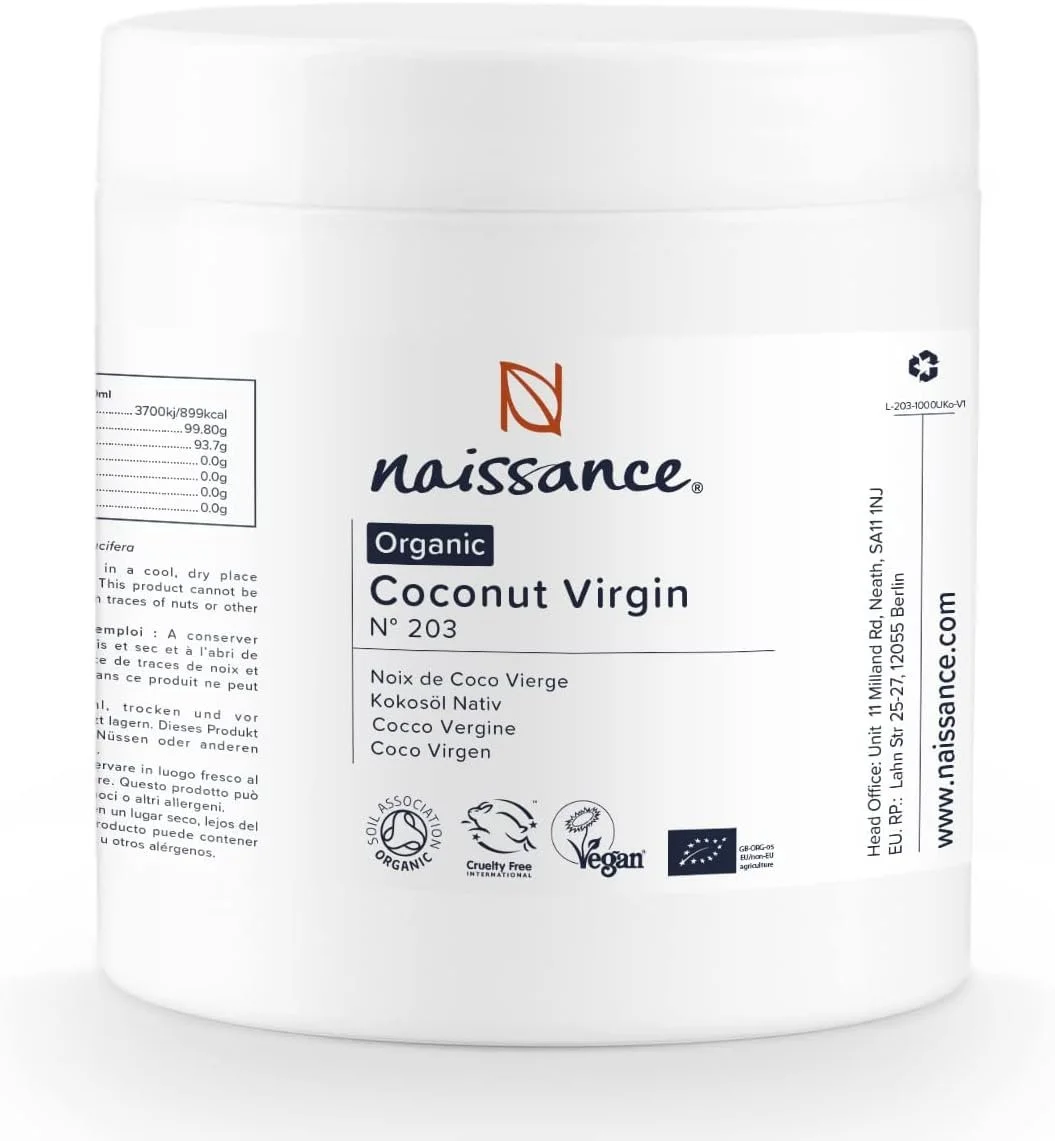
Naissance Virgin Coconut Oil Cold Pressed
unrefined, cold-pressed virgin coconut oil retaining the full lauric acid and caprylic acid content covered above. Single ingredient, no additives — appropriate for reactive psoriasis-prone skin where additional preservatives or fragrance in blended products introduce unnecessary sensitisation risk. The same Naissance cold-pressed range as the castor oil and jojoba recommendations elsewhere in this series.
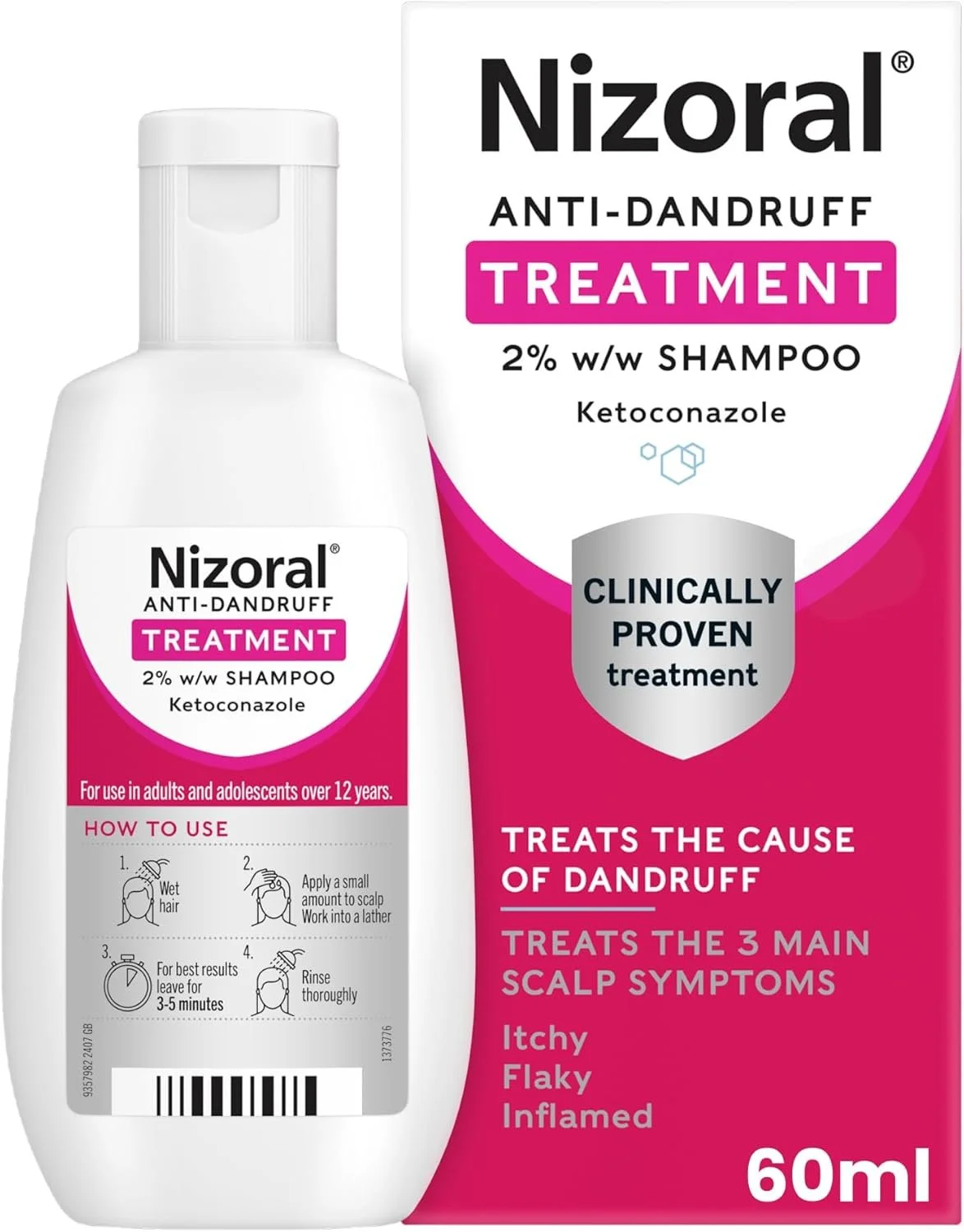
Nizoral Anti-Dandruff Shampoo 2% Ketoconazole
After applying coconut oil as a pre-wash scalp treatment, following with a ketoconazole shampoo addresses the Malassezia seborrhoeic component simultaneously — the combination of coconut oil scale softening and ketoconazole antifungal activity addresses both dimensions of the scalp psoriasis-seborrhoeic overlap that the article identifies.
How it compares to other emollients for psoriasis
Relative to the other natural oils covered in this series:
vs petroleum jelly: petroleum jelly is more occlusive, more durable as a barrier, and more inert. Coconut oil is less occlusive but more spreadable, cosmetically more pleasant, and has the lauric acid antimicrobial benefit petroleum jelly lacks.
vs olive oil: coconut oil is considerably more appropriate for psoriasis than olive oil. Olive oil's high oleic acid content can disrupt the ceramide barrier; coconut oil's lauric and caprylic acids don't carry this same mechanism.
vs castor oil: castor oil has stronger occlusive properties for very thick plaques. Coconut oil is more practical for regular daily use.
vs dedicated emollients (Doublebase, Cetraben): purpose-formulated emollients remain the most effective and most consistent choice for daily large-area psoriasis management. Coconut oil is a practical complement or alternative for localised application.
How to use coconut oil for psoriasis
Choose virgin, cold-pressed coconut oil. Refined coconut oil undergoes processing that reduces (but doesn't eliminate) the lauric acid and caprylic acid content and removes the minor polyphenol components. Unrefined virgin coconut oil retains more of the active components.
Apply on stable, calm skin. Not on actively inflamed, cracked, or painful plaques where the oil may cause stinging.
Apply post-bathing on slightly damp skin — the same two-to-three minute window as any emollient.
Use as a pre-wash scalp treatment for 20–30 minutes maximum, then shampoo with a medicated or gentle fragrance-free shampoo. Don't leave overnight on the scalp.
Patch test first. Coconut oil is generally well-tolerated but occasional sensitivities occur. Test on the inside of the elbow before broader use.
What coconut oil doesn't do
Like all topical emollients, coconut oil doesn't address the T-cell-mediated immune dysregulation driving psoriasis, reduce systemic inflammatory cytokine levels, or prevent plaque formation. It manages the surface consequences of psoriasis — comfort, scale, moisture — not its cause.
Skin support for psoriasis-prone skin
Drought's Skin Support Formula provides vitamin D, zinc, vitamin C, magnesium, and 10 other nutrients addressing the systemic inflammatory and nutritional dimensions of psoriasis that topical oils cannot reach. Made in the UK, suitable for vegetarians, designed for consistent long-term daily use.
FAQs: Coconut oil and psoriasis
Is coconut oil good for psoriasis?
As a topical emollient and scale-softening agent, yes. Its lauric acid content provides mild antimicrobial activity against S. aureus and Malassezia relevant to psoriasis. It doesn't treat the underlying condition
Can coconut oil reduce inflammation?
Modestly and indirectly — through lauric acid's antimicrobial activity against S. aureus rather than through direct anti-inflammatory mechanisms. S. aureus colonisation amplifies psoriatic inflammation through superantigen activity, so reducing S. aureus burden at the skin surface reduces one inflammatory input. Coconut oil doesn't inhibit Th17 cytokine production, NF-κB activity, or keratinocyte hyperproliferation — the central immune mechanisms driving psoriasis. For meaningful anti-inflammatory effect, omega-3 EPA/DHA, curcumin with piperine, and vitamin D address psoriasis's inflammatory pathways at a more fundamental level.
Is coconut oil safe for scalp psoriasis?
As a short pre-wash treatment (20–30 minutes before shampooing) — yes. Avoid leaving overnight on the scalp if seborrhoeic elements are present, as the lipid substrate can encourage Malassezia growth.
Can coconut oil replace dedicated emollients for psoriasis?
For localised, targeted application — yes, it functions as a practical emollient. For consistent daily large-area use, purpose-formulated emollients (Doublebase, Cetraben, Epaderm) have specific advantages: they contain humectants like urea or glycerin alongside occlusives; they're formulated for consistent skin surface coverage rather than the patchy application that oils tend to produce; and they don't carry the Malassezia substrate concern on the scalp or sebum-rich areas. Coconut oil works best as a complement to an established emollient routine rather than a replacement — particularly for pre-wash scale softening or localised plaque treatment..
Is virgin coconut oil better than refined for psoriasis?
Yes — virgin (unrefined) coconut oil retains more lauric acid, caprylic acid, and minor polyphenol components than refined versions.
Is coconut oil better than olive oil for psoriasis?
Yes — olive oil's high oleic acid content can disrupt the ceramide barrier. Coconut oil's medium-chain fatty acid composition is more appropriate for psoriasis-prone skin.
Summary
Coconut oil has specific and useful properties for psoriasis — lauric acid's antimicrobial activity against S. aureus and Malassezia, good scale-softening properties, and reasonable daily tolerability. It is considerably more appropriate for psoriasis than olive oil and works well as a pre-wash scalp treatment at limited contact time. The scalp Malassezia caveat applies: leave-on overnight use on the scalp is not recommended when seborrhoeic elements are present. For daily large-area emollient use, purpose-formulated preparations remain more effective and consistent.
Written by the Drought Skin team — specialists in natural support for psoriasis, eczema and acne
Disclaimer: This article contains affiliate links. We earn a very small commission from each purchase made through these links. There is no additional cost to you. All products featured have been specifically selected as products we personally use and love. For further information, please see our disclaimer page.
-
Emollients for Psoriasis: Which Type Works Best & How to Use Them
Olive Oil for Psoriasis: When It Helps, When It Worsens Symptoms
Castor Oil for Psoriasis: What It Actually Does and How to Use It
Scalp Psoriasis: Identification, Treatment & Long-Term Management
Moisturising for Eczema: How to Do It Properly & What Actually Works
