
Gut Health & Acne: The Gut-Skin Axis, LPS Translocation & What Actually Helps

The idea that gut health affects skin was considered fringe medicine not long ago. It is now a serious area of research, and the gut-acne connection has accumulated enough evidence to be treated as clinically meaningful rather than speculative. That doesn't mean every case of acne is primarily gut-driven, or that fixing the gut will clear everyone's skin. But it does mean that for a subset of people — particularly those with acne alongside digestive symptoms — addressing gut health is a legitimate and potentially significant part of the picture.
Here's what the research actually shows, which pathways are most relevant, and what practical steps are supported by the evidence.
Gut Health & Acne: Is There Really a Connection?
Acne is often treated as a surface-level skin issue.
But in recent years, researchers have become increasingly interested in something called the gut-skin axis — the connection between gut health, inflammation, and skin conditions like acne.
Many people with acne also report issues such as:
Bloating
Digestive discomfort
Food sensitivities
Stress-related flare-ups
This has led to growing interest in whether the gut microbiome could influence:
Inflammation
Hormones
Immune responses
Acne severity
So, can poor gut health actually cause acne?
The reality is that acne is complex and influenced by multiple factors, but emerging research suggests the gut microbiome may play a role in some individuals.
What Is the Gut Microbiome?
The gut microbiome refers to the trillions of microorganisms living inside the digestive system.
This includes:
Bacteria
Fungi
Viruses
Other microbes
A healthy microbiome helps support:
Digestion
Immune function
Inflammation balance
Nutrient absorption
Researchers now believe the gut microbiome may also influence skin health through communication between the gut and immune system.
What the gut microbiome data shows in acne patients
Several studies have compared the gut microbiome composition of people with acne to healthy controls, and the findings are consistent enough to be meaningful.
People with acne show reduced abundance of Bifidobacterium and Lactobacillus species — the same beneficial bacteria depleted in other inflammatory conditions. They show reduced microbiome diversity overall, which is associated with less stable immune regulation. And they show altered production of short-chain fatty acids (SCFAs) — particularly butyrate, which is produced by beneficial gut bacteria from dietary fibre and plays a key role in maintaining gut barrier integrity, reducing intestinal permeability, and modulating immune responses.
This pattern — lower beneficial bacteria, lower SCFA production, higher intestinal permeability — creates systemic inflammatory conditions that are mechanistically relevant to acne. Elevated circulating lipopolysaccharide (LPS), which leaks from the gut when the barrier is compromised, is pro-inflammatory and has been associated with increased sebaceous gland activity.
Can Poor Gut Health Cause Acne?
Current research suggests gut health may contribute to acne in some individuals, but acne is rarely caused by one single factor alone.
Acne may also be influenced by:
Hormones
Oil production
Genetics
Stress
Sleep quality
Diet
Lifestyle habits
However, research increasingly supports the idea that gut dysbiosis may contribute to inflammation linked to acne development.
Some studies have also found higher rates of gastrointestinal conditions in people with acne.
The SIBO-acne connection
This is the most clinically specific and under-discussed finding in the gut-acne literature.
Small intestinal bacterial overgrowth (SIBO) — a condition in which bacteria proliferate in the small intestine where they are normally sparse — has been found to be significantly more common in people with acne rosacea and acne vulgaris than in the general population. A study published in Digestive and Liver Disease found that acne patients had dramatically higher rates of SIBO compared to controls, and that SIBO treatment (with rifaximin, a non-absorbed antibiotic) produced significant improvement in skin symptoms in affected patients.
SIBO produces systemic inflammatory signals through bacterial metabolite leakage, altered immune activation, and increased gut permeability — all of which could plausibly amplify the inflammatory component of acne. It also causes digestive symptoms including bloating, gas, and irregular bowel habits — symptoms that some people with acne alongside gut complaints may recognise.
This doesn't mean everyone with acne has SIBO. But it suggests that people whose acne coexists with significant digestive symptoms — particularly bloating, abdominal discomfort, and irregular digestion — are worth investigating for underlying gut dysfunction rather than treating skin and gut as entirely separate concerns.
Digestive Symptoms Some People Notice Alongside Acne
Some people with acne also report digestive symptoms such as:
Bloating
Constipation
Food sensitivities
Stomach discomfort
Irregular digestion
Research has found acne patients may have higher rates of certain gastrointestinal issues compared to the general population.
This doesn’t necessarily mean digestive problems directly cause acne, but it strengthens interest in the gut-skin connection.
The androgen-gut connection: why this matters for hormonal acne
This pathway is the most specific to acne and the most commonly overlooked.
Androgens — testosterone and its derivatives — drive several of the primary mechanisms of acne: stimulating sebum production, promoting follicular hyperkeratinisation, and supporting the environment in which C. acnes proliferates. Hormonal acne — typically characterised by breakouts along the jaw, chin, and lower face, often cyclically in women — is driven by androgen activity.
The gut microbiome influences circulating androgen levels through a specific mechanism: the "estrobolome" — a collection of gut bacteria that metabolise and regulate oestrogen and androgen clearance. Beta-glucuronidase is an enzyme produced by certain gut bacteria that deconjugates oestrogens in the gut, allowing them to be reabsorbed rather than excreted. Microbiome imbalance can alter beta-glucuronidase activity, affecting the ratio of oestrogen to testosterone in circulation.
For women with hormonal acne alongside gut dysbiosis, this pathway — gut bacteria → androgen metabolism → sebum production and follicular activity — provides a mechanistic link between gut health and acne that goes well beyond general inflammation. It is one reason why some women find that addressing gut health produces meaningful improvement in hormonal acne when topical treatments alone have not.
What actually helps: the evidence-based gut interventions for acne
Diet: fibre, fermented foods, and reduced ultra-processed food. The most consistent dietary finding across gut health research is that fibre-rich diets support SCFA production, microbiome diversity, and gut barrier integrity. Fermented foods — kefir, kimchi, sauerkraut, natural live yogurt — directly introduce beneficial bacteria. Ultra-processed foods, high sugar intake, and diets low in plant diversity are associated with reduced microbiome diversity and increased gut permeability. The dietary pattern with the most evidence for reducing inflammation relevant to acne is the same one that supports gut health: whole foods, high plant diversity, reduced sugar and refined carbohydrates.
Prebiotic fibre. Probiotics work better when the gut environment supports them. Prebiotic-rich foods — garlic, onion, leeks, oats, asparagus, bananas — feed beneficial bacteria and are a cost-effective complement to probiotic supplementation.
Addressing specific gut conditions. For people with significant digestive symptoms alongside acne, a GP assessment for SIBO, IBS, or gut dysbiosis is worth pursuing rather than self-treating. The SIBO-acne research suggests that where SIBO is present, addressing it specifically may produce more meaningful skin improvement than general microbiome support alone.
Could Probiotics Help Acne?
The evidence for probiotics in acne is developing but positive. Several small trials have found reductions in inflammatory acne lesion counts with Lactobacillus-based probiotic supplementation. The mechanism is plausible — supporting beneficial microbiome composition, reducing gut-derived inflammatory signals, and potentially modulating androgen metabolism. Cross-referencing with the eczema probiotics article in this series: strain specificity matters, multi-strain formulations are generally preferable, and eight to twelve weeks of consistent use is the minimum meaningful trial period.
Recommended Products
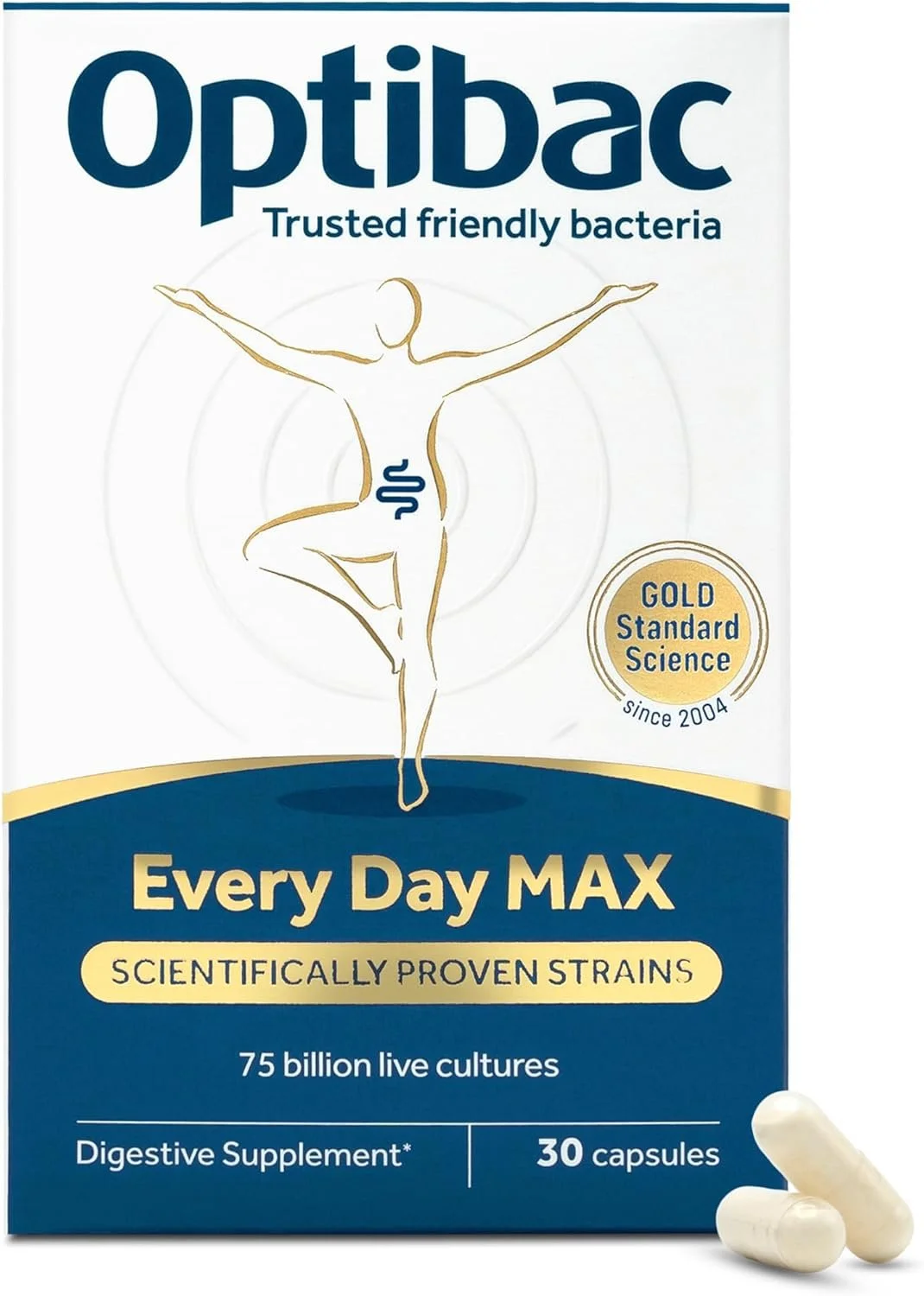
OptiBac Probiotics For Every Day MAX
a high-strength multi-strain probiotic containing Lactobacillus acidophilus, Lactobacillus rhamnosus, and Bifidobacterium species. One of the most established UK probiotic brands with consistent quality standards. A practical starting point for anyone wanting to address gut microbiome support specifically for skin health
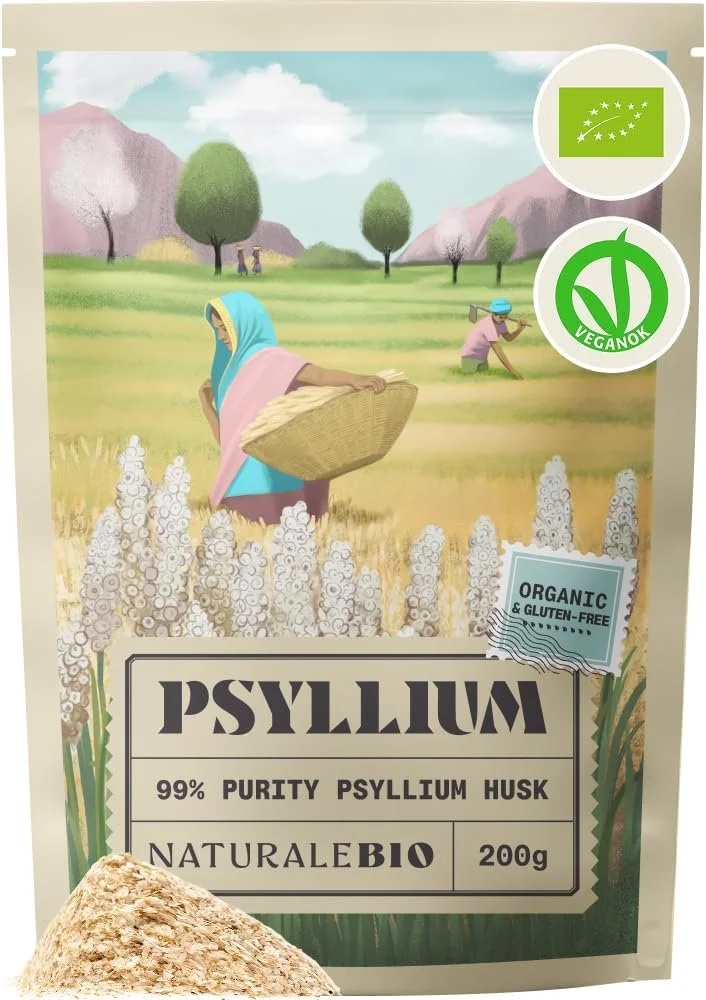
Organic Psyllium Husk Powder
a soluble prebiotic fibre that feeds Bifidobacterium and Lactobacillus species in the colon, supporting the microbiome diversity that the gut-skin axis research most consistently associates with lower systemic inflammatory activity. As covered above, prebiotic fibre and probiotic bacteria work through complementary and non-overlapping mechanisms — fibre provides the substrate for beneficial bacteria to produce butyrate; probiotics introduce the bacterial species that produce it. Start with a small amount and increase gradually to allow gut adjustment.
The stress-gut-acne triangle
Psychological stress affects acne through several routes — covered in detail in the stress article in this series — and the gut is one of them. Stress activates the HPA axis, elevates cortisol, and directly alters gut motility, barrier integrity, and microbiome composition. Cortisol and CRH (corticotropin-releasing hormone) increase intestinal permeability and modify the gut's immune environment.
This creates a three-way relationship: stress worsens gut dysbiosis, gut dysbiosis amplifies systemic inflammation, systemic inflammation worsens acne and stress reactivity. For people whose acne consistently worsens during high-stress periods alongside digestive symptoms, this compound loop is likely operating.
What the gut-acne connection doesn't mean
Being clear about the limits is as important as the evidence.
Gut health is one factor among many in acne. Hormones, genetics, sebaceous gland activity, and C. acnes proliferation are all relevant and are not directly addressable through gut interventions alone. For most people with acne, topical treatment and potentially systemic treatment remain the primary clinical approach.
The gut-acne connection is most relevant — and most likely to produce meaningful results — for people who have significant digestive symptoms alongside skin symptoms, or whose acne is hormonal and hasn't responded adequately to topical approaches.
Supplement Support for Acne-Prone Skin
The nutritional dimensions of gut health and acne overlap substantially. Zinc supports both gut barrier integrity and C. acnes regulation. Vitamin D influences gut immune function and systemic immune regulation. Magnesium supports stress regulation, which affects the gut-acne loop.
Drought's Skin Support Formula provides 14 nutrients including zinc, vitamin D, vitamin C, and magnesium — addressing the nutritional foundations relevant to both gut health and skin function. Used alongside a gut-supportive dietary approach and probiotic supplementation, it covers multiple dimensions of the internal acne picture. Made in the UK, suitable for vegetarians, designed for consistent long-term daily use.
FAQ
Is there a link between gut health and acne?
Yes — and the mechanism is more specific than vague "gut health affects everything" wellness claims. Intestinal permeability allows lipopolysaccharides from gram-negative gut bacteria to enter systemic circulation, triggering TLR4-mediated inflammatory cascades that worsen acne's inflammatory dimension. Studies consistently find altered gut microbiome composition, reduced Bifidobacterium and Lactobacillus species, and increased intestinal permeability in acne patients compared to controls.
What is the gut-skin axis?
The gut-skin axis describes the bidirectional communication between the gastrointestinal microbiome and skin immune activity — operating through systemic inflammatory cytokines, androgen metabolism, and direct neural pathways. In acne specifically, microbiome dysbiosis shifts LPS-producing gram-negative bacteria relative to beneficial species, increasing the systemic inflammatory burden that determines how severely C. acnes triggers inflammatory lesions. The connection is real and mechanistically specific — not a wellness metaphor.
Can SIBO cause acne?
Published research has found significantly higher rates of small intestinal bacterial overgrowth in acne patients, and treatment of SIBO has produced measurable skin improvement in affected individuals in some studies. The mechanism runs through SIBO's systemic inflammatory effects and androgen metabolism disruption rather than direct skin effects. SIBO is one of the more specific gut-acne findings in the clinical literature — worth investigating with a GP if gut symptoms and acne coexist, particularly bloating, gas, or altered bowel habit after eating.
Do probiotics help acne?
Modest but consistent evidence — Lactobacillus rhamnosus and Bifidobacterium longum specifically have shown reductions in inflammatory acne lesion counts in published studies. The mechanism involves both direct gut barrier support reducing LPS translocation and modulation of androgen metabolism through intestinal beta-glucuronidase activity. Multi-strain formulations taken consistently for eight to twelve weeks show the most consistent results — shorter trials don't allow sufficient microbiome shift to produce visible skin effects.
How does gut health affect hormonal acne?
The gut microbiome regulates oestrogen and androgen recirculation through beta-glucuronidase enzyme activity — dysbiosis increases this enzyme's activity, deconjugating oestrogen metabolites that would otherwise be excreted and increasing circulating androgen activity. The result is higher free androgen availability that drives sebaceous gland stimulation, explaining why hormonal acne patterns can persist despite normal blood hormone levels in women with underlying dysbiosis.
What diet changes help gut health for acne?
High soluble fibre intake feeds butyrate-producing Faecalibacterium prausnitzii and Bifidobacterium species most consistently deficient in acne patients. Fermented foods (kefir, kimchi, sauerkraut) provide direct Lactobacillus inoculation alongside prebiotic substrate. Reduced ultra-processed food and refined sugar reduces the dysbiosis-promoting environment that gram-negative LPS-producing bacteria thrive in. These changes align directly with the low-glycaemic diet acne evidence covered in this series — the gut microbiome and glycaemic impact work through complementary and overlapping mechanisms.
Does fixing the gut clear acne?
Not reliably on its own — acne involves hormonal sebum overproduction, C. acnes bacterial activity, and genetic androgen sensitivity that gut health addresses only partially. The gut-skin axis is one of several internal acne dimensions that require simultaneous management. What gut-focused intervention most reliably produces is reduced inflammatory baseline — fewer and less severe inflammatory lesions rather than complete clearance. Most useful as part of a comprehensive internal approach alongside zinc, vitamin D, and dietary changes rather than as a standalone intervention.
Summary
The gut-acne connection is real, documented, and mechanistically specific — not just a wellness trend. Reduced beneficial bacteria, lower SCFA production, elevated gut permeability, and the SIBO-acne association all point to the gut as a meaningful contributor to acne in a subset of people. The androgen metabolism pathway provides the most specific mechanism for hormonal acne. The most evidence-based interventions are dietary fibre, fermented foods, probiotic supplementation, and addressing specific gut conditions where present. This is most relevant for people with digestive symptoms alongside acne, and for hormonal acne that hasn't responded adequately to topical approaches.
Written by the Drought Skin team — specialists in natural support for psoriasis, eczema and acne
Disclaimer: This article contains affiliate links. We earn a very small commission from each purchase made through these links. There is no additional cost to you. All products featured have been specifically selected as products we personally use and love. For further information, please see our disclaimer page.
