
Bananas & Eczema: Nutrients, Histamine Liberation & the Latex-Fruit Syndrome Explained

Bananas are one of the most commonly asked-about foods in eczema discussions — which says more about how much people with eczema are searching for dietary answers than about any particular reason bananas are controversial. For most people with eczema, bananas are a good, well-tolerated food with some specific nutritional properties worth knowing about. For a minority, they can be a trigger — and the reasons are specific rather than vague.
Here's what bananas actually contain, what's relevant to eczema, and when caution is warranted.
Can bananas affect eczema?
Bananas may help some people with eczema because they contain:
fibre
potassium
antioxidants
vitamin B6
But for others, bananas may act as a potential trigger, especially if food sensitivities or allergies are involved.
What bananas contain that's relevant to eczema
Resistant starch (particularly in unripe bananas). This is the most specific and underappreciated nutritional property of bananas for eczema. Resistant starch is a type of dietary fibre that passes through the small intestine undigested and is fermented by beneficial gut bacteria in the large intestine, producing short-chain fatty acids (SCFAs) — particularly butyrate. Butyrate is a primary fuel for gut lining cells (colonocytes), supports gut barrier integrity, and has documented anti-inflammatory effects. As covered in the gut health and leaky gut articles in this series, gut barrier function has measurable relevance to eczema through the gut-skin axis.
Ripe bananas have lower resistant starch content as the starch converts to simple sugars during ripening. For maximum prebiotic benefit, slightly underripe bananas — with a few green patches — are preferable.
Vitamin B6 (pyridoxine). A medium banana provides around 0.4mg of vitamin B6 — approximately 25% of the UK daily reference nutrient intake. B6 is involved in amino acid metabolism and is a cofactor for the enzymes that produce histamine and, crucially, for the enzymes that break it down (diamine oxidase, DAO). Adequate B6 supports histamine metabolism — relevant for a subset of eczema patients where histamine sensitivity is a factor.
Potassium and magnesium. Modest amounts of both minerals relevant to general skin health and inflammatory balance. Not the primary argument for bananas but a legitimate nutritional contribution.
Antioxidants. Including dopamine and catechins — phytonutrients with free radical-scavenging activity. Not at the levels found in berries or leafy greens, but present.
The resistant starch point in practice
This is worth emphasising because it changes how to eat bananas for maximum eczema-relevant benefit. A fully ripe banana (yellow, soft) provides natural sugars with a moderate glycaemic index and less prebiotic benefit. A slightly underripe banana — still yellow but with some green — provides significantly more resistant starch alongside similar vitamins. For people using bananas specifically for gut microbiome support, choosing bananas that aren't fully ripe captures more of the prebiotic benefit.
Ground flaxseed or chia seeds added to a banana-containing smoothie, as in the eczema smoothie recipes in this series, compounds the prebiotic fibre benefit considerably.The resistant starch point in practice
This is worth emphasising because it changes how to eat bananas for maximum eczema-relevant benefit. A fully ripe banana (yellow, soft) provides natural sugars with a moderate glycaemic index and less prebiotic benefit. A slightly underripe banana — still yellow but with some green — provides significantly more resistant starch alongside similar vitamins. For people using bananas specifically for gut microbiome support, choosing bananas that aren't fully ripe captures more of the prebiotic benefit.
Ground flaxseed or chia seeds added to a banana-containing smoothie, as in the eczema smoothie recipes in this series, compounds the prebiotic fibre benefit considerably.
When bananas can trigger eczema: two specific mechanisms
For most people with eczema, bananas cause no problems. Two specific groups may need to be cautious:
Latex-fruit syndrome. People with latex allergy have a higher rate of cross-reactivity with certain fruits — including bananas — due to shared protein structures. The relevant proteins are Hev b 6 and Hev b 11 (from the rubber tree Hevea brasiliensis) and their analogues in banana, avocado, kiwi, and chestnut. Reactions range from mild oral tingling (oral allergy syndrome) to urticaria and, rarely, anaphylaxis. For people with known latex allergy — relevant to healthcare workers, frequent hospital patients, or anyone with a documented latex reaction — caution with bananas is warranted, and an allergist review is appropriate.
IgE-mediated banana allergy. True banana allergy is uncommon but does exist. As noted throughout this series, people with atopic eczema have higher overall rates of IgE-mediated food allergy than the general population. If you consistently notice urticaria, swelling, or immediate worsening of skin within minutes to two hours of eating bananas, skin prick testing through a GP or allergist can confirm whether IgE-mediated banana allergy is present.
What about histamine?
Bananas are sometimes listed as "histamine-liberating foods" — meaning they may trigger histamine release from mast cells rather than containing histamine directly. This is distinct from high-histamine foods like fermented products, aged cheese, or wine.
The evidence for bananas as a significant histamine liberator is weak — they appear on some histamine intolerance food lists but the research supporting this classification is thin. For most people with eczema, bananas are not a meaningful histamine trigger. For people who have identified a broader histamine sensitivity pattern — reacting to multiple histamine-containing and histamine-releasing foods — a trial period of avoidance while monitoring symptoms is reasonable, but not warranted without that context.
Are bananas inflammatory?
No — bananas are not generally considered inflammatory foods.
For most people:
bananas are part of a healthy, balanced diet.
Highly processed foods and excess sugar are more strongly linked to inflammation overall.
Should you avoid bananas if you have eczema?
Usually not—unless:
you notice clear flare-ups after eating them
you have a diagnosed allergy
symptoms consistently worsen after bananas
Restrictive diets can sometimes create unnecessary stress and nutritional imbalance.
How to identify possible food triggers
Keep a food and symptom diary
Track:
flare-ups
foods eaten
stress and lifestyle factors
Patterns matter more than isolated reactions.
Avoid unnecessary elimination diets
Cutting out too many foods can:
increase stress
reduce diet quality
become difficult to sustain
Elimination diets should ideally be supervised if severe.
The practical summary
Bananas are a useful, well-tolerated food for most people with eczema. The resistant starch in slightly underripe bananas supports gut microbiome health through SCFA production — specifically relevant to the gut-skin axis. Vitamin B6 supports histamine metabolism. Neither of these is a reason to eat bananas exclusively or excessively — they're simply good reasons why a banana in a daily smoothie or as a snack is a positive dietary habit for most eczema-prone individuals.
Avoid them if: you have a documented latex allergy; you've noticed consistent immediate reactions after eating them; or you've identified them as a personal trigger through systematic tracking.
Don't avoid them speculatively. Unnecessary food restriction creates stress and potential nutritional imbalance — both of which are documented eczema triggers.
Skin support for eczema-prone skin
Bananas make a good contribution to gut health and nutritional balance but can't provide all the nutrients specifically relevant to eczema management. Vitamin D (unavailable from bananas in meaningful amounts), zinc, and magnesium at doses relevant to immune function all benefit from targeted supplementation for most people with eczema in the UK.
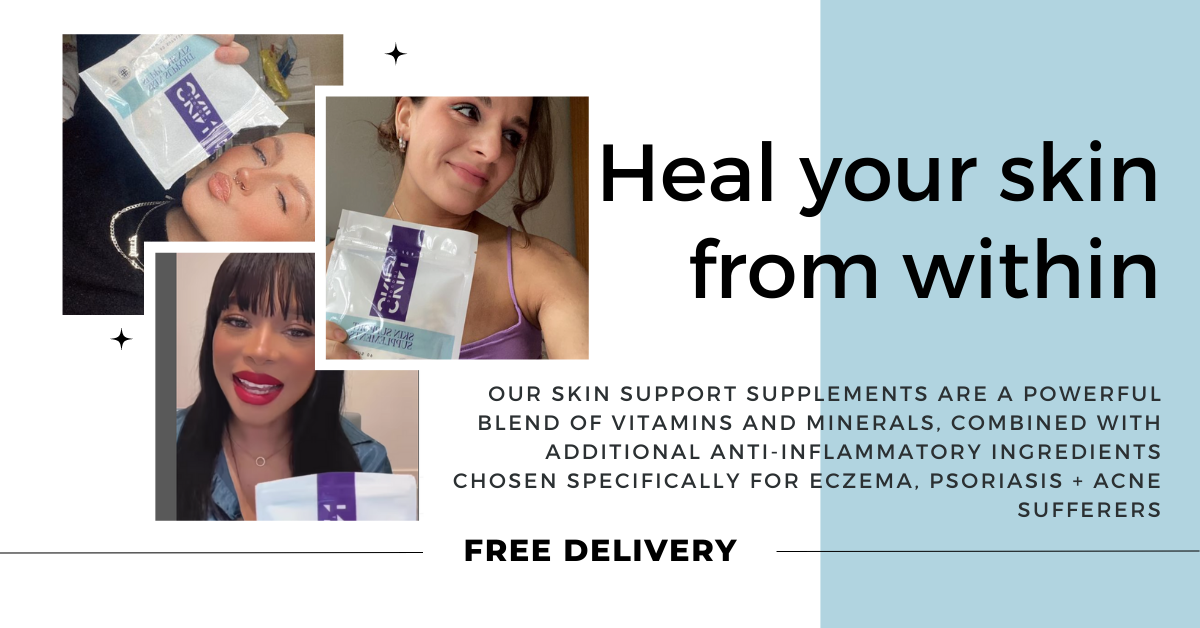
Drought's Skin Support Formula provides 14 nutrients including vitamin D, zinc, magnesium, vitamin C, and biotin — addressing the nutritional foundations of eczema management that even a well-balanced diet doesn't reliably cover. Made in the UK, suitable for vegetarians, designed for consistent long-term daily use.
FAQs: Bananas & eczema
Are bananas good for eczema?
For most people with eczema — yes. Bananas provide vitamin B6, which supports histaminase (diamine oxidase) enzyme activity that breaks down dietary histamine — specifically beneficial for histamine-sensitive eczema patients. Resistant starch in underripe bananas feeds Faecalibacterium prausnitzii and Bifidobacterium species in the gut microbiome, supporting the gut-skin axis through butyrate production. Potassium and antioxidants contribute to general anti-inflammatory status. Banana-triggered eczema exists but affects a specific and identifiable subset — most people with eczema can eat bananas without concern.
Can bananas trigger eczema?
Yes — through three distinct mechanisms depending on the individual. Latex-fruit syndrome affects people with latex sensitisation whose immune system cross-reacts with class I chitinase proteins in bananas — producing IgE-mediated reactions including eczema worsening. Histamine liberation — bananas trigger mast cell degranulation in histamine-sensitive individuals through a mechanism independent of IgE, meaning people can react to bananas without being classically allergic to them. Oral allergy syndrome produces localised mouth tingling from cross-reactivity between banana proteins and pollen allergens — particularly in people with birch pollen hay fever. All three mechanisms are distinct and identifying which applies determines the appropriate management approach.
Are bananas high in histamine?
No — bananas don't contain significant histamine themselves but are histamine liberators rather than histamine-containing foods. They trigger mast cells to release stored histamine through a compound-mediated mechanism independent of IgE sensitisation. This distinction matters practically: IgE-mediated banana allergy requires strict avoidance; histamine liberation reactions are often dose-dependent and may be manageable with reduced portion size rather than complete elimination. People who react to multiple histamine-liberating foods — citrus, strawberries, tomatoes, and bananas — alongside histamine-containing foods (fermented foods, aged cheese, wine) likely have histamine intolerance rather than specific banana sensitivity.
What is latex-fruit syndrome and does it affect eczema?
Latex-fruit syndrome occurs when the immune system cross-reacts between latex proteins and structurally similar class I chitinase proteins in certain fruits including bananas, avocado, kiwi, and chestnuts. People with eczema have elevated rates of latex sensitisation through repeated healthcare exposure — latex gloves, medical equipment, and plasters used during eczema management itself. If you consistently react to latex products and also notice reactions to bananas, avocado, or kiwi, GP referral for latex-specific IgE testing is appropriate before attributing the reactions to dietary sensitivity alone.
Should I avoid bananas if I have eczema?
Only if systematic tracking confirms a consistent and specific correlation between banana consumption and your flares — not based on isolated observation or assumption. Eczema fluctuates naturally with hormonal cycles, stress, sleep quality, and seasonal factors, making single food-symptom correlations unreliable without four to six weeks of systematic food and symptom diary tracking. Blanket banana avoidance without confirmed personal sensitivity removes vitamin B6, resistant starch, potassium, and antioxidants from the diet without guaranteed benefit. Bananas are less commonly implicated as eczema triggers in published elimination diet research than dairy, eggs, wheat, and soy.
Are underripe or ripe bananas better for eczema?
Underripe bananas are better for gut microbiome support specifically. Underripe bananas contain more resistant starch — a prebiotic fibre that Faecalibacterium prausnitzii and Bifidobacterium species ferment into butyrate, supporting the gut-skin axis through short-chain fatty acid production and tight junction maintenance. As bananas ripen, resistant starch converts to simple sugars — producing a higher glycaemic response and less prebiotic benefit. For histamine-sensitive individuals, ripeness doesn't significantly change the histamine liberation picture — both ripe and underripe bananas trigger mast cell degranulation through the same mechanism.
What foods are more likely to trigger eczema than bananas?
The most consistently documented dietary eczema triggers in published elimination diet research are dairy (casein and whey proteins), eggs (particularly in IgE-sensitised individuals and children), peanuts, wheat in non-coeliac wheat sensitivity, soy, and highly processed foods with artificial additives and preservatives. These appear significantly more frequently as primary eczema triggers than bananas in systematic dietary studies. If you are investigating dietary eczema triggers, these food groups warrant attention before bananas — unless banana reactions are specifically and consistently observed in your personal symptom tracking.
Summary
Bananas are a good, generally well-tolerated food for most people with eczema. Their resistant starch content — particularly when slightly underripe — supports gut microbiome health through SCFA production relevant to the gut-skin axis. Vitamin B6 supports histamine metabolism. The two specific reasons for caution are latex-fruit syndrome in people with documented latex allergy, and confirmed IgE-mediated banana allergy. The histamine-liberating claim has limited supporting evidence and is not a reason for most people with eczema to avoid them. As with all dietary advice for eczema, individual observation and systematic tracking matter more than following generic avoidance lists.
Written by the Drought Skin team — specialists in natural support for psoriasis, eczema and acne
Disclaimer: This article contains affiliate links. We earn a very small commission from each purchase made through these links. There is no additional cost to you. All products featured have been specifically selected as products we personally use and love. For further information, please see our disclaimer page.
-
The Best Fruits for Eczema & Psoriasis: What Helps or Hurts
Eczema Smoothies: 5 Recipes Using Ingredients That Support Skin Health
The Eczema Diet: Best Foods, Common Triggers & How to Find Your Pattern
Gut Health and Acne: The Gut-Skin Axis Explained
Eczema and Allergies: The Connection, Common Triggers & What Actually Helps
