
LED Masks for Acne: Blue Light, Red Light, What the Research Shows & Is It Worth It

LED face masks are one of the more interesting beauty technology categories to emerge in the past decade — not because they're a trend but because the underlying photobiomodulation science actually has a genuine evidence base for acne. The challenge is that most of the clinical evidence is for professional-grade devices, at-home masks are considerably weaker, and the marketing frequently overstates what the research supports.
Here's what the mechanisms are, what the evidence actually shows, and how to have realistic expectations.
LED Masks & Acne: Do They Actually Work?
LED face masks have exploded in popularity across TikTok, Instagram and celebrity skincare routines.
From blue light acne masks to expensive red light therapy devices, these futuristic-looking masks promise clearer skin, reduced inflammation and fewer breakouts — all from home.
But while LED masks are heavily marketed online, many people still wonder:
Do they actually work for acne, or are they just another skincare trend?
The answer is somewhere in the middle. Research suggests certain LED light therapies may help mild-to-moderate acne, especially inflammatory breakouts, but results are usually gradual rather than dramatic.
LED masks may help support acne-prone skin, but they’re usually not a miracle replacement for overall skin barrier care and consistent routines.
How LED light therapy works for acne: the specific mechanisms
The mechanisms for the two main wavelengths used in LED acne therapy are distinct and worth understanding separately.
Blue light (415–420nm): the porphyrin mechanism.
Cutibacterium acnes — the bacterium primarily involved in inflammatory acne — naturally produces compounds called porphyrins as part of its metabolic activity. When porphyrins absorb specific wavelengths of blue light, they generate reactive oxygen species (singlet oxygen) that are toxic to the bacterial cell. This is essentially a photodynamic antimicrobial effect triggered by the bacteria's own metabolic products. Blue light kills C. acnes selectively without requiring antibiotics or benzoyl peroxide — and without the resistance concerns associated with antibiotic use.
This mechanism is specific and well-established in the dermatological literature. It is the scientific basis for professionally administered photodynamic therapy (PDT), which is a standard clinical acne treatment. The LED mask version uses the same wavelength without the photosensitising agent used in clinical PDT, making it less potent but also considerably gentler.
Red light (630–660nm): the mitochondrial mechanism.
Red and near-infrared light at these wavelengths are absorbed by cytochrome c oxidase — an enzyme in the mitochondrial electron transport chain. This photon absorption stimulates mitochondrial activity, increasing ATP production, reducing inflammatory cytokine production, and promoting cellular repair processes. For acne, the relevant effects are reduction of inflammation around existing lesions and support for post-inflammatory healing.
Red light doesn't directly target C. acnes — its benefit is anti-inflammatory and repair-supportive rather than antimicrobial. This is why combined red and blue light is consistently more effective than blue alone in clinical trials: the blue targets the bacteria while the red addresses the inflammatory environment.
Near-infrared (830nm): deeper tissue penetration.
Near-infrared light at 830nm is not visible to the naked eye but operates through the same cytochrome c oxidase mitochondrial mechanism as red light — with one significant practical difference. Wavelength determines tissue penetration depth: 630–660nm red light penetrates approximately 1–2mm into skin tissue, reaching the upper dermis and sebaceous gland openings. 830nm near-infrared penetrates 3–5mm, reaching the deeper dermis where the inflammatory environment around developing cystic and nodular lesions originates.
For surface-level inflammatory acne — papules and pustules — the distinction between red and NIR is modest given the lesions are relatively accessible to both. For deeper, slower-developing lesions where the inflammatory cascade originates in the deeper dermis before the spot becomes visible at the surface, NIR's additional penetration may provide more meaningful anti-inflammatory effect at the site of origin. This is why premium LED devices increasingly combine all three wavelengths — blue at 415nm for surface C. acnes porphyrin-mediated killing, red at 630–660nm for upper dermal anti-inflammatory activity, and NIR at 830nm for deeper tissue inflammatory modulation.
What the research actually shows
Several randomised controlled trials have examined LED light therapy for acne. The consistent findings:
Combined blue and red light therapy produces statistically significant reductions in inflammatory acne lesion counts over 4–12 week treatment courses. A meta-analysis of clinical studies found meaningful reductions in inflammatory lesion counts, with blue + red combination producing better results than blue alone. The effect size is modest — LED therapy is not as effective as topical retinoids, benzoyl peroxide, or antibiotics for inflammatory acne. It is most useful as an adjunct to, not a replacement for, topical acne treatment.
What LED therapy is most effective for: mild-to-moderate inflammatory acne (red papules, pustules). Less effective for comedonal acne (blackheads, whiteheads — the porphyrin mechanism requires bacterial activity, which is lower in non-inflammatory lesions) and not effective for deep cystic or nodular acne.
At-home devices vs clinical treatments: the power gap
This is the most important practical consideration for anyone considering purchasing an LED mask.
Clinical LED and PDT devices deliver energy doses measured in J/cm² (joules per centimetre squared) that are considerably higher than at-home consumer devices. The reason consumer devices are lower-powered is primarily regulatory — higher irradiance devices require clinical supervision for safe use.
A professional PDT session might deliver 20–40 J/cm². Most consumer LED masks deliver 1–10 J/cm² per session. This doesn't mean at-home devices are ineffective — the lower-powered devices still produce the photobiomodulation effects, just more slowly and less intensively. To achieve equivalent cumulative dosing to a clinical session, an at-home device needs more frequent and more consistent use.
This is why consistency matters more for at-home LED therapy than any other single variable — three to five sessions per week for 10–20 minutes over at least 8–12 weeks is the minimum for meaningful assessment.
Products worth considering
The most important considerations when selecting an LED mask: documented wavelengths in the clinically supported ranges (blue at 415–420nm, red at 630–660nm), energy output specifications if available, and whether the device is CE-marked or FDA-cleared (which indicates a minimum level of safety and efficacy review).
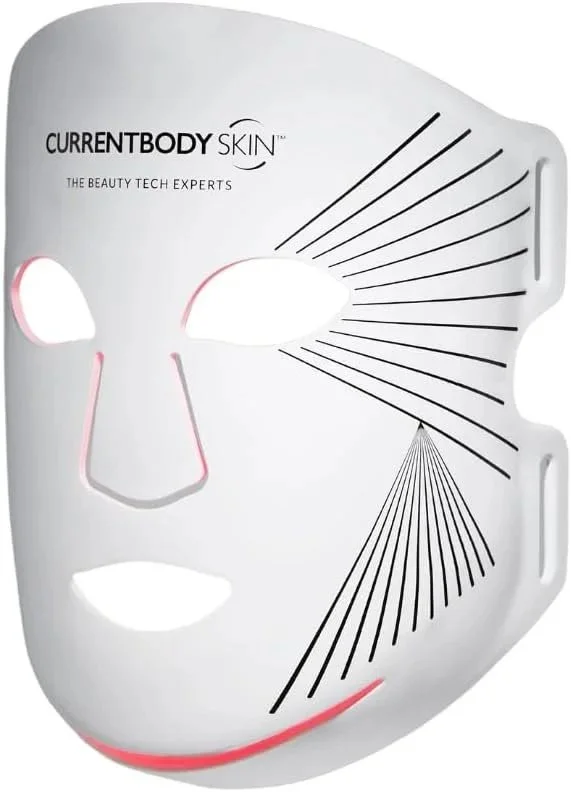
Currentbody Skin LED Light Therapy Mask for Face
a well-regarded consumer LED mask with both red and near-infrared wavelengths. CurrentBody is one of the more established UK-focused LED device brands with documented clinical testing on their products. Appropriate wavelengths (633nm red, 830nm near-infrared) for the anti-inflammatory mechanism relevant to acne. Note that this device is primarily red/near-infrared rather than blue — better suited for the inflammation and healing dimension of acne than the antibacterial porphyrin mechanism.
Can LED Masks Make Acne Worse?
Sometimes — especially at first.
Some people experience:
Temporary purging-like flare-ups
Dryness
Irritation
Increased sensitivity
Certain blue light therapies may also contribute to oxidative stress if overused.
People with highly sensitive or compromised skin barriers may struggle more with frequent treatments.
More LED sessions doesn’t always mean better results.
Realistic expectations
Blue + red LED therapy, used consistently, can:
Reduce inflammatory acne lesion counts meaningfully over 8–12 weeks. Reduce redness and post-inflammatory marks through the anti-inflammatory mechanism. Provide a complement to topical acne treatments that is antibiotic-resistant, gentle, and non-drying.
It will not: clear severe cystic acne, address comedonal acne effectively, replace prescription treatment for moderate-to-severe acne, or produce results in days or weeks.
People who see the best results from at-home LED therapy are those who use it consistently (three to five times weekly), combine it with an appropriate topical routine (niacinamide, salicylic acid, retinoid), and have predominantly mild-to-moderate inflammatory acne rather than deep cystic disease.
The skin barrier remains primary
A concern worth flagging from the original article: the claim that "blue light may contribute to oxidative stress if overused" is not well-supported in the published literature at the wavelengths and irradiance levels used in consumer LED devices. At 415nm blue light at consumer intensities, the porphyrin-mediated effect targets bacterial cells specifically rather than generating nonspecific oxidative stress. Using LED masks as directed on functional devices is not a significant concern on this basis.
What does worsen acne around LED therapy is harsh skincare used concurrently. Combining LED sessions with aggressive chemical exfoliation, prescription retinoids, or multiple actives can worsen the barrier through cumulative irritation rather than through LED therapy itself.
Supplement Support for Breakout-Prone Skin
LED therapy targets acne at the level of bacteria and surface inflammation. The hormonal, nutritional, and gut-mediated drivers that produce the sebum and immune environment in which acne develops are not addressed by light therapy.
Drought's Skin Support Formula provides zinc, vitamin D, vitamin C, and 11 other nutrients addressing the internal pathways relevant to acne — working alongside LED therapy to address what light cannot reach. Made in the UK, suitable for vegetarians, designed for consistent long-term daily use.
FAQ
Do LED masks actually work for acne?
Yes — for mild-to-moderate inflammatory acne with consistent use over 8–12 weeks. Clinical RCTs show meaningful reductions in inflammatory lesion counts with combined blue and red light therapy. The effect size is modest — LED therapy is not as potent as topical retinoids, benzoyl peroxide, or antibiotics. Most useful as a non-antibiotic, non-drying complement to topical treatment rather than a standalone intervention. People with predominantly inflammatory acne (papules, pustules) see the most consistent results; people with predominantly comedonal or deep cystic acne see considerably less benefit.
What colour LED light is best for acne?
Blue and red combined — consistently outperforms either alone in published trials. Blue at 415nm targets C. acnes through the porphyrin-mediated singlet oxygen mechanism — killing the bacterium driving inflammatory lesions. Red at 630–660nm addresses the inflammatory environment through cytochrome c oxidase mitochondrial activation — reducing pro-inflammatory cytokines and supporting post-lesion healing. Neither alone addresses both dimensions simultaneously. Near-infrared at 830nm adds deeper tissue anti-inflammatory penetration for people with deeper lesions. A device providing all three wavelengths is the most comprehensively mechanistically justified option.
Can LED masks clear cystic acne?
Poorly — and the mechanism explains why. Cystic and nodular acne develops deep in the dermis, beyond the effective penetration depth of blue light's porphyrin mechanism (which operates primarily at the follicle opening) and largely beyond standard red light's 1–2mm penetration. Near-infrared's 3–5mm penetration reaches the deeper dermis more effectively — making NIR-capable devices more relevant for deep lesions than blue-only or red-only devices. Even with NIR, deep cystic acne has lower bacterial activity relative to inflammatory acne — reducing the relevance of the porphyrin mechanism entirely. Prescription oral or topical treatment is the appropriate primary intervention for significant cystic or nodular acne.
How often should I use an LED mask for acne?
Three to five sessions per week for 10–20 minutes per session — consistently over at least 8–12 weeks before assessing effect. At-home LED devices deliver lower irradiance than clinical devices (typically 1–10 J/cm² versus 20–40 J/cm² clinically). To accumulate equivalent cumulative dose to a clinical treatment course, at-home use requires more sessions over a longer period. Consistency is the single most important variable for at-home LED therapy — irregular weekly use produces negligible cumulative dose regardless of device quality.
How does blue light kill acne bacteria?
C. acnes produces porphyrins as natural metabolic byproducts of its bacterial activity. When blue light at 415nm strikes these porphyrins, it triggers a photochemical reaction generating singlet oxygen — a reactive oxygen species that is toxic to the bacterial cell membrane. The bacterium is essentially killed by its own metabolic products when exposed to the right wavelength. This is the same photodynamic mechanism used in clinical PDT (photodynamic therapy) for acne — the LED mask version omits the photosensitising agent used clinically, making it less potent but considerably gentler and usable at home without supervision.
What does red light do for acne?
Red light at 630–660nm is absorbed by cytochrome c oxidase — an enzyme in the mitochondrial electron transport chain — stimulating mitochondrial activity and increasing ATP production. The downstream effects relevant to acne are reduced pro-inflammatory cytokine production (IL-1β, TNF-α) around existing lesions and enhanced cellular repair processes that speed post-inflammatory healing and reduce PIH formation. Red light doesn't kill C. acnes directly — its benefit is anti-inflammatory and healing-supportive rather than antimicrobial. This is why blue and red combined consistently outperforms blue alone — the antimicrobial and anti-inflammatory dimensions are addressed simultaneously.
What is near-infrared light and how does it differ from red light for acne?
Near-infrared (NIR) at 830nm is invisible to the naked eye and operates through the same cytochrome c oxidase mechanism as red light — but penetrates 3–5mm into tissue compared to red light's 1–2mm. For surface inflammatory acne the difference is modest. For deeper lesions — developing cysts, nodules, or papules with significant dermal depth — NIR's additional penetration reaches the inflammatory environment at the site of origin rather than addressing only the surface expression. Premium LED masks combining blue (415nm), red (633nm), and NIR (830nm) address the broadest mechanistic range — bacterial, surface anti-inflammatory, and deep tissue anti-inflammatory — simultaneously.
Is at-home LED therapy as effective as clinical treatment?
No — but the gap is manageable with consistency. Clinical LED and PDT devices deliver 20–40 J/cm² per session. Consumer at-home devices typically deliver 1–10 J/cm². The same photobiomodulation mechanism operates at both power levels — at-home devices produce real effects, just more slowly and less intensively. The practical implication is that at-home therapy requires three to five sessions weekly over 12+ weeks to accumulate meaningful cumulative dose — compared to bi-weekly clinic visits for 8–12 weeks clinically. People who use at-home devices consistently achieve meaningful improvements; people who use them occasionally do not.
Can LED masks damage the skin barrier?
Not at recommended frequencies and durations — consumer LED devices at their rated irradiance don't produce barrier disruption from the light itself. The concern is the skincare routine around LED therapy rather than the device. Combining LED sessions with multiple aggressive actives — prescription retinoid, strong AHA, BHA all on the same evening — produces cumulative barrier disruption through the skincare combination rather than the light. A gentle, barrier-supportive routine around LED sessions is appropriate. Clean dry skin, LED session, then a light moisturiser — adding actives separately from LED session evenings if the combination produces irritation.
Are expensive LED masks worth the premium over budget options?
Generally yes — with a specific caveat. More expensive devices typically provide documented wavelengths in the clinically supported ranges (415nm blue, 630–660nm red, 830nm NIR), CE marking or FDA clearance indicating minimum safety review, and higher irradiance output that accumulates effective dose more quickly per session. Budget devices frequently don't specify wavelengths — making it impossible to verify whether the mechanism is active at all. A device claiming "blue light therapy" without specifying the nm wavelength may operate at 450–470nm (visible blue, less effective for porphyrin excitation than 415nm) or another wavelength without the documented mechanism. Checking wavelength specifications before purchasing is the most important selection criterion regardless of price point.
Summary
LED light therapy for acne has genuine mechanistic grounding — blue light at 415nm kills C. acnes through porphyrin-mediated singlet oxygen production; red light reduces inflammation through cytochrome c oxidase mitochondrial activation. Clinical evidence supports meaningful reductions in inflammatory acne lesions with consistent combined blue + red therapy. At-home devices are lower-powered than clinical treatments and require more consistent use to accumulate equivalent dose. Results are most meaningful for mild-to-moderate inflammatory acne, take 8–12 weeks of consistent use to assess, and work best alongside an appropriate topical acne routine rather than as a standalone treatment.
Written by the Drought Skin team — specialists in natural support for psoriasis, eczema and acne
Disclaimer: This article contains affiliate links. We earn a very small commission from each purchase made through these links. There is no additional cost to you. All products featured have been specifically selected as products we personally use and love. For further information, please see our disclaimer page.
