
A Psoriasis-Friendly Morning Routine: Step by Step

A morning routine for psoriasis isn't about wellness trends or perfecting every habit — it's about reducing the inflammatory inputs and skin stressors that begin to accumulate from the moment you wake. Psoriasis is sensitive to cortisol, temperature, barrier disruption, and systemic inflammation — all of which the morning touches in quick succession. A thoughtful routine reduces the load before the day's other stressors add to it.
Psoriasis & Morning Routines: Why Daily Habits May Matter More Than You Think
When people think about psoriasis triggers, they often focus on stress, weather or diet — but daily routines may also play a surprisingly important role.
Morning habits can influence:
Stress levels
Skin hydration
Inflammation
Sleep recovery
Skin barrier function
And because psoriasis-prone skin is already more vulnerable to dryness and irritation, small daily habits may gradually affect how reactive the skin feels over time.
While no “perfect morning routine” will cure psoriasis, many people find that calmer, more supportive routines help their skin feel less irritated and easier to manage long-term.
Psoriasis-friendly routines often focus on reducing irritation and supporting the skin barrier consistently.
Why Morning Stress May Affect Psoriasis
Stress is one of the most commonly reported psoriasis triggers.
Rushed, chaotic mornings may increase:
Cortisol levels
Stress hormones
Nervous system activation
Researchers believe stress may worsen inflammatory signalling linked to psoriasis flare-ups.
Even small habits like:
Poor sleep
Skipping breakfast
Constant rushing
Checking stressful notifications immediately
may affect stress levels throughout the day.
A calmer start to the day may help support overall stress management and skin comfort.

A Psoriasis-Friendly Morning Routine: Step by Step
1. Give yourself time — the cortisol awakening response matters
The first 30–60 minutes after waking involves the cortisol awakening response (CAR) — a natural, biologically programmed spike in cortisol as the body transitions from sleep. In people with well-regulated stress physiology, this spike is moderate and decreases over the morning. In people under chronic stress, the CAR is amplified.
As covered in the stress and psoriasis article, cortisol directly worsens psoriasis through Th17 immune amplification and, through adrenal DHEAS production, elevates androgen-driven sebum. A chaotic, rushed morning — alarm snooze cycles, missed breakfast, stressful commute — amplifies the CAR and sets an elevated cortisol trajectory for the rest of the day.
The simplest intervention: allow enough time in the morning that the first hour isn't rushed. This sounds obvious but is the most impactful structural change for stress-driven psoriasis.
2. Shower with lukewarm water — and keep it brief
Hot water causes vasodilation that strips the skin's surface lipids more aggressively than lukewarm water, increases histamine-driven itch through mast cell activation, and leaves skin tight and dehydrated. This is particularly significant for psoriasis — the plaques' already-compromised barrier loses lipids faster than surrounding skin.
Lukewarm (not cold — cold water shock also elevates cortisol) for five to ten minutes maximum. For scalp psoriasis, use a medicated shampoo as covered in the scalp psoriasis article, applied and rinsed efficiently.
The drying method matters as much as the water temperature: pat with a soft towel rather than rubbing. Friction on psoriasis plaques causes mechanical irritation that can trigger Koebner responses.
3. Apply emollient within two to three minutes of patting dry
This is the most important skincare step and the one most often skipped. As covered in the skin barrier and moisturising articles, the post-bath window is when skin retains surface moisture from bathing — emollient applied within two to three minutes seals this in. Waiting until skin is completely dry before moisturising removes this opportunity.
For psoriasis, thick emollient on plaques — Doublebase, Cetraben, or similar — rather than a light body lotion. Pat gently rather than rub on and around plaque areas. Apply to the full body, not just visible plaques, since the barrier dysfunction in psoriasis extends beyond visible disease.
If using prescribed topical treatment (calcipotriol, betamethasone, Dovobet), apply this after emollient has absorbed briefly — within the same post-bath window, typically two to three minutes after emollient.
4. Eat an anti-inflammatory breakfast
The first meal sets the glycaemic and inflammatory tone for the first half of the day. As covered in the psoriasis breakfast article, several breakfast combinations provide specific anti-inflammatory benefit:
A high-GI breakfast (white toast with jam, sugary cereal, pastry) spikes insulin and IGF-1 within the first hour, activating mTORC1 and sustaining the inflammatory load psoriasis management is trying to reduce. An anti-inflammatory breakfast (oats with berries and walnuts, eggs with vegetables, kefir with seeds and fruit) provides polyphenols, prebiotic fibre, and stable blood glucose that reduce this morning inflammatory input.
This doesn't require elaborate preparation — overnight oats take five minutes the evening before.
5. Take your supplement with breakfast
Fat-soluble nutrients — vitamin D, vitamin A precursors, CoQ10 — absorb significantly better with dietary fat. Breakfast is the most reliable daily fat-containing meal for most people. Taking supplements at a consistent time also establishes the habit reliability that long-term supplementation requires.
Drought's Skin Support Formula provides vitamin D, zinc, vitamin C, magnesium, and 10 other nutrients — taken with breakfast for optimal fat-soluble nutrient absorption. Made in the UK, suitable for vegetarians, designed for consistent long-term daily use.
6. Get brief morning light exposure
Natural light in the first hour of waking is one of the most impactful and most ignored circadian health interventions. Morning light sets the circadian clock, reducing the cortisol dysregulation that worsens with irregular sleep-wake cycles, and improving nighttime sleep quality — which in turn affects the barrier repair that happens overnight.
Brief UV exposure at appropriate levels also directly benefits psoriasis through the same mechanism as phototherapy — reducing Th17 activity at the skin surface. In summer, 10–15 minutes of morning sun on skin is beneficial. In winter in the UK, morning outdoor light is still valuable for circadian entrainment even without significant UV.
This is not a recommendation to abandon sun protection — psoriasis treatment phototherapy is precisely controlled. Incidental moderate morning sun exposure is a different and generally positive thing.
7. Manage the first hour of notifications
This is the stress dimension, not a wellness cliché. Opening email, social media, and news in the first 15 minutes of the day frequently produces anxiety responses and reactive stress that elevate cortisol during the CAR window — when cortisol is already at its natural daily peak and most susceptible to amplification.
Delaying phone use until after the morning skincare routine and breakfast is practical rather than aspirational — it prevents the cortisol amplification that worsens psoriasis through the stress pathway at the most vulnerable point in the circadian cycle.
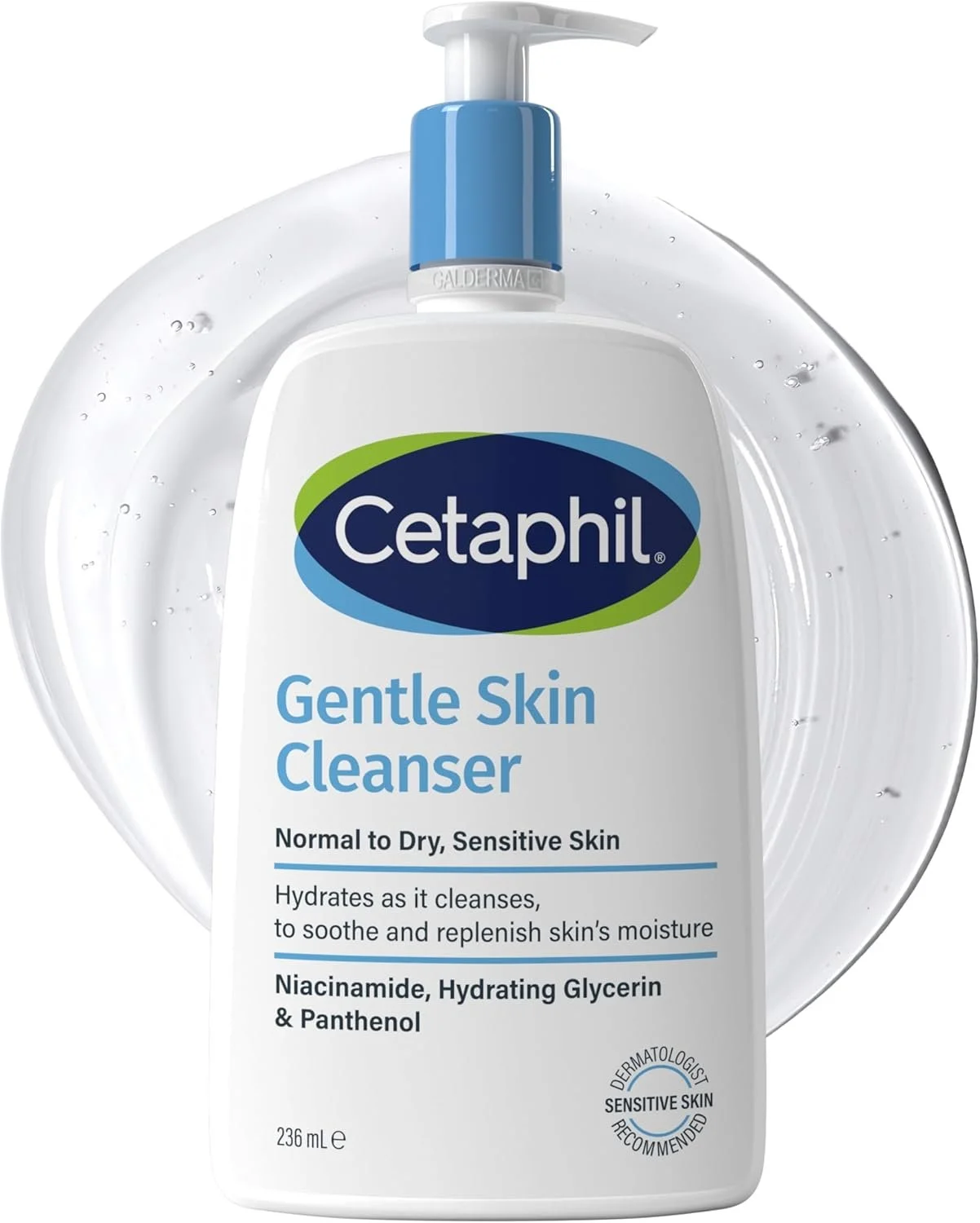
Cetaphil Gentle Skin Cleanser
a fragrance-free, soap-free, SLS-free cleanser for the morning shower step. Mild enough for daily use without stripping the barrier lipids that psoriasis-prone skin is already short of — particularly important given the cortisol-ceramide depletion mechanism covered above. Use with lukewarm water and pat dry gently.
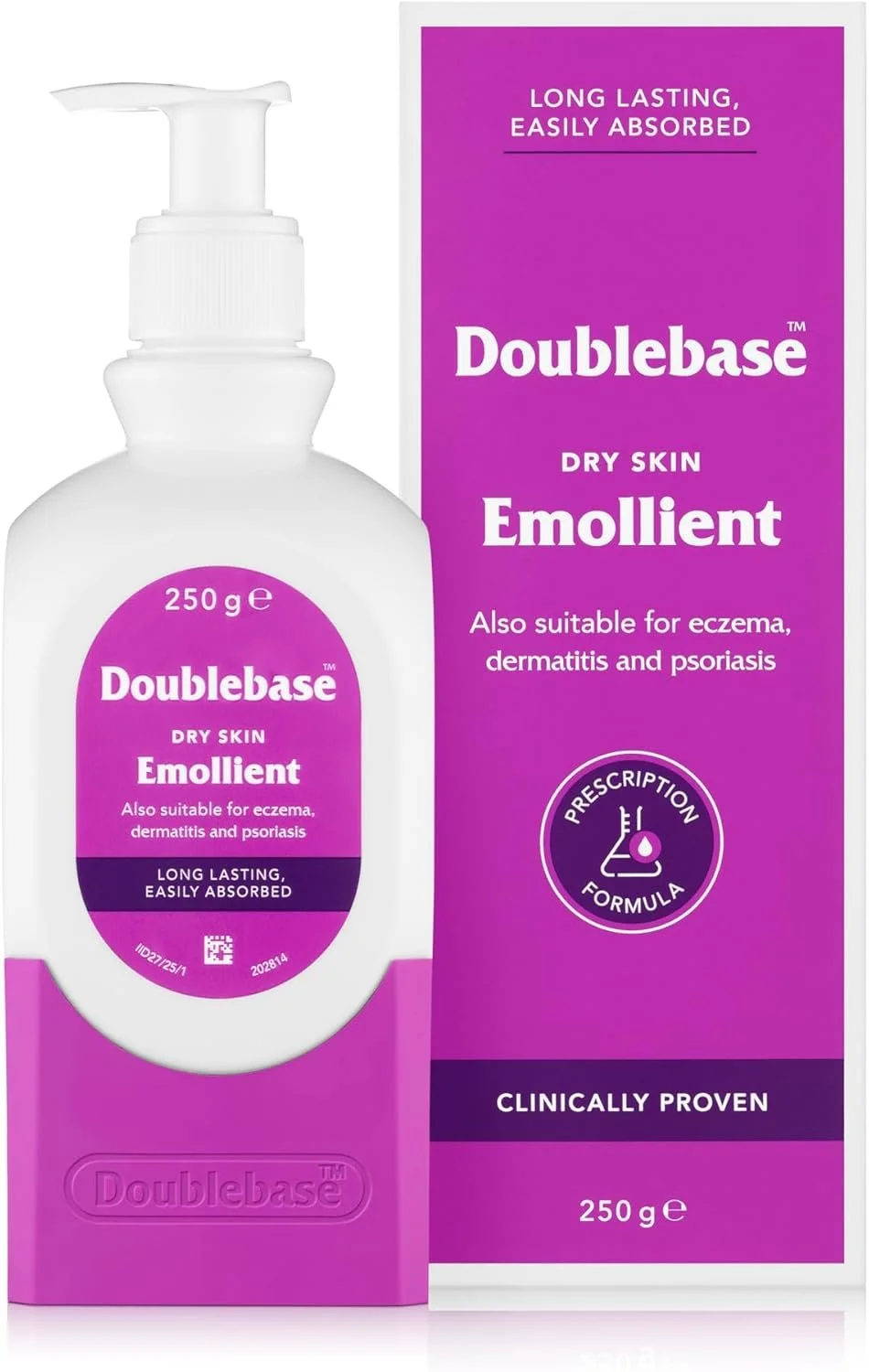
Doublebase Dry Skin Emollient
a paraffin-based emollient in a pump format, applied within the two-to-three minute post-shower window covered in step three above. The pump format makes the timing practical — one or two pumps dispensed immediately after patting dry, applied before skin has fully dried. Fragrance-free and appropriate for psoriasis-prone skin across all body sites.
What to avoid in the psoriasis morning routine
Hot showers — strips barrier lipids and triggers histamine.
Rushing the post-shower emollient step — the two-to-three minute window is narrow; missing it meaningfully reduces effectiveness.
A high-glycaemic breakfast — spikes the insulin and mTORC1 pathways already elevated in psoriasis.
Aggressive scrubbing of plaques — Koebner risk from friction.
Multiple active skincare products applied simultaneously — psoriasis skin is more reactive than healthy skin; introduce any new products during settled periods, not flares, and one at a time.
Why Sleep Still Affects Morning Skin
Morning routines actually begin the night before.
Poor sleep may affect:
Stress hormones
Inflammation
Skin recovery
Itching
Many people notice psoriasis feels worse after:
Late nights
Broken sleep
Stressful evenings
because the skin barrier repairs itself during sleep.
Better mornings often begin with better recovery overnight.
FAQ
Can stress in the morning affect psoriasis?
The cortisol awakening response peaks in the first 30–60 minutes after waking. Stress during this period amplifies the CAR, setting elevated cortisol throughout the day — directly worsening Th17 immune activity driving psoriasis.
Are hot showers bad for psoriasis?
Yes — hot water strips barrier lipids and triggers mast cell histamine release, worsening itch and dryness. Lukewarm for five to ten minutes maximum.
What is the most important morning habit for psoriasis?
Applying emollient within two to three minutes of patting dry after bathing — this is when the post-bath moisture-sealing opportunity is available and when emollient is most effective.
Can sleep affect psoriasis flare-ups?
Poor sleep may increase inflammatory stress and worsen psoriasis symptoms.
Does breakfast affect psoriasis?
Through glycaemic load — high-GI breakfasts spike insulin and mTORC1, amplifying keratinocyte proliferation. Anti-inflammatory breakfasts (oats, berries, eggs, kefir) reduce this morning inflammatory input.
Summary
A psoriasis-friendly morning routine is not about perfection — it is about reducing the inflammatory and stress inputs that accumulate from the first moments of the day. The cortisol awakening response is amplified by rushed, chaotic mornings; lukewarm showers reduce barrier-stripping and histamine; the two-to-three minute post-bath emollient window is the most important skincare moment of the day; an anti-inflammatory breakfast sets the metabolic tone; and brief morning light supports the circadian regulation that affects both sleep and cortisol throughout the day. Consistency across these habits over weeks and months is what produces meaningful impact on psoriasis severity and frequency.
In short:
Morning habits may influence stress, inflammation and skin hydration
Hot showers, harsh skincare and rushing may worsen irritation
Hydration and gentle skincare may support the skin barrier
Stressful mornings may contribute to flare-up triggers
Consistent long-term habits usually matter more than perfection
The morning routine manages psoriasis at the surface — the cortisol, Th17 activity, and nutritional deficiencies driving it require internal support. Drought's Skin Support Formula provides vitamin D, zinc, and magnesium alongside 11 other nutrients — taken with breakfast as part of the morning routine above. Made in the UK, suitable for vegetarians, designed for consistent long-term daily use.
Start your skin support journey →
Written by the Drought Skin team — specialists in natural support for psoriasis, eczema and acne
Disclaimer: This article contains affiliate links. We earn a very small commission from each purchase made through these links. There is no additional cost to you. All products featured have been specifically selected as products we personally use and love. For further information, please see our disclaimer page.
