
Does L-Glutamine Help Psoriasis? The Gut Barrier Evidence, the IL-17 Paradox & Honest Assessment

L-glutamine has become one of the more popular supplements in the psoriasis and gut health community — promoted primarily for its role in maintaining the intestinal lining and, by extension, supporting the gut-skin axis that connects gut health to inflammatory skin conditions.
The reasoning isn't unfounded. L-glutamine does play important roles in gut barrier integrity, immune cell function, and metabolic pathways that are genuinely relevant to psoriasis. But the gap between what glutamine does in the body and what a glutamine supplement reliably does for psoriasis symptoms is significant — and honestly representing that gap is more useful than either enthusiastic promotion or blanket dismissal.
Here's what the evidence actually shows.
What is L-glutamine?
L-glutamine is an amino acid — the most abundant in human blood plasma — that serves as a primary fuel source for rapidly dividing cells, including the enterocytes that line the gut wall and the immune cells that patrol it. It is classified as a conditionally essential amino acid: the body can synthesise it, but under conditions of physiological stress — surgery, critical illness, intense exercise, and chronic inflammation — demand can outpace supply and dietary or supplemental intake becomes important.
This conditional essentiality is one of the most relevant aspects of glutamine for people with psoriasis — a condition characterised by chronic, systemic inflammation. Persistent inflammatory activity places ongoing metabolic demand on glutamine-dependent systems, which raises the plausible question of whether chronic psoriasis depletes glutamine availability in ways that affect gut barrier integrity and immune function.
Can L-glutamine help psoriasis?
L-glutamine may support gut health and inflammation balance — but there's no strong evidence it directly treats psoriasis, and the distinction between those two things matters more here than it does for most supplement topics. The claims made for l-glutamine in psoriasis communities are frequently overstated, presenting a conditionally plausible hypothesis as established fact and leaving people who try it without the realistic expectations that would help them assess whether it's actually doing anything useful for their skin.
What makes l-glutamine genuinely worth understanding — rather than dismissing as another wellness trend — is the specificity of its proposed mechanism. Psoriasis is increasingly understood as a systemic condition with significant gut involvement: intestinal permeability, gut microbiome dysbiosis, and the translocation of bacterial compounds into systemic circulation are all documented in psoriasis patients and all represent potential pathways through which gut health influences skin disease. L-glutamine is the primary fuel source for enterocytes — the cells lining the intestinal wall — and has a documented role in maintaining the tight junction proteins that determine how permeable the gut barrier is. Whether supplementing it produces meaningful clinical benefit for psoriasis specifically is the question the evidence hasn't yet answered cleanly, and that's exactly what this article examines.
The gut barrier connection
The gut lining is a single layer of epithelial cells connected by tight junction proteins, responsible for regulating what passes from the gut into the bloodstream. Glutamine is the primary fuel source for these cells — without adequate glutamine, enterocyte turnover and tight junction maintenance are compromised, which can increase intestinal permeability.
As discussed in the leaky gut and psoriasis article in this series, increased intestinal permeability has been found in a proportion of people with psoriasis — and there are plausible mechanisms by which this could amplify the systemic inflammation driving skin disease. If glutamine depletion during chronic inflammation contributes to gut barrier compromise, then glutamine supplementation could theoretically support barrier maintenance in this population.
This is the most mechanistically coherent argument for L-glutamine in psoriasis. The limitation is that it involves several inferential steps: psoriasis causes chronic inflammation → chronic inflammation depletes glutamine → glutamine depletion compromises gut barrier → compromised barrier worsens systemic inflammation → systemic inflammation worsens psoriasis. Each link has some evidence, but the chain as a whole hasn't been tested in a clinical trial of psoriasis patients.
The IL-17 pathway connection
This is where the science becomes particularly interesting — and where the original article's single sentence on IL-17 deserved much more development.
Psoriasis is primarily driven by a dysregulated Th17 immune response — specifically, the overproduction of IL-17A and related cytokines that drive the accelerated skin cell turnover and inflammation characteristic of plaques. IL-17 is the target of several of the most effective biologic treatments for psoriasis (secukinumab, ixekizumab).
What's relevant to glutamine is that Th17 cell differentiation and IL-17 production are metabolically demanding processes that depend on specific metabolic conditions — and glutamine is a key metabolic substrate for immune cell activity, including Th17 cells. Research has shown that glutamine availability influences the balance between Th17 and regulatory T-cell (Treg) activity: glutamine is required for Th17 differentiation, and Treg cells can function with less glutamine.
This creates a seemingly paradoxical situation: blocking glutamine availability might theoretically suppress the Th17 response driving psoriasis. Some research has explored glutamine metabolism inhibition as a potential therapeutic target in inflammatory conditions.
What this means practically is nuanced. It doesn't straightforwardly support supplemental glutamine as an anti-psoriatic treatment — the picture is more complex. But it does illustrate why glutamine metabolism is genuinely relevant to psoriasis biology rather than tangentially connected.
What the clinical evidence shows
There are no published randomised controlled trials of L-glutamine supplementation for psoriasis. This is the central fact to be honest about.
What does exist:
Research demonstrating that glutamine is important for gut barrier maintenance, primarily from critical care and surgical literature where glutamine depletion is clinically significant. Studies showing altered glutamine metabolism in psoriasis patients, suggesting the condition affects glutamine availability and utilisation. Evidence from inflammatory bowel disease (which shares immune pathways with psoriasis) that glutamine supplementation may support gut barrier function in some contexts. Laboratory and mechanistic research linking glutamine to Th17 cell metabolism and IL-17 production.
None of this constitutes clinical evidence that taking a glutamine supplement improves psoriasis symptoms. The mechanistic rationale is genuinely interesting. The clinical translation is unproven.
When L-glutamine supplementation might be most relevant
Given what the evidence does and doesn't show, there are specific circumstances where L-glutamine supplementation has a more logical rationale for people with psoriasis:
If gut symptoms accompany psoriasis. People with psoriasis have elevated rates of inflammatory bowel disease, and gut permeability findings are more common in this population than in healthy controls. If gut symptoms — bloating, irregular digestion, discomfort — are present alongside psoriasis, addressing gut barrier support through glutamine alongside dietary and probiotic approaches has more coherent reasoning than if the gut is symptom-free.
As part of a broader gut health protocol. As described in the leaky gut and psoriasis article, comprehensive gut support involves probiotics, prebiotic fibre, dietary quality, and stress management. Glutamine contributes to the gut barrier component of this and makes more sense in combination than as a standalone intervention.
During periods of increased physiological stress. The conditional essentiality of glutamine means it becomes most relevant when demand increases — illness, significant stress, high physical activity alongside psoriasis management. These are the conditions where the body's own synthesis may be insufficient.
Dosage and practical use
The doses used in clinical research for gut-related conditions have typically ranged from 5–30g per day. For general gut health support in the absence of critical illness, lower doses (5–10g per day) are more commonly used in supplement contexts.
L-glutamine powder is the most practical form for these doses — tablet and capsule formats typically provide 500mg–1g per serving, which would require impractically large numbers of tablets to reach the doses used in research.
L-glutamine is generally well-tolerated at typical supplemental doses. At very high doses, some people experience digestive discomfort. It should be used with caution in people with liver or kidney disease. Anyone with a history of seizure disorders should discuss glutamine with their doctor before use, as it is a precursor to glutamate, an excitatory neurotransmitter.
Recommended Products
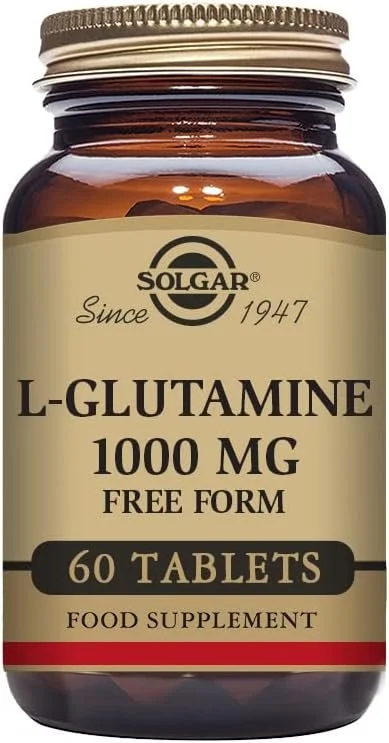
Solgar L-Glutamine 1000mg Tablets
a straightforward 1g per tablet option from a well-established supplement brand. Appropriate for lower-dose supplementation as part of a broader gut health approach. Solgar's quality standards are consistently reliable.
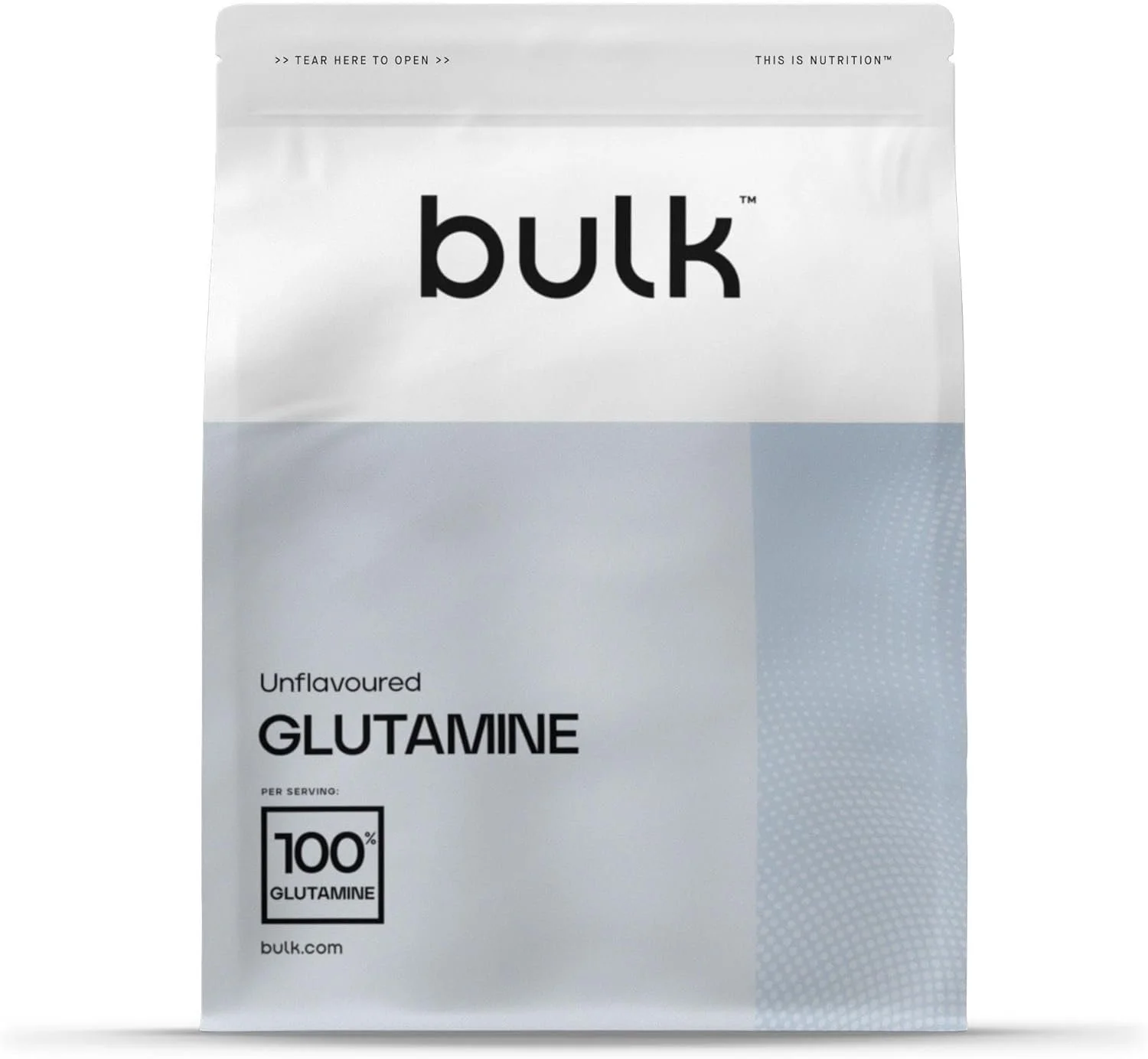
Pure L-Glutamine Powder by Bulk
unflavoured powder that allows flexible dosing. More economical for sustained use and allows doses closer to those used in clinical research. Mix into water, juice, or a smoothie. A practical option for those taking glutamine as part of a comprehensive gut health protocol.
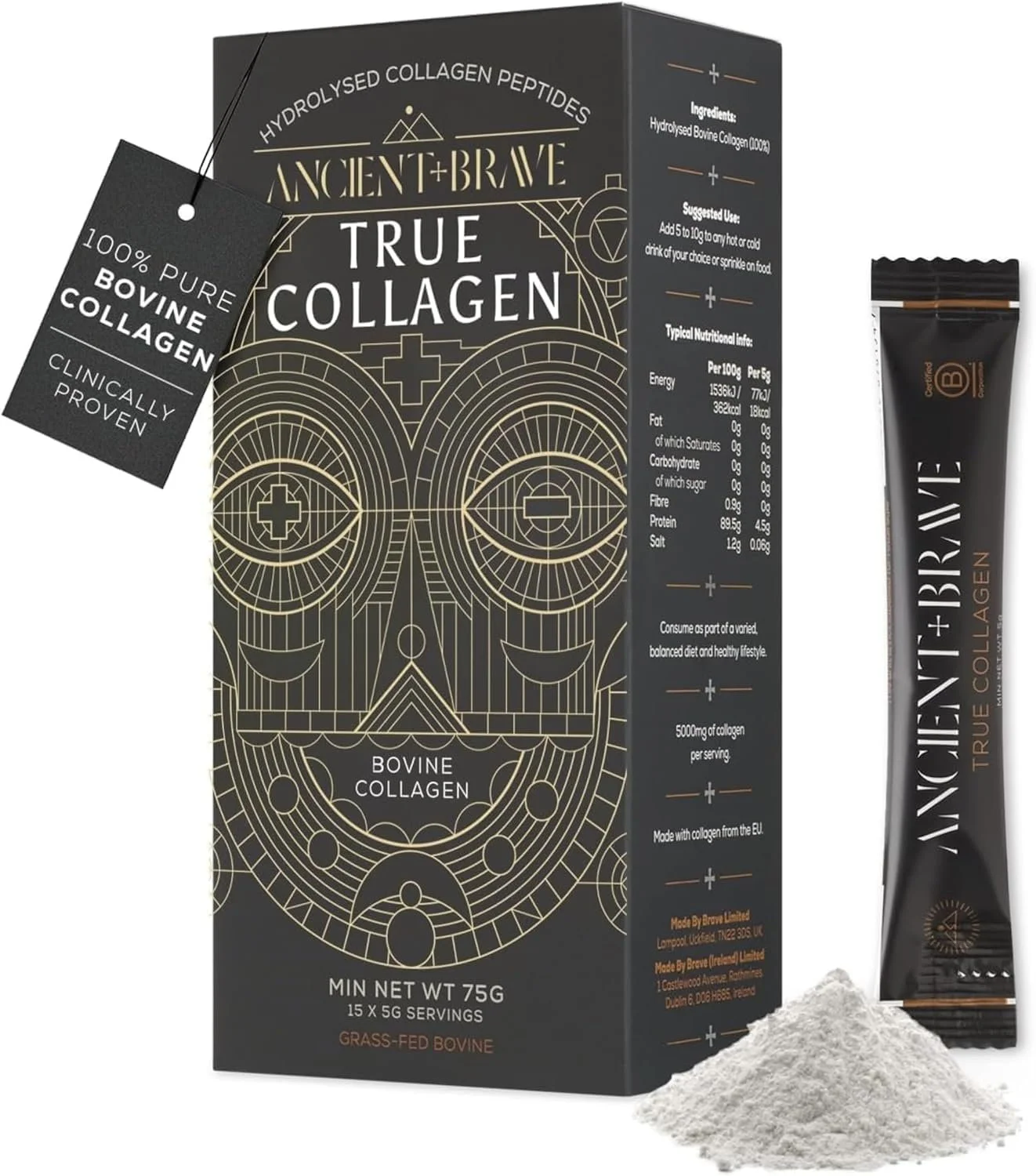
Ancient + Brave True Collagen Powder
Glycine — the most abundant amino acid in collagen — works alongside glutamine in supporting gut lining integrity and is involved in glutathione synthesis, the body's primary antioxidant pathway. For people taking L-glutamine for gut barrier support, combining it with a collagen supplement provides complementary amino acid coverage. This powder is a clean, unflavoured bovine collagen peptide that dissolves easily in hot or cold drinks. A practical option for those wanting to support gut barrier function alongside L-glutamine supplementation
The dietary sources angle
Before reaching for a supplement, it's worth noting that glutamine is abundant in protein-rich foods — it's the most common amino acid in many dietary proteins. Good dietary sources include chicken and turkey, fish, eggs, dairy products, and beef. Legumes, beans, and tofu provide plant-based sources.
For people eating a varied, protein-adequate diet, significant glutamine deficiency from diet alone is unlikely — the conditional depletion argument is more relevant to the increased demand created by chronic inflammation than to inadequate dietary intake for most people.
L-glutamine in the broader context of psoriasis management
The honest positioning for L-glutamine in psoriasis is: a supplement with a plausible mechanism, genuine relevance to gut barrier support, interesting connections to immune metabolism, and no direct clinical evidence for psoriasis symptom improvement. It addresses one potential pathway — gut barrier integrity — in a condition with multiple overlapping drivers.
The nutrients with the most consistent evidence base for psoriasis include zinc (immune regulation, skin barrier), vitamin D (immune modulation, associated with disease severity), vitamin C (antioxidant, collagen support), and magnesium (inflammatory balance, stress regulation). These have a more direct and better-evidenced relationship with psoriasis pathways than glutamine.
Drought's Skin Support Formula addresses these pathways with 14 nutrients selected for their documented roles in skin barrier function, immune regulation, and inflammatory balance — providing a more comprehensive nutritional foundation for psoriasis management than any single amino acid. Made in the UK, suitable for vegetarians, formulated for consistent long-term daily use.
For people specifically interested in the gut-psoriasis connection, combining a comprehensive nutritional supplement with L-glutamine and a quality probiotic addresses gut barrier, microbiome, and broader skin nutrition simultaneously.
FAQs: L-glutamine & psoriasis
Does L-glutamine help psoriasis?
There are no published randomised controlled trials showing L-glutamine supplementation directly improves psoriasis symptoms — and that absence of evidence is the most important single fact to be clear about. What does exist is a mechanistically coherent rationale: L-glutamine is the primary fuel source for enterocytes lining the gut wall, supports tight junction protein maintenance, and is involved in immune cell metabolism including the Th17 cells driving psoriatic inflammation. The chain from plausible mechanism to clinical benefit for psoriasis hasn't been established. Useful as part of a gut health protocol for people with psoriasis and accompanying gut symptoms — not proven as a psoriasis treatment.
Why is L-glutamine linked to psoriasis?
Three specific connections rather than general "gut health is good" reasoning. First, L-glutamine is the primary fuel for enterocytes — without adequate supply, tight junction protein maintenance is compromised, increasing intestinal permeability that may amplify systemic inflammation in psoriasis. Second, chronic inflammation as in psoriasis is a condition of increased metabolic demand on glutamine-dependent systems — the conditional essentiality argument — meaning psoriasis itself may deplete glutamine availability in ways that affect gut barrier and immune function. Third, glutamine is required for Th17 cell differentiation — the immune cell type most specifically responsible for IL-17 production driving psoriatic inflammation — making glutamine metabolism genuinely relevant to psoriasis biology.
Does the IL-17 connection mean glutamine makes psoriasis worse?
This is the most genuinely complex question in the L-glutamine psoriasis space. Th17 cells — which produce the IL-17 driving psoriatic inflammation — require glutamine for their differentiation and metabolic activity. Research has found that Treg cells (which suppress inflammation) can function with less glutamine than Th17 cells. This has led some researchers to explore glutamine metabolism inhibition rather than supplementation as a potential therapeutic direction. What this means practically: the picture isn't straightforwardly "supplement glutamine to reduce psoriasis inflammation." The relationship is metabolically complex and the clinical outcome of supplementation in humans with psoriasis is unknown. It's worth noting rather than ignoring — but it doesn't constitute evidence that supplementing glutamine worsens psoriasis in practice.
What dose of L-glutamine is appropriate for gut health support in psoriasis?
Clinical research in gut-related conditions has used 5–30g per day — the higher end for critical care and surgical contexts where depletion is significant. For general gut barrier support in psoriasis alongside dietary and probiotic interventions, 5–10g per day is a practical starting point. Powder is considerably more practical than tablets for these doses — reaching 10g daily through 1g tablets requires ten tablets per serving. Mix powder into water, juice, or a smoothie — it is largely tasteless. Start at a lower dose and build over one to two weeks to reduce any initial digestive adjustment.
Is L-glutamine safe to take alongside psoriasis medication?
Generally yes — L-glutamine has no documented interactions with topical steroids, calcineurin inhibitors, methotrexate, ciclosporin, or biologic treatments at typical supplemental doses. The specific cautions are: people with liver or kidney disease should discuss with their GP before supplementing given glutamine's role in nitrogen metabolism; people with a history of seizures should discuss before use as glutamine is a precursor to glutamate, an excitatory neurotransmitter; and very high doses (above 30g daily) are not appropriate without medical supervision. At the 5–10g doses appropriate for gut health support, the safety profile is well-established.
Should I take L-glutamine if I have gut symptoms alongside psoriasis?
Yes — this is the most coherent specific indication. People with psoriasis have elevated rates of inflammatory bowel disease and increased intestinal permeability findings compared to the general population. If digestive symptoms accompany psoriasis — bloating, irregular bowel habit, discomfort after eating — addressing gut barrier support through L-glutamine alongside probiotics, prebiotic fibre, and dietary quality improvements has more logical justification than taking it in the absence of any gut symptoms. The reasoning is more specific than general psoriasis supplementation and more likely to produce a perceptible effect.
What works better than L-glutamine for psoriasis?
Nutrients with more direct and more consistently evidenced relationships with psoriasis pathways. Vitamin D — the most consistently documented deficiency in psoriasis patients, with VDR-mediated modulation of Th17 activity directly relevant to the same immune pathway L-glutamine addresses more indirectly. Zinc — immune regulation, barrier repair, and 5-alpha-reductase inhibition. Omega-3 fatty acids — eicosanoid competition reducing leukotriene B4 specifically elevated in psoriatic plaques. Magnesium — HPA axis cortisol regulation relevant to stress-triggered flares. L-glutamine addresses the gut barrier component of the gut-skin axis; these address immune, nutritional, and inflammatory dimensions simultaneously. Most appropriate as a complement to rather than a substitute for the better-evidenced nutritional interventions.
Does the collagen combination with L-glutamine make sense?
Yes — glycine, the most abundant amino acid in collagen, works alongside glutamine in gut lining support through complementary mechanisms. Glycine is required for bile acid conjugation and has documented gut barrier-protective effects; it is also involved in glutathione synthesis, the body's primary antioxidant pathway. Combining L-glutamine with a collagen supplement provides broader amino acid coverage for gut barrier maintenance than either alone. The practical combination — L-glutamine powder and collagen powder mixed into the same drink — is straightforward and the complementary mechanisms make the combination more coherent than taking either as a standalone gut health intervention.
Summary
L-glutamine has genuine mechanistic relevance to psoriasis — through gut barrier maintenance, immune cell metabolism, and connections to the IL-17 pathway that drives the condition. What it lacks is direct clinical evidence in psoriasis populations. The most honest position is to view it as a potentially useful adjunct for people specifically focused on the gut-skin axis, particularly those with accompanying gut symptoms, rather than a general psoriasis supplement. At appropriate doses, from quality sources, and as part of a broader approach, it has low risk and plausible benefit — but it is not a substitute for addressing the wider nutritional and lifestyle foundations of psoriasis management.
Written by the Drought Skin team — specialists in natural support for psoriasis, eczema and acne
Disclaimer: This article contains affiliate links. We earn a very small commission from each purchase made through these links. There is no additional cost to you. All products featured have been specifically selected as products we personally use and love. For further information, please see our disclaimer page.
-
Leaky Gut & Psoriasis: Is There Really a Link? What the Science Says
The Best Probiotics for Eczema: What the Evidence Actually Shows
Supplements & Vitamins for Psoriasis: A Comprehensive Guide
7-Day Psoriasis Diet Plan for Clearer Skin
Types of Psoriasis Explained: Symptoms, Appearance & How They Differ
