
Collagen & Psoriasis: The MMP Breakdown Mechanism, Type II for Psoriatic Arthritis & What the Evidence Shows
Collagen is one of the most widely used supplements in general skin health — and its relevance to psoriasis is more specific than the generic "supports skin structure and hydration" framing that most collagen articles use. There are documented reasons why psoriatic skin has accelerated collagen turnover, and why collagen supplementation occupies a specific and coherent position as a supportive measure alongside the nutrients with stronger direct anti-psoriatic evidence.
What is collagen?
Collagen is the most abundant protein in your body. It provides structure, firmness, and elasticity for your skin, bones, and connective tissues.
As we age or experience chronic inflammation, collagen production naturally slows, leading to dryness, slower healing, and a thinner skin barrier — issues common in psoriasis.
Collagen is the main structural protein in your skin, helping to:
maintain strength and elasticity
support hydration
keep skin looking smooth
It naturally declines with age, which is why supplements are popular.
Can collagen help psoriasis?
Collagen supplements may support skin hydration and structure — but they're not a treatment for psoriasis, and the reason that distinction matters here is more specific than it is for most supplement topics. Psoriasis doesn't simply produce dry or structurally weak skin in the way that ageing does; it produces accelerated keratinocyte turnover driven by Th17 immune dysregulation that simultaneously elevates matrix metalloproteinases — enzymes that actively degrade the dermal collagen the skin is trying to maintain. This means the collagen-psoriasis relationship is a two-directional one: psoriatic inflammation depletes collagen through MMP-mediated degradation while the barrier dysfunction it creates increases the demand for the structural proteins that support healthy skin architecture.
Why psoriatic skin has a specific collagen problem
The inflammatory environment of psoriasis — elevated TNF-α, IL-17, and IL-6 — stimulates the production and activity of matrix metalloproteinases (MMPs). MMPs are enzymes that degrade extracellular matrix proteins, including collagen types I, III, and IV. Multiple studies have found elevated MMP activity in psoriatic skin and in the serum of psoriasis patients compared to healthy controls.
The practical consequence: psoriatic skin breaks down collagen faster than normal skin. The accelerated keratinocyte turnover of psoriasis is the condition's most discussed abnormal cellular process — but the elevated MMP activity degrading the dermal extracellular matrix is an equally real aspect of psoriasis pathology that receives much less attention. This gives collagen supplementation a more specific rationale in psoriasis than in general ageing or dry skin — it addresses a documented deficit rather than simply adding to a declining resource.
What collagen supplementation does
Oral collagen peptides — hydrolysed collagen broken into small amino acid and dipeptide fragments — are absorbed through the gastrointestinal tract and accumulate in skin tissue. Research has found that dietary collagen peptides stimulate fibroblasts to produce more collagen and hyaluronic acid, increasing dermal collagen density.
The most consistent clinical evidence for oral collagen is for skin hydration and elasticity in the general population. For psoriasis specifically, direct clinical trials are limited. The connection is mechanistically coherent (through MMP inhibition and fibroblast stimulation) rather than proven by randomised controlled trials specifically in psoriasis populations.
Vitamin C is a required cofactor for collagen synthesis — it is required for the hydroxylation of proline and lysine residues in procollagen. Collagen supplementation without adequate vitamin C produces suboptimal results. This is why collagen and vitamin C are commonly combined.
Glycine, the most abundant amino acid in collagen, is also relevant to the gut barrier connection discussed in the L-glutamine psoriasis article in this series — glycine supports tight junction protein expression and gut lining integrity alongside glutamine. People using collagen powder for gut barrier support in psoriasis are accessing a mechanistically coherent reason beyond skin structure.
Different Types of Collagen
Type I: found in skin, tendons, and ligaments (most common in supplements)
Type II: found in cartilage — supports joints often affected by psoriatic arthritis
Type III: supports skin and blood vessels alongside type I
Hydrolysed collagen (collagen peptides) is easiest for the body to absorb as it’s broken down into small amino acids.
Type II collagen and psoriatic arthritis
This is the most specific and underappreciated collagen-psoriasis connection.
Type II collagen is the primary structural protein in cartilage. Undenatured Type II collagen (UC-II) — a specific form of collagen that maintains its native triple-helix structure — has been studied in joint conditions including osteoarthritis. The proposed mechanism involves oral tolerance: small amounts of native Type II collagen trigger regulatory T-cell responses that reduce immune attack on cartilage.
Psoriatic arthritis affects approximately 20–30% of people with psoriasis. For this group, Type II collagen (UC-II) represents a specifically relevant addition — addressing the joint collagen being degraded in psoriatic arthritis through both structural support and potential immunomodulatory effects. This is distinct from the Type I collagen in most skin-focused supplements.
Food Sources of Collagen
The body makes collagen naturally using amino acids, vitamin C, zinc, and copper. You can support this process through:
bone broth
chicken or salmon with skin
eggs
beans and lentils
citrus fruits and leafy greens (for vitamin C)
Eating a balanced mix of protein and antioxidants helps collagen formation even without supplements.
Products worth considering
(Affiliate links — we may earn a small commission at no extra cost to you.)
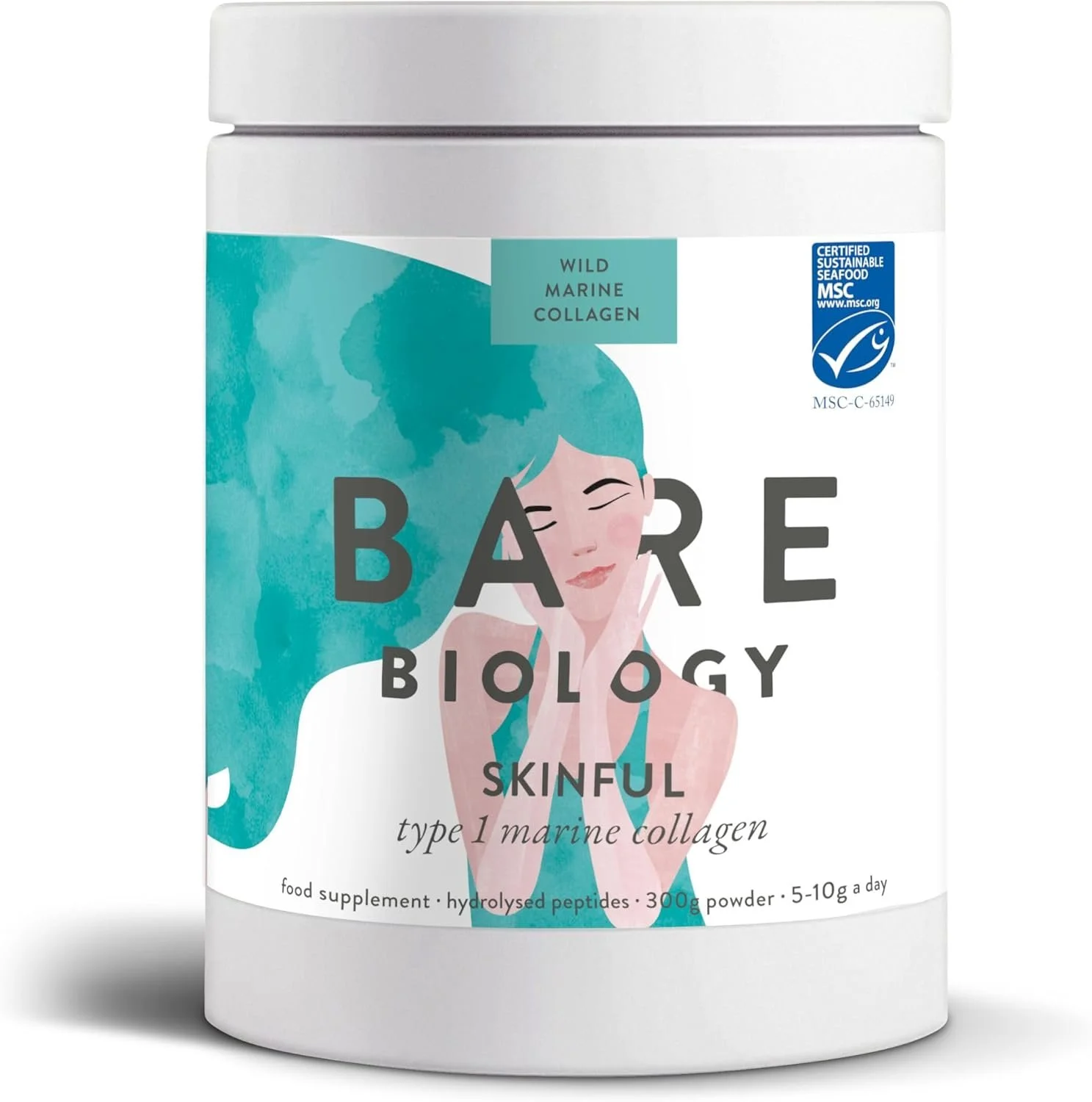
Bare Biology Skinful Pure Marine Collagen Powder
a clean, unflavoured marine collagen powder providing Type I and III collagen peptides. Marine collagen is predominantly Type I (the same type as in human skin and the type most degraded by MMP activity in psoriasis). Mixes easily into hot or cold drinks. From a well-regarded UK brand with transparent sourcing. Appropriate for general skin and gut barrier collagen support.
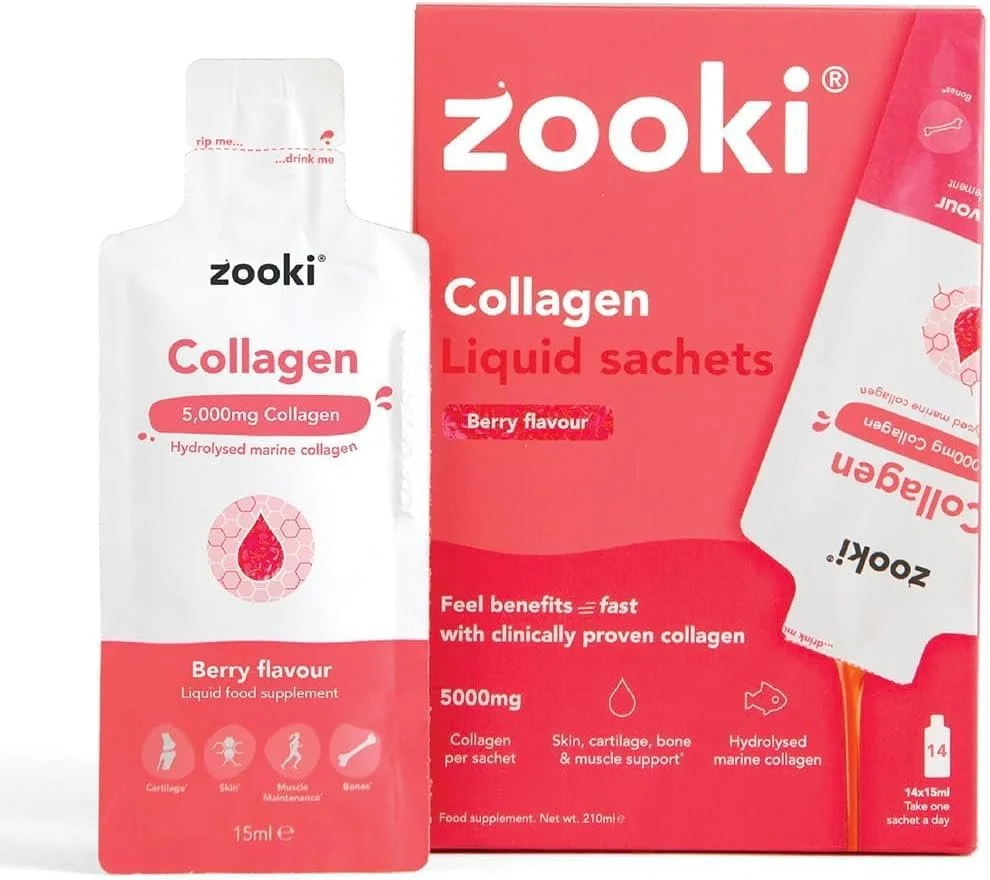
Zooki 5000mg Marine Collagen Liquid Sachets
a liquid marine collagen providing 5g collagen peptides per sachet. The liquid format may improve absorption compared to powder. Contains vitamin C alongside collagen, which is appropriate given the cofactor relationship. Convenient single-serve format for daily consistency.
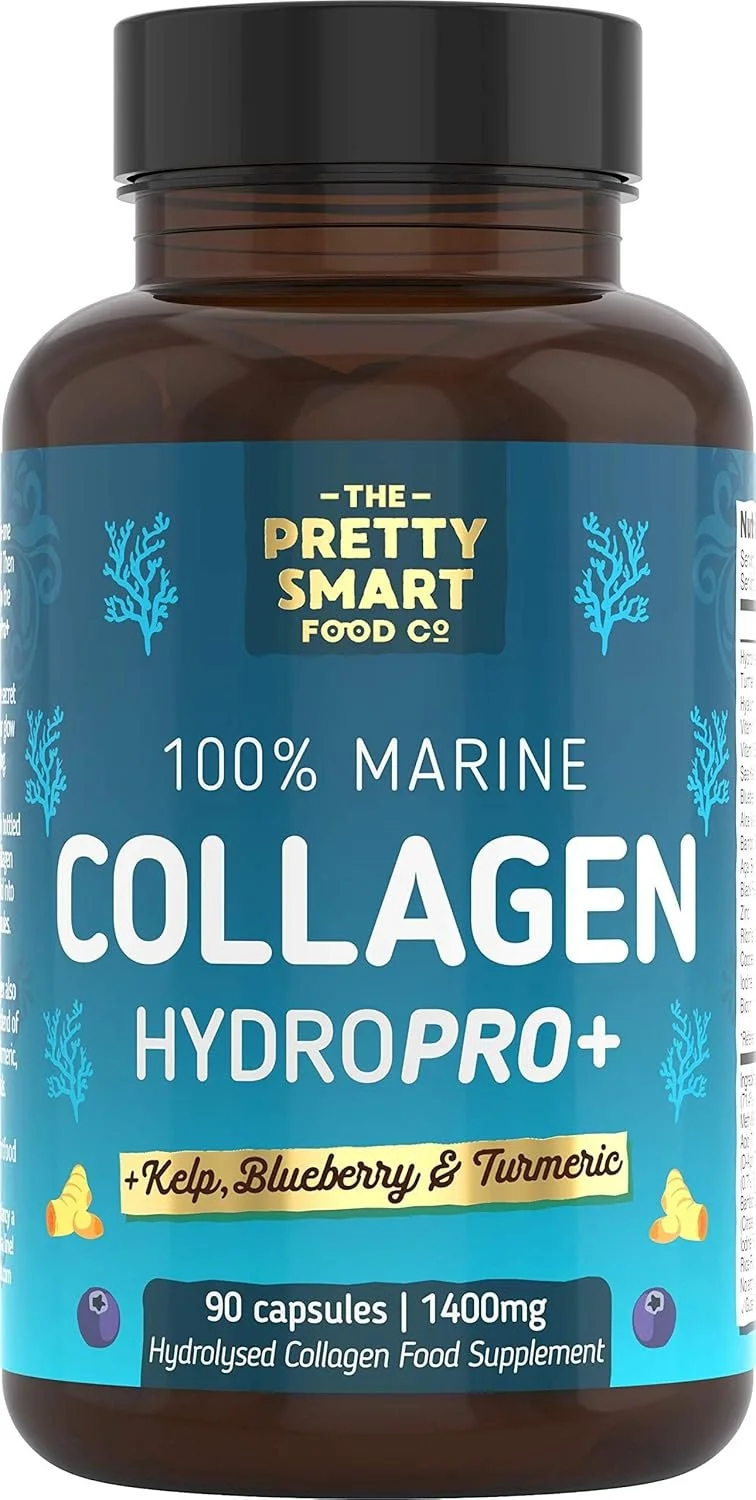
The Pretty Smart Food Co Marine Collagen Tablets with Hyaluronic Acid, Biotin & Blueberry
a combination tablet providing marine collagen alongside hyaluronic acid and biotin. The hyaluronic acid complement is relevant — collagen and hyaluronic acid are the two primary structural components of the dermis, and both are affected by MMP activity in psoriasis. Biotin's role in keratinocyte metabolism adds a further skin-specific rationale.
Collagen Supplements: Do They Work?
Clinical studies show collagen supplements can improve hydration, elasticity, and healing speed in general skin health.
For psoriasis, benefits are likely indirect — collagen helps rebuild healthy tissue and supports barrier strength while anti‑inflammatory nutrients do the deeper work.
When choosing a supplement:
opt for hydrolysed bovine or marine collagen (10 g daily is typical)
choose certified, clean‑label products
pair with vitamin C, which is essential for collagen synthesis
How collagen fits into a psoriasis supplement approach
Collagen addresses dermal structural support — specifically the MMP-mediated collagen degradation in psoriatic skin and, for psoriatic arthritis, cartilage structural support. It is a supportive rather than therapeutic supplement, and does not address the immune dysregulation, vitamin D deficiency, or omega-3 anti-inflammatory deficit that have stronger direct clinical evidence for psoriasis.
The appropriate framework: collagen as a supporting addition once the primary nutritional priorities (vitamin D, zinc, omega-3, selenium, magnesium) are consistently addressed. Not instead of, but alongside.
For people with psoriatic arthritis, Type II collagen (UC-II) is the more relevant form — distinct from the Type I marine collagen in most skin-focused products.
Vegetarian and vegan collagen options: no plant-based collagen exists (collagen is exclusively animal-derived), but plant-based collagen builders — providing the amino acids and vitamin C required for the body's own collagen synthesis — are available. These support endogenous collagen production rather than providing exogenous collagen peptides.
Supporting Collagen Production from Within
Inflammation is the main reason collagen breaks down early. To protect what your body builds:
limit processed sugar and alcohol (they impair collagen fibres)
increase fruit and veg for antioxidants
ensure omega‑3s, zinc, and vitamin D intake is optimal
When to Be Cautious
Collagen supplements are generally safe, but you should check with your GP if you:
follow a vegetarian or vegan diet (most collagen is animal‑derived)
have kidney issues or specific amino‑acid restrictions
are pregnant or breastfeeding
Skin support for psoriasis-prone skin
Collagen addresses the structural dimension of psoriasis skin. The immune dysregulation, inflammatory signalling, nutritional deficiencies, and gut-skin connections require the complementary nutrients covered throughout this series.
Drought's Skin Support Formula provides vitamin C (the required cofactor for collagen synthesis), zinc (which inhibits MMP activity), vitamin D, magnesium, and 10 other nutrients addressing the internal dimensions of psoriasis management that collagen supplementation alone cannot cover. Made in the UK, suitable for vegetarians, designed for consistent long-term daily use.
FAQs: Collagen and psoriasis
Is collagen good for psoriasis?
As a supportive supplement addressing one specific dimension — yes. Psoriatic inflammation activates matrix metalloproteinases (MMP-1, MMP-3, MMP-9) that degrade dermal collagen at an accelerated rate compared to uninflamed skin — producing the thinner, less elastic dermis that people with psoriasis have compared to age-matched healthy controls. Collagen supplementation addresses this specific inflammatory collagen breakdown rather than simply providing anti-ageing benefit. It doesn't address Th17 immune dysregulation, IL-17 production, or keratinocyte hyperproliferation — the primary drivers of psoriasis. Most accurately positioned as a dermal structural support supplement that complements but does not substitute for immune-targeted management.
Can collagen reduce psoriasis inflammation?
Not directly — but through an indirect mechanism worth understanding. Hydrolysed collagen peptides, particularly hydroxyproline-proline dipeptides and tripeptides absorbed from supplementation, have shown modest immunomodulatory activity in published research — reducing certain inflammatory cytokines in joint and skin tissue. The effect is not through NF-κB inhibition or Th17 pathway suppression like the primary anti-inflammatory supplements for psoriasis. It operates more through reducing the inflammatory signal generated by degraded collagen fragments — damaged collagen itself triggers immune activation through DAMPs (damage-associated molecular patterns), and supporting intact dermal collagen reduces this secondary inflammatory signal.
How long does collagen take to work for psoriasis?
For dermal structural effects — three to six months of consistent daily supplementation. Collagen remodelling is a slow process — fibroblasts require sustained amino acid and hydroxyproline peptide availability over months rather than weeks to meaningfully rebuild dermal collagen density. Studies showing measurable skin hydration and elasticity improvements typically run 8–12 weeks minimum. For psoriatic arthritis joint support through Type II collagen specifically — some studies show measurable effects at 12 weeks, with more consistent benefit at six months of daily use. Managing expectations around timeline is the most practically important guidance for collagen supplementation.
Which type of collagen is best for psoriasis?
Depends on the primary concern. Type I hydrolysed collagen — the most common in marine and bovine supplements — is most relevant for dermal skin support, addressing the MMP-driven collagen breakdown in psoriatic skin. Type II hydrolysed collagen is specifically relevant for psoriatic arthritis — it is the primary structural protein in articular cartilage and its supplementation has published evidence for joint comfort and mobility in inflammatory arthritis. For people with psoriasis affecting skin only, Type I marine or bovine collagen at 10g daily is the most appropriate. For people with both skin and joint involvement, a supplement providing both Type I and Type II collagen or separate supplementation addresses both dimensions simultaneously.
Why does collagen need vitamin C to work?
Vitamin C is a biochemically mandatory co-factor for collagen synthesis — not an optional addition. Two enzymes central to collagen production — prolyl hydroxylase and lysyl hydroxylase — require vitamin C as an essential co-factor to hydroxylate the proline and lysine residues that form the collagen triple helix structure. Without adequate vitamin C, these enzymes cannot function and collagen synthesis is impaired regardless of how much amino acid substrate is available from supplementation. This is why scurvy — severe vitamin C deficiency — produces collagen breakdown as its defining pathology. For psoriasis patients supplementing collagen, ensuring adequate vitamin C intake (either dietary from citrus, berries, and leafy greens or supplemental at 500mg–1g daily) is not optional — it determines whether the collagen amino acids are actually incorporated into new structural collagen.
Is marine or bovine collagen better for psoriasis?
Both provide Type I hydrolysed collagen peptides — the form most relevant to dermal skin support — and both have published evidence for skin hydration and elasticity benefits. Marine collagen has smaller peptide molecular weight (approximately 300–800 daltons) than bovine collagen, which may improve absorption efficiency. Marine collagen is also more appropriate for people avoiding red meat or following pescatarian diets. Bovine collagen typically provides both Type I and Type III collagen — Type III is a component of skin and vascular tissue that complements Type I dermally. For psoriatic arthritis specifically, bovine sources more commonly provide Type II collagen alongside Type I. The practical difference in skin outcome between marine and bovine Type I collagen is modest — consistency of daily use at adequate dose (10g) matters more than source.
Can people with psoriasis take collagen alongside their medication?
Generally yes — hydrolysed collagen supplements have no documented interactions with topical steroids, calcineurin inhibitors, methotrexate, ciclosporin, or biologic treatments at typical supplemental doses. Collagen is a food-derived protein supplement rather than a pharmacologically active compound, and its absorption and metabolism don't interact with the pathways that psoriasis medications affect. The specific caution is for people on methotrexate with existing kidney function concerns — high protein supplementation in general warrants GP discussion in this context. Vegans and vegetarians should note that most collagen supplements are animal-derived — there are no genuine vegan collagen supplements, though vegan "collagen booster" supplements provide the amino acid precursors and vitamin C co-factors that support the body's own collagen synthesis.
Summary
Collagen has more specific relevance to psoriasis than most articles suggest — through elevated MMP-mediated collagen degradation in psoriatic skin and through Type II collagen's potential role in psoriatic arthritis management. Marine collagen peptides (Type I) are the most appropriate form for skin support; Type II collagen (UC-II) is the more specific choice for psoriatic arthritis. Vitamin C should accompany collagen supplementation as a required synthesis cofactor. Collagen is a supportive addition within a comprehensive nutritional approach — not a primary intervention, but a coherently relevant one for the specific structural challenges of psoriatic skin.
Written by the Drought Skin team — specialists in natural support for psoriasis, eczema and acne
Disclaimer: This article contains affiliate links. We earn a very small commission from each purchase made through these links. There is no additional cost to you. All products featured have been specifically selected as products we personally use and love. For further information, please see our disclaimer page.
-
Vitamins & Supplements for Psoriasis: What the Evidence Shows for Each
L-Glutamine for Psoriasis: What the Evidence Shows
Leaky Gut & Psoriasis: Is There Really a Link?
The Psoriasis Diet: Best Foods, Foods to Avoid & What the Evidence Shows
Biotin for Eczema & Psoriasis: What It Does, What It Doesn't, and When It Matters
