
Psoriasis on Lips: How to Identify It, What Helps & What to Avoid

Psoriasis affecting the lips is uncommon — the lips are not a typical psoriasis location, and many dermatologists see relatively few cases. But for people who have it, it's genuinely distressing: the lips are constantly in movement, exposed to food and drink, and highly visible. And because it's rare, it's frequently misdiagnosed.
Can psoriasis affect your lips?
Yes—but it’s very rare.
Psoriasis can affect almost any part of the body, but involvement of the lips is uncommon and often confused with other conditions.
What lip psoriasis actually looks like
Psoriasis on the lips produces dry, thickened, scaling skin — the same accelerated keratinocyte turnover that drives plaques elsewhere. It typically appears as:
Well-defined redness with adherent scale on the lips or the skin immediately around the mouth. Fissuring (small cracks) — particularly at the corners of the mouth. Occasional bleeding when cracks deepen. Burning or soreness, particularly when eating acidic or spicy foods.
Unlike psoriasis on elbows and knees, the lips don't produce the classic silvery-white plaques — the skin structure of the lips (vermilion zone) is thinner and wetter, producing a different clinical appearance that looks more like persistent chapping or inflammation than typical psoriasis.
Why psoriasis appears on the lips
Psoriasis is an immune-mediated condition that speeds up skin cell turnover.
This leads to:
buildup of skin cells
scaling and inflammation
visible plaques
While the exact reason it appears on the lips isn’t fully understood, it’s linked to the same immune processes as psoriasis elsewhere.
The diagnostic challenge: what else it might be
Lip psoriasis genuinely looks like several other conditions:
Angular cheilitis — inflammation specifically at the corners of the mouth, typically caused by Candida or bacterial infection, nutritional deficiency (iron, B vitamins, zinc), or ill-fitting dentures. Responds to antifungal or antibacterial treatment. Distinct from psoriasis in its location (corners only) and infective cause.
Contact cheilitis — allergic or irritant contact reaction from lip products, toothpaste (particularly sodium lauryl sulphate), mouthwash, dental materials, or food. Produces inflammation and scaling that resolves when the allergen is removed. Patch testing identifies the specific trigger.
Perioral dermatitis — a specific inflammatory condition around the mouth (sparing the skin immediately adjacent to the lips) often triggered by topical steroids. The original's recommendation to use mild corticosteroids is worth a cautionary note here — if perioral dermatitis is present, steroids initially help then significantly worsen the condition (the same pattern as when mismanaged with steroids generally).
Seborrhoeic cheilitis — Malassezia-driven inflammation around the nasolabial folds and mouth corners, responsive to antifungal approaches.
Ordinary cheilitis (general lip inflammation) — from lip licking (covered below), sun exposure, or chronic dryness.
If lip symptoms have been present for more than two to three weeks without response to simple moisturisation, GP or dermatology assessment is appropriate. A biopsy, if performed by a dermatologist, provides definitive diagnosis.
Common triggers for flare-ups
Even though lip psoriasis is rare, it can still be triggered by:
stress
cold or dry weather
irritation (lip products, food, smoking)
infections
skin injury
Triggers often overlap with psoriasis elsewhere on the body.
The Koebner risk from lip habits
This is specific and largely unaddressed in the original. The Koebner phenomenon — new psoriasis plaques appearing at sites of skin trauma — applies to the lip area.
Lip licking is one of the most common perpetuating habits for lip psoriasis. Saliva is mildly acidic and enzymatically active — repeated lip licking removes the surface protective lipid layer, dries the lips, and causes low-grade mechanical irritation. For psoriasis-prone skin, this sustained irritation is a consistent Koebner driver.
Picking or peeling scale — the instinctive response to scaling lip skin — causes direct trauma that triggers new plaque formation at the picked site.
Frequent sun exposure without protection can trigger Koebner responses on the lip area through UV-mediated inflammation.
Identifying and interrupting these habits is as important as any topical treatment.
How to treat psoriasis on lips
Treatment focuses on reducing inflammation and protecting the skin barrier.
1. Keep lips moisturised
use gentle, fragrance-free balms
apply regularly to prevent cracking
Keeping lips hydrated can reduce discomfort.
2. Topical treatments
Doctors may recommend:
mild corticosteroids
calcineurin inhibitors
vitamin D analogues
These help reduce inflammation and scaling.
3. Avoid irritants
fragranced lip products
harsh skincare
spicy or irritating foods
4. Manage triggers
reduce stress
protect lips from weather exposure
What to use on lip psoriasis
Fragrance-free lip emollient. Pure petroleum jelly (Vaseline) is the most inert and most appropriate barrier product for psoriasis-affected lip skin — no fragrance, no additives, effective occlusion. Apply frequently throughout the day.
Prescribed topical treatments: as covered in the facial psoriasis article in this series, calcineurin inhibitors (tacrolimus, pimecrolimus) are the preferred options for chronic inflammation on sensitive facial skin. The perioral area warrants particular caution with steroids — short-course hydrocortisone 1% only, never potent steroids, and stop immediately if perioral dermatitis is suspected.
Recommended Products
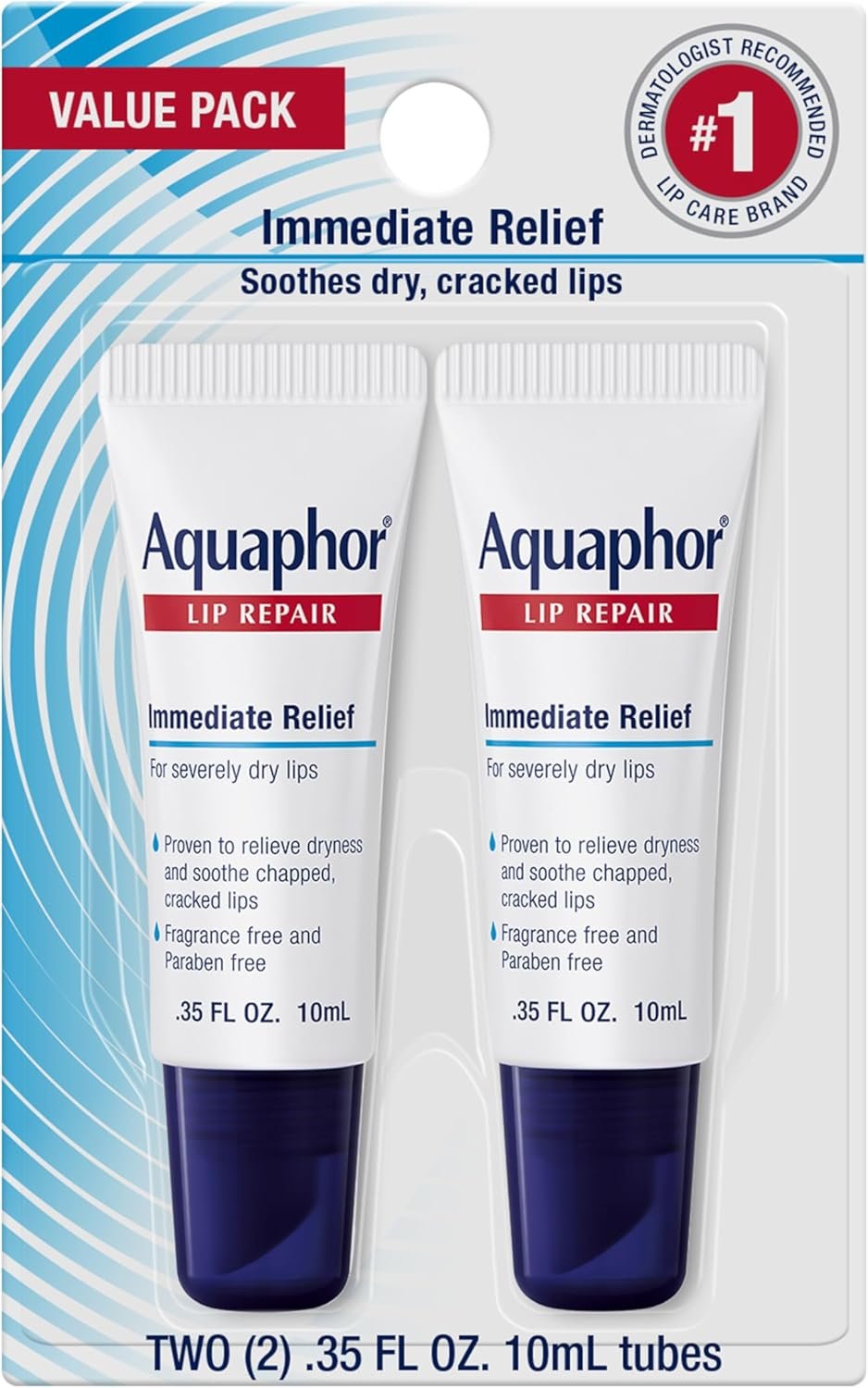
Aquaphor Lip Repair Ointment
a petrolatum-based lip ointment with bisabolol (chamomile-derived anti-inflammatory) and no fragrance. One of the more appropriate product formulations for inflammatory lip conditions.
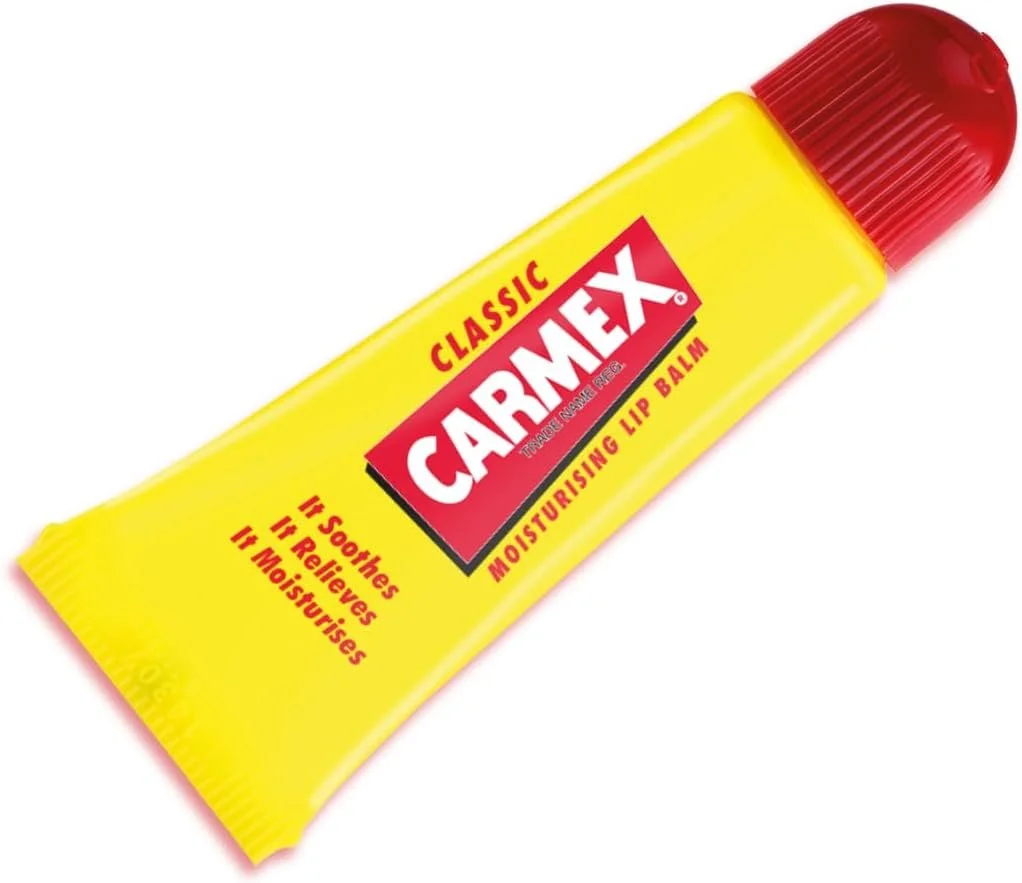
Carmex Classic Moisturising Lip Balm
contains salicylic acid at low concentration (keratolytic for very dry lips), camphor, and menthol alongside petrolatum. Appropriate for scale management on dry, non-acutely-inflamed lips. Note: the menthol and camphor can sting on cracked skin
What to avoid
Fragranced lip products. Fragrance is the most common contact allergen in cosmetics and is present in many mainstream lip balms. For inflamed lip skin, fragrance contact sensitisation is a common aggravating factor.
Lip licking. The most common and most perpetuating habit in chronic lip conditions. Consciously breaking this habit reduces the chronic irritant driving the cycle.
SLS (sodium lauryl sulphate) in toothpaste. SLS is a documented mucous membrane irritant. For people with persistent perioral or lip psoriasis, switching to an SLS-free toothpaste (Sensodyne Complete Protection, Arm & Hammer Sensitive) removes a frequent low-grade irritant.
Acidic and very spicy food during active flares. These directly worsen the soreness of cracked lip psoriasis.
Skin support for psoriasis-prone skin
Lip psoriasis is driven by the same systemic immune mechanisms as psoriasis elsewhere. Vitamin D, zinc, omega-3s, and the anti-inflammatory dietary pattern covered throughout this series address the underlying immune environment.
Drought's Skin Support Formula provides 14 nutrients selected for psoriasis management — addressing the internal foundations that topical lip care cannot reach. Made in the UK, suitable for vegetarians, designed for consistent long-term daily use.
FAQs: Psoriasis on lips
Is psoriasis on lips common?
No — it’s considered very rare.
How do I know if it's psoriasis or just chapped lips?
Psoriasis on lips produces persistent redness and scaling that doesn't resolve with simple moisturisation over two to three weeks, may be accompanied by psoriasis elsewhere, and can show fissuring. A GP assessment is appropriate for persistent symptoms.
Should I exfoliate lip psoriasis?
No — physical lip scrubs cause friction trauma and Koebner reactions on psoriasis-affected lip skin. Scale should be softened with emollient and managed medically, not mechanically removed.
What lip balm is best for psoriasis?
Fragrance-free, petrolatum-based products (pure Vaseline, Aquaphor) are the most appropriate. Avoid flavoured, fragranced, or essential-oil-containing lip products.
Does lip licking worsen lip psoriasis?
Yes — saliva's enzymatic activity strips surface lipids, and the repeated mechanical irritation is a Koebner stimulus. Consciously reducing lip licking is one of the most impactful practical changes.
Can steroids be used on lip psoriasis?
With significant caution — only hydrocortisone 1% in short courses. Stop immediately if symptoms worsen after initial improvement (suggesting perioral dermatitis). Calcineurin inhibitors are the safer long-term option.
How do I know if it’s psoriasis or eczema?
They can look similar—proper diagnosis is important.
Can psoriasis on lips go away?
It can improve, but may return over time.
What triggers lip psoriasis?
Stress, irritation, and environmental factors are common triggers.
Summary
Lip psoriasis is rare and genuinely difficult to distinguish from cheilitis, contact cheilitis, angular cheilitis, perioral dermatitis, and seborrhoeic cheilitis — all of which require different treatment. Clinical or biopsy-level diagnosis from a GP or dermatologist is appropriate if symptoms persist. The Koebner risk from lip licking and scale picking is specific and practically important — interrupting these habits is as important as topical treatment. Fragrance-free petrolatum-based emollients are the appropriate daily lip care. Physical lip scrubs are contraindicated. Calcineurin inhibitors are the preferred prescription option for chronic inflammatory lip psoriasis that requires more than simple barrier support.
In short:
Rare form of psoriasis
Often mistaken for eczema or chapped lips
Can occur alongside facial or body psoriasis
Not caused by dryness alone
Psoriasis on the lips can be confusing, uncomfortable, and difficult to diagnose—especially because it looks similar to other conditions. If you’re dealing with persistent symptoms, it’s important to look beyond surface-level treatments and focus on supporting your skin more holistically.
Supporting your skin from within can help reduce flare-ups and improve long-term stability.
Start your skin support journey →
Written by the Drought Skin team — specialists in natural support for psoriasis, eczema and acne
Disclaimer: This article contains affiliate links. We earn a very small commission from each purchase made through these links. There is no additional cost to you. All products featured have been specifically selected as products we personally use and love. For further information, please see our disclaimer page.
-
Facial Psoriasis: Common Sites, Treatment Safety & What Actually Helps
Eyebrow Psoriasis: Identification, Treatment & Grooming Safely
Psoriasis & Eczema Triggers: What Causes Flare-Ups & How to Identify Yours
Types of Psoriasis Explained: Symptoms, Appearance & How They Differ
Topical Steroid Withdrawal (TSW): Symptoms, Causes & What the Evidence Shows
