Mouth Taping for Acne: Trend, Myth or Helpful Habit? What the Evidence Shows

Mouth taping — placing a strip of breathable tape over the lips before sleep to encourage nasal breathing — has become one of the more discussed wellness interventions of the past few years. The claims made for it online are often overstated. But the question of whether breathing pattern during sleep affects acne is more interesting than a simple "no" — because the indirect chain of mechanisms is real, even if mouth taping as a specific intervention hasn't been studied for acne directly.
What Is Mouth Taping?
Mouth taping involves placing a specialised strip of tape over the lips before sleep to encourage breathing through the nose.
The practice has gained popularity through social media, podcasts, and wellness influencers.
Potential goals include:
Reducing mouth breathing
Improving sleep quality
Reducing snoring
Encouraging nasal breathing
While some people report benefits, research on mouth taping remains relatively limited.
The Link Between Sleep And Acne
Sleep plays an important role in many biological processes.
During sleep, the body carries out repair and recovery functions that affect:
Hormone regulation
Immune function
Inflammation
Skin barrier repair
When sleep quality is poor, levels of stress hormones such as cortisol may increase.
Higher cortisol levels have been linked to:
Increased inflammation
Greater oil production
Worsening acne in some individuals
This does not mean one bad night's sleep causes breakouts, but long-term sleep disruption may contribute to an environment that is less favourable for skin health.

Why breathing pattern during sleep matters
The connection between mouth taping and acne, where it exists at all, runs through sleep quality rather than any direct effect of breathing on sebaceous glands.
Nasal breathing vs mouth breathing during sleep. Nasal breathing produces nitric oxide — a molecule with vasodilatory, antibacterial, and regulatory effects — through the paranasal sinuses. The nose filters, humidifies, and warms incoming air in ways that the mouth doesn't. Chronic mouth breathing bypasses these functions, is associated with worse sleep architecture (less restorative slow-wave sleep), and is a risk factor for sleep-disordered breathing including obstructive sleep apnoea (OSA).
The OSA-acne link. OSA is increasingly studied in relation to skin conditions. As covered in the sleep and skin article in this series, OSA produces fragmented, non-restorative sleep and intermittent hypoxia (brief periods of low oxygen). Both trigger HPA axis activation — elevating cortisol and, simultaneously, adrenal DHEAS production. As covered in the hormonal acne article, DHEAS is an androgen precursor that converts to testosterone and DHT, directly driving sebaceous gland activity and sebum production.
The chain is: mouth breathing → worse sleep quality and OSA risk → elevated cortisol + DHEAS → increased androgen drive → increased sebum → worsened acne. This is an indirect pathway and mouth taping is a distal intervention within it. But the pathway is mechanistically real.
The cortisol-sebum connection specifically
Poor sleep from any cause — mouth breathing related or not — elevates morning cortisol. As covered in the hormonal acne and stress articles, cortisol elevates DHEAS from the adrenal glands. DHEAS converts in peripheral tissues including skin to testosterone and DHT. DHT stimulates sebaceous gland activity through androgen receptors — the same pathway as cyclical hormonal acne.
This is why sleep disruption consistently worsens acne in people who are already hormonally susceptible. It is not just that tired skin looks worse — the hormonal signalling from poor sleep is genuinely pro-acne.
What Does The Research Say About Mouth Taping?
At present, there is very little research examining mouth taping and acne directly.
Most available studies focus on:
Breathing patterns
Sleep-disordered breathing
Snoring
Sleep quality
There is currently no evidence demonstrating that mouth taping is an effective acne treatment.
While improved sleep may indirectly benefit skin health, this remains very different from proving that mouth taping clears acne.
What mouth taping specifically aims to do
Mouth taping encourages nasal breathing during sleep. The hypothesis is that this reduces the sleep architecture disruption associated with mouth breathing and mild sleep-disordered breathing — producing deeper, more restorative sleep with less cortisol elevation.
The evidence for mouth taping's effect on sleep quality is preliminary. Small studies have found improvements in snoring and sleep oxygen saturation in people who mouth breathe during sleep. There are no randomised controlled trials examining mouth taping and acne specifically.
The honest framing: if mouth taping helps you sleep better — by encouraging nasal breathing and reducing the micro-arousals from mouth breathing — then it may modestly reduce the cortisol-androgen dimension of acne. This is a plausible but indirect and unproven benefit, not a proven acne treatment.
When mouth taping is not appropriate
Mouth taping is specifically contraindicated for people with:
Significant nasal congestion or obstruction — the whole premise requires functional nasal breathing. Obstructive sleep apnoea requiring CPAP — tape is not an appropriate substitute. Any breathing difficulties during sleep. Claustrophobia or anxiety about sleeping with the mouth restricted.
If you suspect significant sleep apnoea (non-restorative sleep despite adequate hours, loud snoring, observed breathing pauses), GP assessment and a sleep study is the appropriate next step — not mouth tape. As noted in the psoriasis fatigue article, OSA is significantly more prevalent in people with inflammatory skin conditions than in the general population.
Other Sleep Habits That May Support Skin Health
If you're interested in improving sleep for overall wellbeing, it may be more helpful to focus on established sleep habits such as:
Maintaining a consistent bedtime
Limiting screens before bed
Creating a cool, dark sleeping environment
Managing stress
Avoiding excessive caffeine late in the day
These strategies have considerably more evidence behind them than mouth taping.
What actually improves acne through the sleep pathway
If the goal is addressing the sleep-cortisol-sebum connection:
Improving overall sleep quality through consistent timing, bedroom cooling (16–19°C), limiting alcohol (which dramatically disrupts sleep architecture — covered in the alcohol article), and reducing evening screen light exposure has considerably more evidence than any specific breathing intervention.
Stress management — the HPA axis activation from psychological stress produces the same cortisol and DHEAS elevation as sleep disruption. Breathwork, yoga, and CBT for stress reduction address the cortisol pathway more directly than changing breathing pattern during sleep.
Nasal health. If mouth breathing is driven by nasal congestion — from hay fever, dust mite allergy, or chronic rhinitis — treating the underlying nasal condition (antihistamines, nasal steroid spray from GP) is more effective than tape.
For the specific acne drivers — sebum production, C. acnes activity, inflammation — the approaches in the acne skincare and acne supplements articles address these more directly than any sleep intervention.
Is mouth taping worth trying?
For people who are confident they mouth breathe during sleep and don't have contraindications: it's low-risk, low-cost, and may improve sleep quality for some people. The expectation should be modest improvement in sleep rather than visible acne clearing.
Recommended Products
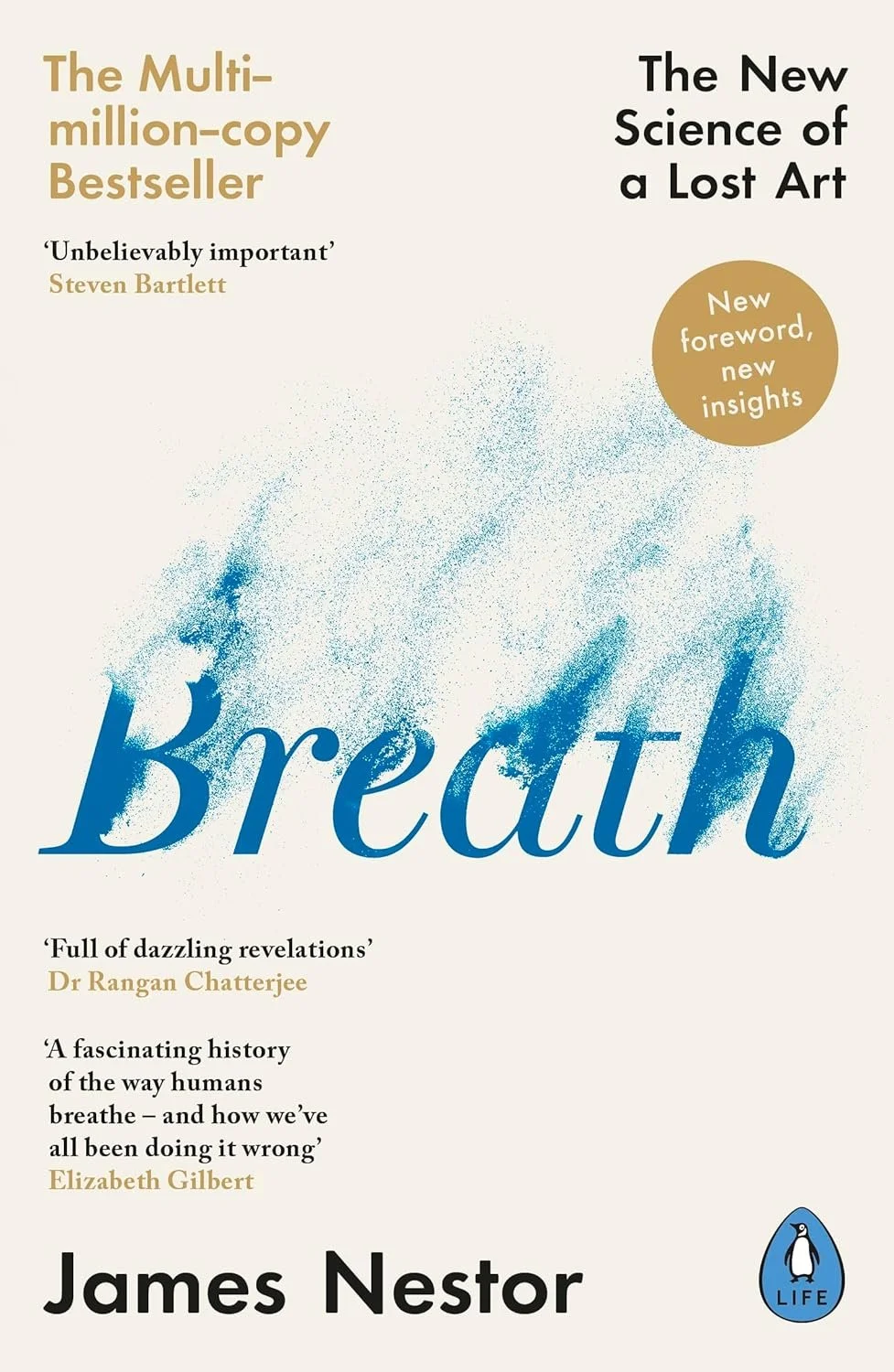
James Nestor book Breathe
provides a compelling and evidence-grounded case for the broader importance of nasal breathing on health — covering the nitric oxide mechanism, the research on breathing patterns and sleep, and the case for nasal breathing beyond just mouth taping. A worthwhile read if this area interests you.
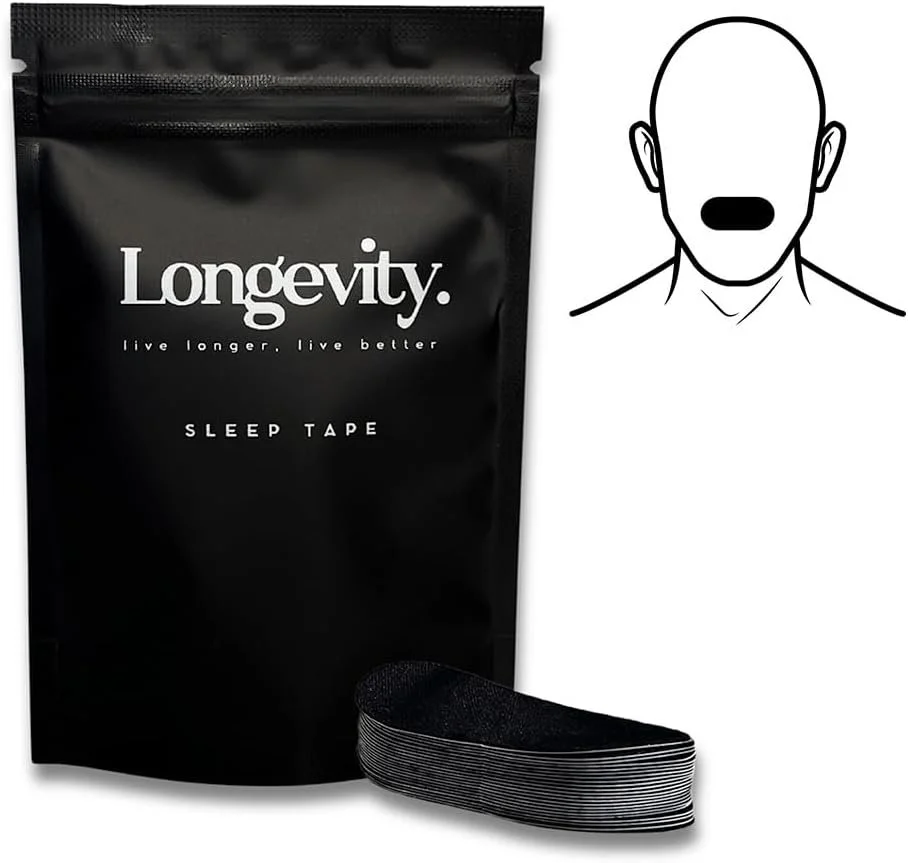
Longevity Mouth Strips
specifically designed mouth strips for sleep, using a gentle hypoallergenic adhesive appropriate for facial skin. The central breathing vent allows emergency mouth breathing if nasal congestion occurs — an important safety feature that distinguishes purpose-made mouth tape from DIY alternatives. Not appropriate for people with significant nasal obstruction, OSA requiring CPAP, or any sleep breathing difficulty.
Supplement Support For Skin Health
The cortisol and androgen dimension of acne — which poor sleep amplifies — responds to nutritional support alongside sleep improvement. Zinc inhibits 5-alpha-reductase (reducing DHT), magnesium supports HPA axis stress regulation, and vitamin D modulates the immune responses that poor sleep worsens.
Drought's Skin Support Formula provides zinc, magnesium, vitamin D, vitamin C, and 10 other nutrients — addressing the internal hormonal and inflammatory pathways relevant to acne that sleep quality affects. Made in the UK, suitable for vegetarians, designed for consistent long-term daily use.
FAQ
Can mouth taping cure acne?
No — and this is the most important point to establish clearly. There is no published clinical evidence showing mouth taping directly treats, reduces, or clears acne. The proposed mechanism is entirely indirect: mouth taping aims to improve sleep quality by encouraging nasal breathing, and better sleep may reduce the cortisol elevation and inflammatory burden that worsens acne over time. Even if mouth taping successfully improves sleep quality — which itself has limited evidence — the acne benefit operates through a long and indirect chain rather than any direct mechanism. Mouth taping is a sleep quality intervention with a plausible but unproven secondary skin benefit, not an acne treatment.
Does poor sleep make acne worse?
Yes — through a specific and well-documented mechanism. Poor sleep quality and insufficient sleep duration elevate cortisol through HPA axis dysregulation — the same stress-cortisol pathway that drives stress-triggered acne flares. Elevated cortisol stimulates sebaceous gland androgen receptors, increasing sebum production through IGF-1 amplification. Simultaneously, sleep deprivation reduces the nocturnal growth hormone peak that drives skin repair and barrier regeneration overnight. The result is higher sebum production combined with impaired barrier repair — the combination that creates the most favourable environment for C. acnes proliferation and inflammatory lesion formation. Consistently poor sleep doesn't cause a single spot — it raises the systemic inflammatory baseline from which every acne trigger operates.
Can mouth breathing cause acne?
Not directly — but it may contribute to conditions that worsen acne through two indirect pathways. First, mouth breathing is associated with poorer sleep quality through increased sleep-disordered breathing, snoring, and micro-arousals — with the downstream cortisol and inflammatory consequences covered above. Second, mouth breathing bypasses the nasal cavity's humidification, filtration, and nitric oxide production — nasal breathing generates nitric oxide which has documented vasodilatory and mild antimicrobial effects. Whether this nitric oxide deficit has skin-specific consequences is not established, but the sleep quality disruption mechanism is more directly plausible. The evidence specifically linking mouth breathing to acne is limited — the sleep quality mechanism is more coherent than any direct mouth-breathing-skin pathway.
Is mouth taping safe?
Not for everyone — and the safety considerations are specific rather than general caution. People with nasal obstruction from congestion, deviated septum, nasal polyps, or structural issues cannot reliably breathe through the nose during sleep and should not attempt mouth taping. People with sleep apnoea should discuss with a sleep specialist before trying mouth taping — the intervention is not appropriate as a substitute for CPAP or other established sleep apnoea management. People who experience anxiety, claustrophobia, or panic should not attempt mouth taping. Adhesive reactions are possible — use tape specifically designed for skin contact rather than standard stationery or craft tape. Start with a small piece across the centre of the lips rather than fully sealing the mouth.
What is better than mouth taping for sleep quality and acne?
Established sleep hygiene interventions have considerably stronger evidence for sleep quality improvement than mouth taping — and better sleep quality is the actual mechanism through which any mouth taping acne benefit would operate. Consistent sleep and wake times regulate circadian cortisol rhythm most effectively — the cortisol nadir that allows sebaceous gland activity to normalise overnight requires consistent sleep timing more than any other single sleep intervention. Reducing blue light exposure in the two hours before sleep reduces melanopsin-mediated melatonin suppression. Cool, dark sleeping environments reduce nocturnal cortisol. Stress management through the day reduces the HPA axis activation that poor sleep amplifies. Each of these directly addresses the cortisol mechanism relevant to acne more reliably than mouth taping.
Does nasal breathing have benefits for skin?
Indirectly — nasal breathing produces nitric oxide in the nasal passages that is inhaled into the lungs and has systemic vasodilatory effects improving circulation including skin microcirculation. Better skin blood flow supports the nutrient delivery and immune cell trafficking relevant to barrier repair and inflammatory resolution. Nasal breathing also filters and humidifies inhaled air, reducing the dry air dehydration that can affect skin surface moisture. These are plausible rather than proven skin benefits — the nasal breathing evidence base focuses primarily on respiratory and cardiovascular outcomes rather than skin specifically. The most clinically defensible nasal breathing benefit for acne remains the sleep quality improvement pathway rather than any direct skin mechanism.
Should I try mouth taping if I have acne?
Only if you are also a mouth breather with poor sleep quality — and with appropriate safety checking first. If you don't have nasal obstruction, sleep concerns, or documented mouth breathing, mouth taping is unlikely to produce meaningful benefit for acne given the indirect and unproven mechanism chain. If you do experience poor sleep quality, snoring, or wake feeling unrefreshed, addressing the underlying sleep quality issue — through sleep hygiene, GP assessment for sleep-disordered breathing, or stress management — will produce more consistent benefit for both sleep and acne than mouth taping alone. Mouth taping is a reasonable addition to a sleep quality improvement programme for people without contraindications — it is not a starting point for acne management.
Summary
Mouth taping doesn't directly treat acne — there is no clinical evidence for this. The indirect connection runs through sleep quality: mouth breathing worsens sleep architecture and OSA risk, which elevates cortisol and adrenal DHEAS, which increase androgen-driven sebum production. This chain is mechanistically real even though mouth taping as a specific intervention hasn't been studied for acne. For people who mouth breathe during sleep without contraindications, it is a low-risk practice that may modestly improve sleep quality. The more impactful sleep-to-acne interventions remain consistent sleep timing, bedroom cooling, alcohol reduction, and stress management.
Written by the Drought Skin team — specialists in natural support for psoriasis, eczema and acne
Disclaimer: This article contains affiliate links. We earn a very small commission from each purchase made through these links. There is no additional cost to you. All products featured have been specifically selected as products we personally use and love. For further information, please see our disclaimer page.
