
Nail Psoriasis: Why Each Symptom Occurs, How to Distinguish It from Fungal Infection & What Helps
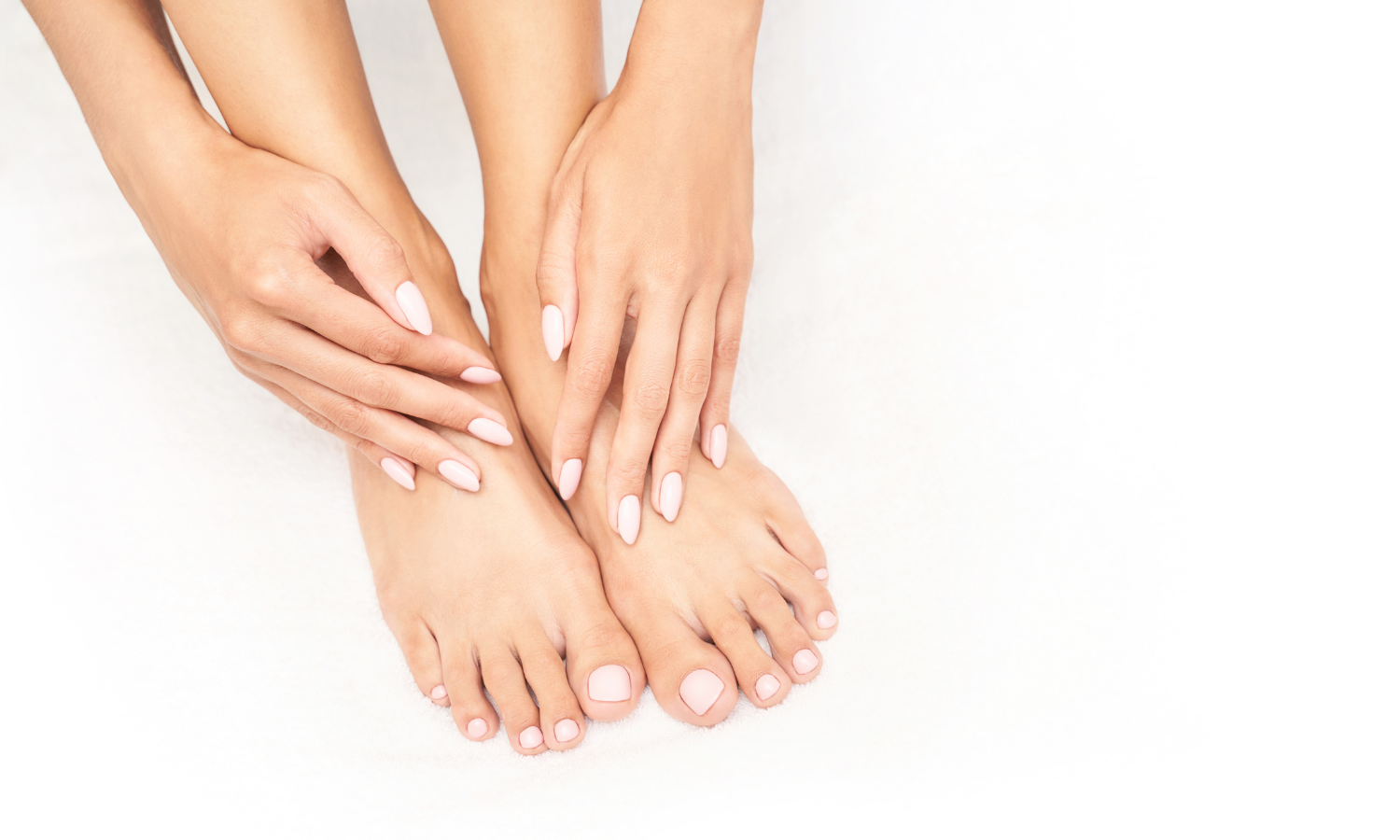
Nail psoriasis affects approximately 50–80% of people with psoriasis at some point — making it one of the most common manifestations of the condition. It's also one of the most frustrating, because nails grow slowly and treatment response is correspondingly slow. Understanding why each symptom occurs — based on which part of the nail anatomy is affected — makes the clinical picture significantly clearer.
Nail Psoriasis: Symptoms, Causes & How to Support Nail Health
Psoriasis doesn’t only affect the skin.
For many people, it can also affect the nails — causing changes that may feel frustrating, uncomfortable, or difficult to hide.
Nail psoriasis can affect:
Fingernails
Toenails
Nail texture
Nail colour
Nail growth
In some cases, nail symptoms may appear alongside skin psoriasis.
For others, nail changes may happen first.
What Is Nail Psoriasis?
Nail psoriasis occurs when psoriasis affects the nail area and nail bed.
It may cause visible changes to:
Nail texture
Nail growth
Nail appearance
Some people experience mild symptoms, while others notice more significant nail changes over time.
Nail psoriasis may affect:
One nail
Several nails
Fingernails and toenails together
Nail symptoms can sometimes appear before psoriasis develops elsewhere on the body.
In other cases, people already living with psoriasis later notice nail involvement too.
Why nail anatomy matters for understanding symptoms
The nail unit has several distinct structural components, each producing characteristic symptoms when psoriasis affects it:
The nail matrix — the tissue at the base of the nail (under the proximal nail fold) where nail cells originate. When psoriasis affects the matrix, it disrupts nail formation as the nail is growing. This produces pitting (small indentations) and leukonychia (white spots).
The nail bed — the tissue underlying the nail plate. When psoriasis affects the nail bed, it produces onycholysis (nail lifting), subungual hyperkeratosis (thickened tissue under the nail), and the characteristic "oil drop" or salmon patch — a yellowish-brown discolouration visible through the nail plate.
The hyponychium — the area where the nail plate meets the fingertip. Psoriasis here contributes to the subungual buildup that lifts the nail.
Understanding which structure is affected explains why treatment options differ and why some symptoms respond to different approaches than others.
The specific symptoms and what causes each
Pitting. The most recognisable and most common sign of nail psoriasis — small, ice-pick-like indentations across the nail surface. Caused by psoriasis affecting the proximal nail matrix, producing temporary loss of cells from the nail surface as it forms. Pitting is strongly associated with scalp psoriasis.
Onycholysis. Separation of the nail plate from the nail bed, beginning at the free edge and progressing proximally. Often accompanied by a yellowish-white discolouration at the margin of separation. The separating space can accumulate debris and become a site for secondary fungal (Candida, dermatophyte) or bacterial infection. Onycholysis is caused by psoriasis inflammation of the nail bed.
Subungual hyperkeratosis. Chalky, white material accumulating under the nail — the same accelerated keratinocyte turnover that drives skin plaque formation, occurring in the nail bed. The nail plate may appear raised and thickened. Often confused with and sometimes complicated by fungal nail infection.
Oil drop sign (salmon patch). A yellow-brown, translucent discolouration seen through the nail plate — characteristic of psoriasis specifically, caused by serum proteins and inflammatory exudate in the nail bed. The oil drop appearance is quite specific to nail psoriasis and helps distinguish it from fungal infection.
Nail plate crumbling. Severe or longstanding nail matrix involvement can produce a soft, crumbly nail plate that fractures easily. More common in toenails.
Why Does Psoriasis Affect the Nails?
Psoriasis is linked to inflammation and rapid skin cell turnover.
When this process affects the nail area, it can disrupt:
Nail formation
Nail growth
Nail structure
Because nails grow slowly, changes may:
Develop gradually
Take time to improve
Persist for long periods
This is one reason nail psoriasis can feel frustrating — improvements often happen more slowly than skin improvements elsewhere on the body.
The fungal nail infection differential: clinically important
Nail psoriasis and fungal nail infection (onychomycosis) look very similar — both can produce thickening, discolouration, and onycholysis. They can also co-exist: psoriatic nail changes create a compromised nail environment that is more susceptible to fungal colonisation.
Key distinguishing features: the oil drop sign and pitting are specific to psoriasis and are not seen in fungal infection. Subungual hyperkeratosis from psoriasis tends to be whiter and chalkier; fungal hyperkeratosis is often yellowish-brown and the nail more uniformly thickened.
A GP or dermatologist can take nail clippings for fungal microscopy and culture — the definitive way to distinguish or confirm concurrent fungal infection. This matters practically because antifungal treatment is ineffective for psoriatic nail changes, and vice versa. If fungal infection is present alongside psoriasis, both need addressing separately.
What Can Trigger Nail Psoriasis Flare-Ups?
Like skin psoriasis, nail psoriasis may worsen due to certain triggers.
Possible triggers may include:
Stress
Nail trauma or injury
Harsh chemicals
Illness
Picking at nails
Repeated irritation
Even smaller forms of repeated damage — such as aggressive manicures or nail biting — may worsen symptoms in some people.
Some people also notice flare-ups worsen:
During stressful periods
In colder weather
After repeated irritation to the hands
The psoriatic arthritis connection
As covered in the psoriatic arthritis article in this series, nail involvement (pitting, onycholysis) is associated with approximately three times the risk of developing psoriatic arthritis compared to psoriasis without nail involvement. The anatomical connection is the shared blood supply between the nail bed and the distal interphalangeal (DIP) joint — psoriatic inflammation in the nail reflects immune activity that is particularly proximate to the joint.
If you have nail psoriasis and develop any joint pain, stiffness, or swelling — particularly in the fingers or toes — discuss this with your GP specifically in the context of psoriatic arthritis risk. Early diagnosis and treatment of PsA prevents irreversible joint damage.
What helps: treatment options
Nail psoriasis is one of the most treatment-resistant manifestations of psoriasis because:
Topical treatments have difficulty penetrating the hard nail plate
Nails grow slowly, so even effective treatment takes months to produce visible results
Trauma from daily hand use perpetuates the inflammatory cycle
Emollient and nail moisturisation. Keeping the nail plate and surrounding skin well-moisturised reduces brittleness and cracking. Petroleum jelly or a paraffin-based emollient applied under the free edge where onycholysis is present reduces debris accumulation and secondary infection risk.
Topical calcipotriol. Vitamin D analogues applied directly to the nail fold and under the free edge have evidence for reducing subungual hyperkeratosis and pitting in some patients. Requires consistent daily application for months. Available as part of Dovobet gel or as a separate preparation under GP prescription.
Intralesional corticosteroid injections. Triamcinolone injected into the proximal nail fold by a dermatologist is the most effective locally targeted treatment for pitting and matrix involvement. Produces visible improvement in nail texture but requires clinic administration and can be uncomfortable.
Biologic treatments. For people already on biologic therapy for skin or joint disease, most biologics significantly improve nail psoriasis as part of their systemic anti-inflammatory effect. If nail psoriasis is significantly affecting quality of life alongside skin or joint disease, this is worth discussing with a dermatologist.
Practical nail care:
Keep nails trimmed short — long nails increase the leverage that worsens onycholysis. Avoid nail trauma — particularly common in toenails from tight footwear. Wear gloves for cleaning and wet work — sustained water exposure softens the nail and worsens separation. Avoid acrylic nails and nail extensions over psoriatic nail changes — they trap moisture and debris and increase onycholysis.
Recommended Products
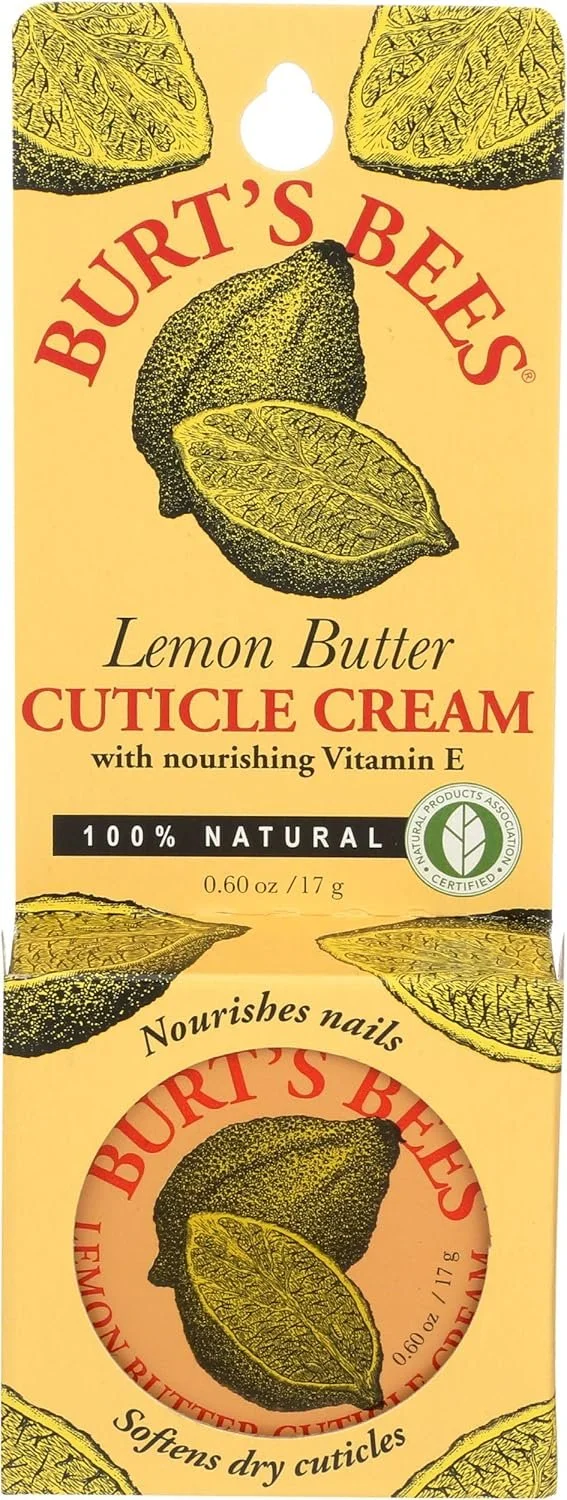
Burt's Bees Lemon Butter Cuticle Cream
a fragrance-light, beeswax-based cuticle and nail cream appropriate for daily massage into the nail fold and under the free edge where onycholysis is present. Regular application reduces nail plate brittleness and cracking, and softens the surrounding skin without harsh chemical ingredients that could irritate psoriasis-affected nail tissue. Apply morning and evening, particularly after hand washing.
Supplement Support for Psoriasis-Prone Skin
The systemic immune inflammation driving nail psoriasis responds to the same nutritional support relevant to skin psoriasis. Biotin specifically supports normal nail function and is often recommended for brittle or damaged nails — and is part of the Drought formula.
Drought's Skin Support Formula provides vitamin D, zinc, biotin, vitamin C, and 10 other nutrients — addressing the internal nutritional foundations relevant to both psoriasis management and nail health. Made in the UK, suitable for vegetarians, designed for consistent long-term daily use.
FAQ
What does nail psoriasis look like?
Four specific signs — each with a distinct anatomical origin. Pitting (small ice-pick indentations on the nail surface) originates in the proximal nail matrix where psoriasis disrupts the keratinisation of the nail plate as it forms. Onycholysis (nail separating from the nail bed, typically at the free edge) originates in the nail bed where psoriatic inflammation disrupts the hyponychium attachment. Subungual hyperkeratosis (chalky or crumbly material accumulating under the nail) reflects psoriatic scaling of the nail bed epithelium. The oil drop sign (yellow-brown translucent discolouration visible through the nail plate) is the most diagnostically specific sign — produced by serum and inflammatory exudate pooling in the nail bed beneath intact nail plate. Identifying which signs are present helps determine where the psoriasis is most active in the nail unit.
Can nail psoriasis go away?
Significant improvement is achievable with appropriate treatment — and the timeline is specific. Nails grow approximately 3mm per month, meaning even highly effective treatment takes four to six months to produce visible improvement in fingernails as healthy nail replaces affected nail from the base outward. Toenails grow more slowly and may take nine to twelve months to show full improvement. Complete clearance is most consistently achieved with biologic therapy targeting IL-17 or IL-23 — several biologics have published nail-specific outcome data showing meaningful NAPSI score reductions. Recurrence is common when systemic inflammation continues or treatment is stopped — nail psoriasis typically reflects the overall systemic inflammatory burden rather than being an isolated local problem.
Is nail psoriasis painful?
It varies significantly by sign and severity. Subungual hyperkeratosis — the accumulation of material under the nail — can cause pressure pain as the thickened tissue pushes against the nail plate, particularly in toenails where footwear compresses the nail. Onycholysis (nail separation) itself is typically painless but creates a space that traps debris and moisture — increasing secondary infection risk that produces pain independently of the psoriasis. Significant subungual hyperkeratosis in toenails can cause sufficient pressure to affect walking. For most people with predominantly pitting or oil drop sign, nail psoriasis is cosmetically distressing without significant physical pain — but for those with significant subungual hyperkeratosis or extensive onycholysis, meaningful discomfort is common.
How do I know if it's nail psoriasis or a fungal infection?
Oil drop sign and pitting are specific to psoriasis. A GP can take nail clippings for fungal microscopy to confirm or exclude fungal infection definitively. Both can co-exist.
Is nail psoriasis associated with joint disease?
Yes — nail involvement is associated with approximately three times the risk of psoriatic arthritis. Report any joint pain, stiffness, or swelling to your GP promptly.
How long does nail psoriasis take to improve?
Months — nails grow approximately 3mm per month, so even effective treatment takes 4–6 months to produce visible improvement in fingernails (longer for toenails).
Can nail psoriasis affect toenails?
Yes — and toenail psoriasis presents specific management challenges that fingernail psoriasis doesn't. Footwear pressure on thickened subungual hyperkeratosis causes pain that fingernail involvement doesn't produce. The slower growth rate of toenails (approximately 1.5mm per month compared to 3mm for fingernails) means treatment takes considerably longer to produce visible improvement — twelve or more months for full toenail replacement with healthy nail. Toenail psoriasis is also more frequently confused with onychomycosis (fungal nail infection) — the combination of trauma, warmth, and moisture in footwear creates an environment where fungal co-infection alongside psoriasis is common. GP nail clipping for fungal microscopy is specifically important for toenails given this co-infection risk.
What should I avoid with nail psoriasis?
Keep nails short — long nails create leverage that worsens onycholysis by catching on surfaces and pulling the separated nail further from the nail bed. Avoid acrylic extensions and gel polish — the adhesives used contain acrylate allergens that are documented contact sensitisers, and the application process involves mechanical preparation of the nail surface that traumatises already-fragile psoriatic nail. Avoid nail biting — introduces S. aureus from the oral cavity into the subungual space where onycholysis has created an open channel. Use gloves for sustained wet work — repeated water exposure softens the nail plate and worsens onycholysis by reducing the structural integrity of already-separated nail. Avoid tight footwear on affected toenails — pressure on subungual hyperkeratosis causes pain and worsens the thickening through the same Koebner-adjacent pressure mechanism that worsens psoriatic plaques under tight clothing.
How is nail psoriasis treated?
Treatment follows the same step-up approach as psoriasis generally — with nail-specific considerations at each level. Topical treatments (potent corticosteroids, calcipotriol, tazarotene) have limited penetration through the nail plate to the nail matrix and nail bed — they are most effective for nail bed signs (onycholysis, oil drop) rather than nail matrix signs (pitting). Intralesional corticosteroid injections into the nail matrix produce more consistent improvement for pitting but are painful and require dermatology administration. Systemic treatments — methotrexate, ciclosporin — improve nail psoriasis alongside skin disease. Biologic therapies targeting IL-17 (secukinumab, ixekizumab) and IL-23 (guselkumab) have the strongest published nail-specific evidence with NAPSI score reductions documented in multiple RCTs. For isolated nail psoriasis without significant skin or joint involvement, the benefit-risk calculation for systemic treatment is more complex — dermatology referral is appropriate for any nail psoriasis causing significant functional impairment or diagnostic uncertainty.
Summary
Nail psoriasis affects the majority of people with psoriasis, with each symptom — pitting, onycholysis, subungual hyperkeratosis, oil drop sign — arising from psoriasis in a specific part of the nail anatomy. Fungal nail infection produces similar symptoms and can co-exist; nail microscopy by a GP distinguishes them. Nail involvement is associated with three times the psoriatic arthritis risk — joint symptoms warrant prompt GP discussion. Treatment is slow due to nail growth rate: topical calcipotriol, intralesional steroid injections for pitting, and biologic therapy for significant systemic disease. Gentle nail care — short nails, gloves, no extensions — reduces perpetuating trauma.
Written by the Drought Skin team — specialists in natural support for psoriasis, eczema and acne
Disclaimer: This article contains affiliate links. We earn a very small commission from each purchase made through these links. There is no additional cost to you. All products featured have been specifically selected as products we personally use and love. For further information, please see our disclaimer page.
-
Psoriatic Arthritis: Symptoms, Types, Early Signs & Why to Act Quickly
Types of Psoriasis Explained: Symptoms, Appearance & How They Differ
Psoriasis on Hands & Feet: Palmoplantar Psoriasis Explained
Vitamins & Supplements for Psoriasis: What the Evidence Shows
Emollients for Psoriasis: Which Type Works Best & How to Use Them
