
Castor Oil for Psoriasis: The Ricinoleic Acid Mechanism, Koebner Risk & What Works Better

Castor oil is one of the most viscous plant oils available — and that distinctive thickness is both its main practical advantage for psoriasis and the reason it can be frustrating to use. Understanding what castor oil actually is, why ricinoleic acid gives it specific properties, and where it fits practically in a psoriasis routine makes it a more useful tool than the vague "deeply hydrating natural remedy" framing most articles offer.
Is castor oil good for psoriasis?
Castor oil may help moisturise dry, scaly skin and reduce discomfort — but it's not a complete treatment for psoriasis, and its value is more specific than either its enthusiastic wellness following or its medical dismissal suggests. The active compound responsible for castor oil's anti-inflammatory properties is ricinoleic acid — a hydroxylated fatty acid that makes up approximately 90% of castor oil's composition and has documented activity at substance P receptors involved in pain and inflammatory signalling. This gives castor oil a more specific biological rationale than most plant oils discussed for psoriasis, though the clinical evidence remains limited to in vitro and animal research rather than human trials. Where it is most coherently useful is as an emollient and scale-softening pre-treatment — particularly for scalp psoriasis — rather than as a primary therapeutic agent.
What castor oil is and what it contains
Castor oil is extracted from the seeds of Ricinus communis. Its most distinctive property is its composition: approximately 85–90% ricinoleic acid, a hydroxylated monounsaturated fatty acid that is almost unique to castor oil among plant oils. This unusual structure gives castor oil its exceptional viscosity and humectant properties — unlike most plant oils, ricinoleic acid can attract and retain moisture from the environment as well as forming a strong occlusive barrier.
Ricinoleic acid and the anti-inflammatory claim. The original article stated castor oil "may have mild anti-inflammatory properties" from ricinoleic acid. This is technically accurate but worth contextualising. In vitro and animal studies have found ricinoleic acid activates EP3 prostaglandin receptors — a mechanism that produces anti-inflammatory effects in some contexts. However, topical clinical evidence for ricinoleic acid reducing psoriatic inflammation specifically is very limited. The main practical benefit of castor oil for psoriasis is mechanical — its strong occlusive and humectant properties — rather than pharmacological anti-inflammatory activity.
What castor oil can genuinely do for psoriasis
Scale softening. This is castor oil's strongest practical application for psoriasis. The combination of high viscosity, occlusive barrier formation, and humectant moisture-drawing properties makes it exceptionally effective at softening thick, adherent plaque scale when applied and left on for an extended period. Used as a pre-wash treatment — applied to plaques and left for 20–30 minutes before bathing — it loosens scale without mechanical scraping.
Intense moisture retention. For very dry, cracked plaques — particularly on the elbows, knees, and lower legs — castor oil's occlusive properties provide stronger and longer-lasting moisture retention than lighter emollient creams. Applied thinly at night and sealed under breathable cotton, it hydrates significantly over several hours.
Scalp psoriasis scale pre-treatment. As with olive oil (discussed in the olive oil article in this series), castor oil can be used as a pre-shampoo treatment to soften thick scalp scale. The same Malassezia caveat applies — castor oil is a rich substrate for the yeast that drives seborrhoeic dermatitis, which often co-exists with scalp psoriasis. Use it as a short-duration pre-wash treatment (20–30 minutes before shampooing) rather than leaving it overnight.
Where castor oil falls short and why
It's extremely thick. Castor oil's viscosity makes it impractical as a daily whole-body emollient. Applied alone to large psoriasis-affected body areas, it is difficult to spread, slow to absorb, and stains clothing and bedding. For daily use across significant body surface area, purpose-formulated emollients (Cetraben, Epaderm, CeraVe) are considerably more practical.
It doesn't address the underlying condition. Like all topical treatments, castor oil addresses surface comfort and barrier function — it doesn't modulate the Th17 immune response driving psoriasis, reduce inflammatory cytokine production, or prevent plaque formation. It is a comfort measure, not a treatment.
Potential for contact reaction. Castor oil is generally well-tolerated but occasional contact sensitivity does occur — particularly in people with multiple existing product sensitivities. A patch test on the inside of the elbow before broad application is advisable.
How to use castor oil practically for psoriasis
As a plaque pre-treatment: apply a generous layer directly to thick plaques, cover loosely with a warm damp cloth or cling film for 20–30 minutes, then bathe or shower. This is the most effective use case — the combination of warmth, moisture, and ricinoleic acid's humectant properties loosens scale efficiently.
As an overnight spot treatment for very dry patches: apply a thin layer to the most affected areas (not large body surface area), cover with a soft cotton cloth, and rinse in the morning. More practical than whole-body application.
Mixed with a lighter carrier oil: blending castor oil with a lighter oil (jojoba, sweet almond, argan — in a 1:3 ratio) significantly reduces viscosity while retaining some of castor oil's occlusive properties, making it more practical for larger area application.
Recommended Products
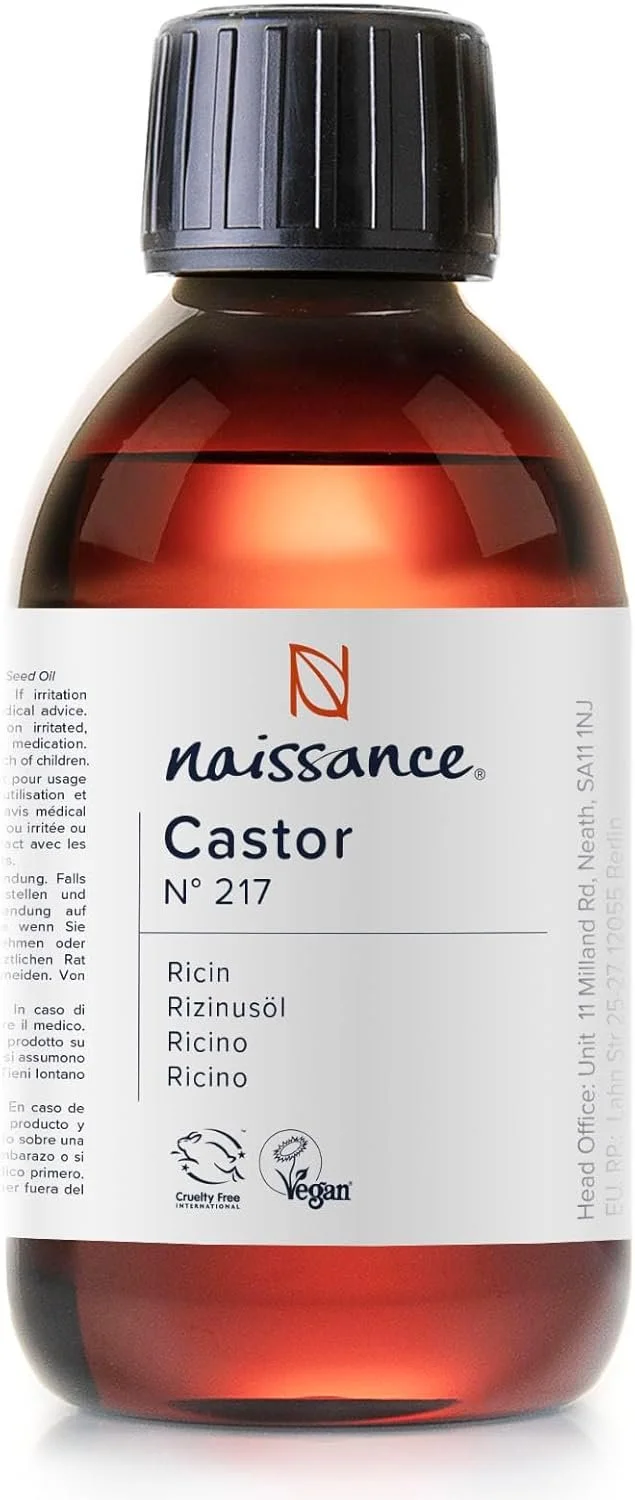
Naissance Castor Oil Cold Pressed
cold-pressed, hexane-free castor oil. Cold pressing preserves the ricinoleic acid content and avoids the solvent residues of some cheaper refined alternatives. Pure without additives — important for reactive psoriasis skin that may respond to preservatives or fragrance in blended products
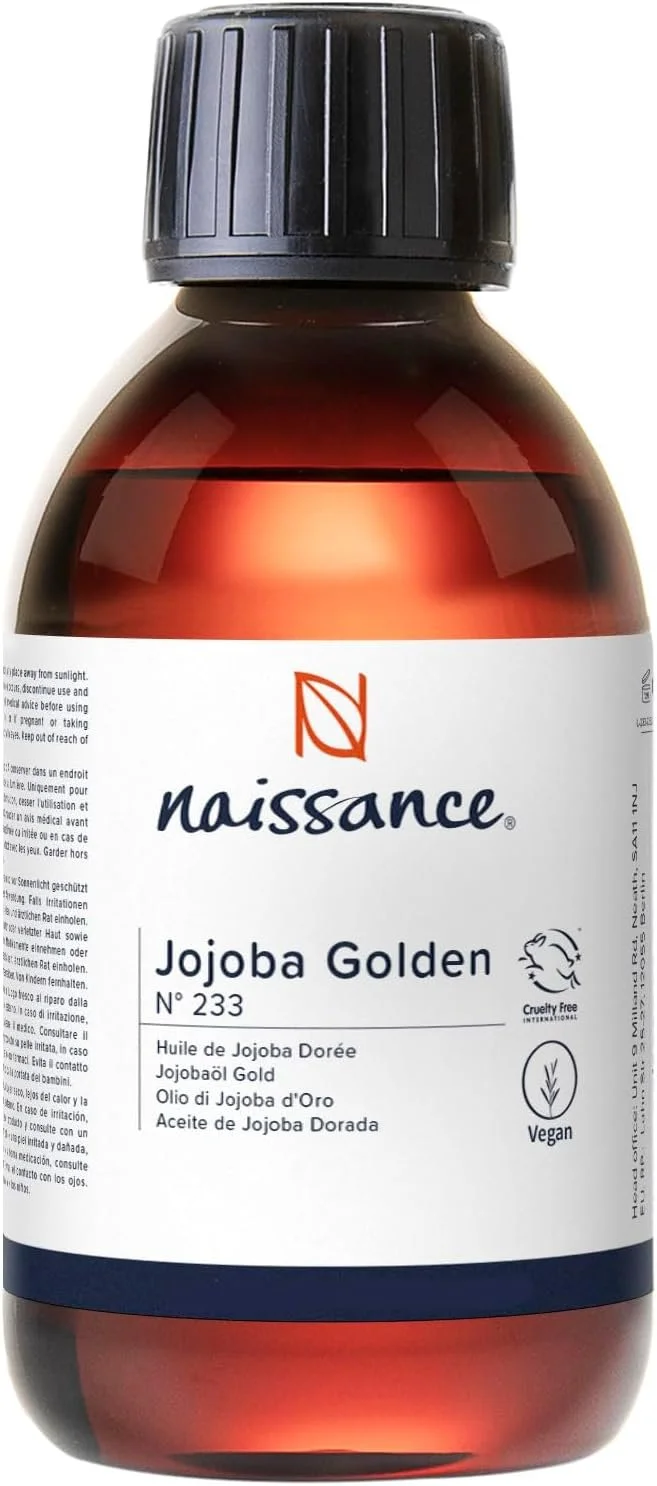
Naissance Jojoba Oil Cold Pressed
the most appropriate carrier for diluting castor oil on psoriasis-prone skin. Jojoba's wax ester composition closely resembles the skin's own sebum, making it non-comedogenic and well-tolerated on reactive skin. A 3:1 ratio of jojoba to castor oil produces a consistency appropriate for larger back and body plaques while retaining castor oil's ricinoleic acid benefit. Both from the same Naissance range — consistent quality and sourcing.
Better alternatives for daily psoriasis moisturising
For consistent daily emollient use — which is the most important topical habit for psoriasis — purpose-formulated emollients are more effective than castor oil used alone:
Petroleum jelly provides similar or stronger occlusive properties with better spreadability. Cetraben, Epaderm, and CeraVe ceramide cream provide barrier repair alongside occlusion. Urea 10% preparations address scale while simultaneously humectifying — combining castor oil's scale-softening benefit with better daily tolerability.
Castor oil works best as an occasional pre-treatment tool alongside a consistent daily emollient routine, not as a replacement for one.
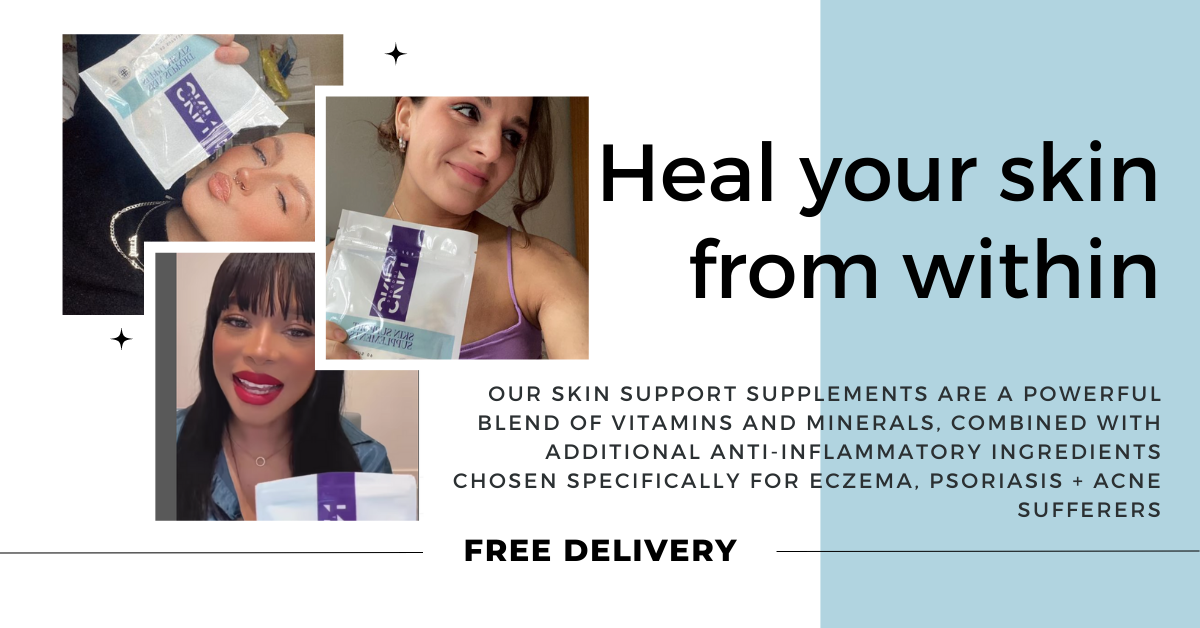
Skin support for psoriasis-prone skin
Topical oils address psoriasis at the skin surface. The immune dysregulation and systemic inflammation driving the condition require internal support that no oil can provide.
Drought's Skin Support Formula provides 14 nutrients including vitamin D, zinc, vitamin C, and magnesium — addressing the internal nutritional foundations of psoriasis management that topical care alone cannot reach. Made in the UK, suitable for vegetarians, designed for consistent long-term daily use.
FAQs: Castor oil and psoriasis
Is castor oil good for psoriasis?
As a softening pre-treatment for thick psoriatic plaques — yes. Castor oil's 90% ricinoleic acid content provides occlusive barrier protection and mild anti-inflammatory activity through EP3 receptor modulation. Its high viscosity makes it most effective applied thickly to plaques for one to two hours before bathing rather than as a daily leave-on moisturiser — the viscosity that makes it effective for scale softening also makes it impractical for everyday use on large body surface areas.
Can castor oil make psoriasis worse?
Yes — through the Koebner phenomenon. The standard advice to massage castor oil into psoriatic plaques carries a specific friction risk for the 25–30% of psoriasis patients who are Koebner-positive. Mechanical trauma from vigorous massage on psoriatic skin can trigger new plaque formation at the site of friction. Apply castor oil by gentle patting rather than rubbing — and avoid application to inflamed, broken, or actively flaring skin entirely.
Is castor oil safe for psoriasis — what about ricin?
Cold-pressed castor oil for topical use is safe — the ricin concern is a common misconception. Ricin is a toxic protein found in castor beans but is not present in cold-pressed castor oil because the oil extraction process doesn't extract water-soluble proteins. Topical castor oil from a reputable cold-pressed source carries no ricin risk. The safety concerns for psoriasis are contact sensitisation in a subset of users and Koebner friction risk from massage — not ricin toxicity.
How should I use castor oil for scalp psoriasis?
Apply castor oil generously to the scalp the night before washing — cover with a soft shower cap or cotton cloth to allow the oil to penetrate and soften scale overnight. Wash off in the morning with a medicated shampoo containing salicylic acid or coal tar — allowing adequate contact time before rinsing. Never apply castor oil to the scalp and then vigorously scratch or rub — the pre-wash softening protocol works by making scale removal during shampooing less traumatic, not by requiring mechanical removal of softened scale before washing.
How often should I use castor oil for psoriasis?
As a pre-treatment before bathing — one to three times weekly rather than daily. Daily application of a heavy occlusive oil to psoriatic skin without adequate removal leads to buildup that can trap heat against inflamed plaques and worsen the inflammatory cycle. A lighter fragrance-free emollient is more appropriate for daily use — castor oil is most effective as a targeted weekly pre-treatment for particularly thick or stubborn plaque areas.
What works better than castor oil for psoriasis?
For daily emollient use — Doublebase Gel, Epaderm, or Cetraben provide more practical barrier repair without the viscosity and buildup concerns of castor oil. For scale softening specifically — urea 10–20% provides combined humectant and keratolytic activity that addresses scale more completely than castor oil's purely occlusive mechanism. For scalp scale — salicylic acid or coal tar shampoos used after an overnight oil pre-treatment (castor or coconut oil) address both the scale and the underlying seborrhoeic overlap dimension simultaneously. As covered in the psoriasis exfoliation article in this series, chemical keratolysis addresses scale more specifically than any topical oil alone.
Can I use castor oil alongside my prescribed psoriasis treatment?
Generally yes for topical treatments — apply prescribed steroid or calcineurin inhibitor first, allow full absorption, then apply castor oil as an occlusive over the top if needed for additional barrier protection. Do not apply castor oil immediately before prescribed topical treatment as the oil layer reduces penetration of the active ingredient. For systemic treatments — castor oil has no documented interactions with methotrexate, biologics, or other systemic psoriasis medications.
Summary
Castor oil has genuine practical value for psoriasis — specifically for softening thick, adherent plaque scale as a pre-wash treatment, and as an intensive overnight spot treatment for very dry patches. Its ricinoleic acid content provides strong occlusive and humectant properties. Its practical limitations — extreme viscosity and impracticality for daily large-area use — mean it works best as an occasional targeted treatment alongside a daily purpose-formulated emollient rather than as a standalone moisturiser. The anti-inflammatory claims from ricinoleic acid have limited clinical evidence in psoriasis specifically. Apply it for what it genuinely does well.
Written by the Drought Skin team — specialists in natural support for psoriasis and eczema.
Disclaimer: This article contains affiliate links. We earn a very small commission from each purchase made through these links. There is no additional cost to you. All products featured have been specifically selected as products we personally use and love. For further information, please see our disclaimer page.
-
Psoriasis Skincare Routine: What Actually Helps, What to Avoid & Common Mistakes
Olive Oil for Psoriasis: When It Helps, When It Worsens Symptoms
Bath Salts for Eczema & Psoriasis: What Actually Helps and How to Use Them
Types of Psoriasis Explained: Symptoms, Appearance & How They Differ
Paraffin Creams for Eczema: Benefits, Fire Risk, and the Best Alternatives
