
Omega-3 and Psoriasis: The Eicosanoid Mechanism, What the Evidence Shows & Realistic Expectations
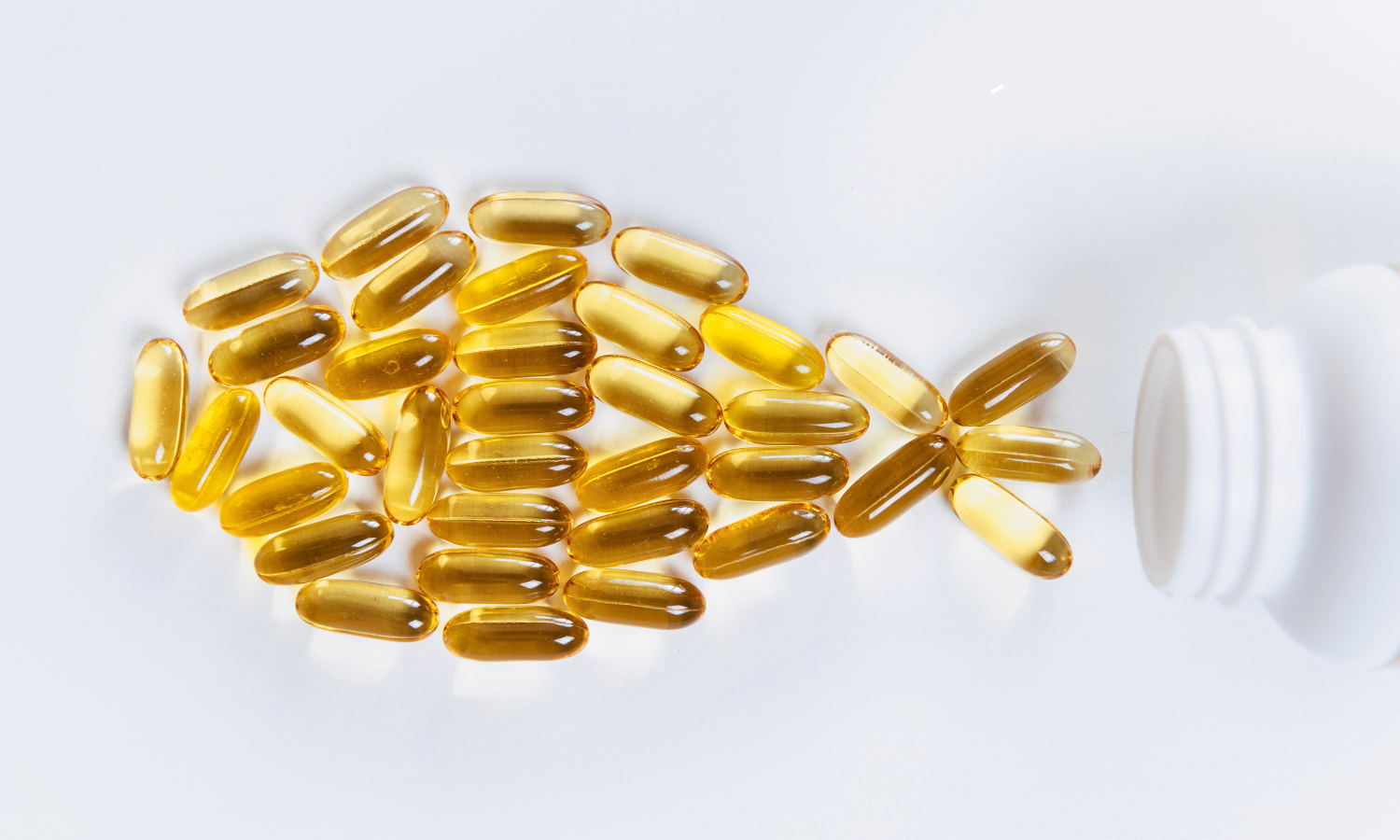
Omega-3 fatty acids have a more specific and more coherent mechanism for psoriasis than most supplement content acknowledges — and a more modest evidence base than the same content typically suggests. Understanding both gives a more useful picture than either the enthusiastic supplement marketing or the dismissive "evidence is mixed" medical response.
What Are Omega-3 Fatty Acids?
Omega-3 fatty acids are essential fats that play important roles in immune regulation, cardiovascular health, brain function, and inflammation.
The three main omega-3s are:
EPA (Eicosapentaenoic Acid)
EPA is primarily found in oily fish and fish oil supplements. It is often considered the most relevant omega-3 for inflammatory conditions because it influences the production of inflammatory signalling molecules.
DHA (Docosahexaenoic Acid)
DHA is also found in marine sources and contributes to cell membrane health throughout the body, including the skin.
ALA (Alpha-Linolenic Acid)
ALA is found in plant foods such as:
Flaxseeds
Chia seeds
Walnuts
Hemp seeds
The challenge is that humans convert only a small proportion of ALA into EPA and DHA, meaning plant sources may not provide the same biological effects as marine omega-3s.
The mechanism: why omega-3 is specifically relevant to psoriasis
Psoriasis is driven by Th17 immune activity producing TNF-α, IL-17, and IL-23 — the same cytokines targeted by modern biologic treatments. Omega-3 fatty acids EPA and DHA address this inflammatory profile through three specific and complementary pathways:
Eicosanoid competition. EPA and DHA compete directly with arachidonic acid (AA) for the cyclooxygenase (COX) and lipoxygenase (LOX) enzymes that produce inflammatory mediators. When EPA occupies these enzymes instead of AA, it produces series-3 prostaglandins and series-5 leukotrienes — significantly less pro-inflammatory than the series-2 and series-4 variants that AA produces. In psoriasis specifically, leukotriene B4 (an AA-derived LOX product) is a potent chemoattractant for neutrophils and is elevated in psoriatic skin — EPA's competitive inhibition of LTB4 production is the most direct mechanism connecting omega-3 to psoriatic inflammation.
Th17 modulation. EPA and DHA reduce IL-17 and IL-23 production and support the Th17/Treg balance — modulating the immune pathway most specifically relevant to psoriasis at the same level that biologic treatments target. This immunomodulatory effect is less potent than biological agents but operates through a genuinely relevant pathway rather than a generalised anti-inflammatory effect.
Resolvins and protectins. EPA and DHA are precursors to specialised pro-resolving mediators — resolvins, protectins, and maresins — that actively resolve inflammation rather than simply suppressing it. These resolution mediators support tissue repair and reduce the chronic inflammatory persistence that characterises psoriatic disease. This resolution mechanism is distinct from the competitive inhibition above and represents a more recently understood dimension of omega-3's anti-inflammatory action.

What the evidence actually shows
The 2019 meta-analysis of omega-3 supplementation in psoriasis found statistically significant improvements in PASI scores, erythema, scaling, and pruritus across multiple trials. The effect sizes were modest — omega-3 supplementation produced meaningful but not dramatic PASI reductions.
The variability across trials reflects several factors: different doses (ranging from 1.8g to 6g combined EPA and DHA daily), different supplementation periods (8 weeks to 24 weeks), different psoriasis severity at baseline, and different background treatments used alongside supplementation. The most consistently positive results appear in trials using higher EPA concentrations (above 1.8g EPA daily) over longer periods (12 weeks or more).
The honest summary: omega-3 supplementation produces consistent but modest improvement in psoriasis severity scores across the evidence base — not a dramatic clearance, but a meaningful reduction in inflammatory activity that supports other management approaches rather than replacing them.
How Much Fish Oil Is Used in Psoriasis Studies?
One of the biggest reasons for conflicting findings is that studies use very different doses.
Research showing benefits has often used substantially higher amounts of EPA and DHA than are found in standard supermarket fish oil capsules.
Many positive psoriasis studies have used approximately:
1.8–4 grams of combined EPA and DHA daily
Higher-EPA formulations
Consistent supplementation for at least 8–12 weeks
This is considerably more than the amount typically consumed from diet alone.
Always consult your healthcare professional before taking high-dose omega-3 supplements, particularly if you:
Take blood-thinning medication
Have a bleeding disorder
Are preparing for surgery
Are pregnant or breastfeeding
EPA vs DHA: which matters more for psoriasis?
Both contribute — but EPA is the more directly relevant of the two for psoriasis specifically. EPA is the direct precursor to the series-3 prostaglandins and series-5 leukotrienes, and the LTB4 competition mechanism that most directly addresses psoriatic neutrophil recruitment operates primarily through EPA rather than DHA. High-EPA formulations (where EPA represents 70%+ of the total omega-3 content) are the most commonly used in the psoriasis trials showing the strongest effects.
DHA contributes through cell membrane composition, resolvin D production, and Th17 modulation — an important complementary role, but secondary to EPA's direct eicosanoid competition mechanism for psoriasis specifically.
The plant-source limitation
Flaxseed, chia seeds, walnuts, and hemp seeds provide ALA (alpha-linolenic acid) — a plant-source omega-3 that the body must convert to EPA and DHA before it can produce the eicosanoid competition and Th17 modulation effects relevant to psoriasis. Human ALA to EPA conversion rates are approximately 5–10%, meaning large quantities of plant-source ALA are required to achieve equivalent EPA levels to fish oil supplementation.
For people following plant-based diets, algae-derived omega-3 supplements provide EPA and DHA directly — sourced from the marine algae that fish accumulate omega-3 from in the first place, delivering the same fatty acids through a plant-based route.
Can You Get Enough Omega-3 Through Food?
Many people can improve omega-3 intake through diet.
Good sources include:
Salmon
Sardines
Mackerel
Herring
Trout
General dietary guidance often recommends eating oily fish twice weekly. However, the doses used in psoriasis studies are frequently higher than dietary intake alone provides.
Omega-3 and psoriatic arthritis
The eicosanoid competition mechanism is relevant to joint inflammation as well as skin inflammation — LTB4's neutrophil recruitment role extends to synovial tissue in psoriatic arthritis, and EPA's competitive inhibition operates at both sites simultaneously. Published evidence for omega-3 in psoriatic arthritis specifically shows modest improvements in joint tenderness and morning stiffness.
Omega-3 is not a substitute for DMARDs or biologics in psoriatic arthritis with active joint disease — but as a complementary nutritional intervention addressing the same inflammatory pathway at both the skin and joint level, it is more specifically relevant for PsA than most supplemental approaches. As covered in the psoriatic arthritis article in this series, early joint treatment prevents irreversible damage — omega-3 should complement rather than delay appropriate medical management.
Dosage and practical guidance
The doses used in psoriasis trials showing positive results range from approximately 1.8g to 4g combined EPA and DHA daily — considerably more than standard supermarket fish oil capsules provide per serving. A typical 1,000mg fish oil capsule contains approximately 300mg combined EPA and DHA — meaning you would need six capsules to reach the lower end of the research dosage.
High-EPA concentrated formulations — where omega-3 content exceeds 80–90% of the capsule — provide research-relevant doses at lower capsule counts. Always discuss high-dose supplementation with your GP if you take blood-thinning medication, have a bleeding disorder, are preparing for surgery, or are pregnant.
Recommended Products
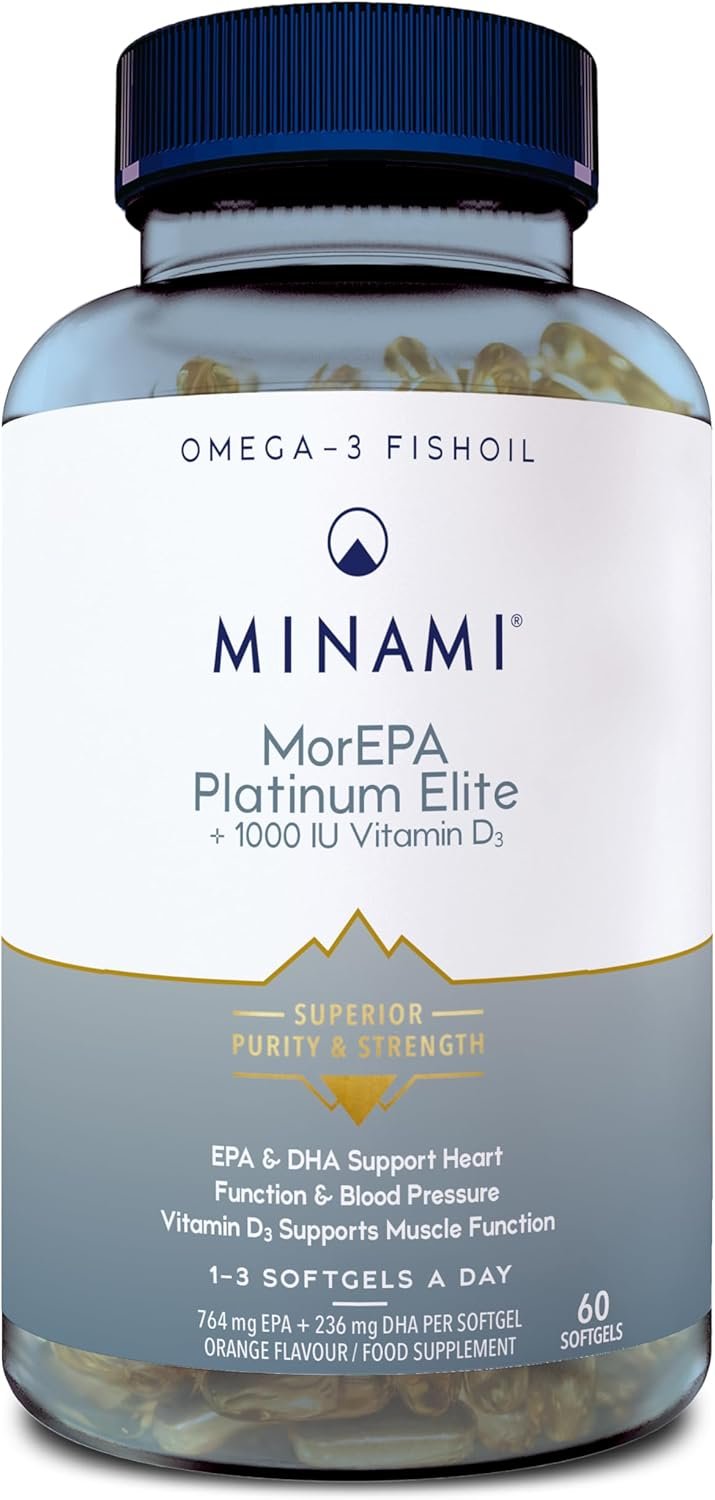
Minami MorEPA Platinum + Vitamin D3
a highly concentrated omega-3 supplement providing 764mg EPA and 236mg DHA per softgel alongside vitamin D3, extracted via supercritical CO2 processing that removes contaminants to exceed European purity standards. The high EPA concentration is specifically relevant for the LTB4 competition mechanism most directly applicable to psoriasis. The addition of vitamin D3 gives this product particular relevance for psoriasis given vitamin D's documented Th17 modulation role — addressing two of the most consistently documented nutritional considerations for psoriasis simultaneously.
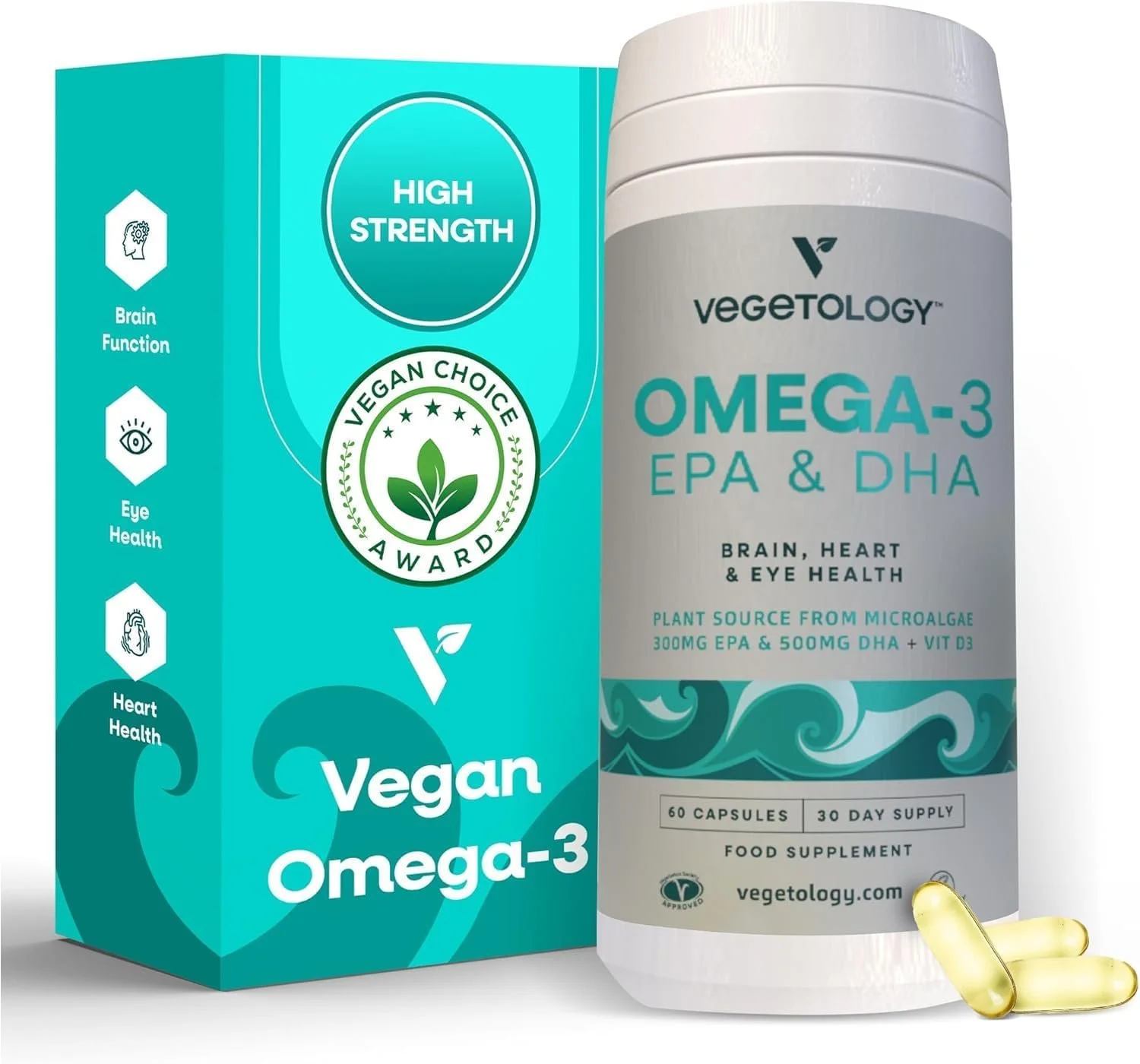
Vegetology Opti3 Omega-3 EPA & DHA
an algae-derived omega-3 providing direct EPA and DHA without fish oil, appropriate for vegetarians and vegans. Algae is the original source of the EPA and DHA that accumulates in fish — providing the same eicosanoid competition benefit as fish oil without the ALA conversion limitation of plant-source alternatives.
Supporting Your Skin Beyond Omega-3
Omega-3 addresses the eicosanoid competition and Th17 modulation dimensions of psoriasis — vitamin D, zinc, and vitamin C address the complementary nutritional dimensions that omega-3 alone doesn't cover. Vitamin D modulates Th17 activity through the VDR pathway alongside its keratinocyte regulation role; zinc supports immune function and barrier repair; vitamin C provides antioxidant protection against the oxidative stress that psoriatic inflammation generates.
Drought's Skin Support Formula provides vitamin D, zinc, vitamin C, magnesium, and 10 other nutrients — addressing the multi-nutrient internal picture that omega-3 supplementation addresses only partially. Made in the UK, suitable for vegetarians, designed for consistent long-term daily use.
Frequently Asked Questions
Does fish oil cure psoriasis?
No. There is currently no cure for psoriasis. Fish oil may help improve symptoms in some people but should not replace medical treatment.
How long does fish oil take to work for psoriasis?
The most positive psoriasis trials use supplementation periods of 12 weeks or longer. Expect at least 8–12 weeks of consistent use before assessing results.
Is flaxseed oil as effective as fish oil for psoriasis?
No — flaxseed provides ALA which converts to EPA at approximately 5–10% efficiency. Algae-derived supplements provide EPA and DHA directly and are the appropriate plant-based alternative.
What is the best omega-3 for psoriasis?
Most research focuses on EPA and DHA, particularly higher-EPA formulations.
Does fish oil help psoriasis?
Modestly — the 2019 meta-analysis found statistically significant improvements in PASI scores, erythema, and scaling across multiple trials, with effect sizes that are meaningful but not dramatic.
How much EPA do I need for psoriasis?
Psoriasis trials showing positive results have generally used 1.8g–4g combined EPA and DHA daily, with the most consistent benefits at higher EPA concentrations. Discuss high-dose supplementation with your GP.
Can omega-3 help psoriatic arthritis?
Modestly — the same LTB4 competition mechanism applies to synovial joint inflammation as to skin inflammation. Omega-3 is a complementary intervention, not a substitute for appropriate joint treatment.
Should I take omega-3 alongside my psoriasis medication?
Discuss with your GP — omega-3 at high doses has mild antiplatelet effects that may interact with blood-thinning medications.
Summary
EPA and DHA have a specific and coherent mechanism for psoriasis through LTB4 competitive inhibition, Th17 modulation, and resolvin-mediated inflammatory resolution. The 2019 meta-analysis supports consistent modest PASI improvements across supplementation trials — most pronounced with high-EPA formulations at doses of 1.8g EPA or above over 12 weeks or more. ALA from plant sources converts inefficiently to EPA and DHA; algae-derived supplements provide a plant-based alternative with equivalent direct EPA and DHA. Omega-3 is a complementary nutritional intervention for psoriasis — meaningful as part of a comprehensive approach, not a standalone treatment.
In Short
Omega-3 fatty acids can help reduce inflammation involved in psoriasis.
Research shows modest improvements in psoriasis severity in some studies, but results are mixed.
The strongest evidence relates to EPA and DHA, which are found in oily fish and fish oil supplements.
Plant sources provide ALA, which converts poorly into EPA and DHA in the body.
Omega-3s should be viewed as a supportive strategy rather than a replacement for prescribed psoriasis treatments.
A broader anti-inflammatory nutrition approach is likely more important than any single supplement.
Omega-3 addresses LTB4 competition and Th17 modulation — vitamin D, zinc, and vitamin C address the VDR pathway, barrier repair, and oxidative stress that eicosanoid competition doesn't reach. Drought's Skin Support Formula provides all three alongside 11 other nutrients, addressing the complementary internal dimensions that omega-3 supplementation leaves open. Made in the UK, suitable for vegetarians, designed for consistent long-term daily use.
Start your skin support journey →
Written by the Drought Skin team — specialists in natural support for psoriasis and eczema.
Disclaimer: This article contains affiliate links. We earn a very small commission from each purchase made through these links. There is no additional cost to you. All products featured have been specifically selected as products we personally use and love. For further information, please see our disclaimer page.
-
The Psoriasis Diet: Best Foods, Foods to Avoid & What the Evidence Shows
Vitamin D and Psoriasis: The Evidence, the Mechanisms & the UK Context
Psoriatic Arthritis: Symptoms, Types, Early Signs & Why to Act Quickly
Anti-Inflammatory Diet for Psoriasis: What to Eat, What to Avoid
Vitamins & Supplements for Psoriasis: What the Evidence Shows
