

Period Acne: A Cycle-by-Cycle Guide to Managing Hormonal Breakouts
Period acne follows a predictable hormonal pattern — which means it can be managed proactively rather than reactively. Here's the cycle-by-cycle guide.

Tea Tree Oil for Acne: How It Works, What the Evidence Shows & Important Safety Considerations
Tea tree oil has genuine antimicrobial evidence for acne — but the oxidation risk, contact sensitisation, and undiluted application dangers are rarely addressed. Here's the honest picture.

Essential Oils for Psoriasis: Which Help, Which Are Contact Allergens & the Koebner Application Risk
Frankincense's boswellic acid inhibits 5-lipoxygenase, chamomile's bisabolol has anti-inflammatory activity — but linalool oxidation and Koebner friction from application are the risks most articles miss. Here's the honest hierarchy.

Menopause & Eczema: Why It Happens + What Helps
Menopause can trigger or worsen eczema in ways that catch many women off guard. Here's why it happens, what's going on hormonally, and what genuinely helps.
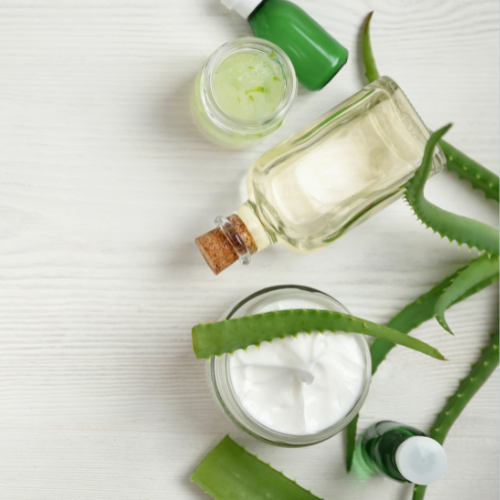
Aloe Vera for Eczema: The Acemannan Mechanism, What the Evidence Shows & the Aloin Safety Warning
Aloe vera's acemannan content has documented antimicrobial activity against S. aureus — the bacterium most associated with eczema severity. But aloin in whole-leaf preparations is a documented irritant. Here's what to use and what to avoid.

Coconut Oil for Psoriasis: Benefits, Limitations & How to Use It Safely
Coconut oil has specific properties relevant to psoriasis — particularly for the scalp and scale softening. Here's what it does well, what it doesn't, and the Malassezia caveat.

Mould, Damp & Eczema: The Mechanisms & What Actually Helps
Mould worsens eczema through protease-mediated barrier disruption and IgE allergen sensitisation. Here's the mechanism, the UK housing context, and what actually helps.

Oregon Grape for Psoriasis: The Berberine Mechanism, Clinical Evidence & How to Use It
Oregon grape's berberine inhibits keratinocyte proliferation and NF-κB activity — giving it a specific mechanism for psoriasis backed by multiple clinical trials where 60–84% of patients reported significant improvement. Here's what the evidence shows

Salt Water for Acne: The Osmotic Mechanism, Why Ocean Water Differs from DIY & the Barrier Risk
Salt water's osmotic effect temporarily draws fluid from sebaceous glands — but disrupts the ceramide barrier simultaneously. Here's when it helps, when it worsens acne, and why ocean water behaves differently from DIY salt spray.

Moisturising for Eczema: Why It's Essential
Moisturising is the foundation of eczema care — but most people do it wrong. Learn how emollients work, what to look for, and when to moisturise for best results.

Sea Moss for Eczema: Does It Actually Help?
Sea moss is trending for eczema — but does it live up to the claims? We look at the evidence, the nutrients, the risks, and what's realistic to expect.

Cryotherapy and Eczema: What the Cold Actually Does and What's Safe at Home
Cold therapy temporarily reduces eczema itch through specific vasoconstriction and histamine mechanisms — but cold urticaria is a real risk. Here's what's safe and what isn't.