Honey for Eczema & Psoriasis: The Methylglyoxal Mechanism, Manuka vs Raw & What the Evidence Shows

Honey has been used on skin for thousands of years — and unlike many traditional remedies, its properties have been examined under clinical conditions. For eczema in particular, the evidence is more specific and more compelling than most natural remedy articles suggest. The key is understanding what honey actually does, which type matters, and how to use it appropriately for these specific conditions.
Can honey help eczema and psoriasis?
Honey can help soothe dry, irritated skin and improve hydration — but it doesn't treat eczema or psoriasis itself, and the difference between honey that's worth considering and honey that isn't is more specific than most natural remedy content acknowledges. Not all honey has the same properties: the methylglyoxal compound in genuine manuka honey has documented antimicrobial activity against Staphylococcus aureus — the bacterium that colonises eczema skin and directly amplifies inflammatory flares — which gives medical-grade manuka a specific and coherent rationale that standard supermarket honey doesn't share. The MGO rating, the application method, and the distinction between medical-grade and food-grade manuka all determine whether you're getting genuine antimicrobial benefit or simply applying a sticky humectant.
What makes honey therapeutically active
Not all honey is equal therapeutically. Standard supermarket honey has mild humectant and mild antimicrobial properties. Medical-grade and raw manuka honey have considerably more specific and documented activity.
Hydrogen peroxide. Most honeys produce small amounts of hydrogen peroxide through an enzymatic reaction — this provides general antimicrobial activity. However, hydrogen peroxide is also irritating at higher concentrations and can be deactivated by proteins in wound fluid and body secretions, limiting its durability in use.
Methylglyoxal (MGO). This is what makes manuka honey distinctive. Leptospermum scoparium (the New Zealand tea tree plant whose nectar manuka bees collect) produces dihydroxyacetone in the nectar, which converts to methylglyoxal during honey production. MGO has potent antimicrobial activity that is not deactivated by protein and persists on the skin surface — making manuka honey considerably more durable in antimicrobial effect than standard honey.
Low pH and high osmolarity. All honeys are acidic (pH 3.2–4.5) and highly concentrated (high sugar content draws water out of bacterial cells by osmosis). These properties independently inhibit bacterial growth and create an environment hostile to bacterial colonisation on skin.
Polyphenols and antioxidants. Raw honey contains flavonoids, phenolic acids, and other antioxidants with anti-inflammatory properties. These vary by honey variety and processing — raw, minimally processed honey retains more than standard commercial honey.
Why these properties are specifically relevant to eczema
The S. aureus connection is the most important reason honey has specific — not just general — relevance to eczema.
Staphylococcus aureus colonises the skin of approximately 90% of people with atopic eczema, compared to around 5% of healthy individuals. The bacterium produces exotoxins that act as superantigens, triggering immune responses, damaging the skin barrier, and perpetuating the itch-inflammation-scratching cycle. Managing S. aureus colonisation is one of the most significant practical targets in eczema management.
Both manuka honey and medical-grade honey have documented activity against S. aureus, including methicillin-resistant strains (MRSA). For eczema skin, a topical agent that reduces S. aureus load through osmotic, acidic, and MGO-mediated mechanisms — without the resistance risk of antibiotic creams — is a genuinely useful addition to the skincare toolkit.
The clinical evidence
The most significant published research involves the work of Professor Peter Molan at the University of Waikato (New Zealand) and subsequent groups. Clinical studies using honey for eczema and seborrhoeic dermatitis have found:
In a study of patients with chronic seborrhoeic dermatitis (forehead, eyebrows, chest) who applied diluted honey every other day and left it for three hours before rinsing, participants showed significant improvement in scaling, itching, and hair loss — with some achieving complete clearing. Crucially, those who stopped treatment relapsed, while continued application maintained improvement.
For atopic eczema, clinical observations and smaller studies have found improvements in itch, scaling, and dryness with consistent honey application — consistent with its S. aureus-reducing, humectant, and anti-inflammatory properties. Larger randomised controlled trials are limited.
For psoriasis, the evidence is less direct. Honey's scale-softening, antimicrobial, and soothing properties may provide comfort for mild psoriasis patches, but there is no mechanism by which it addresses the T-cell immune dysregulation driving the condition.
Understanding the UMF and MGO rating systems
Manuka honey products are rated by two main systems: UMF (Unique Manuka Factor) and MGO (methylglyoxal). Both reflect the concentration of therapeutic compounds, primarily MGO.
A UMF 10+ / MGO 263+ is generally considered the minimum therapeutic grade for skin conditions. UMF 15+ / MGO 514+ is recommended for more active antimicrobial purposes (wound care, infected skin). UMF 5+ / MGO 83+ is often labelled for food use and has limited therapeutic effect.
For eczema skin management where S. aureus reduction is the goal, UMF 10+ or higher is the appropriate starting point.
Products worth considering
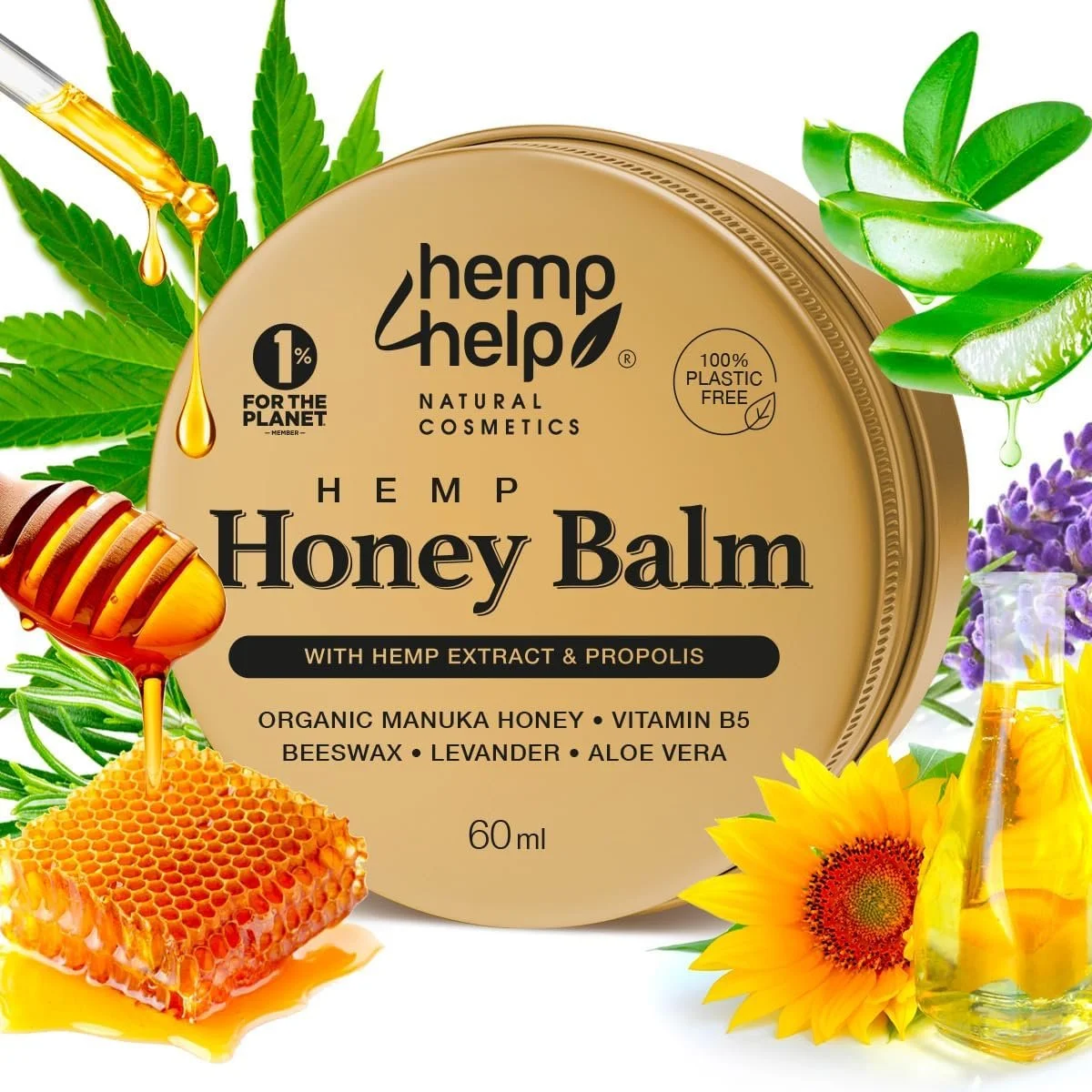
Hemp Help Manuka Honey & Hemp Balm
combines manuka honey with hemp seed oil (a source of GLA and balanced omega fatty acids) in a balm format. The combination addresses both the antimicrobial benefit of manuka and the barrier lipid support from hemp seed oil. A practical option for localised dry or affected patches.
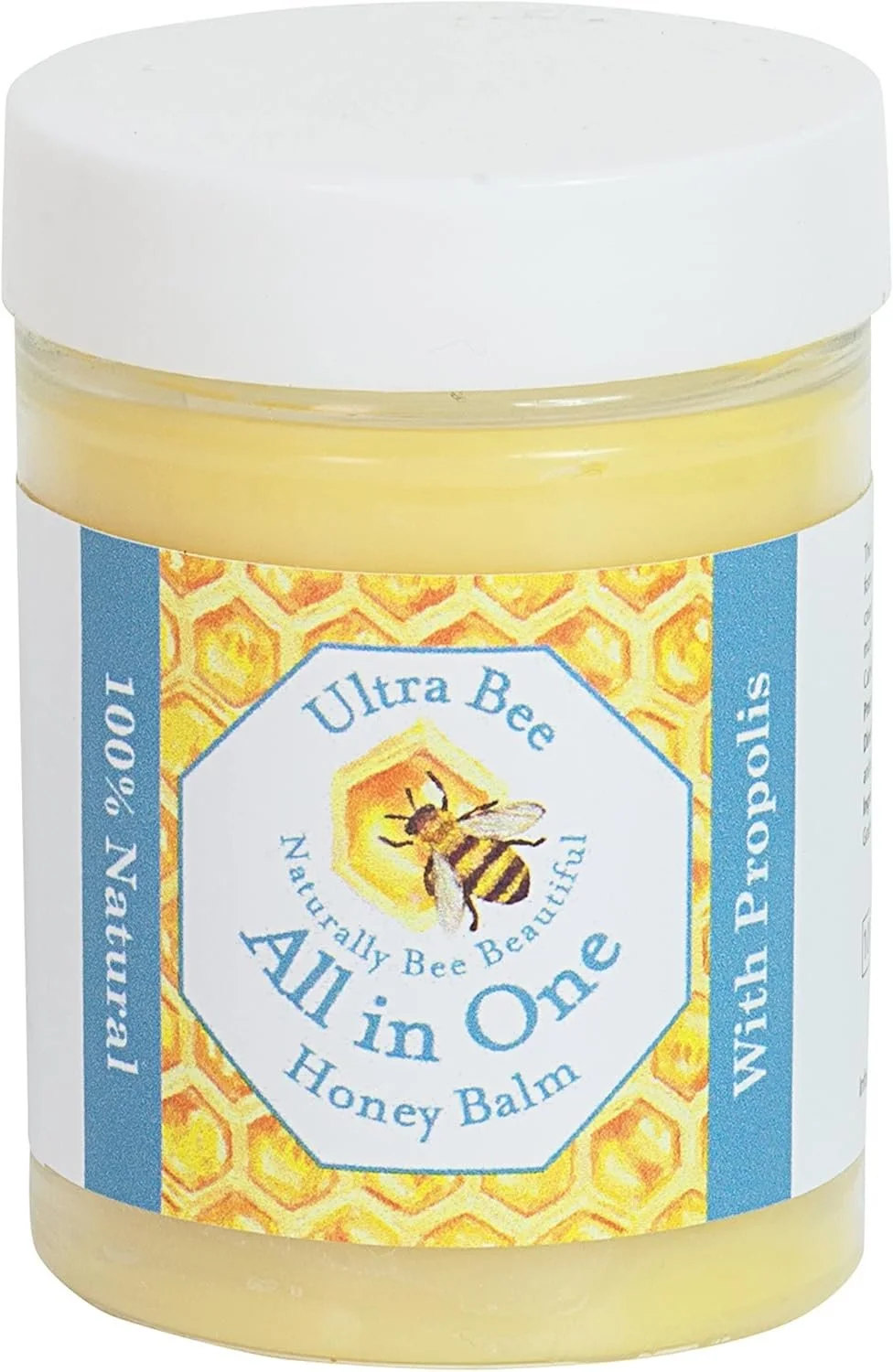
Ultra Bee 100% Natural Honey Balm
a natural honey-based balm suitable for sensitive and eczema-prone skin. Check the current ingredient list before purchasing — the formulation is simple and suitable for reactive skin, but confirm fragrance-free status.
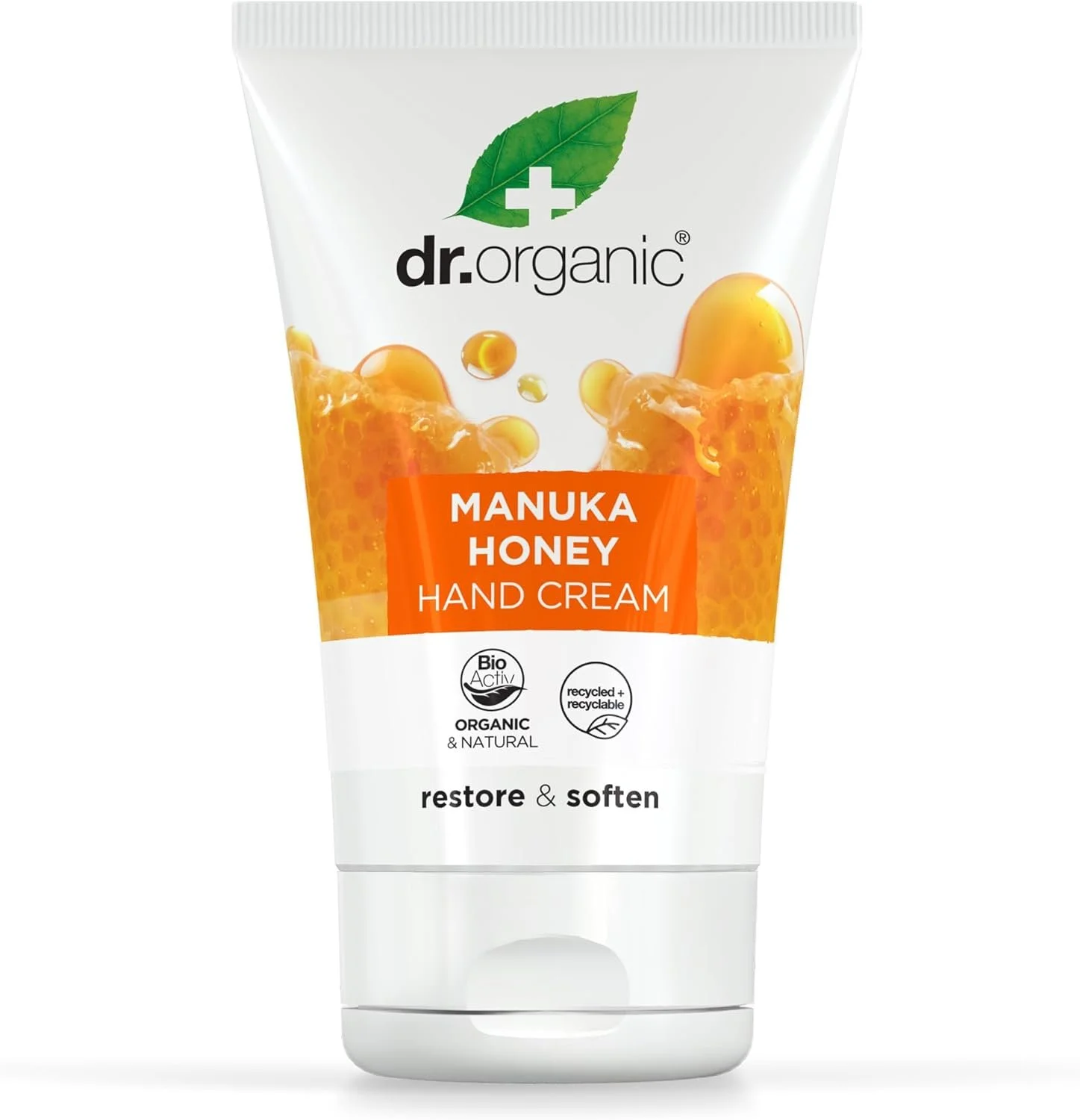
Dr Organic Manuka Honey Hand Cream
a honey-based hand cream for eczema-prone skin on the hands. Hand eczema is one of the most common and most practically inconvenient presentations, and a honey-formulated hand cream provides both moisturisation and mild antimicrobial support appropriate to this site.
How to use honey safely for eczema and psoriasis
Choose the right type. For meaningful antimicrobial effect, raw manuka honey (UMF 10+) or medical-grade honey products (like Medihoney) are substantially more effective than standard supermarket honey.
Patch test first. Apply a small amount to the inside of the elbow and check after 24 hours. Propolis — a resinous compound found in some honeys and honey-based products — is a documented contact allergen and is more prevalent in raw and minimally processed varieties.
Apply to calm, unbroken skin. Honey on severely inflamed or acutely broken skin may cause stinging. It's appropriate for sub-acute or chronic dry patches, not acute weeping flares.
DIY honey-oat mask: 1 tablespoon raw manuka honey, 1 tablespoon finely ground rolled oats, 1 teaspoon aloe vera gel. Mix into a smooth paste. Apply to face or affected areas, leave for 10–15 minutes, rinse with lukewarm water, and apply emollient immediately. The oatmeal adds avenanthramide anti-inflammatory compounds; the aloe provides cooling; the honey provides humectant and antimicrobial activity.
Follow with emollient. Honey draws moisture toward itself — applying a fragrance-free emollient after rinsing seals in hydration and prevents rebound dryness.
Avoid on children under one year old for any ingestion risk. Topical application on unbroken skin is generally safe for infants above this age, but patch test first.
When to be cautious
People with known pollen, bee venom, or propolis allergy have an elevated risk of honey reactions. People with multiple existing topical product sensitivities should patch test before use. Do not apply honey to infected or severely inflamed psoriasis skin — medical treatment is more appropriate than natural remedies in that context.
Skin support for eczema & psoriasis-prone skin
Honey addresses surface comfort and S. aureus reduction. The immune dysregulation and nutritional deficiencies driving eczema and psoriasis require internal support that topical treatments cannot provide.
Drought's Skin Support Formula provides 14 nutrients including vitamin D, zinc, vitamin C, and magnesium — supporting the internal foundations of skin health that honey can complement but cannot replace. Made in the UK, suitable for vegetarians, designed for consistent long-term daily use.
FAQs: Honey and eczema & psoriasis
Is honey good for eczema and psoriasis?
Yes — through specific mechanisms rather than vague moisturising benefit. Manuka honey's methylglyoxal content inhibits S. aureus — the bacterium most consistently associated with eczema severity amplification through its toxin production and barrier disruption. Raw honey's hydrogen peroxide production provides broader antimicrobial activity. Both types provide humectant moisture retention through their hygroscopic sugar composition. Medical-grade honey preparations have the strongest evidence — multiple published trials show significant reductions in wound healing time and bacterial colonisation on eczema-affected skin. The distinction between honey types matters considerably: Manuka's methylglyoxal mechanism is more specific and more potent than raw honey's hydrogen peroxide activity.
What is the UMF rating in Manuka honey and why does it matter?
UMF stands for Unique Manuka Factor — a standardised rating measuring methylglyoxal concentration alongside two companion markers (leptosperin and DHA) that confirm genuine New Zealand Manuka honey provenance. The rating directly determines antibacterial potency: UMF 5+ provides minimal methylglyoxal concentration insufficient for documented antibacterial activity at skin level; UMF 10+ is the minimum threshold for meaningful S. aureus inhibition in published studies; UMF 20+ provides the highest methylglyoxal concentration with the strongest antibacterial evidence. For eczema specifically — where S. aureus colonisation is the primary mechanism of interest — UMF 10+ is the minimum worth using therapeutically. Lower UMF ratings provide humectant benefit but not the specific antibacterial activity that distinguishes Manuka from standard honey.
Is Manuka honey better than raw honey for eczema?
For S. aureus inhibition specifically — yes. Manuka honey's methylglyoxal is stable and potent regardless of storage or heat exposure; raw honey's hydrogen peroxide activity is unstable and degrades on exposure to light, heat, and the enzyme catalase present in wound fluid and skin. For general humectant moisturising — both are equivalent. For psoriasis specifically — the antimicrobial distinction matters less than for eczema given S. aureus colonisation is less central to psoriasis pathology; the anti-inflammatory and humectant properties of both types are the more relevant mechanisms for psoriatic scale softening.
Can I leave honey on eczema overnight?
Yes — with specific precautions. Medical-grade Manuka preparations are designed for extended skin contact and are the most appropriate format for overnight application. Raw honey applied overnight carries a practical concern: its high sugar content is an excellent bacterial growth medium if the occlusion is not clean, and bedding contact with raw honey creates hygiene and staining issues. Apply a thin layer to settled, non-inflamed eczema skin, cover with clean cotton gauze or a breathable dressing rather than leaving uncovered to contact bedding, and wash off in the morning before applying regular emollient. Never leave honey on broken, weeping, or infected eczema skin overnight without medical guidance.
Is honey safe for baby eczema?
Topically — yes, with precautions. The risk most parents are aware of (infant botulism from ingesting raw honey) applies to oral consumption and is not a topical concern at normal skin contact levels, though avoiding application near the mouth area where licking is possible is sensible. Use medical-grade Manuka preparations rather than raw honey for infant skin — the standardised production process eliminates contamination variables and the UMF-rated formulation provides predictable activity. Patch test on a small unaffected area for 24 hours before application to inflamed infant eczema skin. For significant or widespread infant eczema, GP guidance before introducing any topical natural preparation is appropriate.
Does honey help psoriasis plaques?
Specifically for scale softening and mild antimicrobial support — yes. Honey's humectant properties soften the thick, adherent psoriatic stratum corneum more gently than mechanical exfoliation, and its mild antimicrobial activity reduces the S. aureus and other bacterial colonisation that can complicate psoriatic plaques. The evidence base for honey in psoriasis specifically is considerably weaker than for eczema — most published honey skin research focuses on wound healing and atopic eczema. Honey is most coherently positioned for psoriasis as a complementary topical approach for mild, stable plaques rather than a primary treatment for moderate or severe disease.
What is the best way to use honey for eczema?
Apply a thin layer of UMF 10+ Manuka honey or medical-grade honey preparation to clean, settled eczema skin — not to actively inflamed, broken, or weeping areas. Leave for 20–30 minutes for a face mask approach, or cover with clean cotton gauze for extended contact. Rinse off with lukewarm water and apply fragrance-free emollient immediately while skin is still slightly damp. Frequency: two to three times weekly rather than daily — daily honey application without careful hygiene increases bacterial contamination risk and creates emollient routine disruption. Medical-grade Manuka cream preparations (Medihoney) are the most practical format for regular use — the stabilised formulation eliminates the hygiene and consistency concerns of raw or pure Manuka honey application.
Summary
Honey — particularly manuka honey at UMF 10+ or medical-grade preparations like Medihoney — has specific and documented benefits for eczema through its activity against S. aureus, its humectant properties, and its anti-inflammatory compounds. The clinical evidence for seborrhoeic dermatitis is the most developed; atopic eczema evidence is positive but limited. For psoriasis, honey provides comfort and moisturisation but has no mechanism for addressing the underlying immune condition. Used consistently on calm, unbroken skin — patch tested first, followed by emollient — it is a legitimate and useful addition to a skin management routine for both conditions.
Written by the Drought Skin team — specialists in natural support for psoriasis and eczema.
Disclaimer: This article contains affiliate links. We earn a very small commission from each purchase made through these links. There is no additional cost to you. All products featured have been specifically selected as products we personally use and love. For further information, please see our disclaimer page.
