
Weight Loss and Psoriasis: What the Evidence Shows

The relationship between body weight and psoriasis is one of the most consistently documented in dermatology — and the evidence for benefit from weight loss is more specific and more quantified than most people realise. Understanding the specific mechanisms and the clinical data makes this more than a general "lose weight for better health" recommendation.
Psoriasis & Weight Loss: Can Losing Weight Help Psoriasis?
Psoriasis is usually thought of as a skin condition — but researchers now know it’s much more connected to overall health and inflammation throughout the body.
One area receiving increasing attention is the relationship between psoriasis and body weight. Studies consistently show psoriasis is more common in people who are overweight or obese, and researchers believe excess body fat may contribute to inflammatory activity linked to psoriasis flare-ups.
Because of this, many people with psoriasis are exploring whether weight loss may help support calmer skin and reduce flare severity over time.
Weight loss may help support psoriasis management for some people because of the connection between body fat and inflammation.
Why Weight Is Linked To Psoriasis
Psoriasis is considered an inflammatory condition, and body fat is now understood to play an active role in inflammation throughout the body.
Fat tissue releases inflammatory chemicals called cytokines, including:
TNF-alpha
IL-6
Leptin
These inflammatory signals are also involved in psoriasis pathways.
Researchers believe this may help explain why psoriasis severity is often higher in people carrying excess weight.
Psoriasis and metabolic health appear closely connected through inflammation.
The specific numbers: what weight loss achieves for psoriasis
A 2014 meta-analysis examining weight loss interventions in overweight and obese psoriasis patients found an average PASI score reduction of approximately 2.5 points from weight loss interventions — independent of other treatment changes. To put this in context, a PASI reduction of 2–3 points is comparable to the effect of some moderate-potency topical treatments.
Multiple individual studies have found similar effects. A landmark randomised controlled trial (Jensen et al.) found that a 10–15% reduction in body weight produced significant PASI improvement in overweight psoriasis patients — with effects beginning within weeks of weight loss.
This is clinical data for a dietary and lifestyle intervention that requires no prescription and produces no side effects — making it one of the highest-leverage self-managed changes available for overweight people with psoriasis.
The bidirectional relationship
The psoriasis-obesity relationship runs in both directions, which can create a frustrating cycle:
Excess adipose tissue worsens psoriasis through leptin, TNF-α, and reduced adiponectin. Psoriasis worsens quality of life, reduces physical activity (particularly when psoriatic arthritis is present), may increase cortisol from chronic stress and poor sleep — all of which promote weight gain. Psoriasis-related depression is twice as prevalent as in the general population; depression is independently associated with weight gain.
The practical response: addressing weight and psoriasis simultaneously rather than treating them as separate problems, because they are mechanistically interconnected.
Why body weight affects psoriasis: the adipokine mechanism
Adipose (fat) tissue is metabolically active — it is not passive storage but an endocrine organ that produces inflammatory compounds called adipokines.
Leptin — produced by adipocytes in proportion to fat mass — promotes Th17 differentiation and activity. As covered throughout the psoriasis series, IL-17 and the Th17 pathway are the primary immune drivers of psoriatic inflammation. More adipose tissue means more leptin, which directly amplifies the immune pathway driving psoriasis.
Adiponectin — produced in inverse proportion to fat mass (more fat = less adiponectin) — has anti-inflammatory properties that counterbalance the Th17 response. Obesity reduces adiponectin, removing this protective effect.
TNF-α and IL-6 — both produced directly by adipose tissue at rates proportional to mass. These are the same cytokines measured in inflammatory markers, the same targets of psoriasis biologics, and the same compounds the liver must process and clear. The liver-psoriasis connection from the liver and milk thistle articles is directly relevant here: more adipose tissue means more TNF-α and IL-6 production, more hepatic inflammatory burden, and worsened systemic inflammatory tone.
This is why the relationship between body weight and psoriasis is mechanistically specific rather than just correlational — the pathways through which adipose tissue worsens psoriasis are the same pathways driving the condition.
The Role Of Diet & Inflammation
There’s no single “psoriasis diet,” but many people focus on reducing highly processed foods and supporting overall metabolic health.
Some people try to reduce:
Ultra-processed foods
Excess sugar
Heavy alcohol intake
Highly processed meats
while increasing:
Vegetables
Fibre-rich foods
Healthy fats
Lean protein
Balanced nutrition patterns are often linked to better overall inflammatory health.
Long-term dietary consistency is usually more sustainable than extreme dieting.
Weight and biologic treatment response
Biologic medications for psoriasis — secukinumab, ixekizumab, adalimumab, and others — are predominantly weight-dosed. Higher body weight requires either higher doses or more frequent dosing to achieve equivalent serum drug concentrations. In practice, this means obese psoriasis patients on standard biologic doses often have subtherapeutic drug levels, producing lower treatment response than expected.
Weight loss in obese patients on biologics can therefore improve treatment response not just through reduced inflammatory burden but through improved pharmacokinetics — the same dose produces higher serum concentrations in a smaller body.
Vitamin D sequestration: the secondary weight-psoriasis connection
Adipose tissue sequesters vitamin D — the fat-soluble vitamin accumulates in fat stores and becomes less bioavailable. People with higher body fat require significantly more vitamin D supplementation to achieve equivalent serum 25(OH)D levels.
Vitamin D deficiency is more prevalent in psoriasis patients and correlates with higher PASI scores. Obesity compounds this — not only through the adipokine inflammatory mechanism but by reducing the serum vitamin D that would otherwise moderate psoriatic inflammation through VDR-mediated keratinocyte effects.
Exercise & Psoriasis
Exercise may support psoriasis management indirectly by helping:
Weight regulation
Stress management
Sleep quality
Overall inflammation balance
However, some people with psoriasis struggle with:
Friction during exercise
Sweat irritation
Joint pain from psoriatic arthritis
Confidence issues during flare-ups
Low-impact activities are often easier for sensitive skin and joints.
Movement doesn’t need to be extreme to support overall health.
What approach to weight loss supports psoriasis
The anti-inflammatory dietary pattern that most effectively supports psoriasis (Mediterranean diet — covered in the psoriasis diet article) is also the pattern with the most consistent evidence for sustainable weight management. The goals are aligned rather than in conflict:
Reducing ultra-processed food, alcohol, and high-glycaemic foods reduces both caloric density and the inflammatory inputs that worsen psoriasis independently of weight. Increasing vegetables, legumes, oily fish, and whole grains provides anti-inflammatory and prebiotic benefit while supporting satiety and reducing caloric density. Regular moderate exercise — as covered in the exercise and eczema article — reduces both systemic inflammatory markers and body weight, while supporting the stress and sleep dimensions of psoriasis management.
Crash dieting, severe caloric restriction, and extreme exercise increase cortisol — a direct psoriasis trigger through the stress pathway covered in the stress article. The approach that reduces both weight and psoriasis is sustainable, gradual, and anti-inflammatory — not aggressive, short-term, or highly stressful.
Why Sleep & Stress Still Matter
Weight and psoriasis aren’t only about food.
Poor sleep and chronic stress may affect:
Appetite hormones
Inflammation
Recovery
Skin flare frequency
This is why many people now focus on:
Better sleep routines
Stress management
Gentle exercise
Consistent habits
rather than only calorie restriction.
Psoriasis management usually involves multiple lifestyle factors working together.
Supplement Support for Dry, Psoriasis-Prone Skin
Nutritional support during weight loss is particularly important — caloric restriction reduces intake of vitamin D, zinc, and other nutrients specifically relevant to psoriasis.
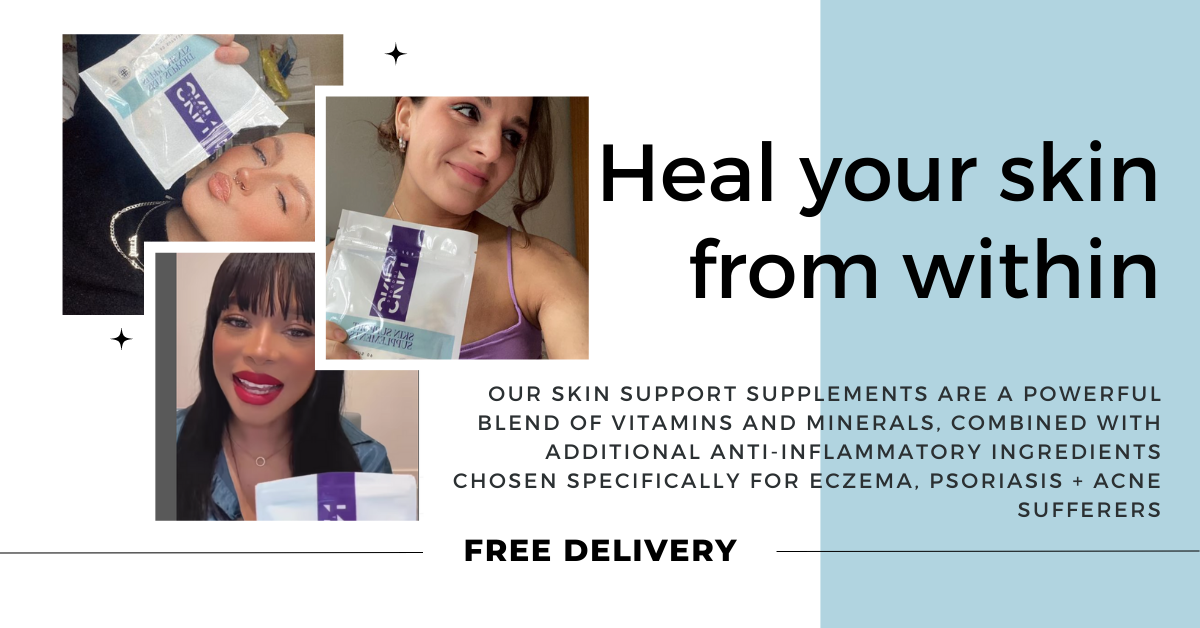
Drought's Skin Support Formulaprovides vitamin D, zinc, vitamin C, magnesium, and 10 other nutrients — supporting the internal nutritional foundations that remain important whether body weight is changing or stable. Made in the UK, suitable for vegetarians, designed for consistent long-term daily use.
FAQ
Can weight loss improve psoriasis?
Yes — meta-analyses have found average PASI reductions of approximately 2.5 points from weight loss interventions in overweight psoriasis patients.
Why is psoriasis linked to obesity?
Excess body fat may increase inflammatory signalling linked to psoriasis flare-ups.
Why does obesity worsen psoriasis?
Adipose tissue produces leptin (promoting Th17 activity), TNF-α, and IL-6 — directly amplifying the inflammatory pathways driving psoriasis — while reducing anti-inflammatory adiponectin.
Does weight affect biologic treatment for psoriasis?
Yes — most biologics are weight-dosed. Obesity can produce subtherapeutic serum drug levels at standard doses, reducing treatment response.
How much weight loss helps psoriasis?
Studies have found meaningful PASI improvements with 10–15% body weight reduction. Even modest, sustained weight loss produces measurable inflammatory improvements.
Does belly fat affect psoriasis?
Visceral fat is linked to inflammatory activity and metabolic health, which researchers believe may influence psoriasis severity.
What diet is best for psoriasis and weight loss?
The Mediterranean dietary pattern addresses both — anti-inflammatory, fibre-rich, and lower in caloric density than ultra-processed Western diets.
Can crash dieting worsen psoriasis?
Yes — severe caloric restriction increases cortisol, which is a documented psoriasis trigger through HPA axis activation.
Summary
Weight loss in overweight psoriasis patients produces average PASI reductions of approximately 2.5 points — comparable to moderate topical treatment — through the leptin-Th17 pathway amplification, reduced TNF-α and IL-6 from adipose tissue, improved biologic pharmacokinetics at lower body weight, and better vitamin D bioavailability. The relationship is bidirectional — psoriasis worsens weight management through reduced activity, depression, and stress. The approach that benefits both is sustainable anti-inflammatory dietary change, moderate exercise, and stress management — not crash dieting, which worsens psoriasis through cortisol elevation.
Psoriasis and weight appear closely connected because both involve inflammation, metabolic health and immune system activity.
In Short
Psoriasis is linked to inflammation throughout the body
Excess body fat can increase inflammatory signalling
Research suggests weight loss can improve psoriasis severity in some people
Crash dieting and extreme restriction may worsen stress and inflammation
Gentle long-term lifestyle changes are usually more sustainable
Adipose tissue sequesters vitamin D — reducing body fat improves 25(OH)D bioavailability alongside reducing adipokine inflammatory load. Drought's Skin Support Formula provides vitamin D, zinc, and 12 other nutrients supporting the internal nutritional foundations that weight management improves access to but cannot establish on its own. Made in the UK, suitable for vegetarians, designed for consistent long-term daily use.
Vitamin A can be a helpful part of supporting psoriasis—but it’s rarely enough on its own.
If you’re looking for more consistent results, a broader, inside-out approach may be more effective.
Start your skin support journey →
Written by the Drought Skin team — specialists in natural support for psoriasis, eczema and acne
Disclaimer: This article contains affiliate links. We earn a very small commission from each purchase made through these links. There is no additional cost to you. All products featured have been specifically selected as products we personally use and love. For further information, please see our disclaimer page.
-
The Psoriasis Diet: Best Foods, Foods to Avoid & What the Evidence Shows
Vitamin D and Psoriasis: The Evidence, the Mechanisms & the UK Context
How Stress Triggers Eczema & Psoriasis Flare-Ups
Psoriasis and Liver Health: The Hepatodermal Axis Explained
Vitamins & Supplements for Psoriasis: What the Evidence Shows
