
Menopause & Eczema: Why It Happens + What Helps
Menopause can trigger or worsen eczema in ways that catch many women off guard. Here's why it happens, what's going on hormonally, and what genuinely helps.

Salicylic Acid & Eczema: When It Helps, When It Worsens Symptoms & What to Use Instead
Salicylic acid's keratolytic mechanism makes it useful for scalp eczema and thick dry patches — but its lipophilic penetration through compromised eczema barrier skin causes stinging and worsening in most presentations. Here's when to use it and when to avoid it.
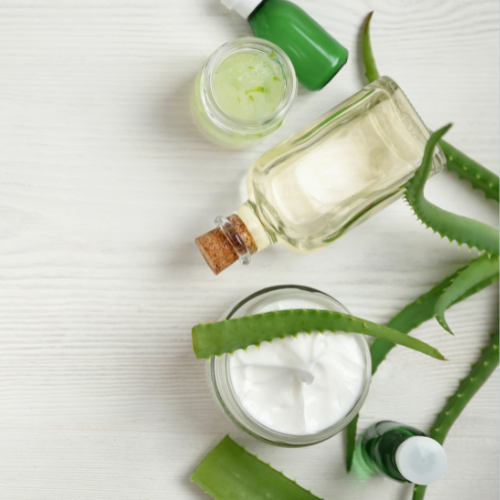
Aloe Vera for Eczema: The Acemannan Mechanism, What the Evidence Shows & the Aloin Safety Warning
Aloe vera's acemannan content has documented antimicrobial activity against S. aureus — the bacterium most associated with eczema severity. But aloin in whole-leaf preparations is a documented irritant. Here's what to use and what to avoid.

Coconut Oil for Psoriasis: Benefits, Limitations & How to Use It Safely
Coconut oil has specific properties relevant to psoriasis — particularly for the scalp and scale softening. Here's what it does well, what it doesn't, and the Malassezia caveat.

Lactic Acid for Acne: What It Does, What It Doesn't & Where It Fits
Lactic acid's dual AHA and humectant action makes it the gentlest exfoliating acid for acne-prone skin. Here's how it works, what it's best for, and how it compares to alternatives.

Mould, Damp & Eczema: The Mechanisms & What Actually Helps
Mould worsens eczema through protease-mediated barrier disruption and IgE allergen sensitisation. Here's the mechanism, the UK housing context, and what actually helps.

Oregon Grape for Psoriasis: The Berberine Mechanism, Clinical Evidence & How to Use It
Oregon grape's berberine inhibits keratinocyte proliferation and NF-κB activity — giving it a specific mechanism for psoriasis backed by multiple clinical trials where 60–84% of patients reported significant improvement. Here's what the evidence shows

Salt Water for Acne: The Osmotic Mechanism, Why Ocean Water Differs from DIY & the Barrier Risk
Salt water's osmotic effect temporarily draws fluid from sebaceous glands — but disrupts the ceramide barrier simultaneously. Here's when it helps, when it worsens acne, and why ocean water behaves differently from DIY salt spray.

Soy and Eczema: Who Needs to Be Careful and Who Doesn't
Soy is a top-five allergen in paediatric eczema — but in adults it's a much less common trigger. Here's who needs to be cautious, the fermented soy distinction, and how to find out.

Which Type of Psoriasis Do You Have?
Not all psoriasis looks or behaves the same. Here's a clear guide to every type — plaque, guttate, pustular, erythrodermic and more — and how to tell them apart.

Toners for Acne-Prone Skin: Do You Need One, What Works & What to Avoid
Most toners for acne don't do what people think — and the wrong one actively worsens breakouts. Here's what toners actually do, which types help, and which to avoid.

What Is the EASI Score? How Eczema Severity Is Measured & What the Numbers Mean
The EASI score measures eczema severity across four body areas and four clinical signs. Here's exactly how it's calculated, what the scores mean, and why it matters for treatment